
Aves · Strigiformes
Snowy Owl
Bubo scandiacus
Vulnerable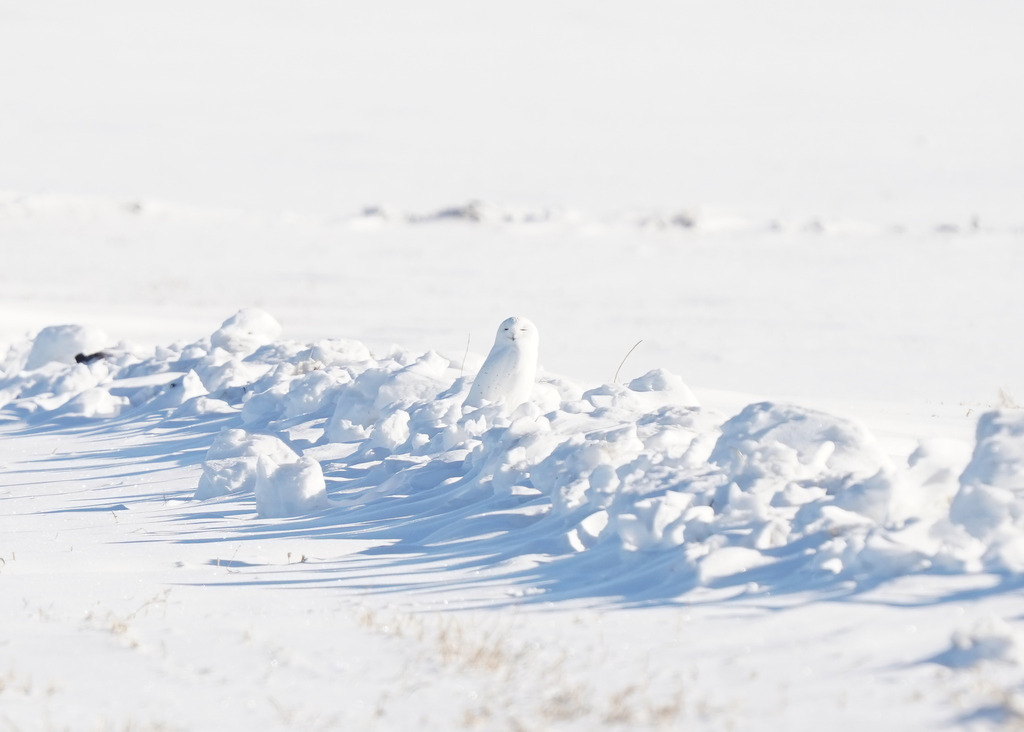
© alove4feathers · iNaturalist · CC BY 4.0
The Snowy Owl is a magnificent arctic predator that commands attention wherever it appears. With its striking white plumage and penetrating yellow eyes, this large raptor is instantly recognizable across the frozen landscapes of the far north. Bubo scandiacus inhabits regions across at least five countries and has captured human imagination for centuries—both as a symbol of the wilderness and, more recently, as an indicator of changing polar ecosystems.
Currently classified as Vulnerable by the IUCN, the Snowy Owl faces mounting pressures from climate change, habitat alteration, and fluctuating prey populations across its circumpolar range. Unlike many raptors confined to specific territories, these owls are nomadic wanderers—sometimes traveling thousands of kilometres between seasons in search of food and suitable breeding grounds. Their ecological role as apex predators in the Arctic makes their conservation status particularly significant for understanding the health of polar ecosystems.
Identification and Appearance
Bubo scandiacus, the Snowy Owl, is a large and unmistakable Arctic raptor characterized by predominantly white plumage that is purer in tone than that of sympatric mammals like polar bears (Ursus maritimus) and Arctic foxes (Vulpes lagopus). In field conditions, these owls frequently blend seamlessly with their snowy surroundings, appearing as pale rocks or drifts of snow on the tundra landscape. The maximum recorded weight reaches 2,026 grams, placing this species among the heaviest owls in the Northern Hemisphere. Unlike many owl species, Snowy Owls lack prominent ear tufts in their normal resting state, though very short and likely vestigial tufts can occasionally be erected, particularly by females during nesting.
Sexual Dimorphism
Snowy Owls exhibit pronounced sexual dimorphism in plumage coloration and marking patterns. Males are strikingly white with minimal dark markings, presenting an almost pure white appearance that makes them highly distinctive in the field. Females, by contrast, are heavily marked with dark barring and spotting across the head, back, and wings, giving them a more mottled and cryptic appearance. This sexual difference in plumage likely reflects differing selective pressures related to nesting ecology, with female crypticity providing camouflage while incubating eggs on the tundra ground.
The longevity of this species extends to at least 28 years in the wild, indicating robust survival rates typical of large, apex predators in stable Arctic environments.
Distribution and Habitat
Bubo scandiacus, the Snowy Owl, has been recorded across five countries, with the vast majority of observations concentrated in North America. Canada dominates the species’ documented range with 164 records, followed by the United States with 129 records. Smaller numbers have been documented in Sweden (3 records), China (2 records), and Russia (2 records), indicating occasional vagrant appearances far outside the core range.
The species shows a highly seasonal presence pattern, with January representing the peak month for observations (181 records), followed by February (119 records). No records exist from March through December in the available dataset, suggesting that documented sightings are concentrated during the winter months when the owls are most active in southern regions or when observer effort peaks. This dramatic seasonal skew reflects the species’ migratory behavior and its irruptive movements into lower latitudes during harsh arctic winters.
Elevation data are not available for this species in the current dataset. Habitat preferences, while not formally classified in the records, are consistent with the species’ known association with open terrain, tundra edges, and prairie environments across its range—landscapes characteristic of both its high-latitude breeding grounds and wintering territories in continental North America.
Biology
Behavior
Snowy Owls are primarily nocturnal and crepuscular hunters, though they often hunt during daylight hours in their Arctic habitat where summer days are nearly continuous. They perch on elevated positions—rocks, posts, or low structures—and scan the landscape for movement before swooping down to catch prey. These owls are generally solitary outside the breeding season, though they may gather in loose aggregations during winter migrations to southern regions. Their white plumage provides exceptional camouflage against snow and ice, making them nearly invisible in their natural environment.
Snowy Owls are territorial during breeding season and will defend their nesting areas aggressively. They produce a range of vocalizations including hoots, hisses, and barks, particularly when alarmed or protecting young. Their flight is direct and powerful, with a distinctive wing pattern visible in flight. In winter, they undertake irregular southward movements driven by prey availability, sometimes appearing far south of their normal range when lemming populations crash.
Diet
Snowy Owls are carnivorous specialists with a diet dominated by small mammals, particularly lemmings and voles. They hunt primarily on the ground and in open terrain, using their exceptional hearing to locate prey beneath snow. A single owl may consume 3–5 small rodents per day, though this varies with prey availability. Beyond small mammals, they occasionally take ptarmigan, other birds, fish, and insects, but rodents remain their primary food source throughout the year.
The abundance of lemmings in their Arctic breeding grounds directly influences Snowy Owl populations and breeding success. In years of lemming scarcity, these owls may fail to breed entirely or produce fewer offspring. This dependence on cyclical prey populations makes Snowy Owls highly responsive to environmental fluctuations in the high Arctic.
Reproduction
Snowy Owls breed in the Arctic tundra, typically from April through August in the Northern Hemisphere. They reach sexual maturity within their first year and form monogamous pairs that may reunite in subsequent breeding seasons. Females lay clutches of 3–11 eggs, with clutch size correlating strongly with lemming abundance—larger clutches occur in years of prey plenty. Incubation lasts approximately 32–34 days, during which the male provides food for the female.
Both parents participate in raising chicks after hatching, with the male hunting and the female brooding and feeding young initially. Chicks fledge at 6–7 weeks of age but remain dependent on parents for several additional weeks. The long lifespan of up to 28 years allows individuals to reproduce over multiple decades, building resilience into their populations despite variable breeding success linked to prey cycles.
Conservation and Threats
Bubo scandiacus, the Snowy Owl, is classified as Vulnerable on the IUCN Red List. This designation reflects genuine concerns about the species’ long-term survival, though the population is currently increasing—a positive sign that existing conservation efforts and legal protections are having measurable effect. The upward trend suggests the species is responding well to international safeguards, though threats remain present across its Arctic and subarctic breeding range.
Threats
Climate change poses the most significant long-term threat to Snowy Owls. Warming temperatures are altering snow cover patterns, lemming population cycles, and Arctic habitats, disrupting the species’ finely tuned breeding ecology. Reduced sea ice affects food web productivity and lemming abundance—the primary prey supporting Snowy Owl populations during the critical breeding season. Contaminants such as mercury and polychlorinated biphenyls accumulate in Arctic food chains and concentrate in owl tissues, affecting reproduction and survival. Human disturbance during breeding season, collisions with vehicles and infrastructure in winter range areas, and illegal hunting in some regions remain localized but persistent threats.
Conservation Efforts
Snowy Owls benefit from protection under international agreements including the Convention on International Trade in Endangered Species (CITES) and various national legislation across their range. Many breeding territories in the Canadian Arctic and Greenland are protected within national parks and wildlife reserves. Research programmes tracking population dynamics, migration patterns, and prey availability continue across North America, Europe, and Russia, providing essential data for adaptive management. Banding and satellite tracking have revealed migration corridors and wintering grounds, enabling targeted habitat protection.
Cultural Significance
The Snowy Owl has become a global cultural icon in recent decades, particularly through its prominence in popular literature and film. J.K. Rowling’s Harry Potter series features Hedwig, a female Snowy Owl who serves as the beloved pet of the protagonist, making the species instantly recognizable to millions of readers and film viewers worldwide. This cultural visibility sparked concern among conservationists and wildlife organizations, who worried that the character’s popularity might drive illicit trade in Snowy Owls. However, research published in PLOS ONE (2017) found no strong evidence of increased confiscation of Snowy Owls from the black market following the films’ release, though wildlife rehabilitation centers did report larger than typical numbers of Snowy Owls during this period.
In North American symbolism, the Snowy Owl holds official status as the avian emblem of Quebec, recognized alongside the yellow birch and versicolor iris as one of the province’s three official emblems. This designation reflects the species’ deep association with the Arctic landscape and its presence throughout Canada’s northern regions. The scientific name scandiacus itself derives from Scandinavia, marking the owl’s historical connection to the northern parts of Europe where it was first formally observed and documented.
Fun Facts
- Snowy owls can see in almost complete darkness and hunt by sound alone, rotating their asymmetrical ears independently to pinpoint prey moving beneath snow. This ability allows them to locate lemmings and voles hidden under as much as 30 centimetres of snow without ever seeing their target.
- A single snowy owl can consume up to five lemmings per day during peak hunting season, but may fast for weeks when prey becomes scarce across the Arctic tundra. Their nomadic winter migrations span thousands of kilometres as they follow their prey south from breeding grounds.
- Unlike most owls, snowy owls are highly diurnal during Arctic summers when daylight is constant; they actively hunt in continuous daylight to feed hungry chicks that demand food every 30 minutes. This reversed activity pattern is unique among their genus and driven entirely by the rhythm of their Arctic habitat.
- Female snowy owls are significantly larger than males, sometimes weighing 50% more, though both sexes maintain white plumage in adulthood. Males become nearly pure white by their third or fourth year, while females retain dark barring throughout their lives.
- Snowy owls can rotate their heads up to 270 degrees, allowing them to scan nearly three-quarters of a full circle without moving their body. Combined with forward-facing eyes that provide binocular vision, this mobility gives them exceptional hunting precision.
- These owls have feathered feet and legs extending all the way to their talons, providing insulation against Arctic temperatures that can drop below −40 °C. The dense plumage also silences their flight, enabling near-silent approaches to prey on open tundra where there is nowhere to hide.
- Snowy owls produce pellets containing the indigestible bones and fur of their prey, and researchers use these pellets to track lemming population cycles across the Arctic. When lemming populations crash, snowy owl breeding failures and southbound migrations follow within the same year.
Ecology
Habitats
Diet
Behavior
Conservation Status
LC · NT · VU (Vulnerable) · EN · CR · EW · EX
Photo Gallery
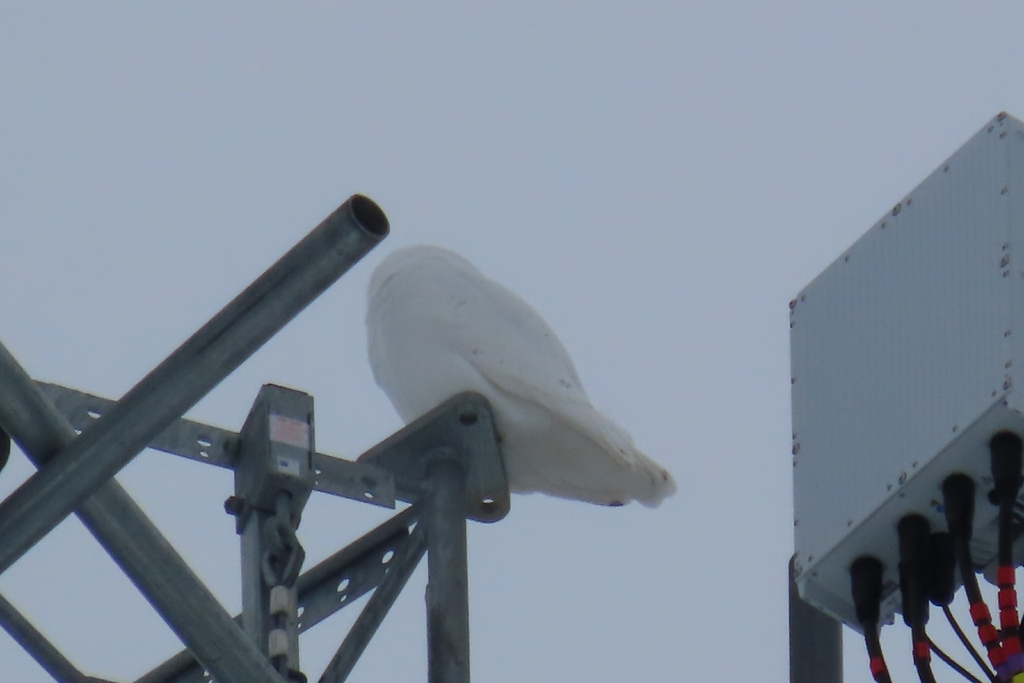
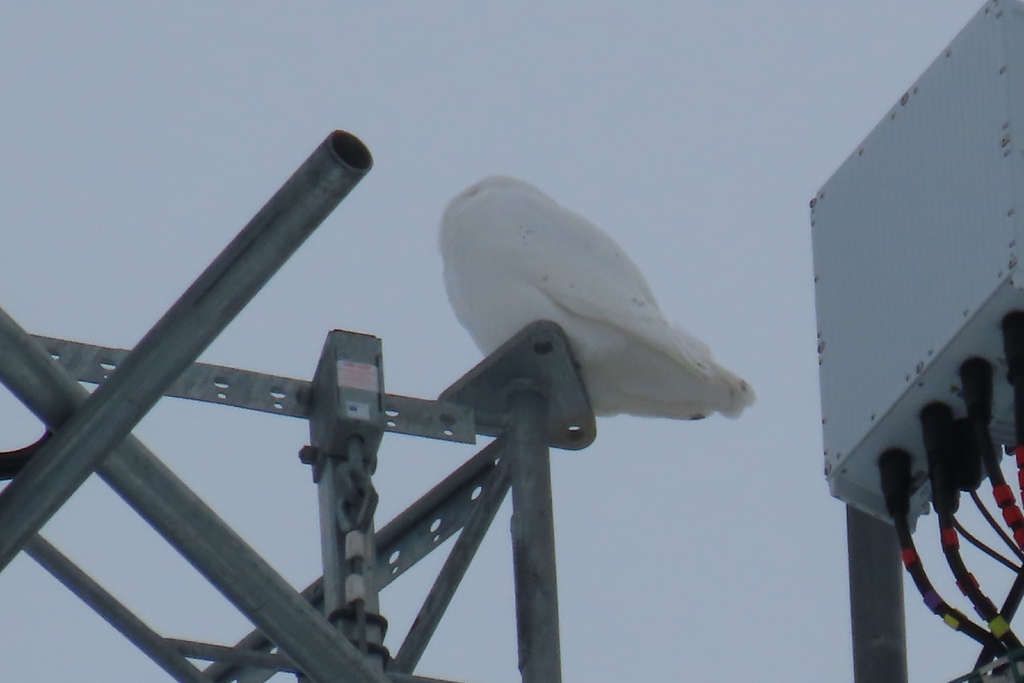
alove4feathers · CC BY 4.0
Related Species

Was this profile helpful?