
Squamata
European Green Lizard
Lacerta viridis
Least ConcernAlso known as: Eastern Green Lizard, Green Lizard
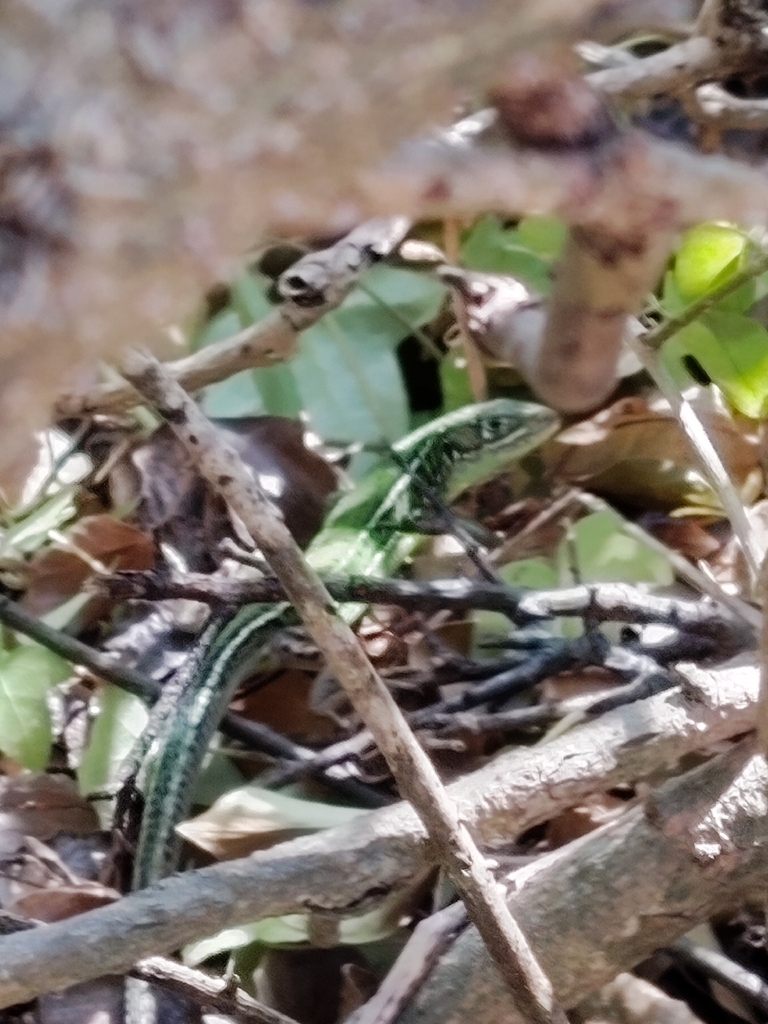
© Jeremy Barker · iNaturalist · CC BY-NC 4.0
Scientific Classification & Quick Facts
Classification
At a Glance
The European Green Lizard is a striking emerald-coloured reptile that commands attention wherever it basks in Mediterranean and temperate European sunlight. With its vibrant green dorsal surface and the capacity to grow into a sizeable predator, Lacerta viridis represents one of Europe’s most charismatic lacertid lizards. This species inhabits at least 14 countries across its native range, thriving in diverse habitats from sun-drenched scrublands to rocky hillsides where dense vegetation provides both shelter and hunting grounds.
Classified as Least Concern by the IUCN, Lacerta viridis maintains stable populations across much of its European distribution, though habitat loss and collection for the pet trade remain localized threats. The species exemplifies the remarkable diversity of the Lacertidae family, and its ecological success in temperate regions demonstrates how colour and size can be key adaptations for both thermoregulation and dominance in its environment. Understanding this lizard’s biology and behaviour reveals much about the resilience and complexity of European herpetofauna.
Identification and Appearance
The European Green Lizard is a medium-sized lizard with a distinctive slender build. The head-to-cloaca length (snout-vent length) reaches up to 15 cm, but the tail extends considerably longer—up to twice the body length—making the total length reach approximately 40 cm. The tail is fragile and can be shed voluntarily when seized by a predator, a behavior known as autotomy; the animal regenerates a replacement tail over time.
Coloration and Sexual Dimorphism
Male and female European Green Lizards display striking differences in appearance. Males are typically uniform bright green, adorned with small spots that become more pronounced along the back. The throat is distinctly bluish in adult males—a characteristic that is less prominent or absent in females. Females are more slender than males and present a more uniform green coloration overall, frequently displaying between two and four light-colored longitudinal bands that are bordered by black spots. These bands give females a more patterned appearance compared to the relatively unmarked males.
Distribution and Habitat
Lacerta viridis, the European Green Lizard, is concentrated in central Europe, with the highest density of recorded observations in Austria, which accounts for the majority of documented sightings. GBIF records show 161 observations from Austria alone, followed by Hungary with 53 records and Romania with 27. The species occupies a range spanning at least 14 countries across the continent, including Slovakia, the Czech Republic, Slovenia, Greece, Croatia, Ukraine, and Serbia, though observation density decreases significantly eastward and southward from its core Austrian population.
The species exhibits a pronounced seasonal presence pattern, with March representing the peak activity month—GBIF data show 188 observations recorded in March compared to only 11 in February and 101 in April. This spring concentration likely reflects emergence from winter hibernation and increased basking activity as temperatures rise. Observations drop to zero across the summer and autumn months in the available dataset, suggesting either reduced detection rates during these periods or a genuine shift in behavior and accessibility to recorders.
Specific elevation data are not available in current records, though the species’ presence across Austria’s varied topography indicates tolerance for a range of altitude zones. The lizard inhabits open and semi-open landscapes where suitable basking and cover vegetation coexist, though precise habitat type classifications are not specified in the distribution dataset. Its concentration in central European countries with temperate continental climates underscores its preference for regions with distinct seasonal temperature variation.
Biology and Behavior
Behavior
Lacerta viridis is a diurnal lizard, most active during warm daylight hours when it basks on rocks, logs, and vegetation to thermoregulate. These lizards are highly territorial, with males establishing and defending feeding and breeding territories through visual displays and physical combat. When threatened, they flee rapidly into dense vegetation or rocky crevices, relying on speed and agility rather than defensive posturing. Males are notably aggressive toward one another during the breeding season, engaging in head-bobbing displays and bite-driven conflicts to establish dominance.
The species exhibits strong site fidelity, often returning to the same basking and shelter locations across seasons. Individuals communicate through body coloration changes—the vibrant green can deepen or lighten slightly in response to temperature and social context—and through head movements and tail positioning. During cooler months or unfavorable weather, Lacerta viridis remains sheltered in burrows, under rocks, or within vegetation, becoming less conspicuous until conditions warm again.
Diet
European Green Lizards are carnivorous, feeding primarily on insects and other small invertebrates. Grasshoppers, crickets, beetles, spiders, and ants form the bulk of their diet, which they forage for actively during their daily activity periods. They are ambush and pursuit hunters, using their keen eyesight to locate prey and their quick reflexes to capture it. Juvenile lizards consume smaller prey items such as small insects and spiders, gradually shifting to larger prey as they grow.
Reproduction
Breeding occurs in spring and early summer, typically from April to June depending on local climate and latitude. Males compete vigorously for access to females, and mating is preceded by elaborate courtship displays involving head-bobbing, circling, and color intensification. After successful mating, females lay clutches of 4 to 16 elongated eggs in protected locations such as soil cavities, under rocks, or in decomposing wood.
Eggs are left unattended after deposition; the female provides no parental care. Incubation typically lasts 8 to 10 weeks, with hatchlings emerging in late summer to early autumn. Young lizards are immediately independent and must fend for themselves from birth. The species reaches sexual maturity at approximately 2 to 3 years of age, with a typical lifespan of around 10 years in the wild.
Conservation and Threats
Lacerta viridis, the European Green Lizard, holds a Least Concern status on the IUCN Red List. This designation reflects that the species is not currently at immediate risk of extinction across its range. The lizard maintains stable populations across much of central and southern Europe, where suitable habitat remains available.
Threats
Although classified as Least Concern, the European Green Lizard faces mounting pressures from habitat loss and fragmentation. Agricultural intensification, urban expansion, and the conversion of open grasslands and scrubland to monoculture have reduced available breeding and foraging grounds. Climate change poses an emerging threat, as shifting temperature regimes may affect breeding timing, food availability, and thermal refuges in parts of its range.
Road mortality presents a localised but persistent problem, particularly in areas where lizard populations cross roads during seasonal movements. Collection for the pet trade, though regulated in many countries, remains a concern in regions with weak enforcement of wildlife protection laws.
Conservation Efforts
The European Green Lizard benefits from legal protection across much of its range. The species is listed under EU Directive 92/43/EEC (the Habitats Directive) and receives protection in national wildlife laws throughout most European countries. Protected areas and nature reserves support viable populations, particularly in the Mediterranean and temperate regions where the lizard is most abundant.
Habitat restoration projects, especially the creation and maintenance of grassland corridors and sun-exposed rocky areas, help sustain local populations. Several European countries have implemented road management schemes to reduce reptile mortality on high-traffic routes through known lizard habitat.
Fun Facts
The European green lizard is one of Europe’s largest and most widespread lizard species, yet many naturalists underestimate just how far its range extends and how adaptable it truly is. Here are some remarkable facts about this vibrant reptile.
- The European green lizard spans one of the vastest ranges of any large European lizard, stretching from Slovenia and eastern Austria across to the Black Sea coasts of Ukraine and Turkey—a geographic footprint that spans thousands of kilometres.
- Despite their dependence on sunshine, European green lizards are strategic baskers: they position themselves on rocks or lawns throughout the day to absorb heat, allowing their bodies to reach the optimal temperature for hunting, digestion, and movement.
- This species demonstrates remarkable habitat flexibility by sheltering amongst dense bushes and shrubs, a behaviour that protects them from predators and extreme temperatures while remaining close to open basking grounds.
- The males of this species are notably territorial and will engage in competitive head-bobbing displays and aggressive chasing to defend their basking and hunting territories from rivals.
- European green lizards possess exceptional colour variation across their range, with some populations displaying brilliant emerald green while others show more muted sage or brownish tones depending on local geology and vegetation.
- Their tails account for approximately two-thirds of their total body length and serve as a fat storage organ; a lizard with a thick tail is better equipped to survive periods of food scarcity.
- When threatened, European green lizards can shed their tails in a process called autotomy, allowing the detached tail to thrash and distract a predator while the lizard escapes to safety.
Ecology
Behavior
Conservation Status
LC (Least Concern) · NT · VU · EN · CR · EW · EX
Photo Gallery
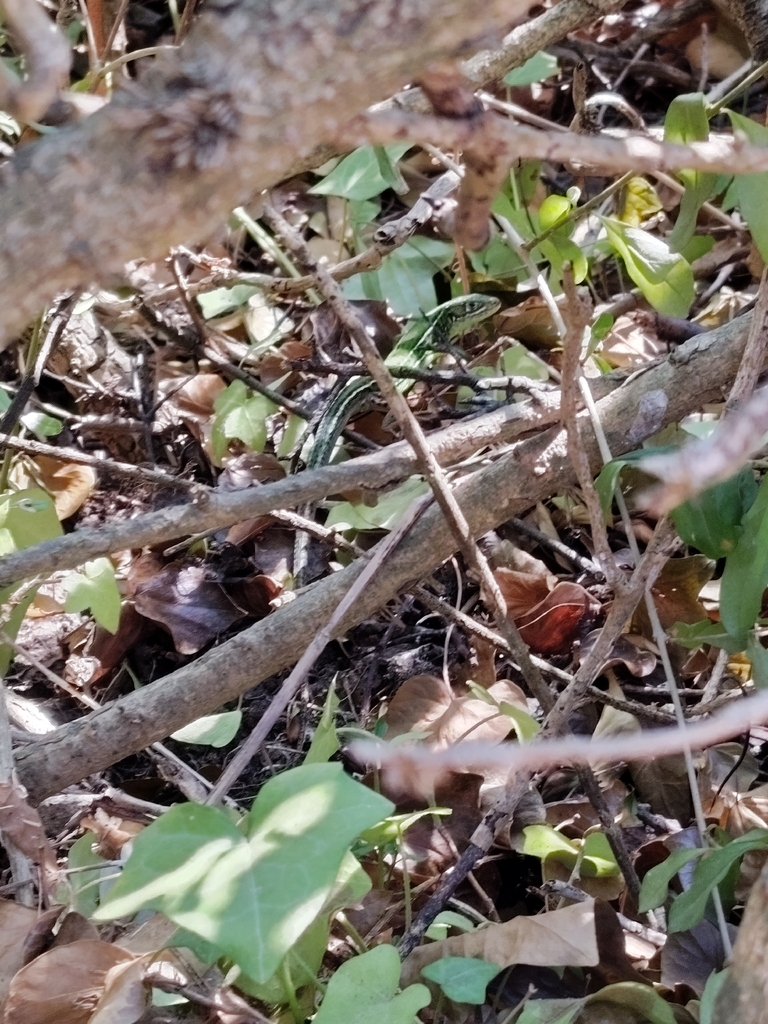
Jeremy Barker · CC BY-NC 4.0
Related Species
Was this profile helpful?