
Squamata
Common European Adder
Vipera berus
Least ConcernAlso known as: Adder, Common Viper, Nikolsky's Viper [nikolskii], Northern Viper, Viper
© no rights reserved · iNaturalist · CC0 1.0
The common European adder is the only venomous snake found across much of northern Europe, a distinction that has earned it both respect and fear in human culture for centuries. This compact viper, with its distinctive zigzag marking running the length of its body, inhabits a surprisingly diverse range of environments—from windswept moorlands and heathlands to damp forest margins and rocky hillsides. Its presence spans at least 10 countries across Europe, making it one of the continent’s most widespread reptiles despite its modest size and cryptic nature.
Listed as Least Concern by the IUCN, the adder has maintained stable populations across much of its range, though it faces mounting pressures from habitat loss and human persecution. Its venom, while potent, is rarely fatal to humans—a fact often overshadowed by exaggerated cultural anxieties. Understanding this species means looking past folklore to appreciate a highly adapted predator that has successfully survived in some of Europe’s harshest climates.
Identification and Appearance
Vipera berus is a relatively compact viper with a robust, muscular body. Adults typically reach 55 to 60 centimetres in total length (including tail), though regional variation is pronounced. Scandinavian populations are notably the largest, with specimens occasionally exceeding 90 centimetres, and records of individuals reaching 104 centimetres on two documented occasions. In France and Great Britain, maximum sizes range from 80 to 87 centimetres. Body mass ranges from 50 grams to approximately 180 grams, reflecting both sex and regional differences.
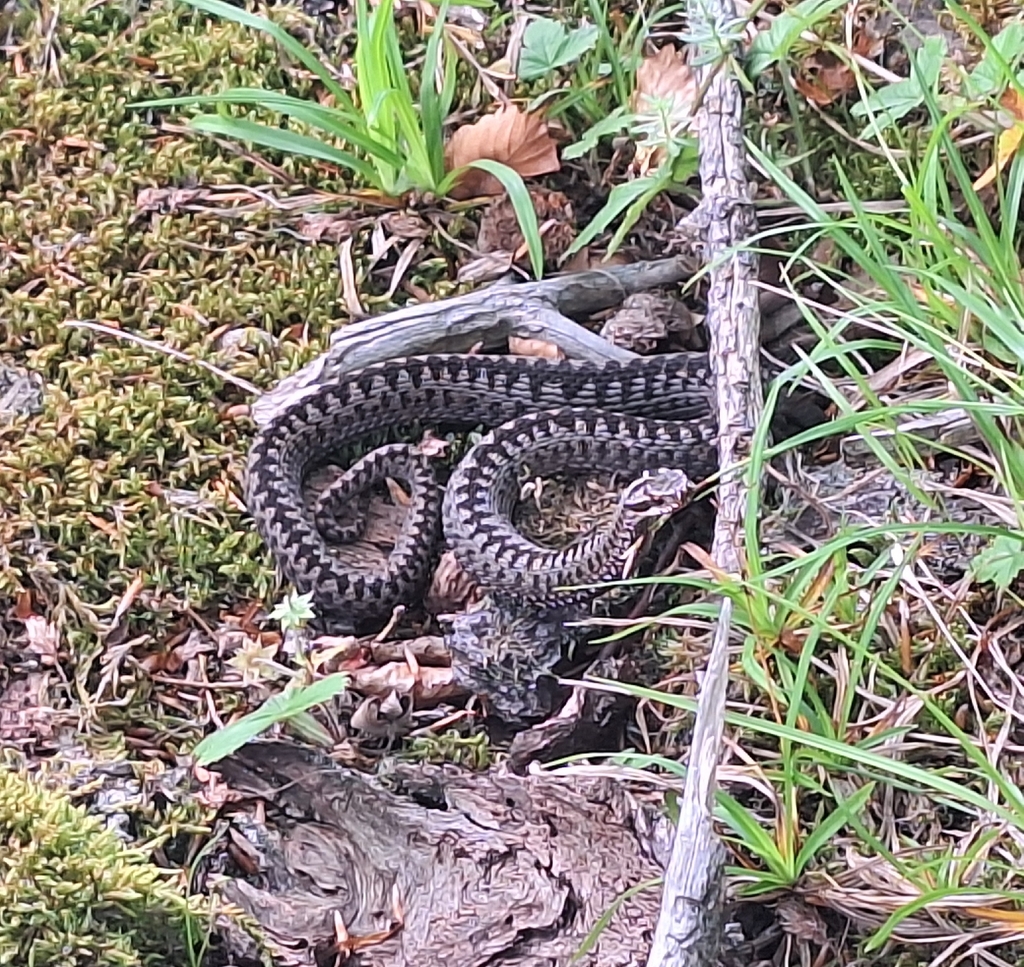
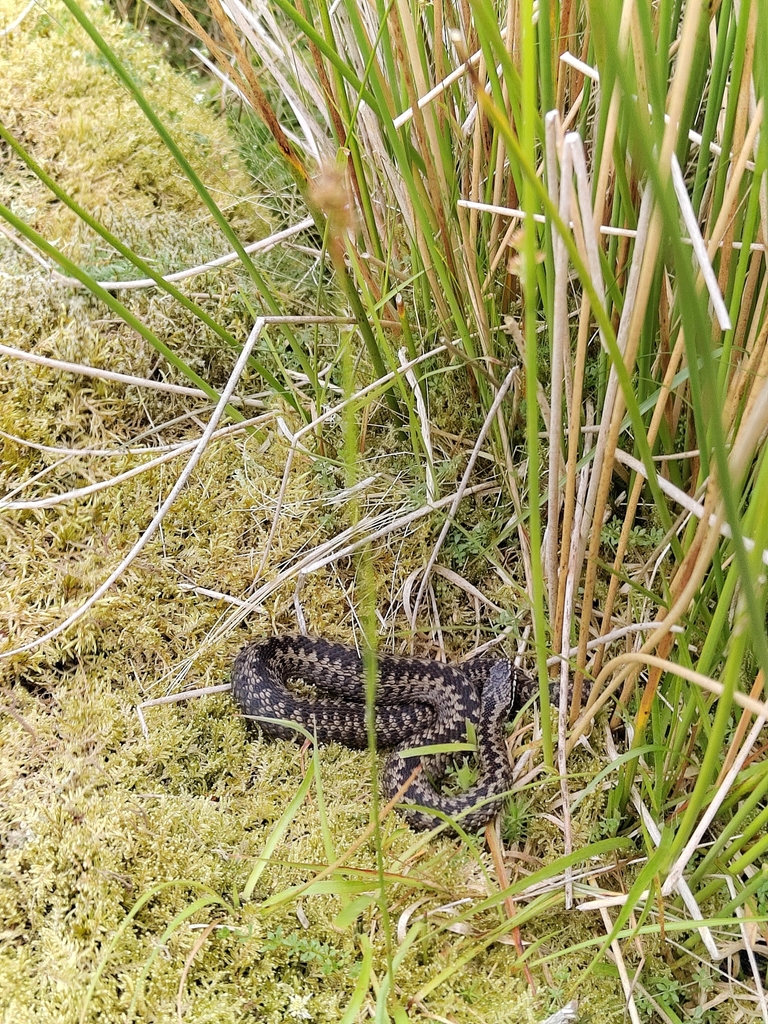
Coloration varies considerably across populations and individuals. The dorsal surface typically displays a distinctive dark zigzag pattern running the length of the spine, set against a background that may be grey, brown, reddish, or even yellowish. Some individuals, particularly in northern regions, exhibit melanistic (almost entirely black) coloration. The head is triangular and flattened, with a characteristic vertical pupil. The ventral (belly) surface is usually dark grey or black with lighter spotting. A pale or whitish stripe often runs along the jaw line, providing useful contrast for identification in the field.
Sexual dimorphism exists in this species, though males and females overlap considerably in size. The body proportions are robust relative to length, and the tail comprises roughly one-sixth of the total length. The keeled dorsal scales create a slightly rough texture to the skin, and the overall appearance reflects adaptation to the cooler climates and variable habitats throughout their European range.
Distribution and Habitat
Vipera berus is found across northern and central Europe, with the Netherlands holding the largest number of recorded observations at 187 sightings. Denmark follows with 45 records, while Great Britain, Germany, Norway, France, Sweden, Turkey, Poland, and the Czech Republic account for smaller populations. The species occurs in at least 10 countries across the region.
The adder shows a highly seasonal distribution pattern, with a marked peak in February when activity is greatest. Observations cluster almost entirely within the winter and early spring months, with February alone recording 214 sightings, followed by March with 83 records. From April onward, observation records drop to zero, likely reflecting the species’ behavior during warmer months or reduced survey effort rather than absence from these regions.
Specific elevation data are not currently available for this species. The adder inhabits diverse environments across its range, including heathlands, moorlands, woodland edges, and grasslands, though detailed habitat classification for individual populations requires further documentation.
Biology and Behavior
Behavior
The common European adder is a solitary and largely terrestrial snake, most active during spring and autumn when temperatures are moderate. It adopts a sit-and-wait hunting strategy, remaining motionless for extended periods before striking at passing prey. During winter, adders enter a state of dormancy (brumation), often aggregating in sheltered locations such as old tree stumps or burrows to survive freezing temperatures. This species is diurnal and crepuscular, meaning it is active during daylight hours and around dawn and dusk.
Male adders exhibit territorial behavior during the breeding season, engaging in ritualized combat with rivals where they intertwine their bodies and attempt to pin one another to the ground. Females are generally less aggressive but will defend their basking spots and gravid refuges. When threatened, an adder assumes a distinctive defensive posture: it coils tightly and flattens its body, hissing loudly and striking if approached further.
Diet
Adders are carnivorous ambush hunters that primarily feed on small vertebrates. Young adders consume insects, spiders, and small lizards, while adults shift toward small mammals such as mice, voles, and shrews. Juvenile snakes may also consume other small snake species and lizards. They occasionally take ground-nesting bird eggs and chicks during breeding season.
The adder’s venom plays a crucial role in subduing prey; a single bite delivers hemotoxic venom that causes rapid tissue destruction and facilitates digestion. After striking, the snake releases its prey and tracks it by scent using the vomeronasal organ (Jacobson’s organ). Feeding frequency varies with season and prey availability, but adult adders typically consume prey once every 7–14 days during the active season.
Reproduction
Breeding occurs in spring (April to May in northern Europe), triggered by rising temperatures and increasing day length. Males engage in ritualized combat bouts to secure mating access to females. Females are ovoviviparous, meaning eggs develop internally and hatch within the mother’s body; she then gives birth to live young rather than laying eggs. Gestation lasts approximately 3–4 months, with females giving birth to 5–20 neonates (average 8–10) in late summer or early autumn.
Neonates are entirely independent at birth and receive no parental care; they measure 13–20 centimeters and must hunt for themselves immediately. Sexual maturity is reached in females at 4–5 years and in males at 3–4 years of age. The species can live up to 19 years in the wild, allowing successful females to reproduce multiple times during their lifespan.
Conservation and Threats
Vipera berus holds a status of Least Concern on the IUCN Red List, reflecting its wide distribution across Europe and relatively robust populations in many regions. However, this classification masks a concerning pattern: populations across much of the species’ range are declining, particularly in western and southern Europe where habitat loss and fragmentation have intensified over recent decades.
Threats
Habitat destruction remains the primary pressure on European adder populations. Wetland drainage, agricultural intensification, and urban sprawl have eliminated or degraded the heathlands, moorlands, and wetland margins where this species depends for shelter and foraging. Road mortality poses an additional threat, particularly in regions where adder populations cross major transport routes during spring migration to breeding sites. Persecution by humans—driven by fear and misunderstanding of venomous snakes—continues in many areas, though protective legislation has reduced this threat in some countries.
Climate change presents an emerging risk. Warmer winters and altered spring timing disrupt the species’ phenology and may affect the success of reproductive cycles. In southern populations already at the edge of thermal tolerance, further warming could reduce suitable habitat significantly.
Conservation Efforts and Legal Protections
Vipera berus benefits from legal protection in most European Union member states under the Habitats Directive, and is protected under national legislation in numerous countries including the United Kingdom, Germany, and Scandinavia. Protected area networks provide refuge in many regions, though connectivity between fragmented populations remains poor. Conservation breeding programmes exist in several countries and zoos, focused on maintaining genetic diversity and supporting reintroductions in historical habitats.
Cultural Significance
The common European adder occupies a significant place in European folklore and traditional medicine, shaped by centuries of misunderstanding about its biology and behaviour. Medieval and early modern beliefs held that adders were deaf—a notion referenced in biblical text—yet paradoxically, snake oil derived from adders was considered a remedy for deafness and earaches. This contradiction reflects how cultural knowledge of the species blended superstition with attempted practical application.
European folklore attributed several false behaviours to adders. Females were believed to swallow their young when threatened and regurgitate them unharmed later, and it was thought that adders would not die until sunset. Traditional treatments for adder bites reveal the imaginative cures that developed: killing the snake and rubbing its corpse or fat onto the wound, placing a pigeon or chicken directly on the bite, or jumping over water. The species was also woven into beliefs about plants—adders were thought to be attracted to hazel trees and repelled by ash trees, leading to the use of ash branches as protective talismans.
Fun Facts
- Vipera berus is one of the most geographically widespread venomous snakes on Earth, ranging from Western Europe all the way to East Asia—far beyond the implied scope of its common name. This exceptional range is unusual for a venomous reptile and reflects the species’ remarkable adaptability to diverse climates and habitats.
- The species is divided into three recognized subspecies, each adapted to different regions across its vast range. These subspecies show variation in coloration, size, and geographic distribution but share the core biology that makes Vipera berus so successful across multiple continents.
- Despite being venomous and potentially dangerous, the common European adder rarely poses a serious threat to humans and fatalities are extremely rare in modern Europe. Most bites occur when people accidentally step on or disturb the snake, and the adder typically retreats if given the opportunity.
- The adder is the northernmost venomous snake in the world, with populations occurring well above the Arctic Circle in Scandinavia. This makes it uniquely adapted to cold climates that would be unsuitable for most other venomous species.
- Vipera berus exhibits sexual dimorphism in coloration: males are often gray or greenish with a dark zigzag pattern, while females tend to be brown or reddish. This color difference helps distinguish the sexes in the field and is consistent across the species’ range.
- The species is ovoviviparous, meaning females retain eggs internally and give birth to live young rather than laying eggs. A single female can produce 3 to 20 offspring per breeding season, depending on her size and environmental conditions.
- Common European adders can live for more than 15 years in the wild and even longer in captivity, making them relatively long-lived for a snake of their small to medium size. Their longevity is partly offset by a relatively slow reproductive rate, particularly in northern populations where breeding may occur only every second or third year.
Conservation Status
LC (Least Concern) · NT · VU · EN · CR · EW · EX
Photo Gallery
no rights reserved · CC0 1.0
Related Species
Was this profile helpful?