The sugar maple, Acer saccharum, is a flowering tree in the soapberry and lychee family, Sapindaceae. Its names include rock maple, sugar tree, sweet maple, and hard maple, the last one used mostly for its wood.
This deciduous tree grows across eastern North America and is classed as Least Concern by the IUCN, meaning it is not currently considered threatened.
The sugar maple matters to forests across the northern United States and Canada, where it often forms pure stands and shapes the woods around it.
Identification and Appearance
The most useful field mark is the sap. Sugar maple leaves have clear sap in the petiole, while Norway maple, a common planted look-alike, has white sap.
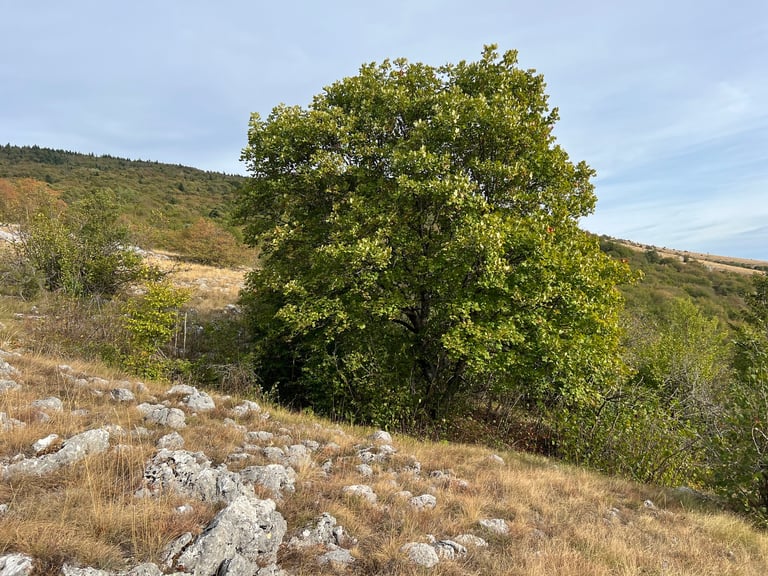
Mature trees usually reach 25 to 35 meters tall, and up to 45 meters in exceptional cases. A 10-year-old tree is typically about 5 meters tall. Forest-grown trees develop a much taller trunk and narrower crown than trees grown in the open.
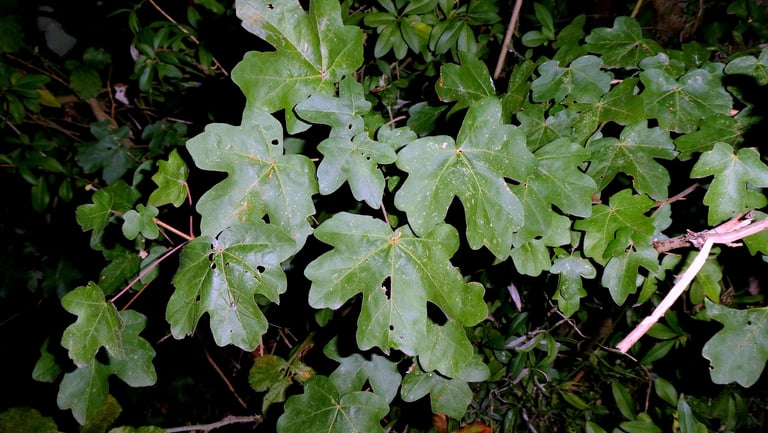
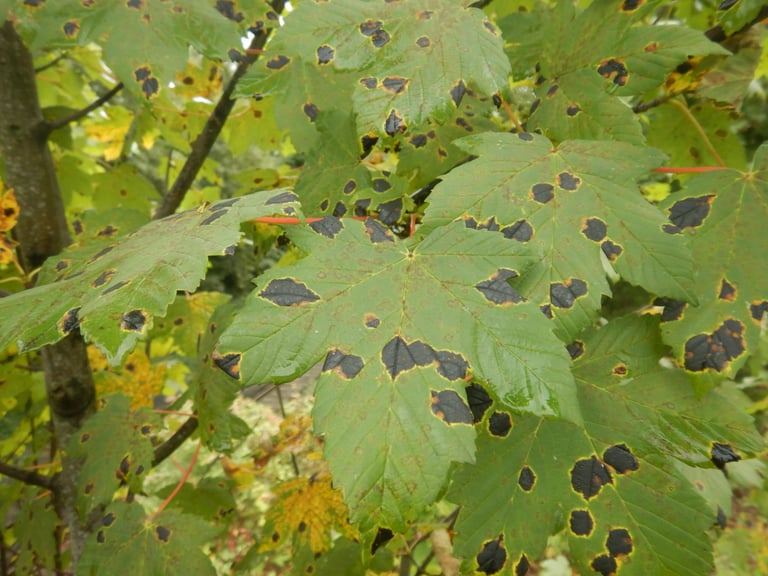
The leaves are up to 20 centimeters long and wide, palmate, with five lobes set in opposite pairs. The upper lobes are larger and deeply notched, with rounded notch bottoms. In autumn the foliage ranges from bright yellow through orange to red-orange, and a single tree can show several colors at once.
The buds are brown and sharp-tipped, and the bark on older trees is shaggy. Norway maple buds are blunt and green or reddish-purple, and its bark has small grooves. Sugar maple leaf lobes are more triangular, while Norway maple lobes are squarish.
Distribution and Habitat
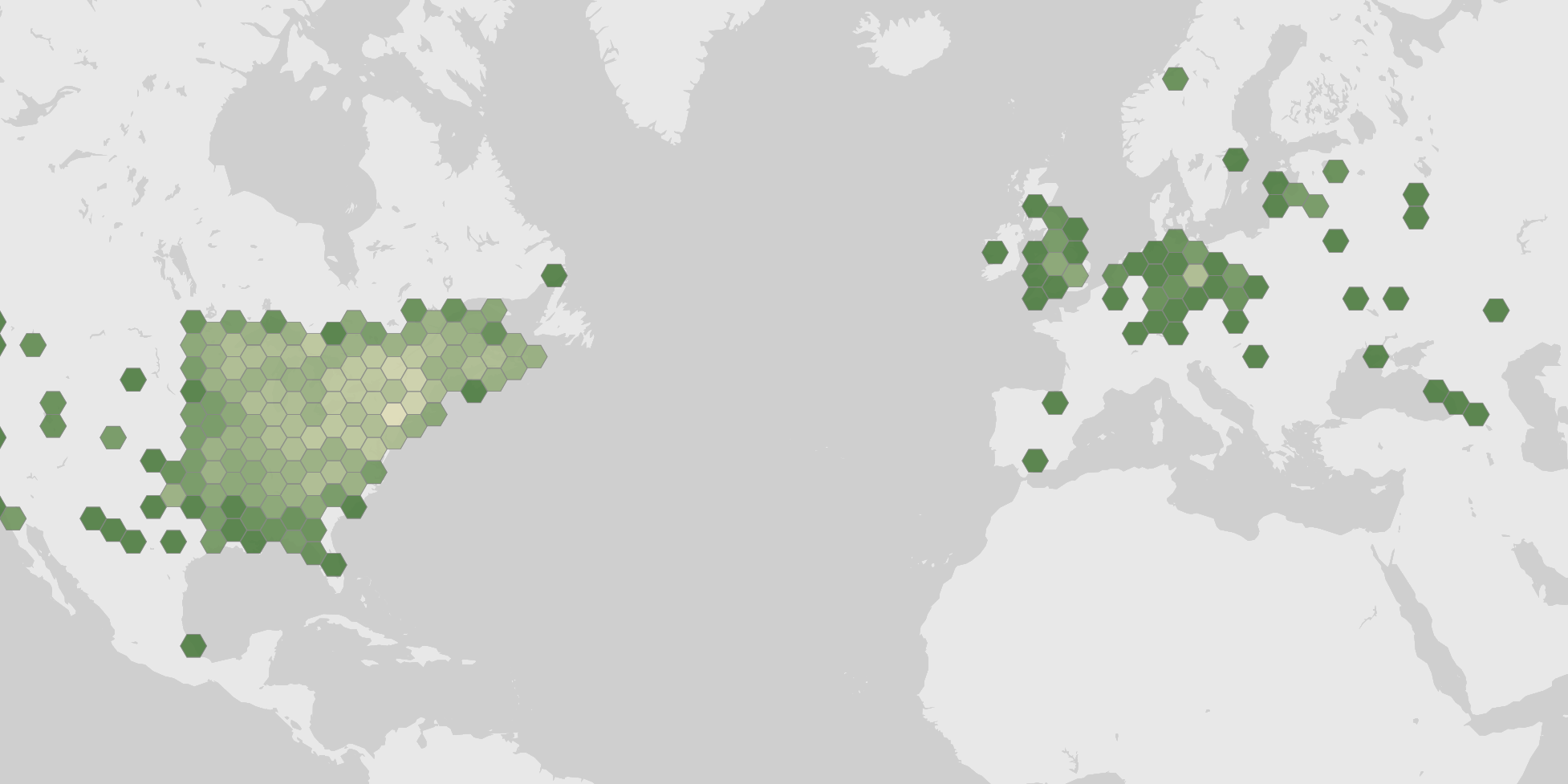
The sugar maple is native to the hardwood forests of eastern Canada and the eastern United States. Its native range covers much of the Northeast and Midwest, from Maine and Québec west to Minnesota, Nebraska, and Kansas, and south to Georgia, Alabama, and Texas.
It is most common in rich, moist woods, where it grows in level areas, coves, and sheltered spots on lower slopes. It is also found along stream terraces, streambanks, ravines, and wooded natural levees, and occasionally on dry rocky hillsides.
Sugar maple grows in many soil types, but it does best on deep, moist, fertile, well-drained soils. It tolerates a wide pH range, from strongly acidic to slightly alkaline, and grows best where pH is between 5.5 and 7.3.
In the Appalachian Mountains it grows at about 910 to 1,680 meters, while in New England and New York it is found up to about 760 meters.
Growth and Form
Sugar maple is a long-lived tree that grows slowly. Mature trees commonly reach 30.5 meters in height.
It is a perennial tree that can live about 200 years, and occasionally up to 300. Seed-bearing begins at about 30 years of age.
In very shaded settings, old trees can grow large in the understory for many years, showing its shade tolerance.
Ecology and Relationships
Sugar maple is among the most shade tolerant of large deciduous trees. Seedlings persist under a closed canopy and grow quickly when a gap opens above them.
Its roots are deeper than those of most maples, and it draws water up from lower soil layers into drier upper soil, which benefits neighboring plants. The mushroom Pholiota squarrosoides decays its fallen logs.
Flowers attract mainly bees, including bumblebees and mason bees, along with lacewings and ladybeetles. Its foliage is eaten by beetles, moths, and true bugs, and by weevils that feed on the leaves. Sheep and songbirds, such as the hawfinch, also feed on the tree.
The tree needs cold winters and a hard freeze for dormancy, which keeps it mostly north of the 42nd parallel. It is also disappearing from urban areas, where the more tolerant Norway maple is replacing it.
Cultivation and Care
Sugar maple grows slowly and can reach about 30.5 meters at maturity. It tolerates cold, with a minimum temperature of about −43.9 °C, and needs winter cold to stay dormant. It has medium drought tolerance and low shade tolerance in cultivation.
Deep, well-drained loam is the best growing medium, although it can grow on sandy soil with good humus. Poorly drained, flood-prone clay is unsuitable, and the tree is sensitive to boron and road salt.
The tree does not bear toxicity concerns in the growing context. Its shade and shallow, fibrous roots can make it hard to grow grass beneath it.
Uses and Human Relationships
Sugar maple wood is pale and strong, and it is widely used for bowling alleys and pins, basketball courts, and baseball bats. Wood with wavy grain, sometimes called birdseye or curly maple, is especially valued.
The wood is also used for musical instruments, including violin-family bodies, guitar necks, grand piano rims, and drum shells. Canadian hardrock maple is prized for pool cue shafts and electric guitar necks.
In the 19th century the tree was a favorite street and park tree because it was easy to propagate and had strong autumn color. It was later replaced by hardier species, because it is intolerant of road salt and urban pollution.
Photos
Photographs from via iNaturalist, licensed under CC0 1.0. and by azk2 via iNaturalist, licensed under CC BY 4.0., credited on each photo.
Ecology and classification
Classification
- Phylum
- Tracheophyta
- Class
- Magnoliopsida
- Order
- Sapindales
- Family
- Sapindaceae
- Genus
- Acer
- Species
- Acer saccharum
Sources
- GBIF Species names and classification
- iNaturalist Photos
- Wikidata Common names and conservation status
- Wikipedia Summary extract
- Encyclopedia of Life Habitat, diet and behavior traits
- Plants of the World Online Native range, life form and climate (WCVP)
- USDA Plants US plants: growth habit and growing conditions
- GloBI What it eats, what eats it, parasites and pollinators
- trophiCH
- GlobalAMFungi