Aureobasidium pullulans is far more than a common mold: it is a workhorse of modern biotechnology, cultivated industrially for the production of enzymes, siderophores, and the polysaccharide pullulan. This black, yeast-like fungus is ubiquitous, turning up in soil, water, air, and even on limestone surfaces across the globe.
Classified within the phylum Ascomycota, order Dothideales, and family Saccotheciaceae, this species belongs to the kingdom Fungi. Its combination of ecological ubiquity and industrial usefulness, especially in biological control of storage diseases on crops, makes it a fungus whose importance far outweighs its inconspicuous appearance.
Fruiting Body and Identification
The most identifying trait of Aureobasidium pullulans is its yeast-like growth form combined with a dark, almost black pigmentation, a combination that sets it apart from many other fungi found in similar environments. Rather than producing a conventional mushroom-shaped fruiting body with a cap, gills, or stem, this species grows as slimy, dark colonies, consistent with its classification as a yeast-like fungus.
Detailed descriptions of cap shape, gill structure, spore print color, or age-related changes in fruiting body form are not available for this species, since its growth pattern differs fundamentally from that of gilled or pored mushrooms. What is established is its epiphytic and endophytic habit: it colonizes the surfaces and internal tissues of a wide range of plants without producing visible disease symptoms, a trait that makes visual identification in the field dependent on laboratory confirmation rather than macroscopic features alone.
Distribution and Habitat
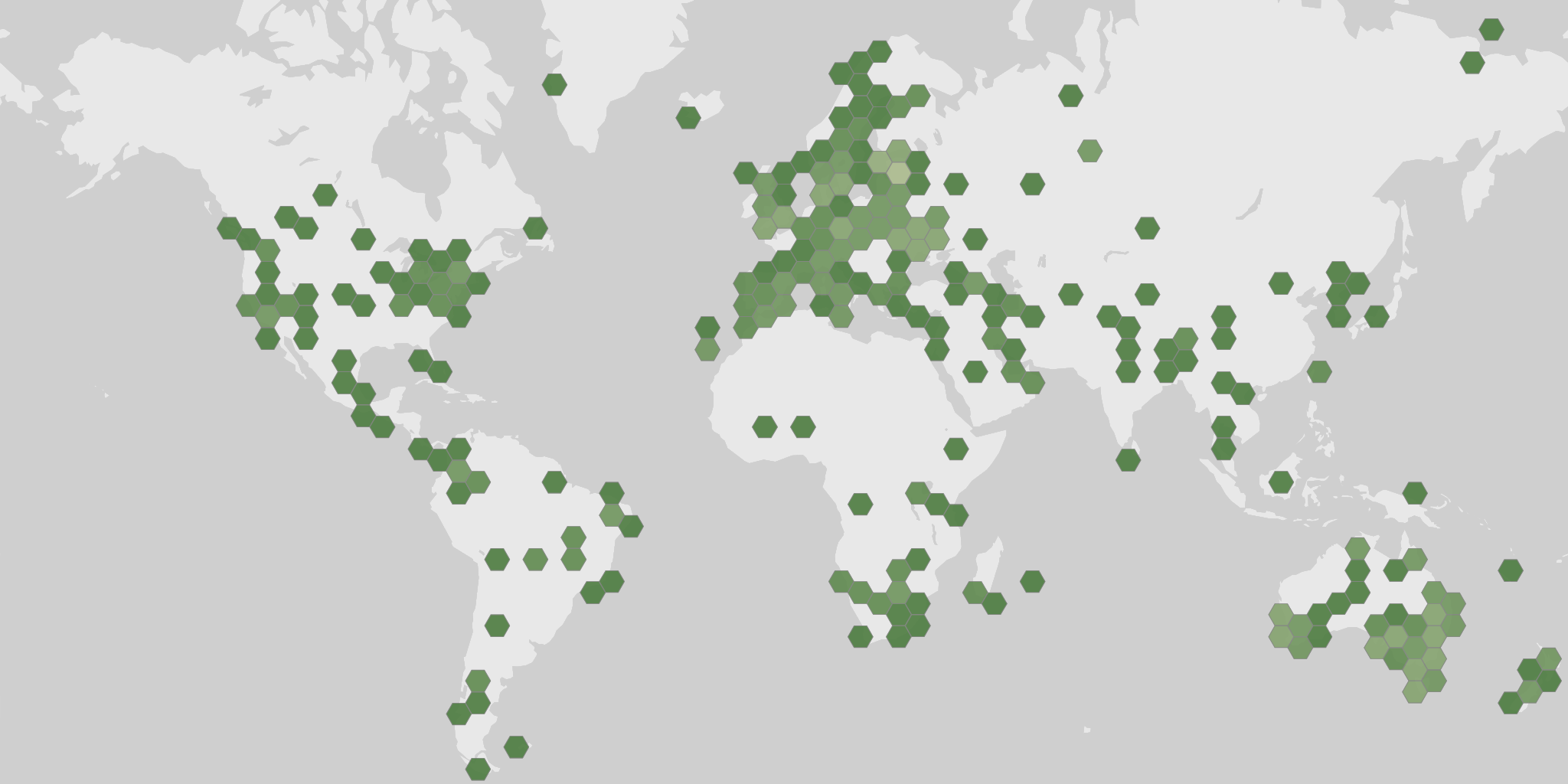
Aureobasidium pullulans has been recorded across a broad range of environments, consistent with its reputation as a generalist species. Occurrence data show observations spread throughout the year, with counts rising sharply from a low in January (257) to a peak in August (1,114) and a secondary high in November (1,054), before dropping again in December (346).
This pattern suggests stronger seasonal presence during the warmer months and into early autumn, though these figures reflect only where the species has been observed, not its abundance or the full extent of its range. As the underlying data notes, these are presence observations rather than a measure of population size or a complete range map.
Beyond seasonal patterns, the species is known to occupy varied habitats, including soil, water, air, and even limestone surfaces, alongside its role as an epiphyte and endophyte on numerous plant hosts.
Fun Facts
- The genus Aureobasidium contains 14 species and one variety, but Aureobasidium pullulans is by far the best known and most studied member.
- A. pullulans is officially divided into four subspecies: pullulans, melanogenum, subglaciale, and namibae.
- This species has been found in an unusually wide range of environments, including soil, water, air, and even on limestone surfaces.
- Alongside Aureobasidium pullulans, only one other species, Aureobasidium iranium, has been formally described within the genus.