Bright orange, gelatinous, and often mistaken for a blob of spilled jam on a fallen log, Dacrymyces chrysospermus is one of the most recognizable jelly fungi in North America. Known in the UK as orange jelly spot and across North America as orange jelly or orange witch's butter, it belongs to the Dacrymycetaceae, a family of jelly fungi within the phylum Basidiomycota.
This species grows on dead coniferous wood, breaking it down as it feeds, and it turns up wherever conifers fall and rot. No conservation status has been assigned to it, and it appears to be common wherever suitable dead wood exists.
What makes it worth a second look is how deceptive its simplicity is: a fungus that looks almost identical to a completely unrelated species from a different taxonomic class, distinguishable only by careful attention to its wood substrate and microscopic spores.
Fruiting Body and Identification
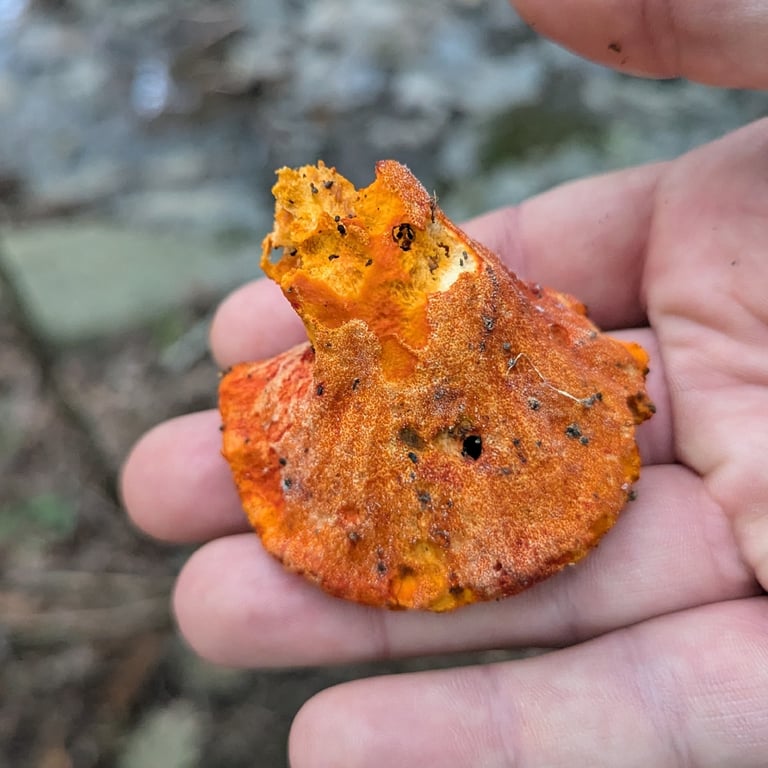
The most reliable identifying features of Dacrymyces chrysospermus are its gelatinous texture, bright orange color, and growth on dead conifer wood. The basidiocarps are highly variable in shape but are typically stoutly stalked, with a spoon- or cup-shaped, spore-bearing head. They frequently erupt from the wood in groups and coalesce into complex masses reaching up to 6 cm (2.4 inches) across.
Under the microscope, the species is distinguished from most other Dacrymyces by its comparatively large basidiospores, measuring 18 to 23 by 6.5 to 8 micrometers and divided by seven septa. This spore structure is the surest way to confirm identification when the jelly-like fruiting body alone is not conclusive.
Tremella mesenterica and Naematelia aurantia are macroscopically identical to D. chrysospermus, sharing the same bright orange, jelly-like appearance. They can be told apart by their growth on hardwood rather than conifers, and by differences visible under the microscope. Despite the resemblance, these lookalikes belong to an entirely different class of fungi, Tremellomycetes, rather than Dacrymycetes.
Dacryopinax spathularia and species of Femsjonia can also resemble this species and add further complication to identification by sight alone.
Distribution and Habitat
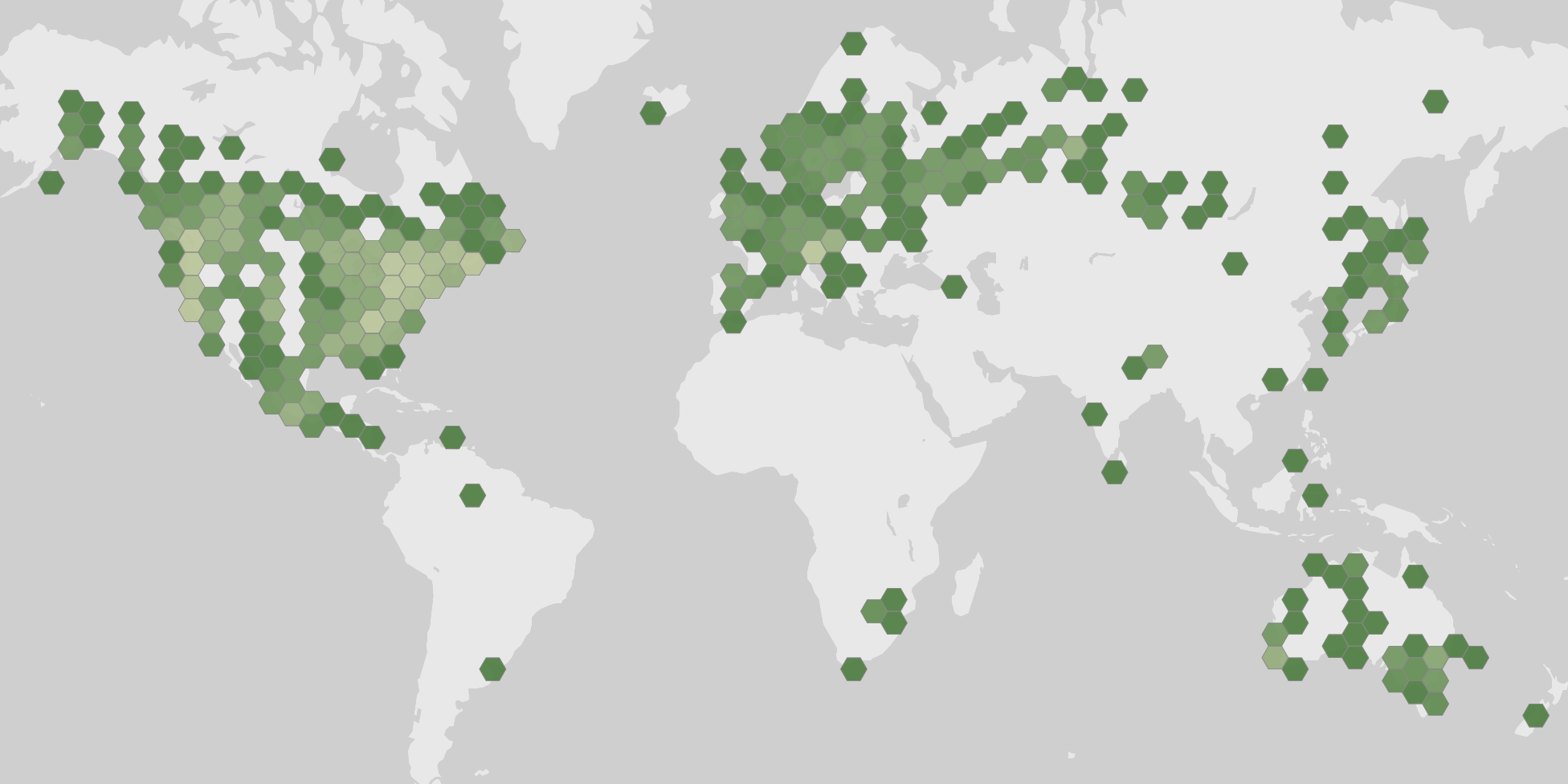
Dacrymyces chrysospermus was first described in New England, but it is now understood to occur worldwide on a variety of conifers. It is considered common across North America, and specimens have also been collected in South America, Europe, Asia, and Australia.
Monthly observation counts show a clear seasonal pattern, with numbers lowest in spring, around 510 to 722 sightings from March through May, and rising sharply through late summer and autumn to a peak of 2,289 in October. Counts remain elevated through November and December before dropping again in the new year. This pattern likely reflects when the fruiting bodies are most visible and actively recorded rather than a true measure of the fungus's population, since these figures are presence observations only, not a measure of abundance or a complete map of its native range.
Fun Facts
- In English this species is called orange witch's butter, echoing a wider folk tradition: in French it is tripe de sorcière ("witch's tripe") and in Dutch heksenboter ("witch's butter"), names shared with other unrelated jelly fungi like Tremella mesenterica and Exidia glandulosa.
- Its basidiospores are unusually large for the genus Dacrymyces, measuring 18 to 23 by 6.5 to 8 micrometers and divided by seven septa, a feature that helps separate it from most related species under the microscope.
- Despite looking nearly identical to Tremella mesenterica and Naematelia aurantia, this species belongs to a completely different class of fungi, Dacrymycetes rather than Tremellomycetes.
- Other jelly fungi, including Dacryopinax spathularia and species of Femsjonia, can also be mistaken for it at a glance.
Ecology
Habitat
- Forest