Hexarthra intermedia belongs to one of the oldest and least conspicuous animal lineages on Earth, the rotifers, a group of microscopic invertebrates that thrive in fresh water around the world.
Classified within the phylum Rotifera, class Eurotatoria, order Flosculariaceae and family Hexarthridae, this species was first described by Wiszniewski in 1929. Its conservation status has not been assessed, and little is documented about it beyond its taxonomic placement.
Despite its tiny size, Hexarthra intermedia is part of a group whose members play outsized roles in freshwater food webs, making even the least-studied species worth a closer look.
Distribution and Habitat
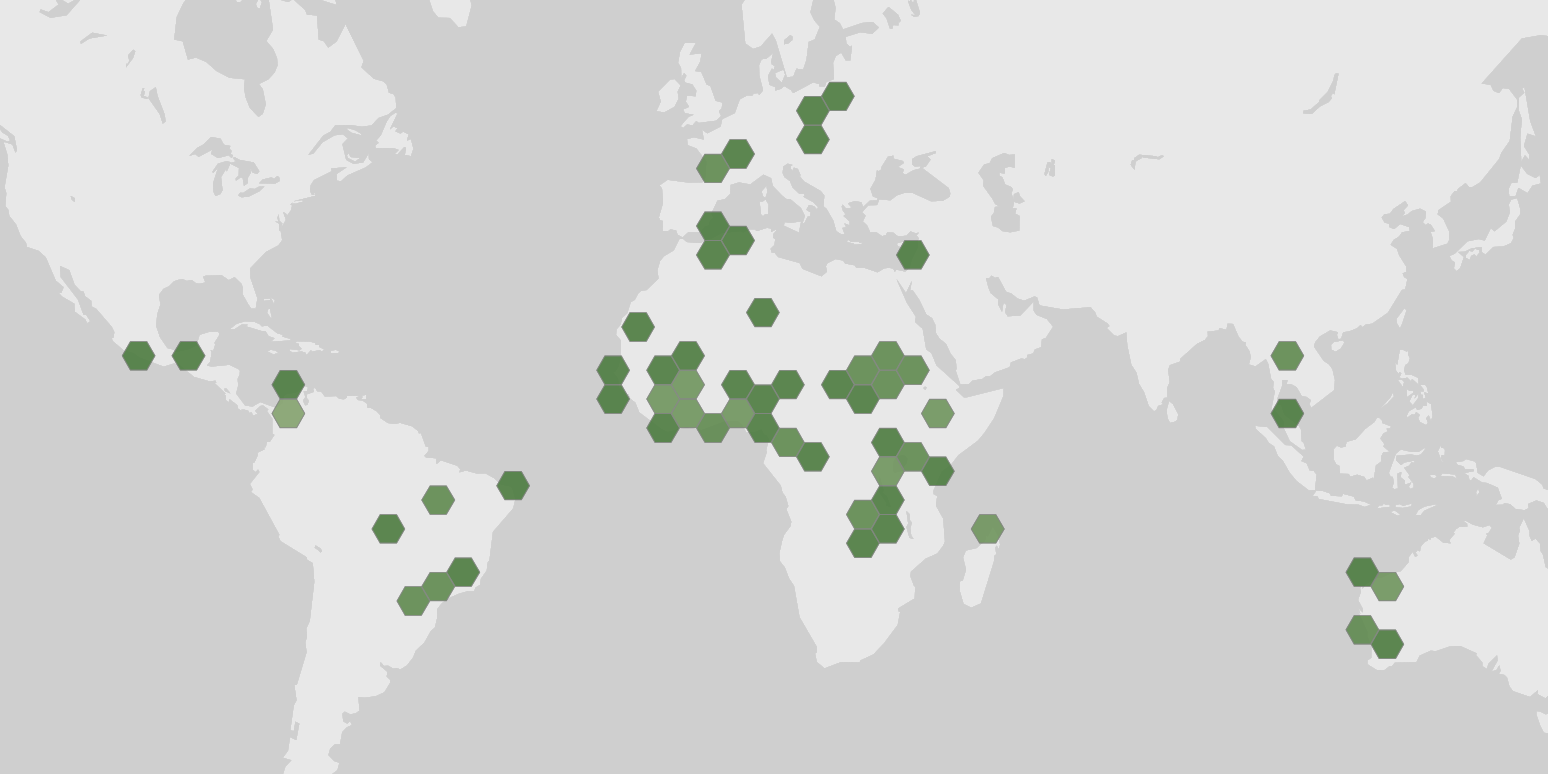
Records of Hexarthra intermedia come from presence observations rather than systematic range surveys, so they show where the species has been detected, not its full distribution or how common it is.
Monthly observation counts vary considerably across the year, with the highest tallies recorded in August (38) and lower but still notable numbers in May (26), November (30) and February (22). Very few observations were logged in January (3), April (4), July (1) and October (4).
This pattern points to several periods of heightened detectability rather than a single breeding or activity season, and it should be read with caution: gaps in observation effort, rather than the species' true presence or absence, likely explain much of the month-to-month variation.
No specific countries, water bodies or habitat types are documented for this species in the available records, so its precise geographic range and preferred freshwater habitats remain undescribed here.
Cultural Significance
No documented mythology, folklore, art, or human use is associated with Hexarthra intermedia. As a microscopic freshwater rotifer, it is known almost exclusively through scientific observation and taxonomic study rather than through cultural tradition.
Unlike large, visible creatures that have inspired legends across human history, this species lives entirely outside the scope of folklore, leaving its story to be told through ecological and taxonomic records alone.