Fossils of the genus Ochrolechia date back to the Paleogene period, about 34 million years ago, which makes it a lineage with a long history.
Ochrolechia parella is a crustose lichen, a fungus living in partnership with a green alga. It belongs to the family Ochrolechiaceae, which contains only this genus, and the genus holds about 40 species. These lichens form uneven, often thick, crust-like growths on a range of surfaces, and the genus includes both common and rare members.
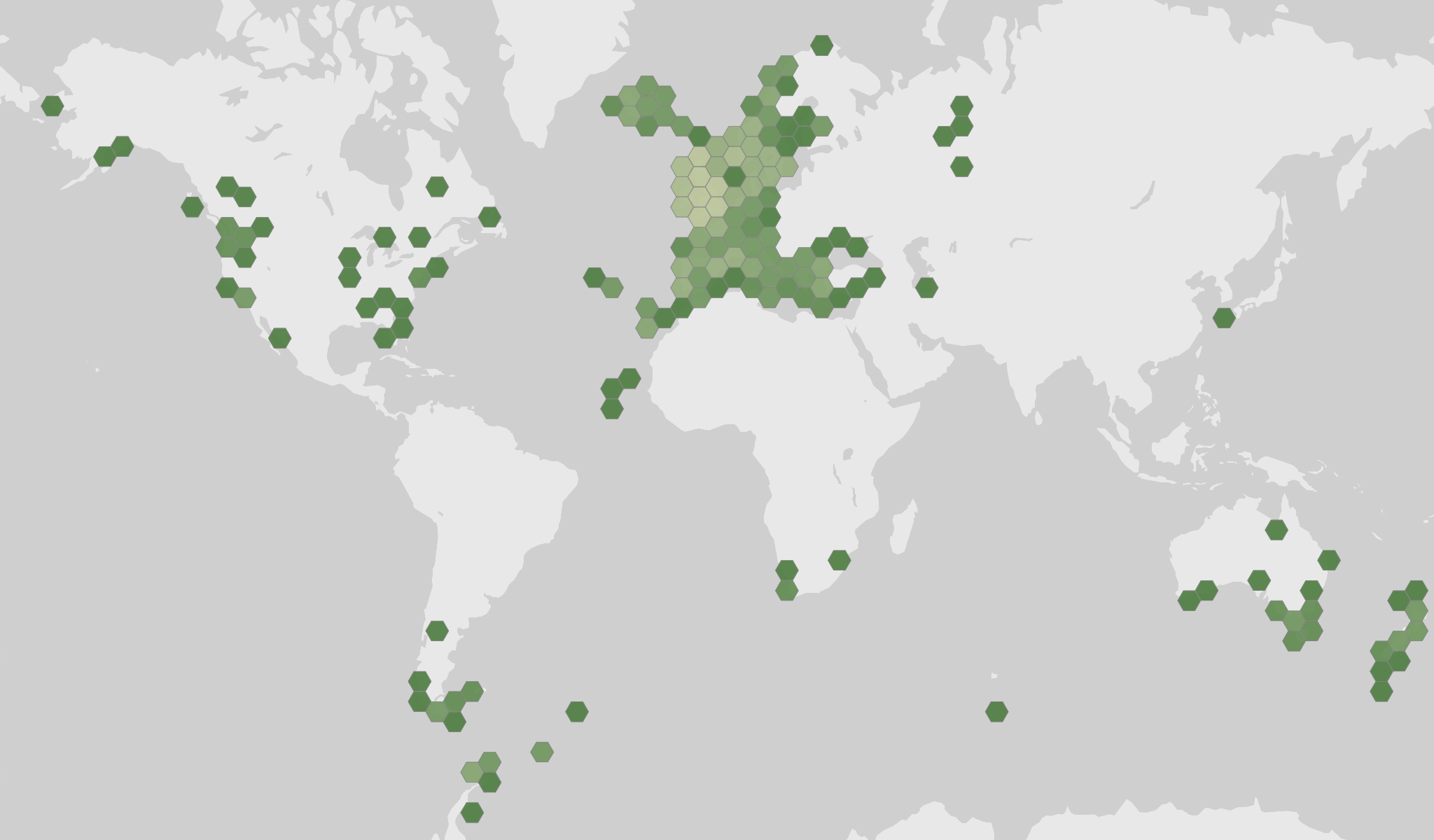
The genus is widely distributed and includes species in arctic and alpine regions. Its chemistry is also distinctive, with orcinol depsides, depsidones and xanthones that botanists use to tell species apart.
Fruiting Body and Identification
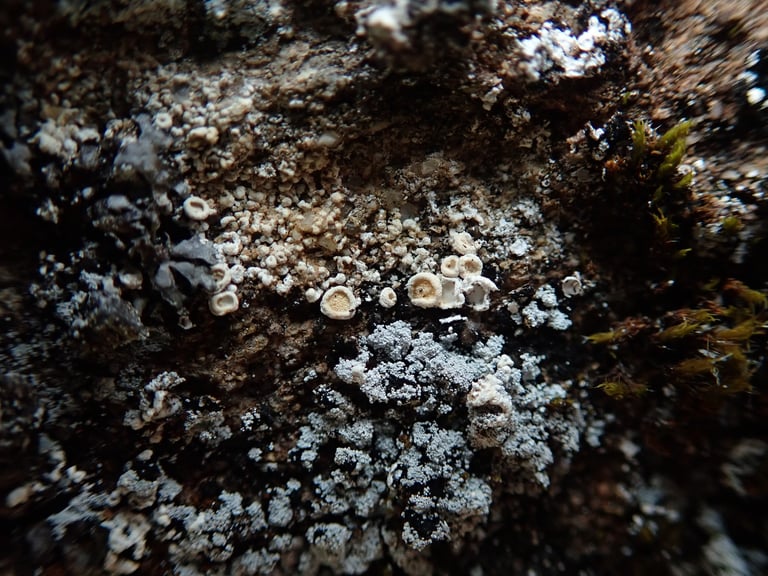
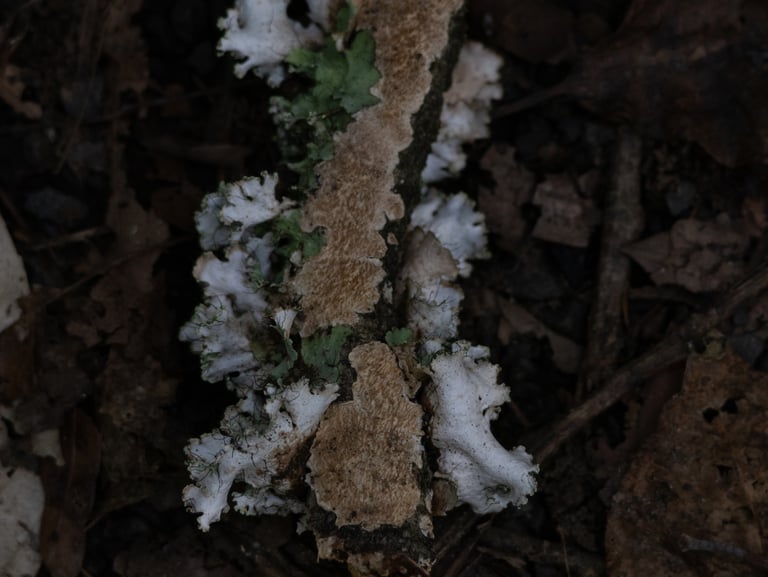
The body of Ochrolechia parella is a crust that ranges from white or pale grey to dark grey, sometimes with a greenish tint. Its surface can look smooth and continuous or slightly cracked, and in some cases it forms scattered, rounded warts. A grey prothallus, a preliminary growth, may show around the edges, though it is sometimes absent.
The reproductive discs, called apothecia, are flat or expanded and usually yellowish or brownish-pink. A fine white powdery coating called pruina often dusts the discs. Each disc sits within a rim of thallus tissue, and in some species a narrow true exciple is visible around the spore-producing layer.
Inside the apothecia, the spore layer is about 150 to 200 μm tall. Each ascus holds two to eight large, smooth, undivided ascospores, and its thick walls turn blue with iodine. The lichen also produces asexual spores in flask-shaped pycnidia sunk into the thallus. These spores are cylindrical to elongated and straight.
Chemical spot tests help confirm identity, because the species produces gyrophoric and lecanoric acids along with xanthones and fatty acids.
Distribution and Habitat
Ochrolechia parella grows on rock surfaces that range from acidic to slightly basic. It favors humid habitats, often near the coast, where moisture stays high.
Sightings of the species peak in midsummer, with the highest number in August. Counts are lower in winter, with the fewest in December and January.
The genus as a whole is widely distributed, and some of its members grow in arctic and alpine settings, where conditions are harsh.
Photos
Photographs from via iNaturalist, licensed under CC0 1.0., by Karen Offereins via iNaturalist, licensed under CC BY 4.0., by Ade. via iNaturalist, licensed under CC BY 4.0., by ikelman via iNaturalist, licensed under CC BY 4.0., by Yves Bas via iNaturalist, licensed under CC BY 4.0., by jhatfield via iNaturalist, licensed under CC BY 4.0., by Patrick Jackson via iNaturalist, licensed under CC BY 4.0., by Katharine Khamhaengwong via iNaturalist, licensed under CC BY 4.0., and by Frank Ashwood via iNaturalist, licensed under CC BY 4.0., credited on each photo.
Ecology and classification
Habitat
Classification
- Phylum
- Ascomycota
- Class
- Lecanoromycetes
- Order
- Pertusariales
- Family
- Ochrolechiaceae
- Genus
- Ochrolechia
- Species
- Ochrolechia parella
Sources
- GBIF Species names and classification
- iNaturalist Photos
- Wikidata Common names and conservation status
- Wikipedia Summary extract
- Encyclopedia of Life Habitat, diet and behavior traits