A crust-forming rock lichen was harvested so heavily for its red dye that its populations fell sharply. Ochrolechia tartarea is a saxicolous (rock-dwelling) crustose lichen in the family Ochrolechiaceae. Carl Linnaeus described it in 1753 as Lichen tartareus.
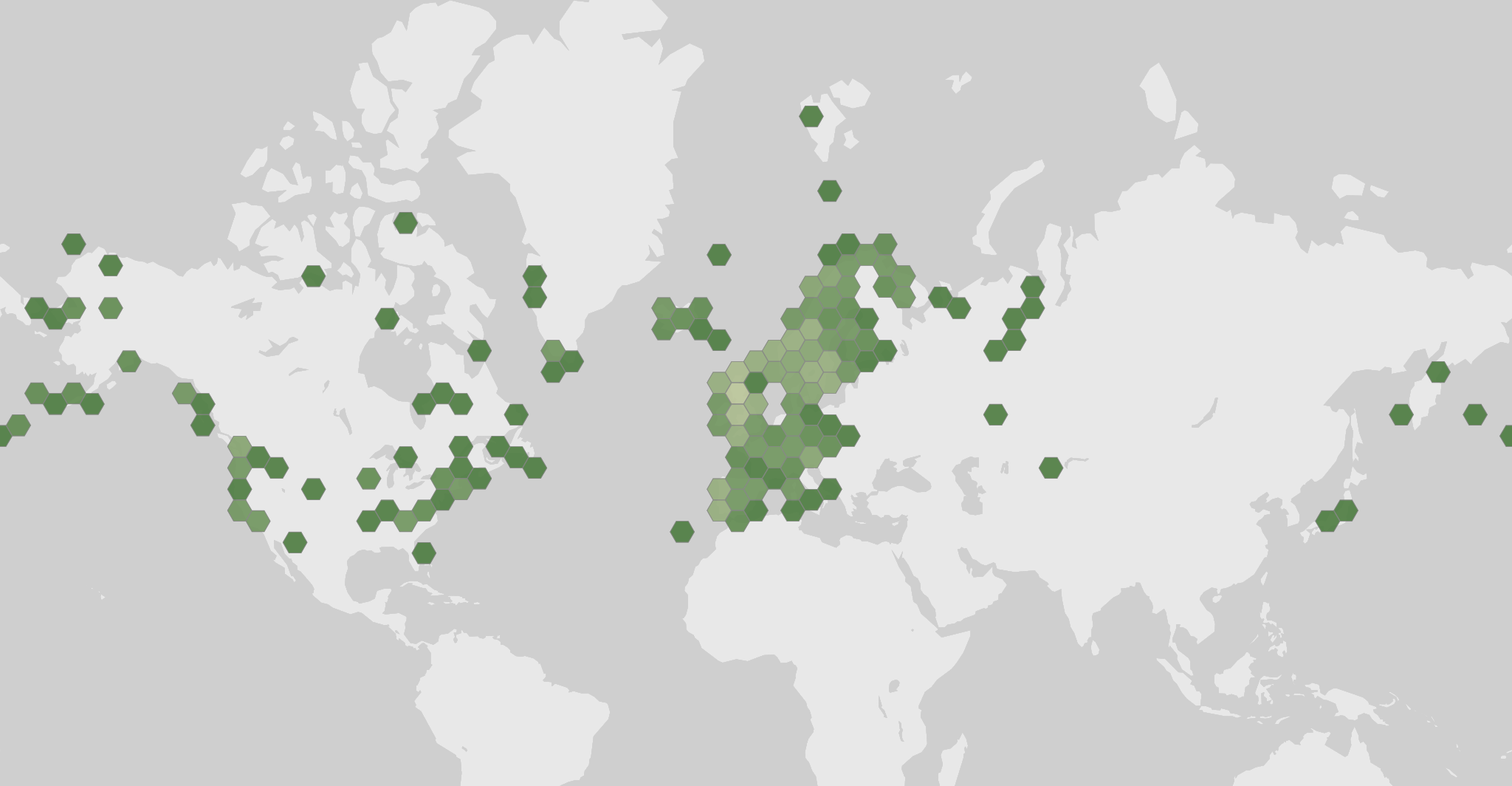
It forms thick, greyish crusts with a rough, crumbly surface and irregular warts. It grows mostly on acidic rocks in moist uplands across Europe and parts of Asia. The lichen is widespread in the oceanic and mountainous regions of Britain and Ireland, runs through the Alps, and has been found as far east as South Korea.
It is rare in lowland areas and is often confused with similar species, so careful identification matters.
Fruiting Body and Identification
The most reliable feature is the thallus, the lichen body. It can grow up to 3 mm thick or more, which is unusually thick for a crustose lichen. Its colour ranges from pale to dark grey, and its surface is rough and crumbly, marked by numerous irregular warts that form a corrugated crust. Some individuals show a paler zoned margin and a pale prothallus, the initial growth stage of the lichen.
The reproductive structures, called apothecia, are usually frequent. They start off immersed and closed, then become rounded or irregular. They sit directly on the thallus without a stalk, and they may be scattered or densely packed. The rim around each apothecium is thick and wavy. The disc is pale brown to dull orange-pink, reaches up to 5 mm across and sometimes 8 mm, and is concave to flat. Its surface is often roughened and is either not pruinose or only translucently so.
The ascospores are broadly ellipsoidal, measuring 40 to 70 micrometres long and 20 to 40 micrometres wide. Chemical spot tests help confirm the species. The thallus turns orange-red with C, pale yellow with K, and red with KC. The disc turns red with C and KC. These reactions come from gyrophoric acid, along with trace amounts of lecanoric acid.
In Australia, Ochrolechia insularis can look similar, since both form warty or knob-like surfaces on rock. O. insularis has a smooth, glossy upper surface and a white thallus, while O. tartarea is granular to powdery and ranges from pale to dark grey. O. tartarea has a pale border around it, which O. insularis lacks. The inner tissue of O. insularis turns red with bleach, while O. tartarea shows no reaction.
Distribution and Habitat
Ochrolechia tartarea favours wind-exposed uplands with high rainfall. In Britain and Ireland it forms thick crusts on boulders and other siliceous rock. It can also overgrow moss-lichen heaths and is only occasional on leached, acid bark. It is widespread across the west and north, but becomes rare or absent in central and south-east England.
In Central Europe it grows on non-calcareous silicate rocks, often with a thin humus cover. It prefers light but frequently shaded sites that are repeatedly and intensely wetted, such as the relatively sheltered faces of exposed crags. It tolerates only moderate light and is often found in the plant community Parmelietum omphalodis. Within Germany it occurs chiefly in upland and alpine areas, such as the Harz and the Alps, with scattered occurrences elsewhere.
In Asia it is known from South Korea. Earlier reports from China have been reassigned to O. trochophora, and historical Antarctic specimens have turned out to be a mixture of O. antarctica and O. frigida. Lowland records on the continent are often misidentifications.
Sightings are most common in July, and the lichen is least seen in winter.
Conservation and Threats
Historically, Ochrolechia tartarea was an important source of cudbear, a red dye patented in Scotland in 1758. Demand led to heavy harvesting and depleted populations in Scotland during the Industrial Revolution. When local stocks ran low, lichen was imported from Norway and other parts of northern Europe to meet demand.
The lichen was once abundant across Britain and southwestern Norway, but its range has shrunk sharply. It now survives only in scattered populations in these regions. The steepest declines occurred near the old dye production centres, where it has largely disappeared. A similar pattern of rarity has appeared in Maine and the Maritime provinces of Canada, where it persists only on exposed subalpine rocky surfaces.
A 2019 study used HPLC–MS/MS analysis to look for chemical markers that could tell dyes made from O. tartarea apart from dyes made from Lasallia pustulata and Roccella tinctoria.
Photos
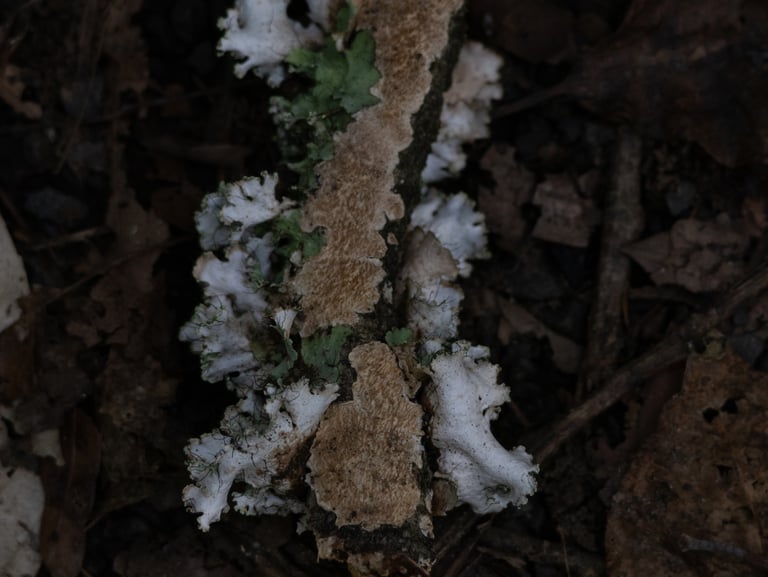
Photographs from via iNaturalist, licensed under CC0 1.0., by Barry Stewart via iNaturalist, licensed under CC BY 4.0., by Jamie O'Neill via iNaturalist, licensed under CC BY 4.0., by Ian Dow via iNaturalist, licensed under CC BY 4.0., and by Heather Morrison via iNaturalist, licensed under CC BY 4.0., credited on each photo.
Ecology and classification
Habitat
Classification
- Phylum
- Ascomycota
- Class
- Lecanoromycetes
- Order
- Pertusariales
- Family
- Ochrolechiaceae
- Genus
- Ochrolechia
- Species
- Ochrolechia tartarea
Sources
- GBIF Species names and classification
- iNaturalist Photos
- Wikidata Common names and conservation status
- Wikipedia Summary extract