Onnia tomentosa, known as the woolly velvet polypore, is a plant pathogen that causes root rot especially in spruce trees, making it a significant presence in the health of conifer forests rather than just a forest curiosity.
It belongs to the family Hymenochaetaceae within the phylum Basidiomycota, and is classed among the Agaricomycetes. It grows as a bracket fungus at the base of conifers, most often in coniferous forests at higher elevations.
Its dual identity as both a distinctive woodland fungus and a serious forest pathogen makes it worth a closer look, both for identification and for understanding its impact on the trees it infects.
Fruiting Body and Identification
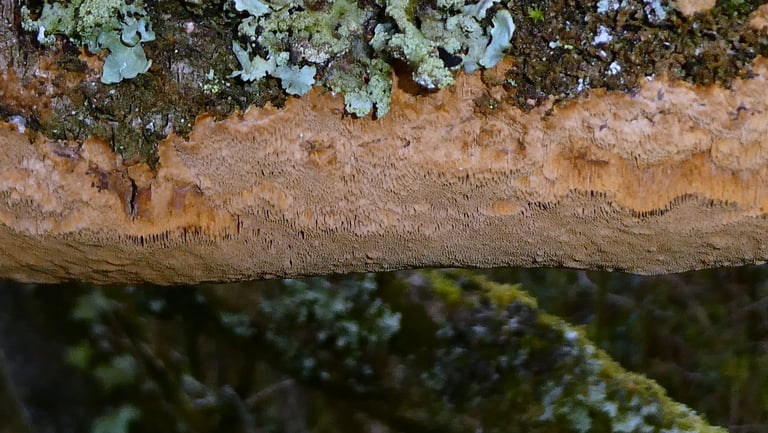
The cap is the most useful identifying feature: flat when young, with a blunt, rounded, yellowish-white margin, and later developing a slightly depressed center with a wavy, contoured rim that becomes sharp-edged with age. It grows up to 10 cm across and is covered in felt-like fuzz that shifts in color from grey in youth to rusty brown as it matures.
The stem, when present, is short, thick, and dark brown to near-black, though the caps may also grow directly from the base of the tree without a distinct stalk. The flesh beneath the cap surface is ochre brown, softer above and hard and fibrous below.
Distribution and Habitat
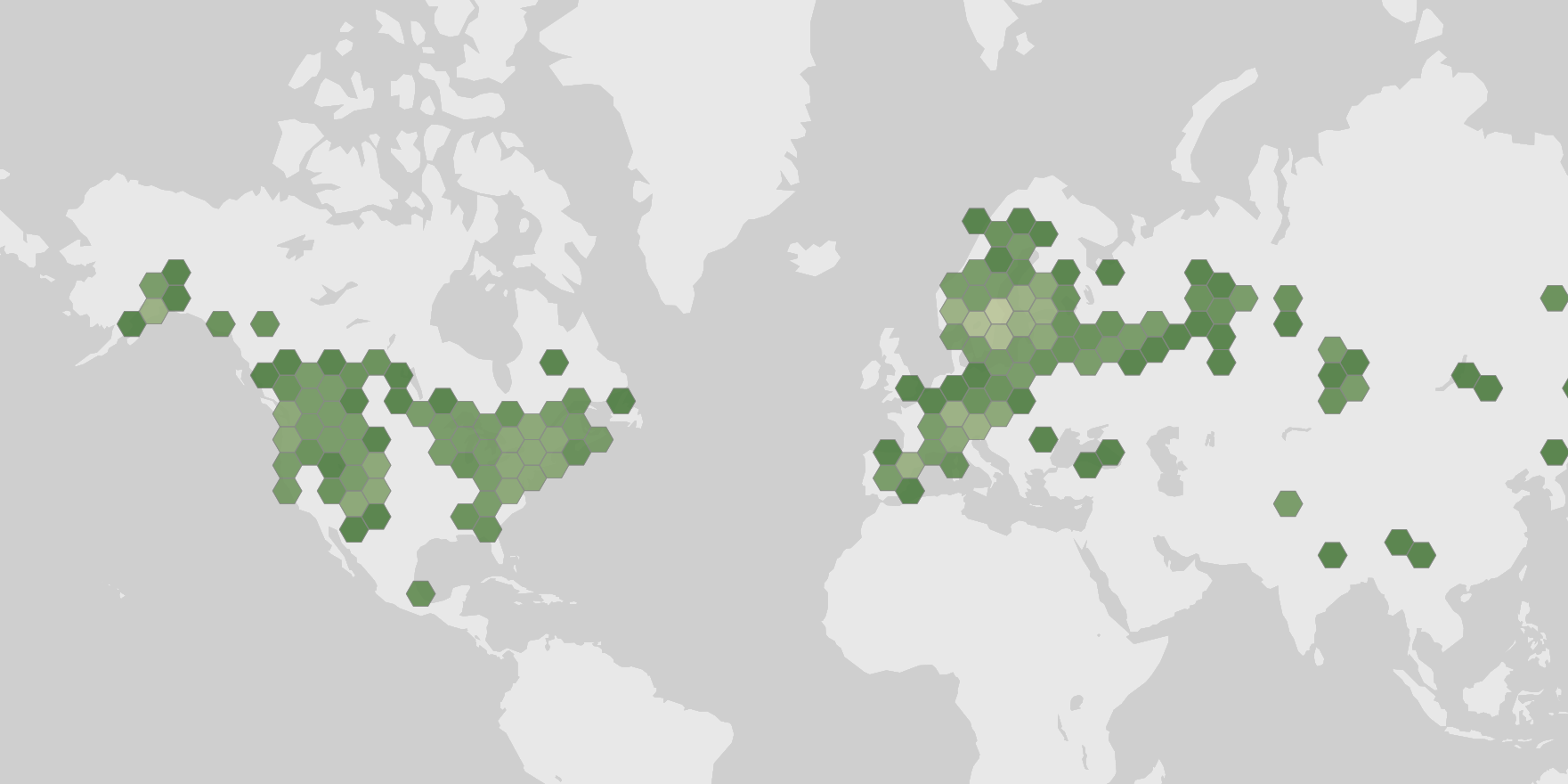
Onnia tomentosa is frequently found in coniferous forests at higher altitudes, typically growing in large groups, and is comparatively rare at lower elevations. As a plant pathogen, it causes tomentosus root rot primarily in spruce, with white spruce and black spruce identified as the most susceptible species in inoculation testing carried out in Saskatchewan.
In Canada, the fungus attacks most commercially important conifers, and its impact has been documented in white spruce plantations such as those at Grand-Mère, Quebec, where it contributed to high losses. In white spruce plantations generally, mortality in clusters of two or three trees tends to occur around age 30 to 35, though younger trees, occasionally as young as 10 years old, can also be killed.
A six-year study of seventeen white spruce plantations aged 43 to 58 years in Ontario recorded average annual mortality of 0.7%, with accumulated mortality of dominant and codominant trees reaching 10.3% across all plantations. At a plantation in Searchmont, Ontario, tomentosus root rot was found in more than half the stumps after clearcutting, though decay and stain had not yet reached stump height.
Observation records show a strong seasonal peak in late summer into early autumn, suggesting this is when fruiting bodies are most often noticed and recorded, though these figures reflect presence observations rather than actual abundance or the fungus's complete range.
Fun Facts
- Onnia tomentosa produces a white pocket rot in the roots and butts of the conifers it infects, a distinctive pattern of decay tied to its common name, tomentosus root rot.
- It is among the pathogens attacking most commercially important conifers grown in Canada, including white spruce.
Photos
Photographs from via iNaturalist, licensed under CC0 1.0., by Annie Bélair via iNaturalist, licensed under CC BY 4.0., by maureen_c-m via iNaturalist, licensed under CC BY 4.0., by Sawyer Baran via iNaturalist, licensed under CC BY 4.0., by Lauren Markewicz via iNaturalist, licensed under CC BY 4.0., and by Marc-Olivier Beausoleil via iNaturalist, licensed under CC BY 4.0., credited on each photo.
Ecology and classification
Classification
- Phylum
- Basidiomycota
- Class
- Agaricomycetes
- Order
- Hymenochaetales
- Family
- Hymenochaetaceae
- Genus
- Onnia
- Species
- Onnia tomentosa
Sources
- GBIF Species names and classification
- iNaturalist Photos
- Wikidata Common names and conservation status
- Wikipedia Summary extract