Few wildflowers have traveled as far from their birthplace as the corn poppy. Native to north Africa and temperate Eurasia, Papaver rhoeas has since been introduced into temperate regions on every other continent except Antarctica, making it one of the most widely encountered wild poppies on Earth.
It is an annual herbaceous flowering plant in the poppy family, Papaveraceae, part of the order Ranunculales. Beyond its botanical identity, the sheer number of common names attached to it across English-speaking countries alone suggests a plant that people have long noticed, named, and remembered.
Identification and Appearance
The clearest field mark is the flower itself: four vivid red petals, slightly overlapping, most often carrying a black spot at the base of each one. The flowers are large and showy, spanning 5 to 10 centimeters across, and sit atop stems that can reach up to 70 centimeters in height. A single plant can produce as many as 400 flowers in a warm season, though each individual bloom lasts only one day.
The flower stem is covered in coarse hairs held at right angles to its surface. This is a key distinguishing feature from the similar Papaver dubium, whose hairs lie flatter, more closely appressed against the stem. The seed capsules are hairless and egg-shaped (obovoid), less than twice as tall as they are wide, with a stigma at least as wide as the capsule itself. Like other poppies, the plant releases a white to yellowish latex when its tissues are broken.
The species also varies in color thanks to selective breeding: cultivated forms exist in yellow, orange, pink, and white, in addition to the classic red. The Shirley poppy is the best-known of these cultivars, and a pale, speckled variety derived from it is also grown. A near-black hybrid called 'Evelina,' bred in Italy in the late 1990s by crossing with P. dubium, has been produced but does not appear to be commercially available.
Chemically, Papaver rhoeas contains the alkaloid rhoeadine, a mild sedative, along with rhoeadic acid, papaveric acid, and rhoeagenine, distinguishing it internally from its narcotic relative Papaver somniferum even as the two are often confused.
Distribution and Habitat
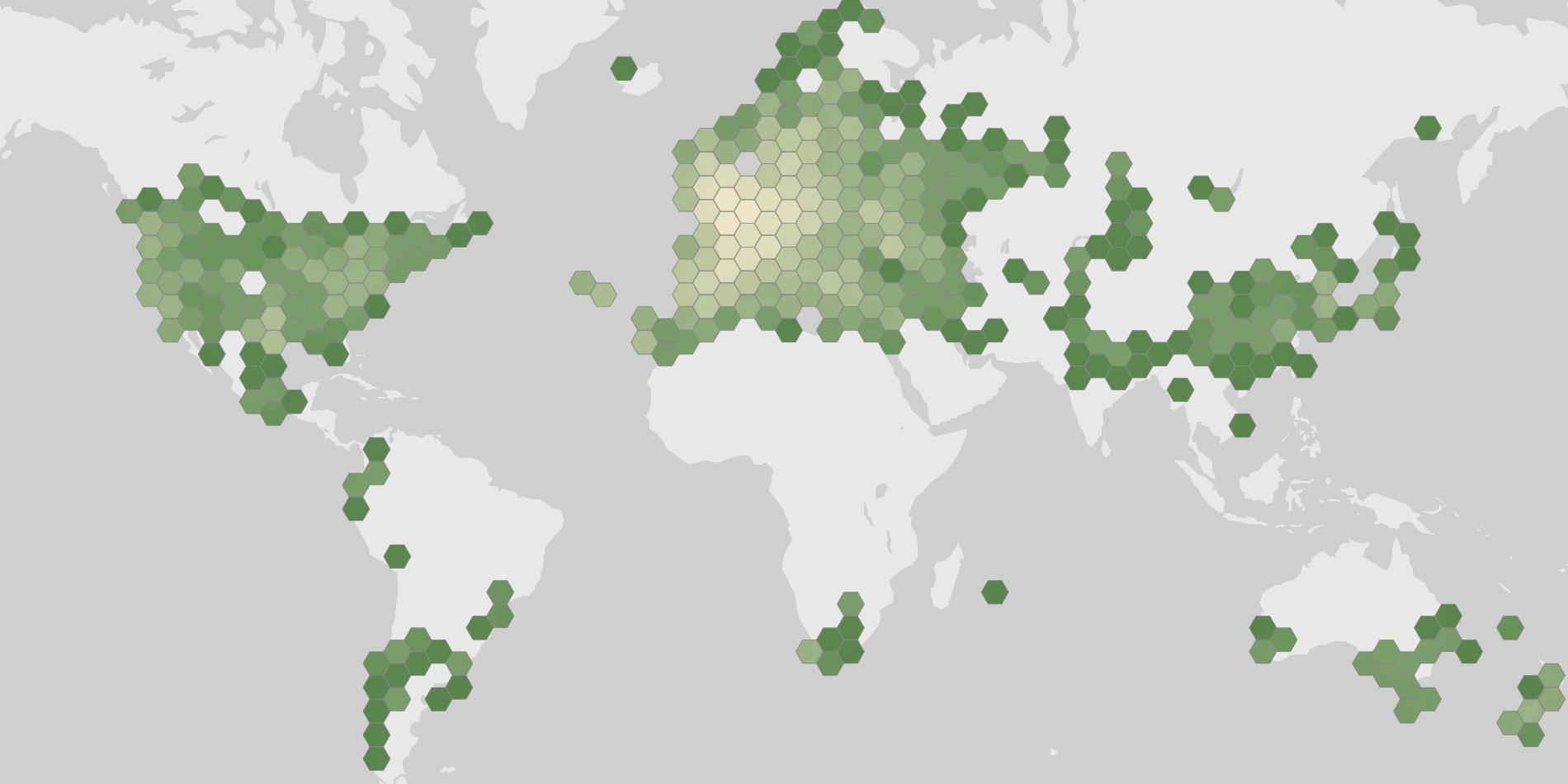
Papaver rhoeas occurs naturally across a broad native range spanning north Africa, the Caucasus, western Asia, and most of Europe. In Africa it is found in Algeria, Egypt, Libya, Morocco, Tunisia, and the Madeira and Canary Islands. Its range extends through the Caucasus (Armenia, Azerbaijan, Georgia), across western Asia from Afghanistan and Cyprus to Iran, Iraq, Syria, and Turkey, and into Pakistan and India. Across Europe it grows from Ireland and the United Kingdom eastward through France, Germany, Poland, and Ukraine, and south into Italy, Greece, and the Balkans.
It favors disturbed and open ground: fields, pastures, stream banks, railroads, and roadsides, typically at elevations between 0 and 2,000 meters. It is hardy from USDA Zone 8 to Zone 10, tolerating temperatures down to about -12°C (10°F).
Beyond this native range, the species has been introduced to temperate areas on every other continent except Antarctica, taking advantage of the same kinds of disturbed, cultivated, or roadside habitats it favors at home.
Monthly observation counts show a sharp seasonal pattern, rising from a low in winter to a pronounced peak in June, before tapering off again by autumn. Since these figures represent presence observations rather than a measure of abundance or full range, the pattern most likely reflects the timing of the plant's late spring to summer flowering season rather than a true population count.
Uses and Human Relationships
The corn poppy's best-known modern role is as a symbol of remembrance. The tradition traces to Lieutenant Colonel John McCrae's 1915 poem "In Flanders Fields," written after the flower's profuse growth was observed on the disturbed, war-torn ground of the Western Front during the First World War. Since the 20th century, wearing a poppy around Remembrance Day has become an established custom in English-speaking countries, and the flower is also used at Anzac Day observances in Australia and New Zealand.
The plant has practical and folk uses as well. Its black seeds are edible, eaten on their own or baked into bread, and in Eastern European countries they are boiled with water or milk and ground with honey or sugar into a sweet paste used in pastries. The petals yield a red dye used in some medicines and wines and are sometimes used to color potpourri. In traditional folk medicine, the plant was used for gout and general aches and pains, and a syrup made from the petals was given to children to help them sleep.
Symbolically, the poppy carries different meanings across cultures. In Greek mythology, poppies were said to flower along the banks of a river from which the dead drank to forget their former lives. In China, it is known as yumeiren after Consort Yu, who according to folklore inspired poppies to grow where she died; a 2010 diplomatic episode arose when Chinese officials mistook the British remembrance poppy for a symbol of the opium poppy and the Opium Wars. In Persian literature the red poppy is considered a flower of love, while in Urdu poetry, as Gul-e-Lalah, it is often a symbol of martyrdom. The flower also appears on national currency and stamps, including Romanian banknotes and Canadian ten- and twenty-dollar notes, and was voted the county flower of Essex and Norfolk in 2002.
Fun Facts
- In ancient Greek and Egyptian tradition, poppies were linked to sleep and death, drawing on the narcotic reputation of the wider poppy genus, even though Papaver rhoeas itself contains only mild sedative compounds rather than strong narcotics.
- The poem that made the poppy a global symbol of remembrance, "In Flanders Fields," was written in 1915, years before the organized remembrance traditions it later inspired took shape.
Photos
Photographs from via iNaturalist, licensed under CC0 1.0., by William Keenan via iNaturalist, licensed under CC BY 4.0., by Pyry Liedes via iNaturalist, licensed under CC BY 4.0., by biogeek via iNaturalist, licensed under CC BY 4.0., and by jamie-aa via iNaturalist, licensed under CC BY 4.0., credited on each photo.
Ecology and classification
Growth habit
- Herb
Classification
- Phylum
- Tracheophyta
- Class
- Magnoliopsida
- Order
- Ranunculales
- Family
- Papaveraceae
- Genus
- Papaver
- Species
- Papaver rhoeas
Sources
- GBIF Species names and classification
- iNaturalist Photos
- Wikidata Common names and conservation status
- Wikipedia Summary extract
- Encyclopedia of Life Habitat, diet and behavior traits