Heath cudweed (Omalotheca sylvatica) is found across the temperate Northern Hemisphere, in both North America and Eurasia. This member of the daisy family, Asteraceae, is a perennial herb. It is known by several common names, including wood cudweed, golden motherwort, chafeweed, owl's crown and woodland arctic cudweed.
Carl Linnaeus first described the species in 1753 under the name Gnaphalium sylvaticum. Its older synonym still appears in some records, which is why the plant can be found under two names in older floras.
Identification and Appearance
The easiest way to recognize heath cudweed is its leaves: they are woolly hairy on the underside but have no hair on the upper surface. Each leaf is lanceolate, pointed and 2 to 8 cm long, with a single vein.
The plant grows 8 to 60 cm tall. Its upper leaves become progressively shorter and narrower as they climb the stem, so the top of the plant looks more slender than the base.
The flower heads are about 6 mm long. Their bracts have a green centre and chaffy brown edges, and the florets are pale brown. Together these give the flower heads a papery, dry appearance.
The achenes are hairy and crowned with reddish pappus hairs, which are visible once the flowers have finished.
Distribution and Habitat
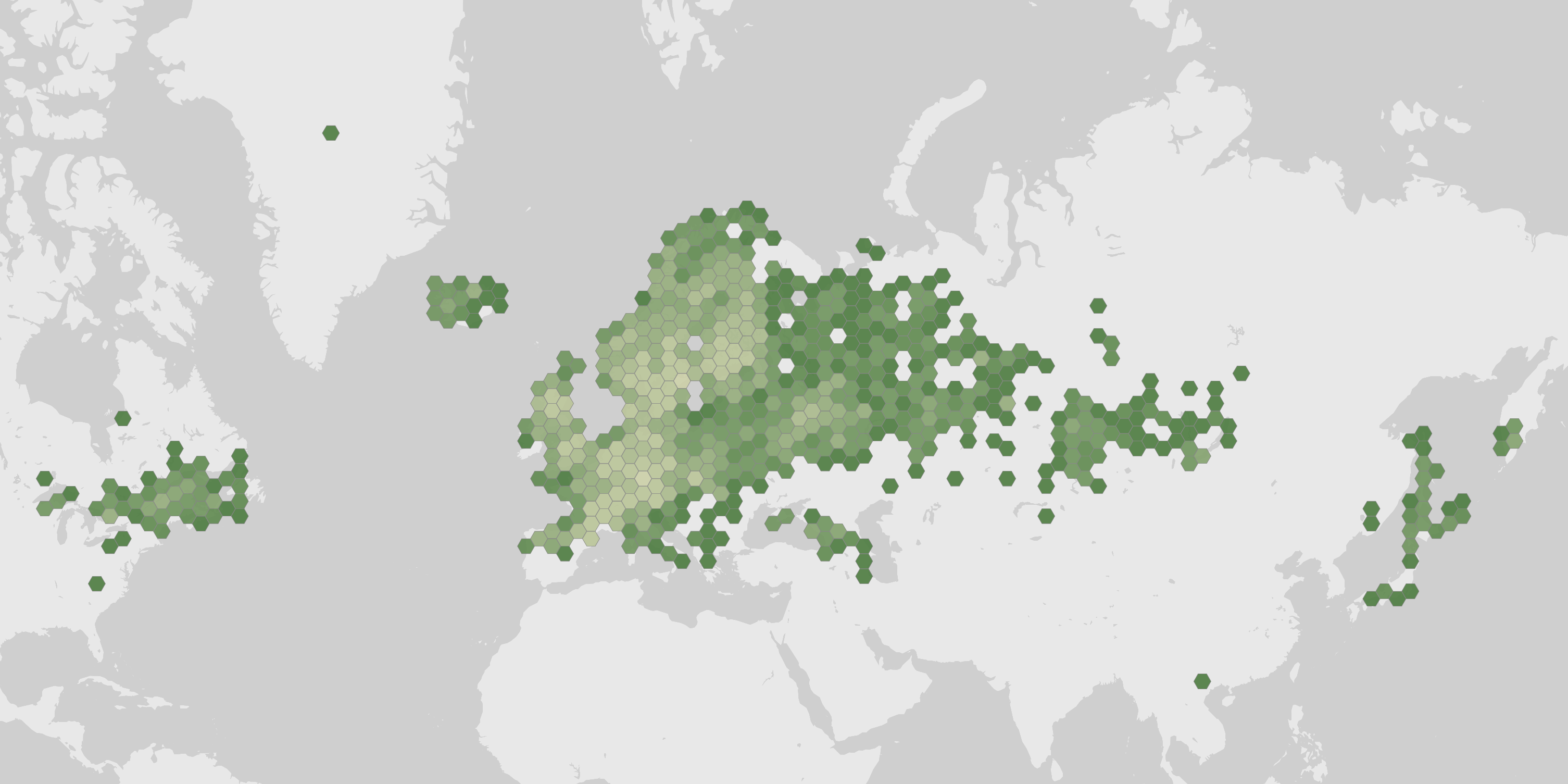
Heath cudweed occurs widely across the temperate Northern Hemisphere. Its native range extends from Western and Central Europe, including Great Britain, France, Germany, Italy, Spain and Scandinavia, through European Russia and the Caucasus, into Central Asia and Siberia. The range reaches as far east as Kamchatka and Sakhalin.
In North America it grows across southern Canada and the northeastern United States. Records include British Columbia, Ontario, Quebec, Labrador, New York, Michigan, Maine and Vermont.
Observation records peak in July and August, with a smaller number in June and September. The species has also been introduced to Java, in Indonesia.
Growth and Form
Heath cudweed is a herbaceous perennial that grows from a base with short runners. It is a forb, meaning it has soft, non-woody stems. The plant reaches 8 to 60 cm tall, depending on the conditions where it grows.
Because it returns each year from its perennial base, the plant persists in the same place across seasons. Its leaves become shorter and narrower toward the top of the stem, giving the plant a tapering outline.
Photos
Photographs from via iNaturalist, licensed under CC0 1.0., by aga_l_ via iNaturalist, licensed under CC BY 4.0., by Maksymilian Bobko via iNaturalist, licensed under CC BY 4.0., by Tim Aßmus via iNaturalist, licensed under CC BY 4.0., by Ondřej Křivan via iNaturalist, licensed under CC BY 4.0., by Мирослав Соболев via iNaturalist, licensed under CC BY 4.0., by Mary E. Macaulay via iNaturalist, licensed under CC BY 4.0., by Oleg Kosterin via iNaturalist, licensed under CC BY 4.0., and by Andreas Schneider via iNaturalist, licensed under CC BY 4.0., credited on each photo.
Ecology and classification
Growth habit
- Herb
Classification
- Phylum
- Tracheophyta
- Class
- Magnoliopsida
- Order
- Asterales
- Family
- Asteraceae
- Genus
- Omalotheca
- Species
- Omalotheca sylvatica
Sources
- GBIF Species names and classification
- iNaturalist Photos
- Wikidata Common names and conservation status
- Wikipedia Summary extract
- Plants of the World Online Native range, life form and climate (WCVP)
- USDA Plants US plants: growth habit and growing conditions