Few wildflowers stage a more theatrical exit than the common dandelion. Its bright yellow flower head withers into a perfect sphere of silver-tufted fruit, popularly called a "clock" or "blowball," built to scatter on the wind.
Taraxacum officinale is a herbaceous perennial in the daisy family, Asteraceae, growing from a single taproot in lawns, meadows, and disturbed ground across temperate regions worldwide.
Its familiarity makes it easy to overlook, but the dandelion's biology, from apomictic seed production to its role as an early-season food source for bees, rewards a closer look.
Identification and Appearance
The single most useful field mark is the flower head itself: one solitary, bractless yellow bloom held atop a hollow, leafless stem, with no other flowers branching from it. All the visible "petals" are actually ligulate, bisexual florets, and a single head can contain 40 to more than 100 of them.
Flowering stems typically stand 5 to 40 centimeters tall, occasionally reaching 70 cm, and can be upright or lax with a purplish tint. They rise from a basal rosette of leaves 5–45 cm long and 1–10 cm wide, oblanceolate to obovate in shape, with margins that range from shallowly lobed to deeply cut and toothed. All parts of the plant ooze a milky latex when broken.
Beneath each flower head sits a set of 12 to 18 reflexed, sometimes glaucous bracts (the calyculus), and a green to dark green or brownish involucre 14–25 mm wide, often with dark grey or purplish tips. After flowering, the head produces olive-green to straw-colored cypselae 2–3 mm long, each ribbed and tipped with a slender beak that connects to a white to silver-white pappus about 6 mm wide, the
Distribution and Habitat
placeholder
Ecology and Relationships
The common dandelion feeds far more than the eye suggests: its foliage nourishes the caterpillars of several moths, including the tortrix moth Celypha rufana, while its early-blooming flowers supply bees with pollen at a time when few other plants are flowering. Although dandelion pollen is nutritionally poor for honey bees, they still gather it readily, and in one study the plant ranked as the fourth most important pollen source in its range, behind only willow, meadowsweet, and blackberry. Foraging on dandelions has not been shown to reduce bee activity on nearby fruit crops, so the plant appears to complement rather than compete with cultivated pollination.
Reproduction by seed is prolific. A single flower head produces 54 to 172 seeds, a single plant can generate more than 5,000 seeds a year, and a dense stand may release over 97 million seeds per hectare annually. Wind can carry these seeds several hundred meters from the parent plant, and they remain viable in the soil seed bank for years — one study recorded germination after nine years of dormancy. Seeds germinate without a cold period but must sit within the top 2.5 centimeters of soil, and the plant can also resprout from fragments of its taproot, making it a persistent colonizer of disturbed ground.
Taraxacum officinale also acts as a rough indicator of soil chemistry, tending to favor soils low in calcium but rich in potassium. Rising atmospheric carbon dioxide appears to favor it further: elevated CO2 levels increase its biomass and boost viable seed output, a trend expected to make the species more competitive and widespread over time. In bloom it is unmistakable, but its basal rosette of leaves can be confused with other plants, such as Chondrilla juncea, before flowering begins.
Uses and Human Relationships
The plant's scientific name reflects its long history of practical use: Taraxacum likely derives from the Arabic tarakhshagog, meaning bitter herb, while officinale signals its medicinal, herbal, or culinary applications. Nearly every part of the dandelion has been put to use. Young leaves and unopened buds are eaten raw in salads, closest in character to mustard greens, while older leaves are cooked; the greens are high in vitamins A and C along with iron, phosphorus, and potassium. The flowers are fermented into dandelion wine, made into flower jam, or boiled with lemon into a honey substitute in parts of Poland and Silesia, and the roots can be baked, ground, and brewed as a caffeine-free coffee substitute. In Belgium the flower flavors a saison ale called Pissenlit, and in the United Kingdom, dandelion and burdock has long been a popular soft drink.
Beyond the kitchen, dandelion leaves have served as a diuretic in traditional Chinese medicine for roughly 2,000 years, a use echoed in other regions and reflected in the French name pissenlit. A 2009 study described the diuretic effect as promising, though it called for further research into the plant's efficacy. Native Americans used the plant as both food and medicine, and the flowers yield a yellow dye, while the latex from the stem has served as a simple glue.
Because dandelions often reproduce asexually and produce genetically identical offspring, they are also useful subjects in scientific research where minimizing genetic variation matters. Culturally, the plant appears in folklore worldwide, including a Native American tale linking its white seed heads to a golden-haired girl pursued too late by the South Wind, and in the tradition of blowing on a seed head to divine one's fate. Scottish dialect names such as witch gowan, doon-head clock, and bumming pipe (referring to the humming of bees and the plant's hollow stem) further reflect its deep folk presence.
Conservation and Threats
The IUCN assessed Taraxacum officinale as Least Concern in 2013, citing a large and stable population, and NatureServe similarly rated it Globally Secure (G5) in 2016. No significant threats to the species are documented; if anything, its ecological flexibility and prolific seed production point toward continued abundance rather than decline. In many regions the plant is regarded not as a species needing protection but as a noxious weed, causing measurable economic damage as an agricultural infestation and a persistent nuisance in residential lawns.
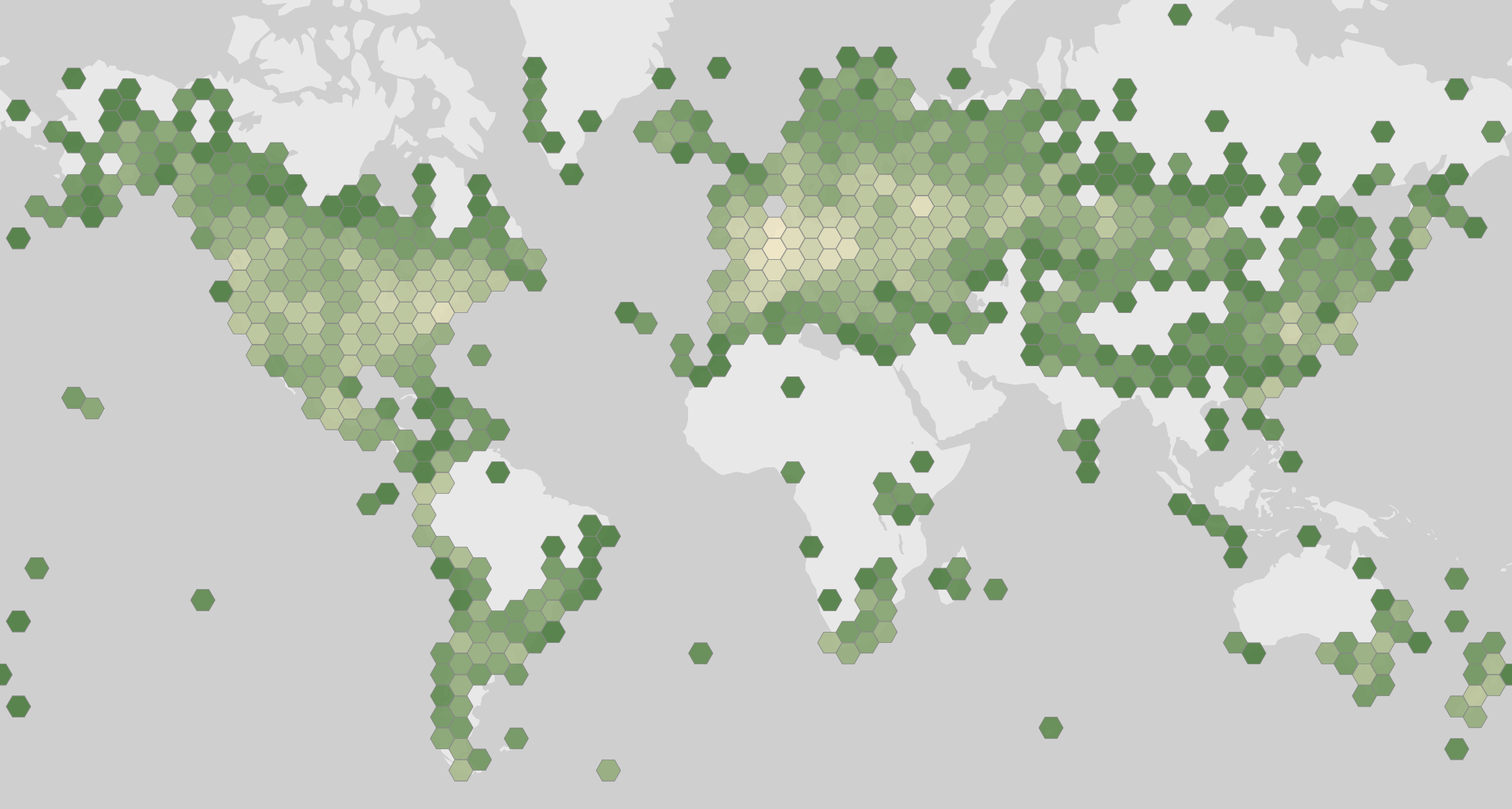
Given this security, conservation efforts are not directed at the species itself. The dandelion's global spread from its native Europe and Asia into North America, southern Africa, South America, Australia, New Zealand, and India reflects successful naturalization rather than any risk of loss.
Fun Facts
- The name Taraxacum likely comes from the Arabic tarakhshagog, meaning bitter herb, a fitting description of the leaves' flavor.
- Dandelions have deep roots in folk practice and witchcraft traditions, and remain part of some modern folk customs today.
- The plant's familiar seed head, sometimes called a clock or blowball, is used in folklore as a tool for telling fortunes by counting the puffs needed to scatter all the seeds.
- Despite being native to only Europe and Asia, the common dandelion now grows on almost every continent.
Photos
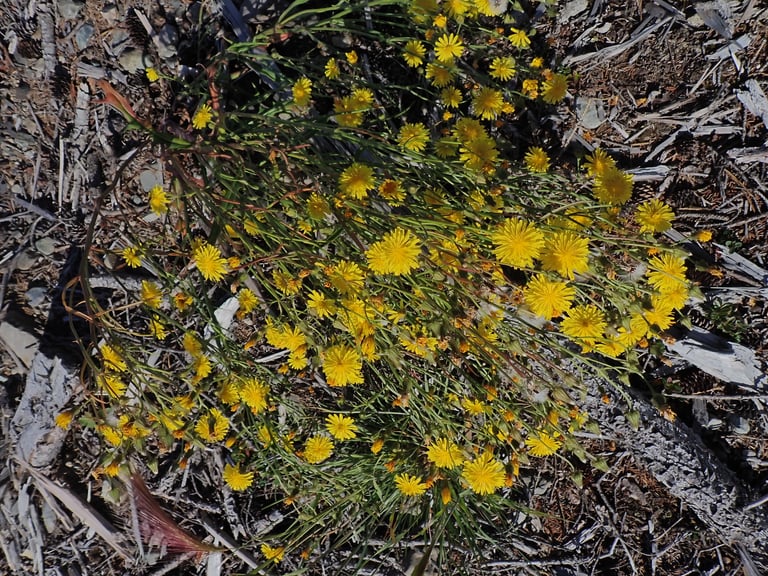
Photographs from via iNaturalist, licensed under CC0 1.0. and by Stanislav Murashkin via iNaturalist, licensed under CC BY 4.0., credited on each photo.
Ecology and classification
Growth habit
- Herb
Classification
- Phylum
- Tracheophyta
- Class
- Magnoliopsida
- Order
- Asterales
- Family
- Asteraceae
- Genus
- Taraxacum
- Species
- Taraxacum officinale
Sources
- GBIF Species names and classification
- iNaturalist Photos
- Wikidata Common names and conservation status
- Wikipedia Summary extract