Few single-celled organisms have shaped human history as much as Saccharomyces cerevisiae. Known to most people as brewer's yeast or baker's yeast, this microorganism causes many of the fermentations that have defined food and drink since ancient times, from leavened bread to wine and beer.
This species belongs to the kingdom Fungi, in the class Saccharomycetes and family Saccharomycetaceae. Its round to ovoid cells, only 5 to 10 micrometers across, are believed to have originally been isolated from the skin of grapes. Beyond its culinary fame, its genetic simplicity and rapid reproduction have made it an indispensable tool for understanding how eukaryotic cells work.
Fruiting Body and Identification
The single most reliable way to recognize Saccharomyces cerevisiae is under a microscope, not with the naked eye: its cells are round to ovoid, measuring 5 to 10 μm in diameter. There is no macroscopic fruiting body to describe, since this species exists as individual cells rather than as a multicellular structure with a cap, gills, or stem.
Reproduction occurs through budding, in which a smaller daughter cell forms as an outgrowth of the parent cell before separating. This budding process is the defining visual feature of the species at the cellular level, distinguishing its growth pattern from fission-based reproduction seen in some other microorganisms.
Distribution and Habitat
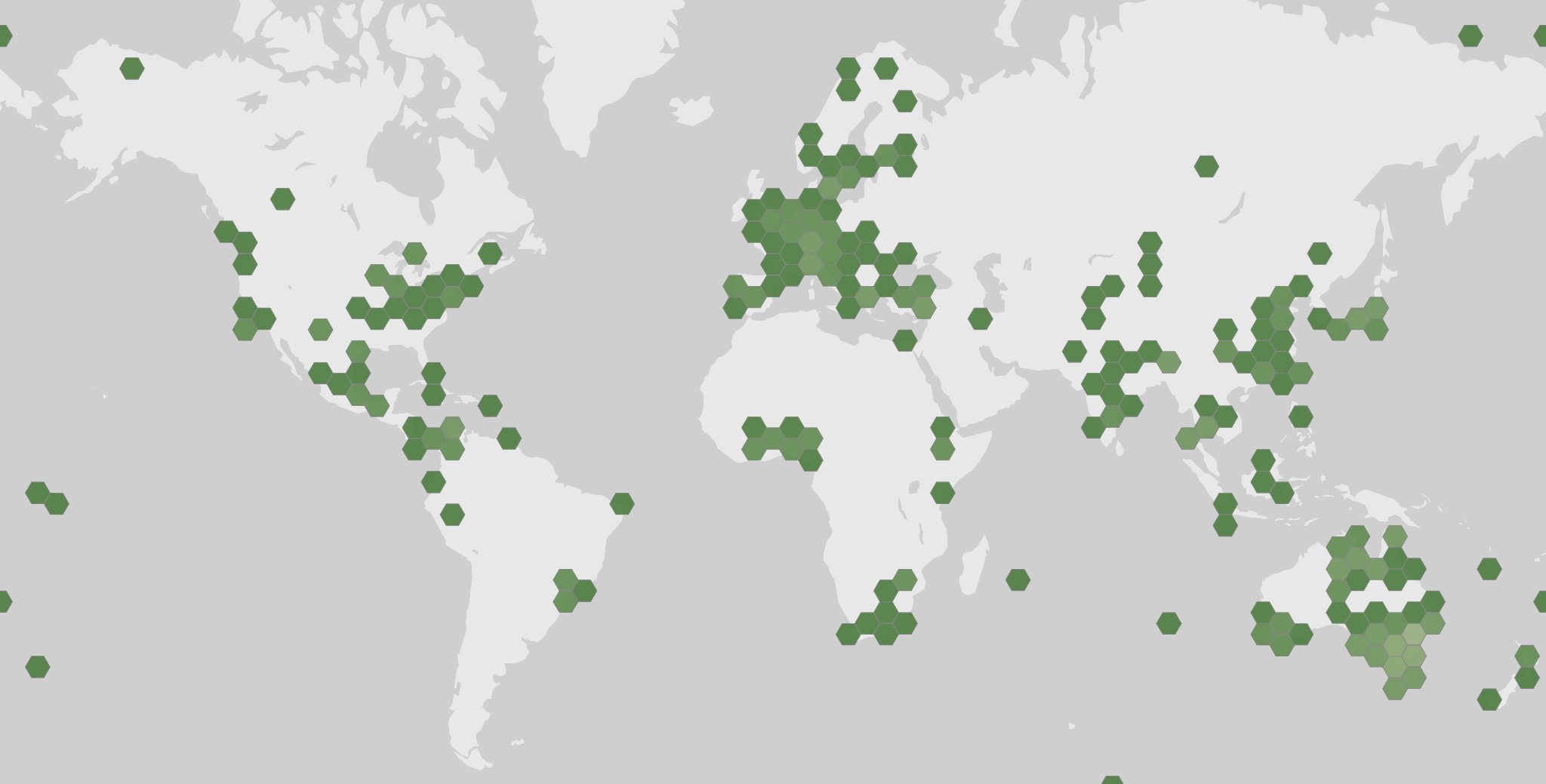
Observation data for Saccharomyces cerevisiae show activity recorded across every month of the year, with counts ranging from a low of 151 in November to a high of 484 in October. Secondary peaks appear in June (379) and July (364), while January also shows notably high counts (363), suggesting the species is detected across multiple seasons rather than during a single narrow window.
These figures come from GBIF occurrence records, which reflect presence observations only. They do not measure abundance, population size, or provide a complete picture of the species' native range, so the October peak should be read cautiously as an indication of seasonal detection rather than a definitive statement about when the yeast is most active in nature.
Life Cycle
Saccharomyces cerevisiae exists in two cellular forms, haploid and diploid, each following a cycle of mitosis and growth. The diploid form is the preferred state in nature, and under optimal conditions these cells can double their population every 100 minutes, though growth rates vary enormously between strains and environments.
When diploid cells encounter stress, they can switch to a sexual cycle: they undergo sporulation, entering meiosis to produce four haploid spores capable of mating with one another. This sexual phase allows genetic exchange, contrasting with the simpler asexual cycle that dominates under favorable conditions. The mean replicative lifespan of a cell is about 26 divisions.
Over long periods of asexual reproduction as diploids, recessive deleterious mutations accumulate in wild populations. These are purged during self-mating episodes, a process known as "genome renewal," which helps maintain the health of the lineage over time.
Ecology and Relationships
In nature, Saccharomyces cerevisiae is found primarily on ripe fruits, especially grapes, which are almost free of yeast before they mature. The species also persists year-round in the bark of oak trees, and because it is not airborne, it depends on vectors to move between locations.
Social wasps such as Vespa crabro and Polistes species act as one such vector: overwintering queens can harbor yeast cells from autumn through spring and pass them to their offspring. Research on Polistes dominula found that the wasp's intestine creates conditions that favor sporulation and spore germination, promoting mating both among S. cerevisiae strains and with the related species S. paradoxus. The yeast grows best at temperatures of 30 to 35°C (86 to 95°F).
The species is also an opportunistic pathogen of low virulence in humans, found transiently on the skin, oral cavity, digestive tract, and vagina of healthy people, though estimates suggest it appears in only about 6% of human intestinal samples and tends to clear within days once external administration stops. Contact with it, despite its widespread industrial and domestic use, very rarely leads to infection.
Uses and Cultural History
Saccharomyces cerevisiae has been central to leavening bread and fermenting alcoholic beverages since antiquity, a role that made it a central figure in religious rituals, economic development, and cultural practices that shaped the earliest civilizations.
Beyond food and drink, the species serves modern purposes as well. Aquaculturists use yeast cultures as a low-cost do-it-yourself method of CO2 injection for aquatic plants, typically maintained in plastic bottles that release one bubble every 3 to 7 seconds. In biotechnology, S. cerevisiae functions as an expression system for producing therapeutic recombinant proteins.
A specific strain, Saccharomyces cerevisiae var. boulardii, is manufactured industrially and used clinically as a probiotic. Moderate-quality evidence points to its usefulness in reducing antibiotic-associated diarrhea and easing side effects of Helicobacter pylori treatment, with some support for preventing traveler's diarrhea. While generally well tolerated in clinical trials, cases of fungemia linked to this strain have been reported in clinical practice, particularly in patients with compromised immunity or central vascular catheters.
Fun Facts
- Oregon designated Saccharomyces cerevisiae as its official state microbe in 2013, recognizing its importance to the state's craft brewing industry.
- Both mother and daughter cells can begin forming new buds even before they have fully separated from each other, a detail of the budding process visible under the microscope.
- The species is believed to have first been isolated from the skin of grapes, linking its origins directly to winemaking.
- Under ideal conditions, a population of these cells can double in size every 100 minutes.
- Despite its microscopic size, its fermenting abilities helped shape rituals, trade, and daily life in some of the earliest human civilizations.