The ashen coral, as Tremellodendropsis tuberosa is commonly known, grows as a small cluster of pale, branching fingers that darken to brown with age, giving it a distinctly ashen look in older specimens.
It is a coral fungus in the family Tremellodendropsidaceae, found across a surprisingly wide and disjointed range spanning Eurasia and the Americas. It fruits on the ground in woods and clearings, appearing singly or in small groups rather than dense colonies.
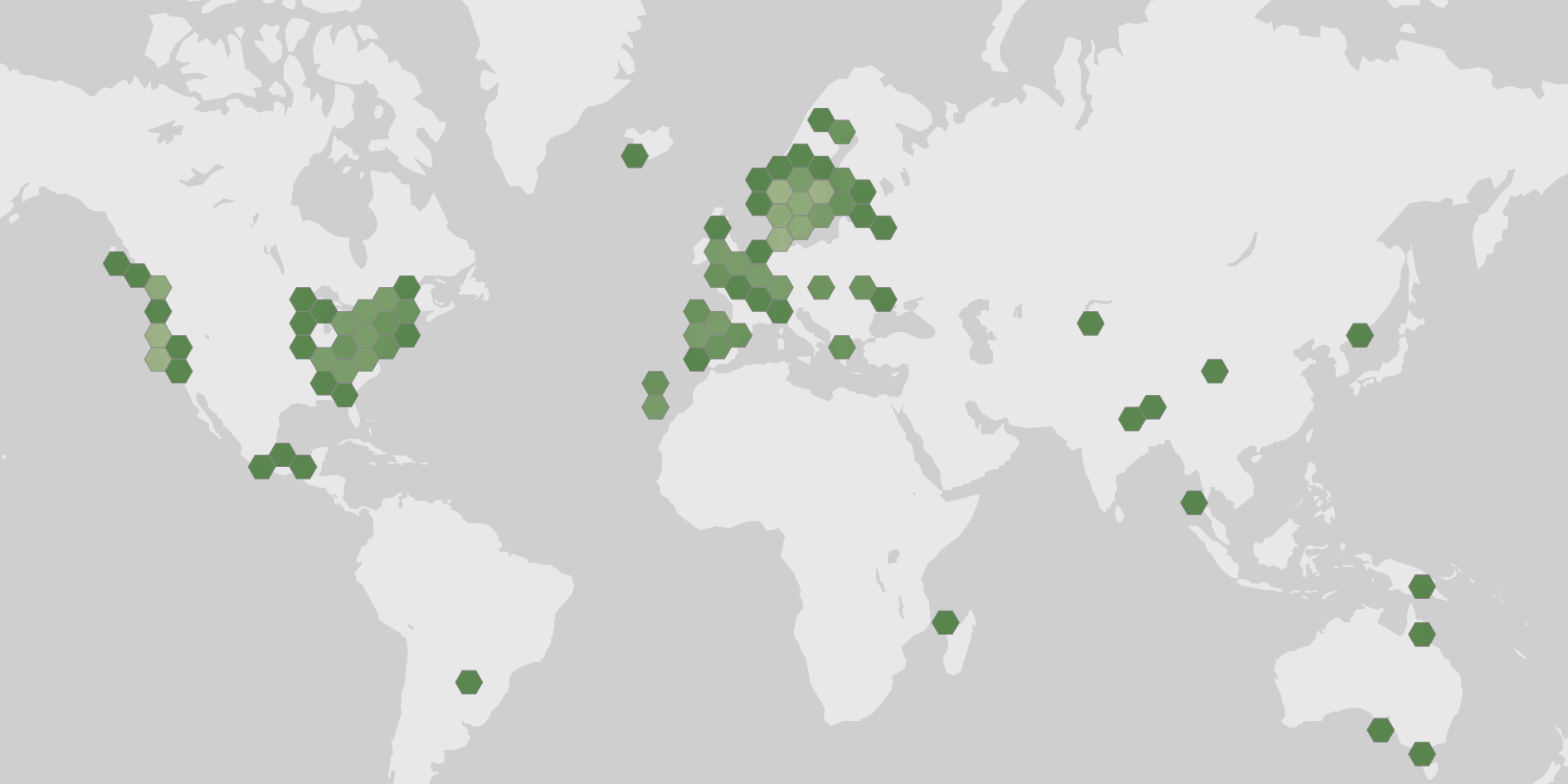
What makes this species worth a closer look is its unusual distribution: the same fungus turns up in temperate Europe and North America as well as in South Brazil and Borneo, a spread that hints at a long and little-understood evolutionary history.
Fruiting Body and Identification
The most reliable way to recognize Tremellodendropsis tuberosa is its coral-shaped fruiting body, which stands 3 to 6 centimeters tall and spreads up to 5 centimeters across. The arms rise from a tough white stem and are either unbranched or only sparsely branched, ending in tips that are rounded and often flattened rather than pointed.
Color shifts with age: young fruiting bodies are whitish throughout, but they gradually turn brownish as they mature. The flesh inside remains white, and the base of the stem is covered in fine whitish mycelium that anchors it to the substrate.
A white spore print confirms identification at the microscopic level. The spores themselves are elongated-elliptical to spindle-shaped, smooth-surfaced, and measure 13 to 20 by 4.5 to 6.5 micrometers. The basidia, the cells that produce the spores, often show longitudinal partitions near their tips, a detail that separates this species from many other coral-shaped fungi.
Ramaria pallida looks superficially similar and could be mistaken for T. tuberosa at a glance, but it is light brown overall except for a whitish stalk base, whereas T. tuberosa stays predominantly whitish before browning with age.
Distribution and Habitat
Tremellodendropsis tuberosa has a wide but scattered distribution, occurring through north temperate regions of Europe and North America as well as in South Brazil and Borneo. This combination of temperate and tropical locations makes it one of the more geographically puzzling coral fungi.
Fruiting bodies grow directly on the ground in woods or clearings, appearing either singly or in small groups rather than forming large colonies.
Monthly observation counts, which reflect presence records rather than actual abundance or a complete range map, show a pronounced late-summer to early-autumn peak, with counts climbing sharply in August and September before dropping off through the winter and spring months. Very few observations are recorded in April and May, suggesting the species fruits mainly outside the early spring period, though this pattern should be read cautiously given the limits of presence-only data.
Fun Facts
- The name "ashen coral" reflects the fungus's whitish, ash-toned appearance in youth, which deepens into brown shades as the fruiting body matures.
- It carries several regional common names, including Bævrekølle and Storsporet bævrekølle in Danish and haarahytykkä in Finnish.
- The species was first described as Thelephora tuberosa by Greville before being reclassified into its current genus by mycologist Dorothy Alleyne Crawford.
- Despite its modest size, it has an unusually broad range, turning up in habitats as distant from one another as temperate Europe, North America, South Brazil, and the island of Borneo.
Ecology
Habitat
- Forest
- Woodland