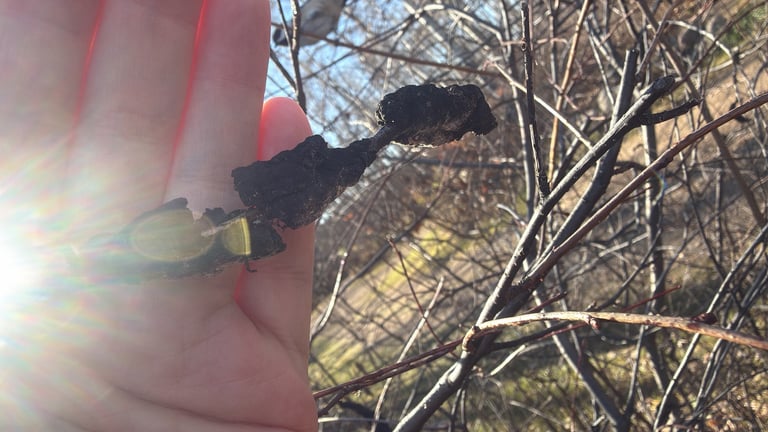
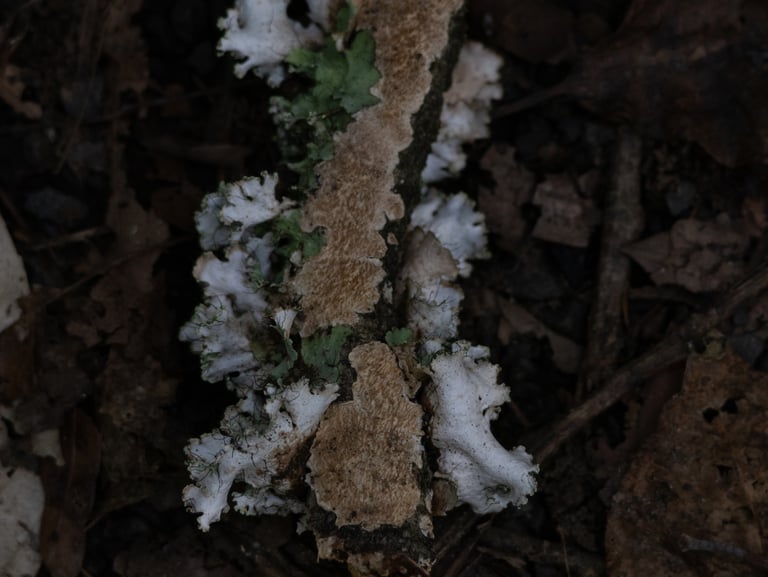
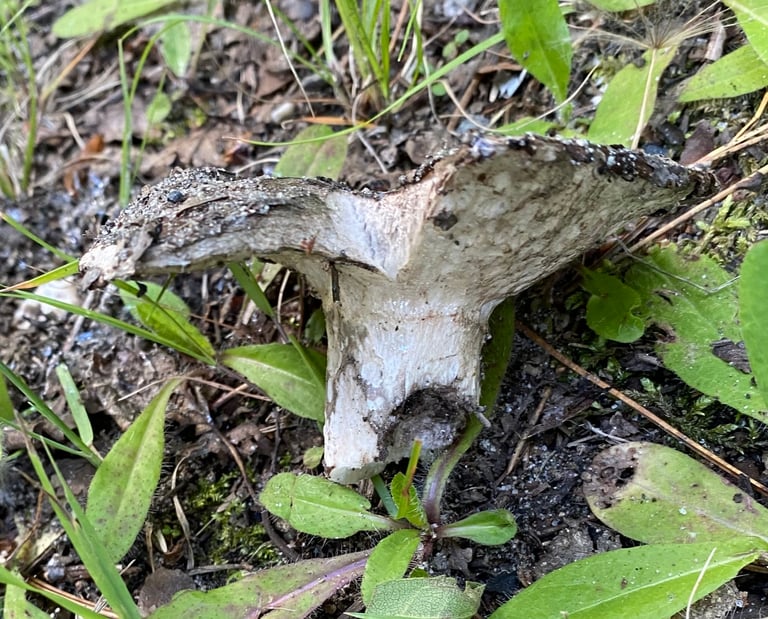
Apple scab is caused by a fungus that spends its life on apple trees, and the organism behind it is Venturia inaequalis. It is an ascomycete in the class Dothideomycetes, family Venturiaceae.
The fungus is best known as the cause of apple scab, a disease that affects apple trees wherever they are grown. Its infection cycle runs through the growing season, so understanding it explains why the disease returns each year.
Fruiting Body and Identification
The most reliable way to recognize the fungus is its fruiting body, which takes the form of a pseudothecium. These structures are solitary and sit embedded in the host plant tissue, so they are not raised above the surface.
Each pseudothecium has small dark hairs around its opening. Inside, it holds pseudoparaphyses along with asci. Each ask contains eight haploid ascospores, the spores that start the next season's infections.
The haploid chromosome number of Venturia inaequalis is seven.
Distribution and Habitat
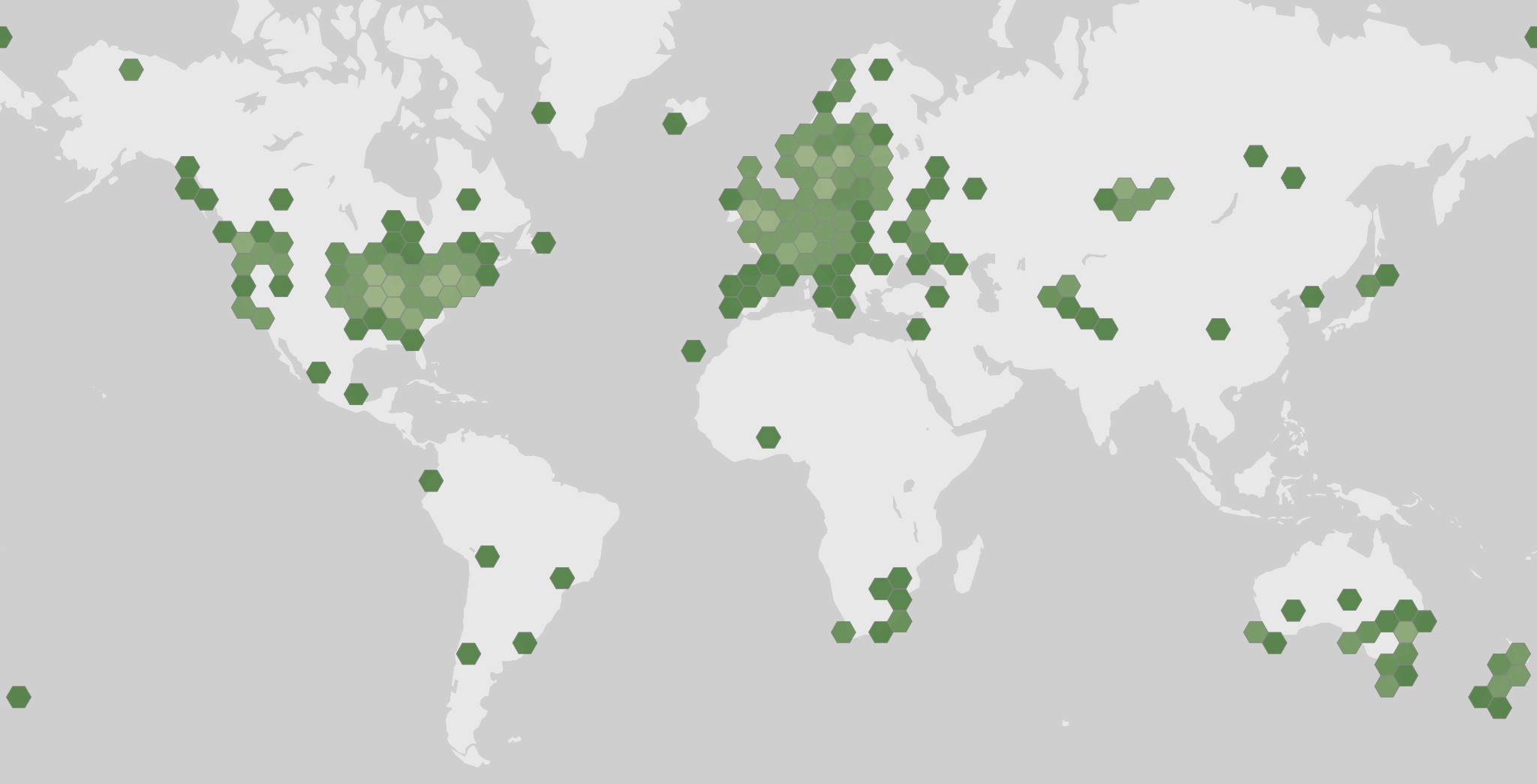
Venturia inaequalis infects susceptible trees, where it attacks leaves and fruit. It is tied to the apple trees it infects, and its activity follows the growing season.
Seasonal presence peaks in August, when the fungus is most active on its hosts. Its presence is lower in the winter months, when the fruiting bodies are still developing inside the host.
Life Cycle
The infection cycle begins in spring. Once temperatures and moisture are suitable, the fungus releases its ascospores, which rise into the air and land on a susceptible tree.
A spore that lands on the leaf surface germinates and forms a germ tube. The tube can penetrate the waxy cuticle directly, and a mycelium then develops between the cuticle and the underlying epidermal tissue. The mycelium produces conidia asexually, and these germinate on fresh tissue of the same tree to produce another generation of conidial spores. These secondary infections repeat through the summer until the leaves and fruit fall at the onset of winter.
Venturia inaequalis overwinters mostly as immature perithecia, where sexual reproduction takes place. The new ascospores are released the following spring. Scab lesions on woody tissue can also overwinter in place, but they do not undergo sexual reproduction, and they produce ineffective conidial spores in spring.
Photos
Photographs from via iNaturalist, licensed under CC0 1.0., by Eric Schmidt via iNaturalist, licensed under CC BY 4.0., by Fyodor Pudovikov via iNaturalist, licensed under CC BY 4.0., by Ryan McMinds via iNaturalist, licensed under CC BY 4.0., by Marcello Manara via iNaturalist, licensed under CC BY 4.0., by veronika_martynova via iNaturalist, licensed under CC BY 4.0., and by Andrew Sebastian via iNaturalist, licensed under CC BY 4.0., credited on each photo.
Ecology and classification
Classification
- Phylum
- Ascomycota
- Class
- Dothideomycetes
- Order
- Venturiales
- Family
- Venturiaceae
- Genus
- Venturia
- Species
- Venturia inaequalis
Sources
- GBIF Species names and classification
- iNaturalist Photos
- Wikidata Common names and conservation status
- Wikipedia Summary extract