
Testudines
Abingdon Island Giant Tortoise [abingdonii]
Chelonoidis niger
ÉTEINTE à L'éTAT SAUVAGEAlso known as: Alcedo Volcano Giant Tortoise [vandenburghi], Cerro Azul Giant Tortoise, Charles Island Giant Tortoise, Chatham Island Giant Tortoise [chathamensis], Darwin Volcano Giant Tortoise
![Abingdon Island Giant Tortoise [abingdonii]](https://plantnimals.com/wp-content/uploads/2026/05/chelonoidis-niger-featured.jpg)
© Nathaniel Isabella · iNaturalist · CC BY 4.0
Scientific Classification & Quick Facts
Classification
At a Glance
The Abingdon Island Giant Tortoise was a massive reptile native to a single volcanic island in the Galápagos archipelago, distinguished by its enormous shell and solitary existence on its remote home. Members of the family Testudinidae, these tortoises represented one of the most specialized and geographically restricted populations of giant tortoises ever known to science. The species inhabited only Abingdon Island (now Pinta Island) in Ecuador, making its entire global range confined to a single location.
The extinction of Chelonoidis niger abingdonii marks one of the most poignant losses of the modern conservation era. Introduced species, habitat destruction, and the deliberate hunting of tortoises for food during human exploration of the Galápagos all contributed to its decline. Today, the Abingdon Island Giant Tortoise exists only in historical records, museum specimens, and scientific literature—a stark reminder of how rapidly endemic island species can vanish when their fragile ecosystems are disrupted.
Identification and Appearance
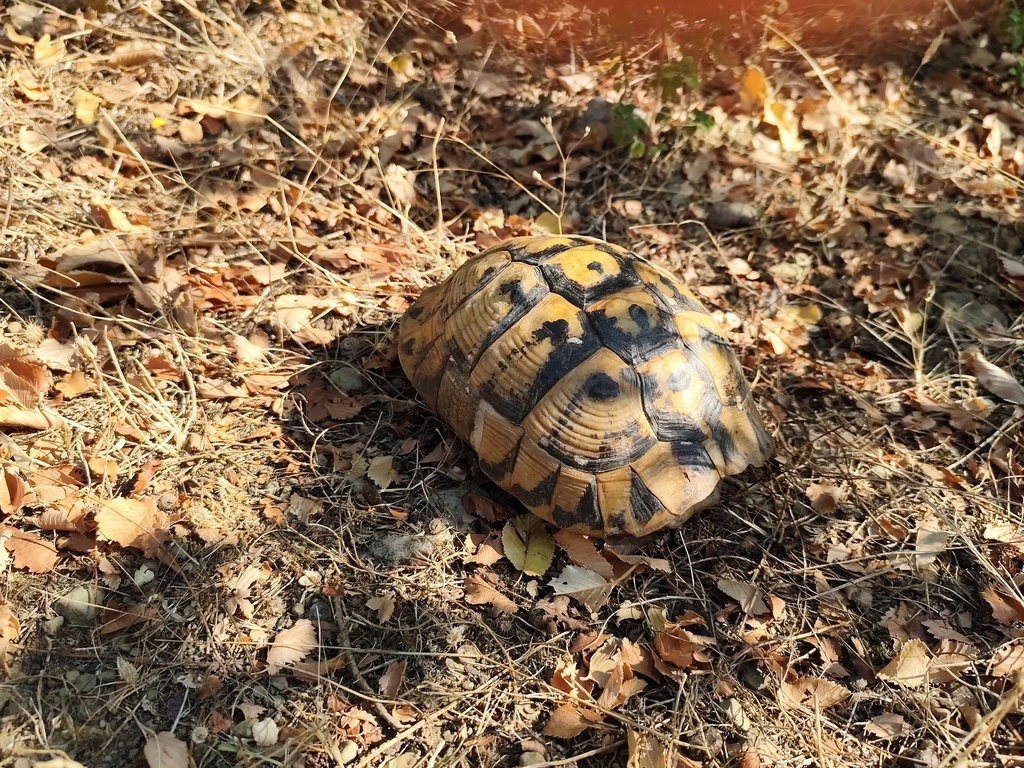
The Abingdon Island giant tortoise is distinguished by its large, domed bony shell, typically dull brown or grey in coloration. The shell’s plates are fused directly to the ribs, creating a rigid protective structure that forms an integral part of the skeleton. Lichens frequently colonize the shells of these slow-moving animals, particularly in older individuals, sometimes creating a mottled appearance over time.
Each tortoise retains a characteristic scute (shell segment) pattern throughout its lifetime, which can aid in individual identification. However, the annual growth bands visible on the shell cannot be reliably used to determine age, as the outer layers gradually wear away with time and environmental exposure. The shell structure allows the animal to withdraw its head and neck completely for protection, though specific morphological measurements for this subspecies are not currently documented.
Distribution and Habitat
Chelonoidis niger (Abingdon Island Giant Tortoise) is endemic to Ecuador, where it historically inhabited Abingdon Island (Pinta) in the Galápagos archipelago. The species’ range is confined to this single Pacific island location, making it geographically one of the most restricted populations within its genus.
No elevation data are currently available for this subspecies, and specific habitat classifications have not been documented in accessible records. Records show peak activity or observation in May, with secondary peaks in January and June, suggesting seasonal variation in detectability or behavior patterns throughout the year. Notably, no observations have been recorded during the months of July through December, which may reflect either seasonal absence or reduced monitoring effort during those periods.
Biology
Behavior
The Abingdon Island Giant Tortoise was a solitary animal, spending much of its time moving slowly across the volcanic terrain of its island home in search of vegetation. Like other giant tortoise subspecies, it was primarily diurnal, active during daylight hours when temperatures were favorable for foraging and thermoregulation. These animals were generally docile and posed no threat to humans, though their massive size and weight gave them substantial defensive capability if threatened.
Social interactions among individuals were minimal, with mating being the primary reason for sustained contact between animals. Males may have engaged in ritualistic head-butting and shell-ramming during competition for access to females, behavior typical of terrestrial tortoises. The subspecies moved deliberately through its habitat, creating worn trails through dense vegetation over decades of repeated passage.
Diet
The Abingdon Island Giant Tortoise was strictly herbivorous, feeding on the sparse vegetation available across the arid and semi-arid zones of Abingdon Island. It consumed grasses, low shrubs, cacti, and fallen fruits and leaves, adapting its diet to seasonal availability. Like all giant tortoises, it was an opportunistic grazer and browser, able to consume coarse plant material that many other herbivores could not digest efficiently.
Reproduction
Giant tortoises of the Chelonoidis niger complex reached sexual maturity relatively late in life, likely not breeding until they were several decades old. Females laid eggs in shallow nests dug in warm soil, typically during the dry season when conditions favored incubation. Clutch sizes were small, usually fewer than a dozen eggs, though exact reproductive parameters for the Abingdon Island subspecies are not well-documented in modern scientific literature.
Incubation periods extended over several months, with hatchlings emerging during the following warm season. Parental care was absent; females laid eggs and abandoned them, leaving hatchlings entirely dependent on their ability to survive predation and environmental conditions. The combination of late sexual maturity, small clutch sizes, and high juvenile mortality made the subspecies inherently vulnerable to population decline, a vulnerability that proved catastrophic when human hunting pressure was introduced.
Conservation and Threats
The Abingdon Island Giant Tortoise is classified as Extinct (EX) on the IUCN Red List. This designation reflects the loss of the last known individual of the subspecies Chelonoidis niger abingdonii, marking a permanent and irreversible absence from the natural world. The extinction of this subspecies represents one of the documented losses within the giant tortoise genus, a sobering reminder of the vulnerability of island-endemic species to human-driven extinction.
Historical Threats and Causes of Extinction
The Abingdon Island Giant Tortoise fell victim to multiple anthropogenic pressures that converged over centuries. Hunting by early explorers and settlers, who viewed the tortoises as a convenient source of food and oil, decimated wild populations. Introduced species—particularly goats and rats—destabilized the island ecosystem by consuming vegetation and destroying eggs and hatchlings. Habitat degradation through overgrazing and human settlement further compressed the species’ range. By the time conservation efforts intensified in the late twentieth century, only a single individual remained, rendering population recovery impossible despite dedicated breeding attempts.
Conservation Significance and Legacy
Although the Abingdon Island Giant Tortoise cannot be restored, its extinction has profound conservation implications. The loss catalyzed heightened protections for the surviving giant tortoise subspecies across the Galápagos, including increased funding for breeding programmes, habitat restoration, and invasive species control. The Charles Darwin Research Station continues to maintain genetic repositories and research programmes focused on preventing similar extinctions among its congeners.
Cultural Significance
The Galápagos giant tortoise holds a prominent place in maritime folklore and the historical imagination of seafaring cultures. During the 18th and 19th centuries, sailor accounts transformed these creatures into legendary “living casks” of meat and fresh water—animals that could survive months aboard ships without additional provisions. Such tales circulated widely through whaling ports and pirate routes, cementing the tortoises’ reputation as invaluable resource for long ocean voyages and contributing to intense pressure on wild populations.
The species name itself carries cultural weight. The genus Chelonoidis derives from the ancient Greek word chelone, meaning “tortoise”—a term that has echoed through Western naturalism for millennia. The species epithet niger, Latin for “black,” references the dark coloration of juvenile individuals that formed the basis of early scientific descriptions. These linguistic choices ground the tortoise within a long European intellectual tradition of naming and classifying the natural world.
Fun Facts
- 1.Abingdon Island giant tortoises were among the largest tortoise subspecies in the Galápagos, with individuals potentially reaching shell lengths exceeding 1.2 metres and weights of several hundred kilograms.
- 2.The subspecies was driven to extinction primarily by introduced rats and feral goats on Abingdon Island, which consumed tortoise eggs and competed for vegetation, leaving no viable breeding population.
- 3.Unlike some giant tortoise subspecies that show domed shells, the Abingdon form possessed a relatively flatter shell morphology adapted to the arid scrubland habitat of its island home.
- 4.Genetic studies revealed that Lonesome George’s DNA diverged from other Chelonoidis niger subspecies enough to suggest he represented a distinct evolutionary lineage found nowhere else on Earth.
- 5.Giant tortoises on Abingdon Island likely lived 100+ years in the wild, but their extremely slow reproduction—females produce only a few eggs every few years—made them catastrophically vulnerable to hunting and introduced predators.
- 6.The loss of the Abingdon population occurred within living memory, with naturalists still observing individuals on the island as recently as the 1970s before the last wild tortoise disappeared.
Sources and References
- Global Biodiversity Information Facility (GBIF)View source
- iNaturalistView source
- WikidataView source
- WikipediaView source
- Encyclopedia of Life (EOL)View source
Ecology
Diet
Behavior
Conservation Status
LC · NT · VU · EN · CR · EW · EX
Photo Gallery
![Abingdon Island Giant Tortoise [abingdonii]](https://plantnimals.com/wp-content/uploads/2026/05/chelonoidis-niger-gallery-1.jpg)
![Abingdon Island Giant Tortoise [abingdonii]](https://plantnimals.com/wp-content/uploads/2026/05/chelonoidis-niger-gallery-2.jpg)
Nathaniel Isabella · CC BY 4.0
Related Species
Was this profile helpful?