
Gnetopsida · Welwitschiales
Welwitschia
Welwitschia mirabilis
Also known as: Angolan Welwitschia, Namibian Welwitschia, Tree Tumbo
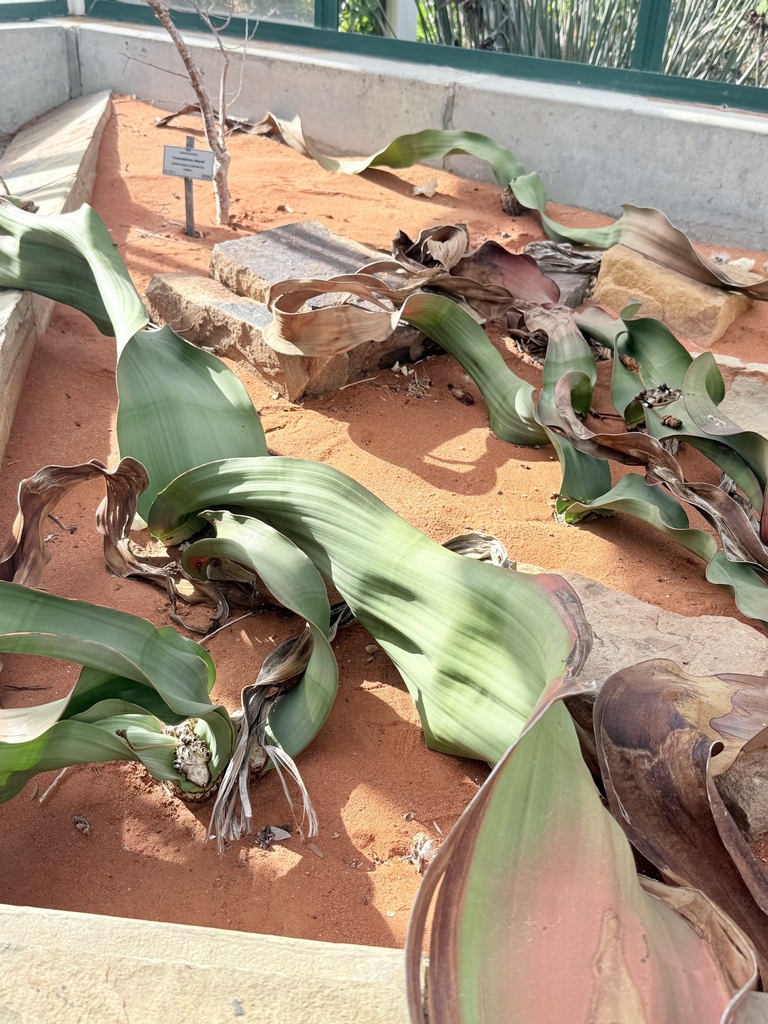
© Vladislav Isaev · iNaturalist · CC BY 4.0
Scientific Classification & Quick Facts
Classification
Known For
Detailed measurements for this species are still being verified.
In the harshest deserts of southern Africa, where rainfall is scarce and temperatures soar, grows one of the world’s most improbable plants. Welwitschia mirabilis—the welwitschia—appears almost alien: a squat, woody trunk topped by just two leaves that sprawl across the ground like the wings of a resting pterosaur. These leaves can reach lengths of 2 metres or more, perpetually frayed and tattered by wind and time, yet somehow continuing to grow throughout the plant’s life. Found across three countries in the Namib Desert region, the welwitschia occupies a taxonomic space all its own, representing the sole living member of its entire family, Welwitschiaceae.
The welwitschia’s rarity and botanical distinctiveness make it a living fossil of extraordinary significance. Its strange anatomy—combining features of conifers and flowering plants—has long puzzled botanists, who view it as a living window into plant evolution. Despite inhabiting one of Earth’s most inhospitable ecosystems and remaining virtually unknown outside specialist circles, this botanical oddity endures as a testament to nature’s capacity for survival through radical adaptation.
Identification and Appearance
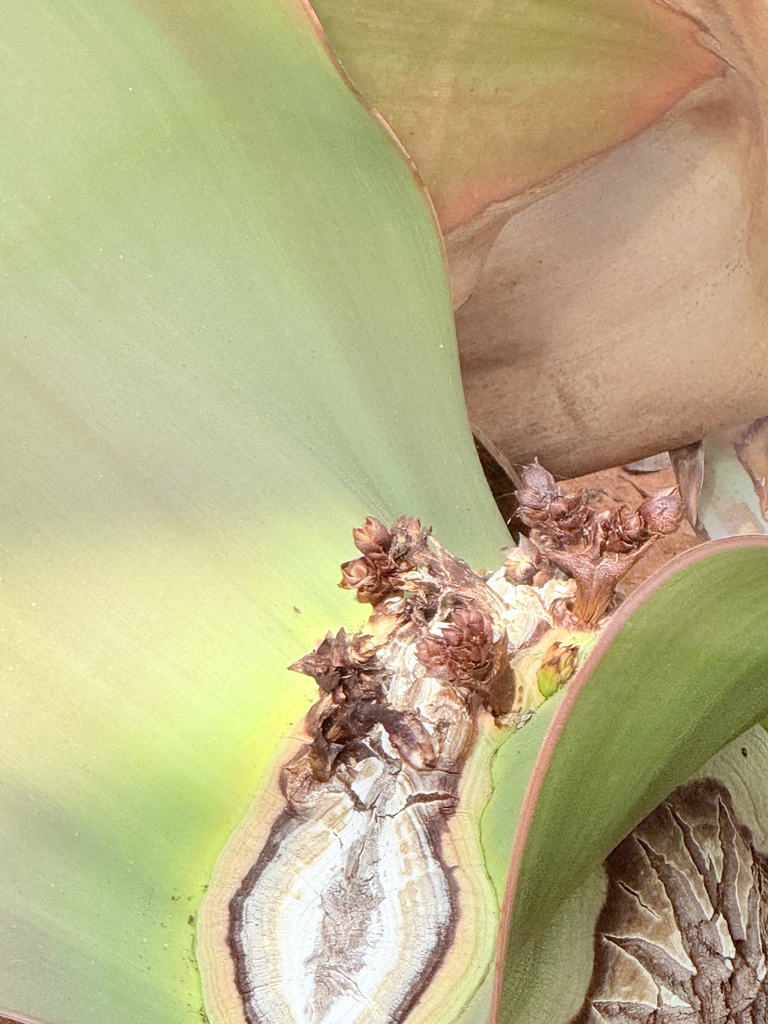
Welwitschia mirabilis is among the most visually distinctive plants on Earth, characterized by its extremely reduced body plan and extraordinary longevity. The plant consists of a large, woody, coin-shaped stem that sits flush with or slightly above ground level, from which emerge only two permanent leaves that persist throughout the plant’s entire lifespan.
Growth and Early Development
After germination, seedlings produce two small cotyledons measuring 25–35 millimetres in length. These cotyledons initially appear pink but quickly turn green as the plant establishes itself. From the crown of the woody stem, a pair of large, permanent leaves then emerge, positioned at right angles opposite to the cotyledons. These leaves grow rapidly and constitute the primary photosynthetic organs of the mature plant.
Leaves and Adult Form
The permanent leaves are remarkably long and ribbon-shaped, with prominent veins running vertically down their length. Rather than growing from a conventional above-ground body, the leaves expand directly from the woody crown, which can reach considerable diameter and woody mass. This unusual architecture—a woody base combined with just two massive leaves—represents an extreme adaptation to arid environments. The plant’s overall form remains low and sprawling, maintaining close contact with the ground.
Distribution and Habitat
Welwitschia mirabilis is restricted to a narrow range in southwestern Africa, with the overwhelming majority of records concentrated in Namibia. Namibia hosts 261 observations, making it the primary stronghold for this remarkable species. Angola contributes a small secondary population with 38 records, while a single record from the United States likely represents a cultivated specimen outside the natural range.
The species occurs at elevations between 338 and 749 metres, with an average elevation of approximately 721 metres. This relatively narrow band places the species in the characteristic fog-dependent desert zones of the Namib region, where coastal fog provides critical moisture to an otherwise arid landscape.
Seasonal observation patterns reveal peaks in October (46 records) and May (44 records), with lower activity during winter months, particularly July (14 records) and November (11 records). This distribution reflects both the plant’s phenological cycles and increased observer activity during more accessible periods. The species’ presence is documented year-round, underscoring its adaptation to the harsh desert environment where it persists as a perennial survivor across decades.
Growth and Cultivation
Growth
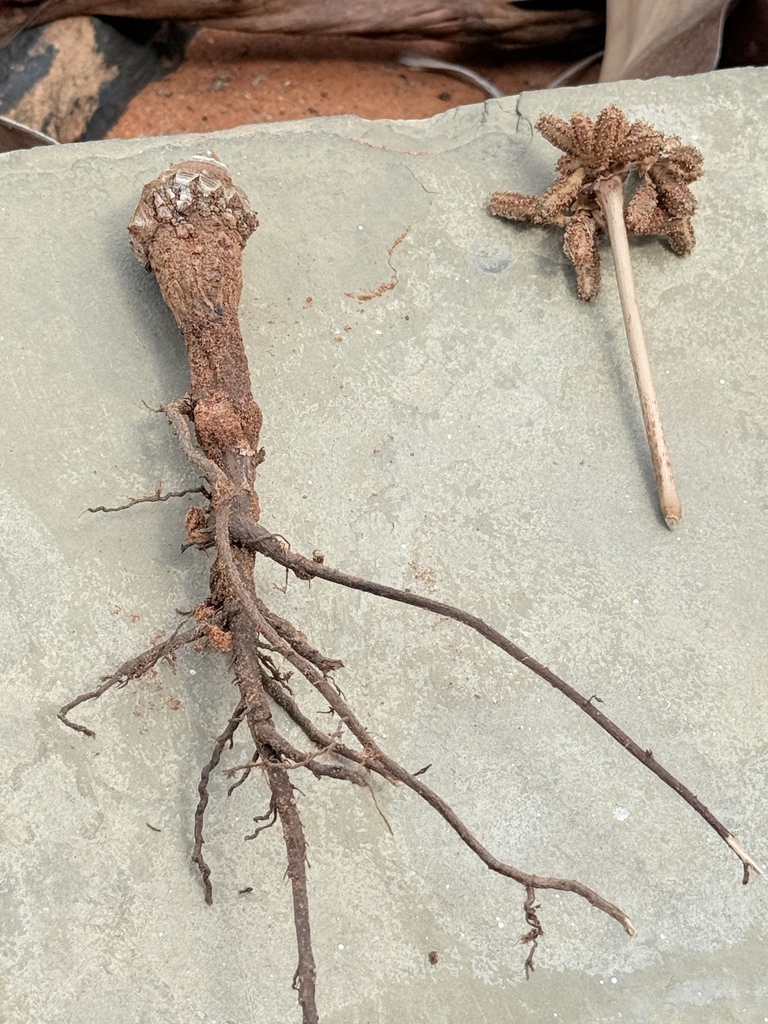
Welwitschia mirabilis is one of the most remarkable plants on Earth, with a growth habit unlike any other flowering plant. The species forms a low, prostrate rosette that hugs the ground, typically consisting of just two large, leathery leaves that emerge from a woody, turnip-shaped taproot. These leaves persist throughout the plant’s life and can reach lengths of 1–4 metres, splitting at the tips as they age and dragging across the desert floor. The main stem above ground remains compact, rarely exceeding 50 centimetres in height or width.
Growth is extremely slow. Plants may take several years to reach mature size, and individuals in their native Namibian habitat have been documented living for over a century. The plant’s longevity and minimal aboveground expansion reflect its adaptation to one of Africa’s most hostile environments, where energy conservation and deep rooting for water access are survival imperatives. The woody taproot can penetrate deep into the soil, anchoring the plant and drawing moisture from considerable depths.
Flowering
Welwitschia reproduces by means of small, inconspicuous flowers borne on branched inflorescences that arise from the centre of the rosette. The flowers are wind-pollinated and produce winged seeds that disperse readily on desert winds. Flowering timing in its native range is linked to moisture availability, typically occurring after rare rainfall events, though precise flowering seasons are not well documented in cultivation records.
Cultivation
Cultivation of Welwitschia outside its native habitat is challenging and rarely successful. The plant requires extremely well-draining, sandy or gravelly soil with minimal organic matter—conditions that mimic the gravel plains and fog zones of the Namib Desert. Standard potting media or garden soil will lead to root rot and plant death. Seeds can be sown but germination is erratic, and seedlings are prone to damping off in humid conditions.
The plant thrives in intense, direct sunlight and demands minimal water once established. In cultivation, watering should be infrequent and only when the soil is completely dry. The species cannot tolerate prolonged humidity, shade, or cool temperatures; it requires warm conditions year-round and good air circulation to prevent fungal disease. Few botanical gardens and private collectors succeed in keeping Welwitschia alive, making it a collector’s plant of considerable difficulty. Its protected status in Namibia also means that legally sourced seeds or plants are difficult to obtain.
Conservation and Threats
Welwitschia mirabilis currently has no formal IUCN Red List assessment, meaning its official conservation status remains undesignated. However, the species maintains a stable population trend across its native range in the Namib Desert of southwestern Africa. Despite its vulnerability to human activities, the extreme longevity of individual plants—some specimens are over 1,500 years old—has historically allowed populations to endure periods of environmental stress.
Threats
The primary threats to Welwitschia are overgrazing and disease. Livestock grazing in the Namib Desert directly damages plants by consuming leaves and compacting soil around their root systems. Young seedlings are especially vulnerable, as their slow growth makes recovery from herbivory difficult. The species’ extreme longevity paradoxically offers little protection against these direct threats, since even long-lived individuals cannot reproduce quickly enough to compensate for sustained damage to the population.
Disease, including fungal infections and stem rot, also poses a significant risk, particularly in years of above-average rainfall when moisture levels favour pathogenic organisms. Climate variability in the desert environment creates unpredictable conditions that can stress plants and make them more susceptible to infection.
Conservation Efforts
Welwitschia mirabilis receives protection through its status in the Namib-Naukluft National Park in Namibia, where access is regulated and extractive activities are restricted. The species is also listed under Appendix II of the Convention on International Trade in Endangered Species (CITES), prohibiting international commercial trade without permits. These legal frameworks help prevent exploitation, though enforcement in remote desert regions remains challenging.
Public awareness and scientific interest in this endemic species continue to grow. Botanical institutions and desert conservation organisations monitor populations and document natural history. Reducing livestock pressure in key habitats and supporting sustainable land management practices are essential to ensuring long-term persistence.
Cultural Significance
Welwitschia mirabilis holds profound cultural significance across southern African societies, particularly among the Himba people of the Namib Desert. The plant’s extraordinary ability to survive hundreds of years in one of Earth’s harshest environments—drawing moisture from sea fog and deep groundwater—has made it a living symbol of resilience and ancestral strength. For the Himba, who have inhabited this region for generations, the welwitschia embodies spiritual endurance and cultural identity, its presence woven into the narratives that define their relationship with the desert landscape.
Beyond indigenous traditions, the plant has captured the imagination of artists and writers across African cultures, who employ it as a metaphor for adaptability and perseverance in the face of adversity. Its rarity and botanical distinctiveness have also earned it a place in the consciousness of gardeners and horticulturists worldwide—few cultivation enthusiasts have ever encountered a living specimen. Many botanists now view the cultivation and preservation of Welwitschia as part of broader global efforts to maintain biodiversity, elevating the species from a regional natural wonder to a symbol of conservation commitment.
Ecologically embedded in Nambian cultural life, the welwitschia provides sustenance to local wildlife and serves as a resource for desert communities. Its role in the desert ecosystem underscores why it remains more than a botanical curiosity: it is a testament to the intertwined survival of people and plants in one of the world’s most unforgiving environments.
Fun Facts
Welwitschia mirabilis is one of the world’s most extreme survivors, thriving in the Namib desert where rainfall rarely exceeds 100 millimetres per year. This remarkable plant challenges everything we think we know about plant adaptation and longevity in hostile environments.
- Welwitschia mirabilis is the only species in its entire genus, family, and order, making it botanically unique. Only two other gnetophyte genera survive today: Gnetum and Ephedra, making this plant a living window into plant evolution.
- The plant grows exclusively in the Namib desert of Angola and Namibia, one of Earth’s driest regions, where it has evolved extraordinary mechanisms to extract moisture from fog and dew. It cannot survive anywhere else on the planet.
- Adult Welwitschia plants produce only two leaves in their entire lifetime, which grow continuously from the base and can reach up to 2 metres in length. These leaves often split and fray as they age, creating the illusion of multiple leaves.
- Despite its small visible above-ground structure, Welwitschia develops a massive taproot that can penetrate more than a metre into the soil to access deep water reserves. This underground architecture is key to its survival in extreme drought.
- Individual plants can live for over 1,000 years, making Welwitschia one of the longest-lived plant species on Earth. Some specimens documented in the field are estimated to be more than 1,500 years old.
- The plant was named after Austrian botanist Friedrich Welwitsch, who documented it in the 1850s during his exploration of southern Africa. The common name, tree tumbo, derives from the Ovambo language.
- Welwitschia absorbs water directly through its leaves via specialised structures called stomata, which remain open at night to capture moisture from fog. This adaptation is entirely unique to this species and is crucial for survival in its arid habitat.
Photo Gallery
Vladislav Isaev · CC BY 4.0
Related Species
Was this profile helpful?