
Mucoromycetes · Mucorales
Dung Cannon
Pilobolus crystallinus
Also known as: Hat-thrower fungus
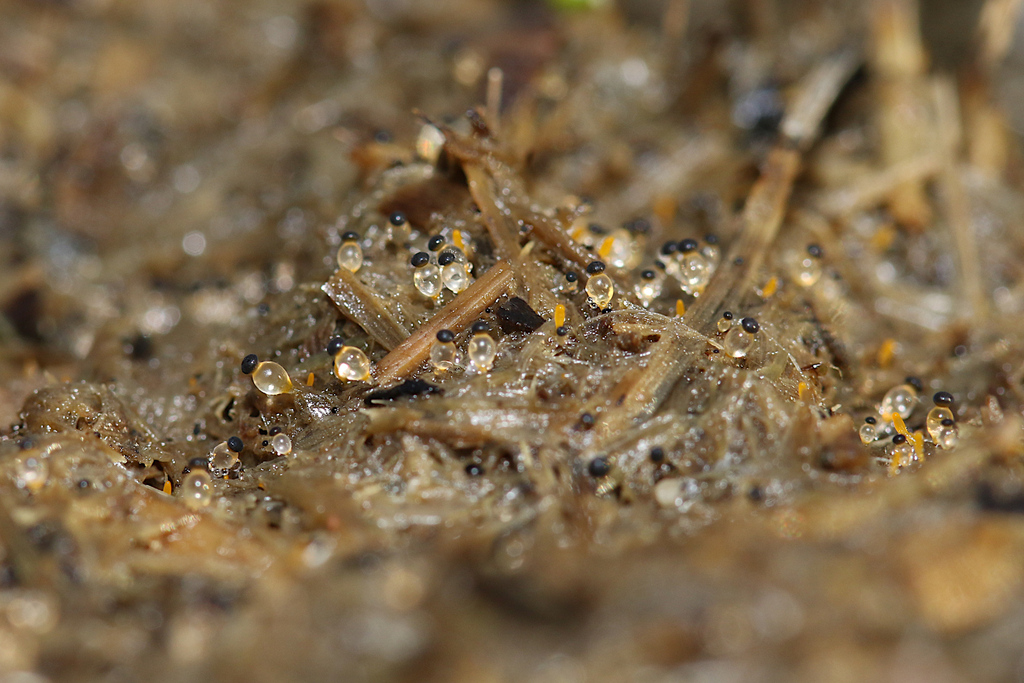
© Shane Austin · iNaturalist · CC BY 4.0
Scientific Classification & Quick Facts
Classification
Known For
Detailed measurements for this species are still being verified.
Pilobolus crystallinus, commonly known as the Dung Cannon, is a fungus with one of nature’s most violent reproductive strategies. Rather than releasing spores passively into the air, this microscopic organism builds up internal pressure and explosively launches its sporangia—spore-containing capsules—at velocities comparable to bullets fired from a gun. The projectiles can travel up to 2 metres away, enabling the fungus to escape its crowded habitat and colonise fresh ground.
This fungus inhabits dung worldwide, recorded in at least 20 countries across multiple continents. Its conservation status remains unknown, reflecting its modest public profile despite its ecological role as a dung decomposer. What makes P. crystallinus especially striking is how it transforms decay into a precision engineering challenge—a single-celled fungus that has evolved ballistics to outcompete its neighbours in one of nature’s most unforgiving habitats.
Identification and Appearance
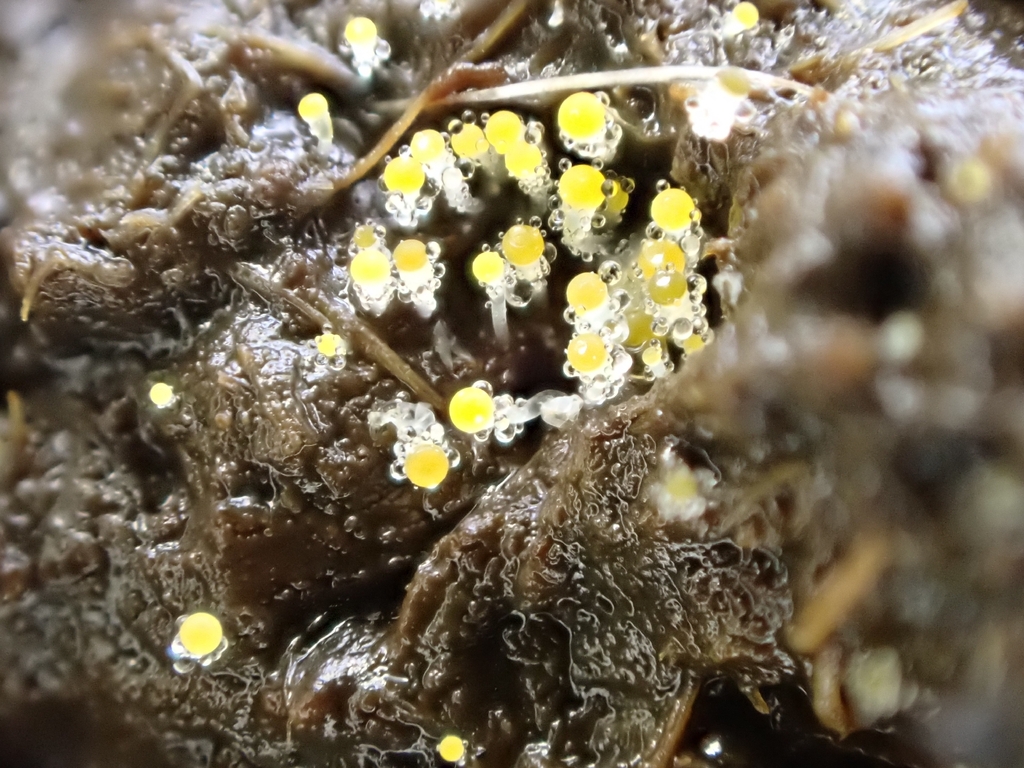
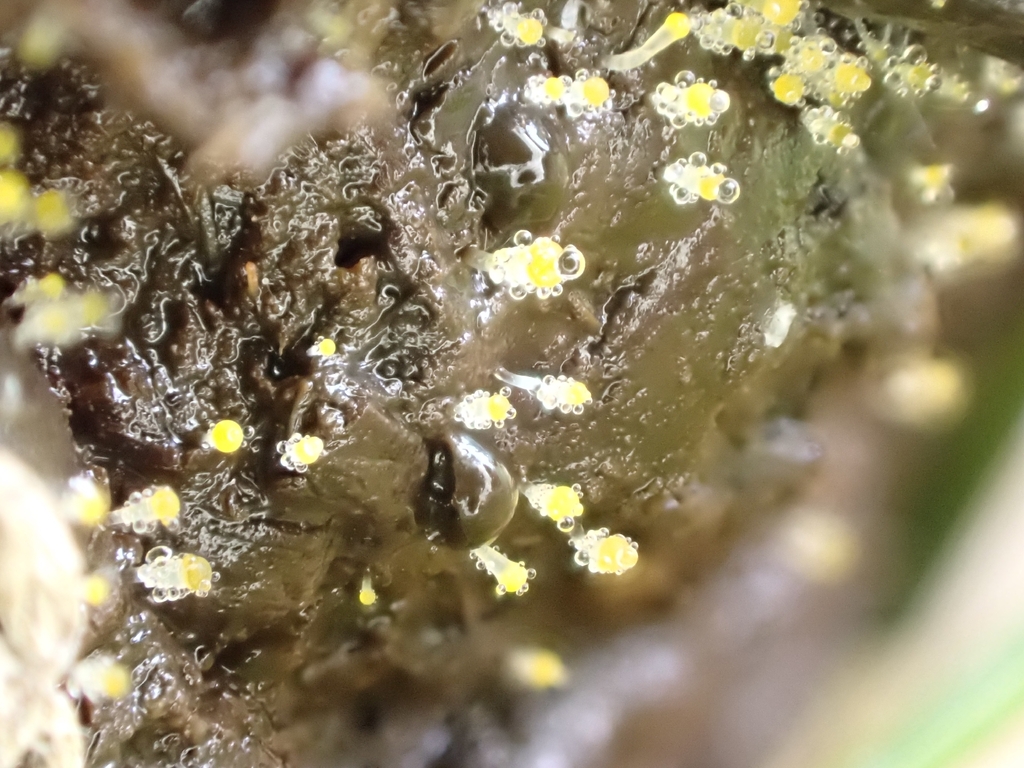
Pilobolus crystallinus is a fungus that exhibits a striking lifecycle culminating in a dramatic spore-dispersal mechanism. The organism develops beneath the surface of its substrate, where oxygen sensitivity restricts growth patterns at the hyphal level. This subterranean habit is interrupted only when the fungus produces its characteristic fruiting structures—the sporangiophore and sporangium—which project above the substrate to perform their explosive dispersal function.
Development unfolds across six distinct stages. During stage I, the sporangiophore elongates at its apex without rotation. Stage II sees the sporangium develop on the sporangiophore. Growth then pauses temporarily in stage III. In stage IV, a subsporangial vesicle expands beneath the sporangium, and this is followed by stage V, where the spore matures while the hypha directly below the subsporangial vesicle continues to elongate. The process culminates in stage VI, when the subsporangial vesicle bursts explosively, projecting the spore-bearing sporangium away from the parent substrate—a mechanism that earned the fungus its common name.
Distribution and Habitat
Pilobolus crystallinus occurs across at least 20 countries, with the highest concentrations recorded in Switzerland (46 observations), the United States (45), and Sweden (34). Strong populations also exist in Denmark, the United Kingdom, and Australia, indicating a widespread presence across both Northern Hemisphere temperate zones and Southern Hemisphere regions. The fungus has established itself across Europe, North America, and Oceania, reflecting its ability to thrive wherever suitable dung substrates are available.
Elevational data show the species ranges from 202.5 metres to 1,570 metres above sea level, with an average occurrence at 754.5 metres. This broad vertical distribution suggests the fungus adapts to diverse climatic conditions across lowland pastures and montane environments, though precise habitat preferences remain unspecified in current records. The fungus colonises herbivore dung across grasslands, meadows, and pastoral settings where livestock grazing or wild herbivore populations provide continuous substrate.
Seasonal activity peaks sharply in September, with 42 recorded observations that month—significantly higher than spring and early summer months. Activity remains relatively elevated through autumn (October, 36 observations) before declining through winter. This pattern reflects the fungus’s dependence on fresh dung availability and favourable moisture conditions, which typically correspond to autumn rainfall and the concentration of herbivore movement during the waning grazing season in temperate regions.
Biology
Lifecycle
Pilobolus crystallinus follows a rapid lifecycle adapted to life on herbivore dung. The fungus begins as vegetative mycelium colonizing fresh fecal matter, breaking down organic material and extracting nutrients. Within days to weeks, fruiting bodies form—distinctive sporangiophores (spore-bearing stalks) that grow perpendicular to the dung surface and develop a dark, liquid-filled bulbous structure at their tip.
The sporangiophore exhibits remarkable phototropism, bending toward light sources to optimize spore dispersal. When turgor pressure builds inside the bulb, the sporangiophore ruptures explosively, launching the sporangium (containing spores) distances of up to 2 metres. This ballistic mechanism allows spores to escape the dung pile and land on vegetation, where herbivores consume them. The spores pass through the animal’s digestive system intact and are deposited in fresh dung, completing the cycle.
Ecological Role
Pilobolus crystallinus functions as a primary decomposer in dung ecosystems. The fungus breaks down cellulose and other polymers in herbivore feces, returning nutrients to soil and facilitating nutrient cycling in pastures and grasslands. By colonizing dung rapidly, it also inhibits pathogenic bacteria and reduces odour production, indirectly improving environmental conditions for grazing animals.
The fungus plays a subtle but important role in dispersing dung across landscapes. Its ballistic spore ejection mechanism ensures that spores land far from the original fecal deposit, promoting genetic diversity and expanding the fungus’s ecological footprint. Many dung-feeding insects and other fungi compete for resources on the same substrate, making P. crystallinus a key competitor in dung microecosystems.
Uses
Pilobolus crystallinus has no culinary or commercial food value. The fungus is not consumed deliberately by humans and poses no direct nutritional benefit. However, the species has attracted considerable scientific interest as a model organism for studying fungal phototropism, spore dispersal mechanisms, and dung ecology.
Research on P. crystallinus has contributed to understanding how fungi locate light sources and respond to environmental cues for reproduction. The explosive spore launch mechanism has inspired biomimetic engineering studies exploring natural projectile systems. Beyond research applications, the fungus remains ecologically important but largely unnoticed in agricultural and pastoral settings, where it quietly processes dung and recycles nutrients into grazing ecosystems.
Conservation and Threats
Pilobolus crystallinus, commonly known as the Dung Cannon, has not been formally assessed by the IUCN Red List. This absence of a formal assessment reflects the limited ecological concern surrounding this fungal species, which thrives across a wide range of dung-rich habitats worldwide. As a saprotrophic organism with no known population declines and no recognized conservation status, the species remains outside formal protection frameworks.
The ecological flexibility of P. crystallinus means it faces minimal direct threats. This fungus depends on the dung of herbivores—particularly cattle, sheep, and horses—which continues to be abundant in agricultural and pastoral systems globally. Changes in livestock farming practices, such as the shift toward intensive indoor systems or the use of antiparasitic drugs that affect dung fauna, could theoretically reduce suitable microhabitats. However, the fungus remains prolific wherever fresh herbivore manure accumulates in warm, moist conditions.
Threats and Habitat Pressures
The primary constraint on P. crystallinus populations is localized habitat availability rather than active threats. In regions where livestock grazing has declined or been replaced entirely by arable monoculture, suitable dung becomes scarce. Similarly, intensive grazing systems with rapid dung removal or mechanical processing may reduce the duration that fresh manure remains available in pastures. Conversely, in rangeland and pastoral zones, the fungus remains abundant and ecologically insignificant.
Conservation Efforts and Legal Status
No formal conservation programmes or legal protections exist for P. crystallinus, nor are any necessary. The species requires no active intervention to maintain viable populations. Its role in the dung ecosystem—dispersing spores through the explosive discharge mechanism that defines its genus—continues unchanged across its global range.
Fun Facts
- 1.The fungus builds a pressurized “cannon” structure called a sporangium at the tip of its fruiting body, which ruptures explosively to eject spores in a sticky matrix that adheres to grass and leaves where grazing animals will eat it.
- 2.Pilobolus is heliotropic, meaning it tracks the movement of the sun throughout the day and positions its spore cannons to aim away from the dung and toward sunlit vegetation where herbivores forage.
- 3.The fungus requires exposure to light to fruiting body formation and sporulation—it effectively “sees” in order to reproduce, using a lens-like structure in its sporangiophore to focus light onto a light-sensitive region.
- 4.After a herbivore ingests spores stuck to grass, the fungus survives passage through the animal’s digestive system and germinates in fresh droppings, completing a dispersal cycle that can span kilometres.
- 5.The sticky spore packets are only projectile-launched during a narrow window after dawn when humidity and turgor pressure are optimal; missed launches mean the spores dry out and lose viability.
- 6.Dung cannon colonies grow so densely on cattle manure that they can turn a fresh pile black within days, making them visibly obvious to any naturalist willing to examine livestock droppings closely.
- 7.The genus name Pilobolus derives from Greek roots meaning “cap-thrower,” a name earned centuries before microscopy could actually reveal the explosive mechanism at work inside each tiny fruiting body.
Sources and References
- Global Biodiversity Information Facility (GBIF)View source
- iNaturalistView source
- WikidataView source
- WikipediaView source
- Encyclopedia of Life (EOL)View source
Ecology
Habitats
Diet
Behavior
Photo Gallery
Shane Austin · CC BY 4.0
Related Species
Was this profile helpful?