
Gnetopsida · Ephedrales
Mountain Ephedra
Ephedra nevadensis
Least ConcernAlso known as: Gray Ephedra, Mormon Tea, Mormon-tea, Nevada Ephedra, Nevada Jointfir
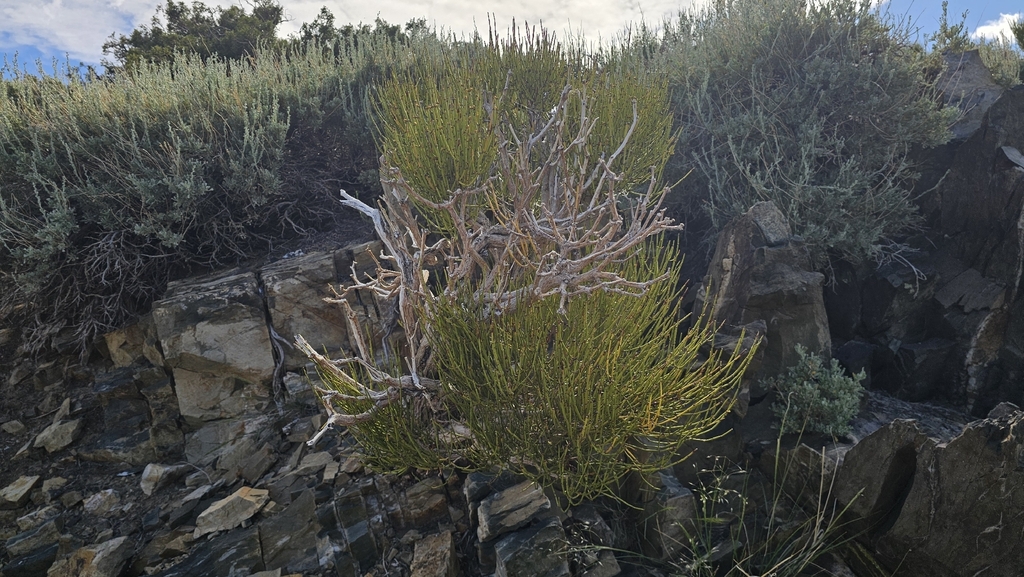
© Indio Brown · iNaturalist · CC BY 4.0
Scientific Classification & Quick Facts
Classification
Known For
Detailed measurements for this species are still being verified.
Ephedra nevadensis, known as Mountain Ephedra, is a sparse, wiry shrub that thrives in some of North America’s most inhospitable high-altitude and arid environments. Its jointed, nearly leafless stems and minimal foliage are masterpieces of drought adaptation, allowing the plant to survive in regions where water is scarce and temperatures swing dramatically between seasons. Despite its unassuming appearance, this species has drawn human interest for centuries—both as a traditional medicinal plant and as a subject of botanical intrigue.
Found exclusively in a single country, Mountain Ephedra maintains a stable conservation status and remains locally common within its narrow range. Its resilience in extreme environments, combined with its unique evolutionary position and historical human use, makes it a valuable subject for understanding plant survival strategies and the deep history of botanical adaptation.
Identification and Appearance
Ephedra nevadensis, commonly known as Mountain Ephedra, is a distinctive woody shrub adapted to high-elevation desert and semi-arid environments. This species is typically encountered at elevations around 1,640 metres, where it occupies rocky slopes and sparse vegetation zones across the Great Basin region and surrounding mountain ranges.
Structure and Growth Form
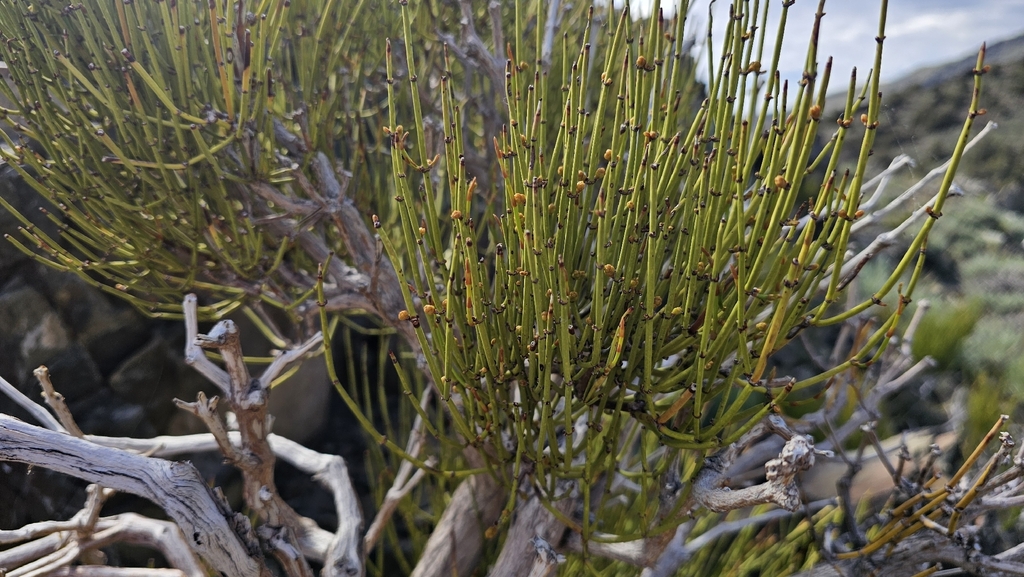
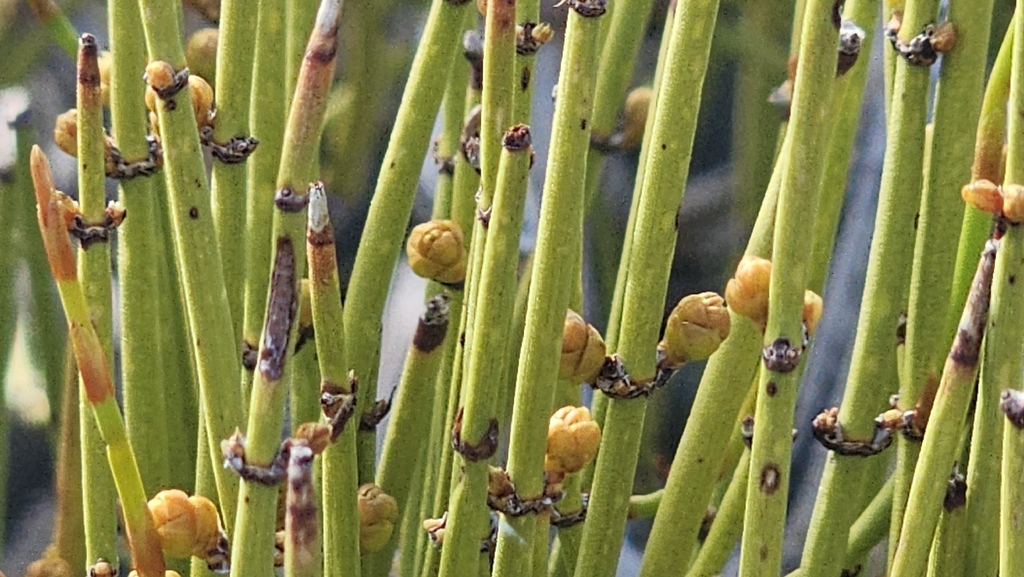
Mountain Ephedra develops as a low, spreading shrub with a compact, bushy growth habit. The plant is characterized by its jointed, angular green stems that perform most of the photosynthetic work in place of conventional leaves. These distinctive segmented branches are typically stiff and brittle, giving the plant a skeletal appearance that is immediately recognizable in its native habitat. The stem colour varies from pale green to grey-green, and older wood often develops a distinctly weathered, dull grey tone.
The leaves are highly reduced and appear as tiny, opposite scales at the stem joints—a characteristic feature of the Ephedra genus that reflects adaptation to extreme aridity. Small cones containing seeds develop at branch tips and are a key identifying feature when the plant is reproductive. The root system is extensive and deep-penetrating, enabling the shrub to access moisture from deep soil layers in its arid environment.
Distinguishing Features
Mountain Ephedra is most easily identified by its bright green, jointed stems combined with its overall sparse, erect growth form. Unlike some related ephedra species, E. nevadensis maintains a relatively upright branching pattern rather than a spreading or trailing habit. The plant’s texture is distinctly rough and angular, and its modest stature makes it a subtle component of high-desert plant communities rather than a visually dominant species.
Distribution and Habitat
Ephedra nevadensis occurs exclusively in the United States, with records concentrated in a single region. GBIF records show 300 documented occurrences, all from US locations. This highly restricted range makes the species endemic to North America and dependent on specific high-elevation conditions.
Elevation and Habitat
Mountain Ephedra inhabits elevations between 1,355 and 1,775 metres, with an average occurrence at 1,638 metres. This narrow elevational band reflects the species’ preference for montane environments where temperature and moisture regimes favour its growth. The plant occupies semi-arid mountain slopes typical of western North American intermontane regions.
Seasonal Presence
Observations peak sharply in April, with 88 records during that month, followed by a secondary peak in May with 60 records. Spring and early summer (March through June) account for the vast majority of sightings, likely corresponding to the species’ flowering and reproductive phenology. By late autumn, observations decline to zero, reflecting dormancy or reduced field detectability during winter months.
Growth and Cultivation
Growth
Ephedra nevadensis, commonly known as Mountain Ephedra, is a low, spreading shrub adapted to arid and semi-arid environments. The plant typically develops a compact, rounded form with fine, jointed green stems that perform most of the photosynthesis. Its branches are stiff and wiry, reflecting its adaptation to harsh desert and mountain conditions where water conservation is critical.
This ephedra species grows slowly, developing a deep root system that allows it to access moisture far below the soil surface. Mature plants remain relatively modest in stature, rarely becoming dominant features in the landscape. The stem structure—fine, segmented, and often chlorophyll-rich—is characteristic of the genus and enables the plant to thrive where traditional broad-leaved shrubs cannot persist.
Flowering and Fruiting
Mountain Ephedra produces small, inconspicuous reproductive structures typical of the genus. The flowers are reduced and wind-pollinated, lacking the showy petals of many desert shrubs. Following successful pollination, the plant develops small, fleshy fruits that contain seeds adapted for dispersal in windy mountain environments.
Cultivation
Ephedra nevadensis thrives in full sun and tolerates extreme aridity once established. The species prefers well-drained soils and is extremely drought-resistant, making it an excellent choice for xeriscaping and low-water gardens. It requires minimal supplemental watering after the initial establishment period and performs poorly in consistently wet conditions.
This shrub is hardy in mountain and high-desert regions where temperatures can drop significantly. It adapts readily to poor, rocky, or sandy soils that would challenge more demanding plants. Cultivation is straightforward for gardeners in arid climates; the plant requires no fertilizer, infrequent pruning, and essentially no pest management once established.
Conservation and Threats
Ephedra nevadensis, commonly known as Mountain Ephedra, holds a conservation status of Least Concern (LC) on the IUCN Red List. This designation indicates that the species faces no immediate threat of extinction and does not meet the criteria for higher-risk categories such as Vulnerable or Endangered. The population trend for this species is currently increasing, a positive indicator of its long-term viability in its natural range.
Threats and Conservation Efforts
Mountain Ephedra faces minimal documented threats at present. The absence of significant conservation challenges contributes to its stable and improving population outlook. Unlike many plant species in arid and semi-arid regions, this ephedra has not experienced the intense pressure from habitat loss, overexploitation, or invasive species that affects other native plants in the western United States.
The increasing population trend suggests that existing conditions in Mountain Ephedra’s native habitats remain suitable for growth and reproduction. No formal, named conservation programs specifically targeting this species have been documented, reflecting its secure status. However, the species benefits indirectly from broader desert and semi-arid habitat protection efforts and from the careful management of public lands in the Great Basin and surrounding regions where it occurs naturally.
Cultural Significance
Mountain Ephedra has not been documented to hold significant cultural, mythological, or symbolic roles in recorded human traditions. Unlike some plant species that feature prominently in folklore, medicine, or ceremonial practices across cultures, Ephedra nevadensis remains largely absent from ethnobotanical records and cultural narratives.
The species does occur within the traditional territories of several Native American peoples of the Great Basin and Southwest, yet no specific cultural uses, names, or associations have been systematically documented in available ethnobotanical literature. This absence may reflect the plant’s limited distribution, its inconspicuous appearance, or simply gaps in historical documentation rather than any lack of ecological presence in these regions.
Fun Facts
- Ephedra nevadensis belongs to the gymnosperms, an ancient group of plants that reproduce via naked seeds rather than flowers and fruits. This lineage stretches back over 300 million years, making ephedras living representatives of some of the earliest seed-bearing plants on Earth.
- The plant earned the colloquial name “Mormon tea” because early settlers in the American West brewed its stems into a caffeine-free beverage. This traditional use reflects the species’ deep cultural roots in desert communities across Nevada and surrounding regions.
- Unlike typical shrubs with broad green leaves, E. nevadensis has virtually no leaves—only tiny, scale-like structures along its jointed green stems. This extreme adaptation dramatically reduces water loss in the arid, dry environments of western North America where it thrives.
- The plant’s multiple common names—Nevada ephedra, gray ephedra, and Nevada jointfir—all reflect different aspects of its appearance and distribution. “Jointfir” refers to the distinctive segmented, joint-like structure of its stems that resembles miniature bamboo segments.
- Despite its modest size and sparse appearance, E. nevadensis is remarkably drought-resistant and can survive in some of the harshest, driest habitats in western North America. Its deep root system and water-conserving stem structure allow it to persist where many other plants cannot establish.
- The plant produces small, papery cones rather than true flowers, with male and female structures often appearing on separate plants. These cones contain the naked seeds characteristic of all gymnosperms and are among the most primitive reproductive structures found in vascular plants.
Ecology
Growing Conditions
Conservation Status
LC (Least Concern) · NT · VU · EN · CR · EW · EX
Photo Gallery
Indio Brown · CC BY 4.0
Related Species
Was this profile helpful?