
Magnoliopsida · Lamiales
Foxglove
Digitalis purpurea
Also known as: Common Foxglove, Digitalis
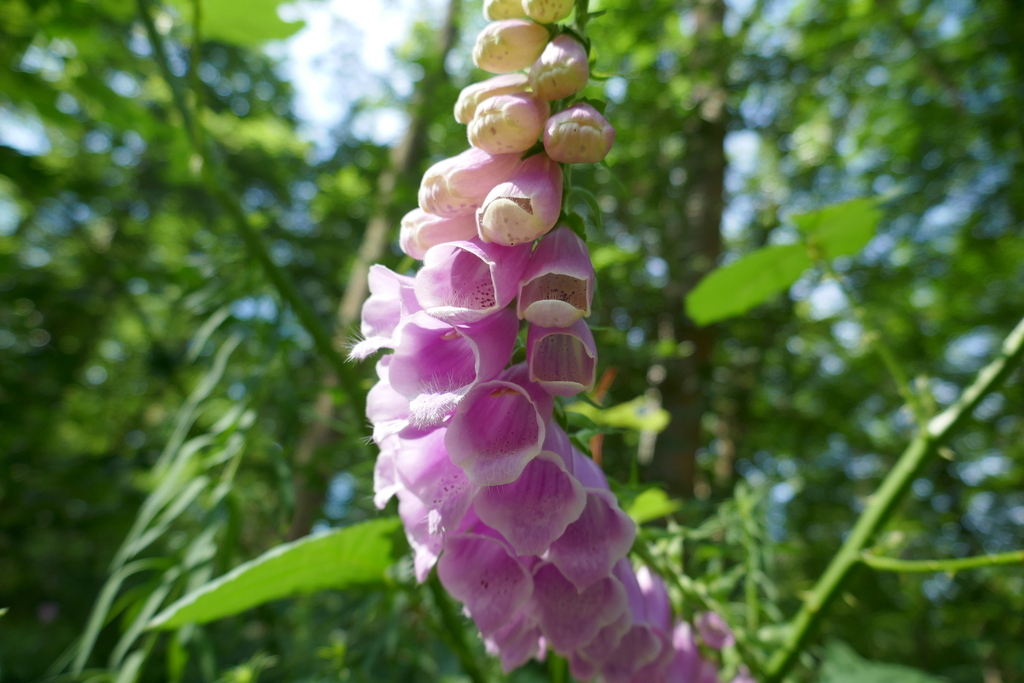
© no rights reserved · iNaturalist · CC0 1.0
Scientific Classification & Quick Facts
Classification
At a Glance
Foxglove stands as one of Europe’s most distinctive wildflowers, with tall spikes of purple, pink, or white tubular flowers that rise dramatically from broad basal leaves. Found across 23 countries and naturalized far beyond its native range, Digitalis purpurea has become a fixture of gardens, roadsides, and disturbed habitats worldwide. Its conservation status remains unknown, yet its prevalence across multiple continents suggests a species well adapted to human-modified landscapes.
What makes foxglove truly remarkable is its dual nature: striking beauty paired with potent toxicity. Every part of the plant contains alkaloids capable of causing serious harm if ingested, yet these same compounds have saved countless lives when properly isolated and dosed by pharmaceutical science. This tension between danger and medicinal value has cemented foxglove’s place in both folklore and modern medicine, making it far more than a simple garden ornament.
Identification and Appearance
Digitalis purpurea is a herbaceous biennial or short-lived perennial that typically lives for two years. The plant has a distinctive two-stage life cycle: in its first year, it produces a rosette of leaves at ground level, while the flowering stem emerges during the second year.
Vegetative Structure
The leaves are spirally arranged, simple, and measure 10–35 centimetres long and 5–12 centimetres broad. They are densely covered with grey-white woolly hairs and glandular trichomes, giving the foliage a soft, pubescent texture. This hairy covering distinguishes foxglove from many similar species and is particularly prominent on young growth.
Flowering Stem and Flowers
The flowering stem develops in the second year and typically reaches 1–2 metres in height, though some specimens may grow taller. Flowers are arranged in a striking, elongated terminal cluster that draws attention from a distance. Each flower is tubular and pendent (hanging downward), with the interior surface of the flower tube heavily spotted or marked with darker pigmentation that serves as a nectar guide for pollinators.
Flower colour is highly variable across populations and especially in cultivated plants. While wild forms are typically purple, variant colours include pink, rose, yellow, and white. This chromatism makes individual plants recognizable even within mixed populations, though purple remains the most characteristic wild form.
Distribution and Habitat
Digitalis purpurea has established a widespread presence across the temperate regions of the Southern Hemisphere and beyond. GBIF records show 67 documented occurrences in New Zealand, 59 in the United Kingdom, and 39 in the United States, making these three countries the primary centres of observation. The species is also well represented in Australia (29 records), Chile (22 records), and Canada (15 records). Across all documented locations, the foxglove has been recorded in 23 countries, indicating successful naturalization far beyond its native European range.
The plant thrives in disturbed and open habitats, particularly in woodlands, hedgerows, and areas recovering from disturbance. It favours cool, moist climates and is notably abundant in maritime temperate zones with high rainfall. In both hemispheres, foxglove colonizes roadsides, abandoned gardens, and woodland edges where competition from established vegetation is reduced. Its ability to flourish in partial shade combined with open ground makes it a characteristic pioneer species in temperate regions worldwide.
Observational data reveals a striking seasonal pattern, with peak records concentrated in January. This concentration likely reflects the flowering phenology of the species in the Southern Hemisphere, where summer conditions in January drive flowering and increased visibility to observers. The pattern underscores the species’ phenological responsiveness to local climate and its prominence as a conspicuous ornamental and naturalized plant during its peak reproductive season.
Growth and Cultivation
Growth
Digitalis purpurea is a biennial herbaceous plant that forms a rosette of large, softly hairy leaves during its first year. The basal leaves are oval to lance-shaped, reaching 15–30 centimetres in length, with a grey-green colour and prominent veining. In the second year, the plant produces an upright flowering stem that can reach 60–150 centimetres tall, depending on growing conditions and soil fertility. The stems are sturdy and unbranched, rising directly from the centre of the leaf rosette.
After flowering and seeding, the plant completes its life cycle and dies, leaving behind thousands of tiny seeds that may germinate in subsequent seasons. This biennial strategy allows foxglove to invest all its energy into reproduction once it reaches maturity, rather than dividing resources between growth and flowering year after year.
Flowering
Flowers appear in the second year of growth, typically from late spring through early summer in temperate climates. The bell-shaped blooms are arranged densely along the upper portion of the stem in a distinctive spike or raceme. Individual flowers are usually deep purple or pink, though white and pale yellow forms occur naturally and in cultivation. Inside each flower, distinctive dark spots or blotches serve as nectar guides, directing pollinators toward the reproductive organs. Flowers open progressively from the base of the spike upward, prolonging the blooming period over several weeks.
After pollination, flowers develop into dry, papery seed capsules containing thousands of dust-like seeds. A single mature plant can produce over 100,000 seeds, which remain viable in the soil for many years. This prolific seed production explains foxglove’s tendency to naturalize in favourable locations, where seedlings may appear for decades after a plant has flowered.
Cultivation
Foxglove thrives in partial shade to full sun, though in warmer regions afternoon shade helps prevent stress and extends the flowering period. The plant tolerates a wide range of soil types but prefers well-draining soil enriched with organic matter. It is hardy across temperate and cool regions, establishing readily in disturbed areas, woodland margins, and gardens throughout its native range and beyond. Young seedlings benefit from consistent moisture during their first growing season, though established plants show reasonable tolerance of drier periods once their root systems are developed.
Propagation is straightforward: sow seeds directly onto moist soil in late summer or early autumn, barely covering them as they need light to germinate. Seedlings can be transplanted once they are large enough to handle. If allowed to set seed, foxglove will self-sow reliably, creating naturalistic drifts in subsequent years. Deadheading spent flower spikes before seed sets will prevent unwanted seedling colonies, though this sacrifices the attractive seed heads that extend ornamental interest into autumn.
Conservation and Threats
Digitalis purpurea, the common foxglove, has not been formally assessed for the IUCN Red List. Its population trend is increasing across much of its native and introduced range, reflecting its resilience as a biennial herb and its capacity to establish in disturbed habitats, woodland edges, and gardens throughout Europe and beyond. This favourable status suggests the species faces no immediate conservation crisis at a global scale.
Threats
No major threats to foxglove populations have been formally documented. The species thrives in secondary habitats created by human activity, including quarries, roadsides, and abandoned agricultural land. Its broad ecological tolerance and prolific seed production insulate it against localised pressures. Where it occurs as a naturalised plant outside its native range, it may become locally abundant and even invasive in some contexts, though this does not constitute a conservation concern for the species itself.
Conservation Efforts
Formal conservation programmes specifically targeting Digitalis purpurea are not necessary given its stable and increasing populations. The species benefits incidentally from broader habitat protection schemes in Europe, particularly those preserving woodland margins and semi-natural grasslands where it naturally occurs. In regions where it has naturalised—such as parts of North America—local land managers sometimes control its spread in sensitive ecosystems, but such measures are ecological rather than conservation-driven.
Fun Facts
- A pharmaceutical pioneer: Digitalis purpurea is the original botanical source of digoxin, a powerful cardiac glycoside used to treat heart failure and arrhythmias for over two centuries. This single plant species revolutionized cardiology and remains clinically important today.
- A two-year life strategy: Foxglove is a biennial, meaning it follows a precise two-stage life cycle—growing as a low rosette of leaves in year one, then sending up a tall flowering spike and reproducing in year two before dying. This strategy allows the plant to invest all its energy into a single, dramatic reproductive event.
- A prolific seed producer: A single foxglove plant can produce thousands of tiny seeds that remain viable in soil for years, allowing it to establish thriving populations in garden settings with minimal intervention. This reproductive abundance is why it persists so readily as a garden favourite across generations.
- An accidental traveller: Originally native to western and central Europe, foxglove has naturalized across temperate regions of North America, Australia, and New Zealand, often arriving via ornamental plantings and establishing wild populations. It now occupies disturbed habitats and grasslands far from its ancestral range.
- A breeder’s delight: The ornamental value of foxglove has inspired horticulturists to develop numerous cultivars with expanded colour ranges—from pure white through cream, pink, and purple—and flower forms that rival the wild species. These cultivars remain some of the most reliable tall perennials and biennials for garden designers.
- Toxicity in every part: Every tissue of the foxglove plant—leaves, stems, seeds, and roots—contains cardiac glycosides, making it lethal if ingested. Even dried material retains its toxicity, and skin contact can cause irritation in sensitive individuals.
Photo Gallery
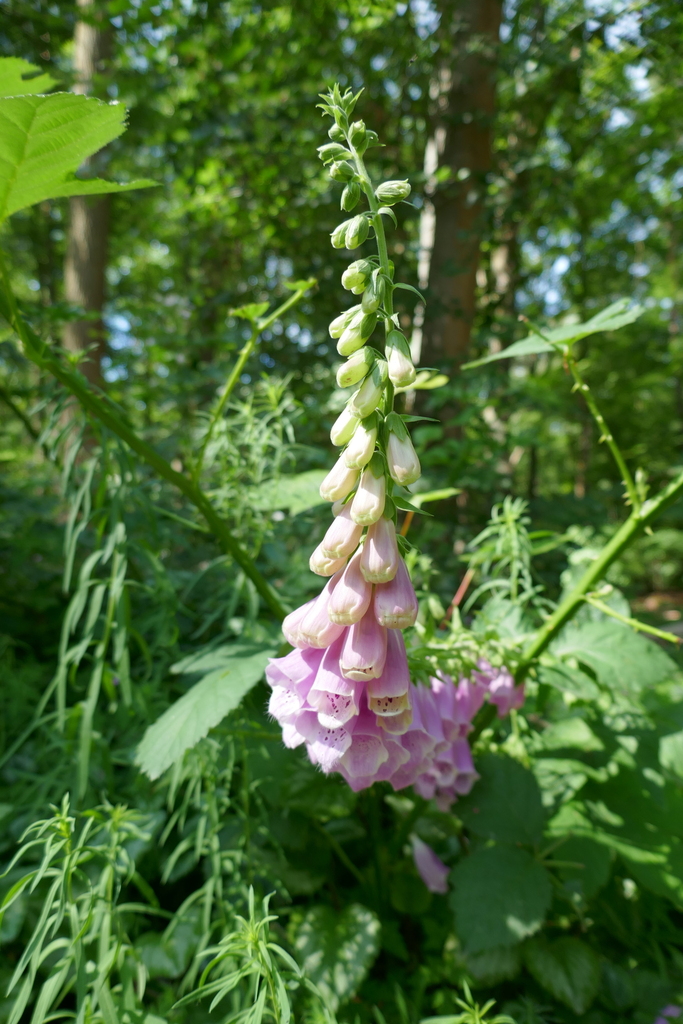
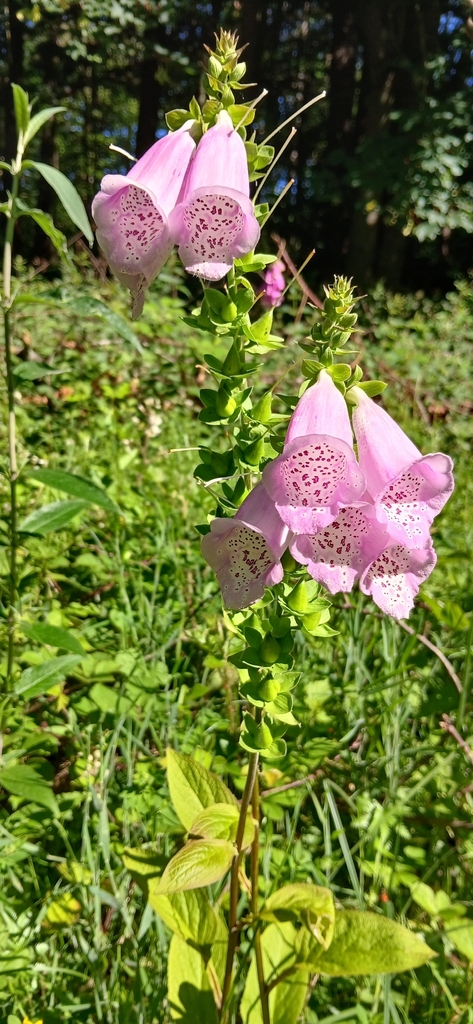
no rights reserved · CC0 1.0
Related Species
Was this profile helpful?