
Liliopsida · Asparagales
Early Purple Orchid
Orchis mascula
Also known as: Early-Purple Orchid, Early-purple Orchid, salep
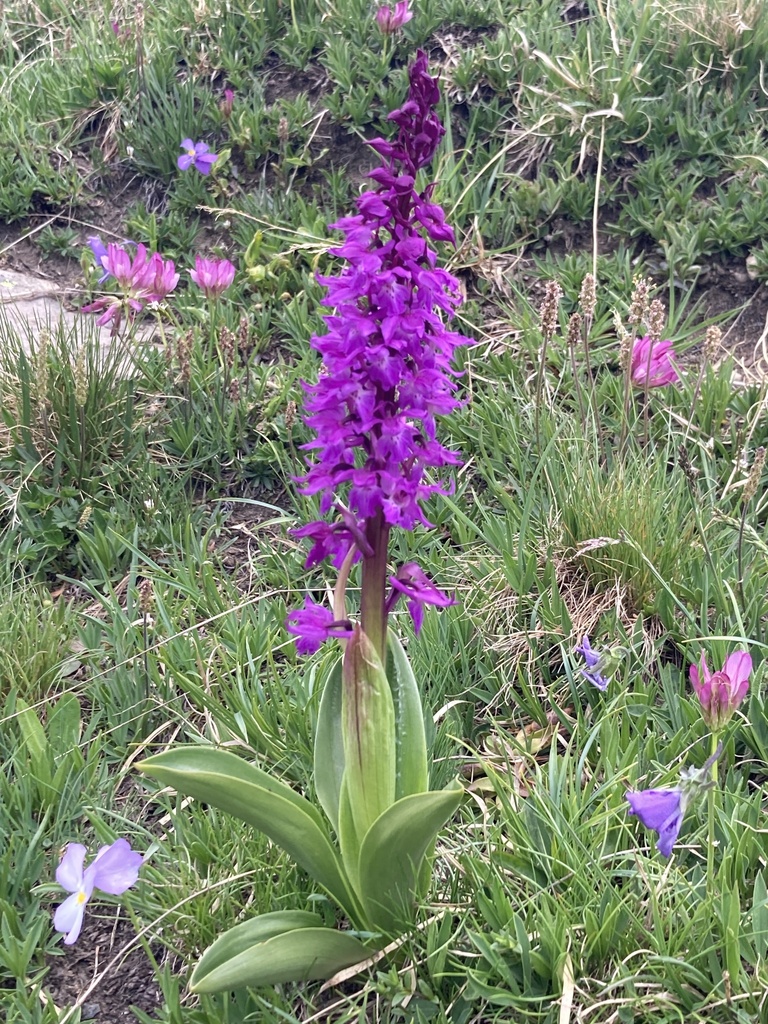
© Antoine MARNAT · iNaturalist · CC BY 4.0
Scientific Classification & Quick Facts
Classification
Known For
Detailed measurements for this species are still being verified.
The Early Purple Orchid emerges from cool European meadows and woodlands in late spring, its magenta flowers signalling the height of the growing season. Orchis mascula is one of Europe’s most recognizable wild orchids, prized by naturalists for its striking purple blooms and distinctive spotted leaves. Found across 18 countries, from the Mediterranean basin to the temperate north, this species has adapted to thrive in grasslands, woodlands, and rocky slopes where few other orchids persist. Its conservation status remains unknown, yet it continues to captivate botanists and amateur naturalists alike.
What makes this orchid especially noteworthy is its phenological precision: it flowers earlier than most competing plants, capturing the attention of spring pollinators before the meadow becomes crowded with blooms. This timing, combined with its ability to form symbiotic relationships with soil fungi, has made it a subject of botanical interest and a bellwether species for monitoring the health of European grassland ecosystems.
Identification and Appearance
Orchis mascula is a perennial herbaceous orchid reaching 50–60 centimetres in height. The stem is green at the base but turns distinctly purple towards the apex, a feature that aids field identification. The root system comprises two rounded or ellipsoid tubers that store nutrients for the plant’s yearly cycle.
Leaves and Inflorescence
Basal leaves are grouped around the stem base in oblong-lanceolate shapes, pale green in colour. Many individuals display brownish-purple speckles across the leaf surface, though this marking is variable and not always prominent. The inflorescence forms a dense cylindrical spike measuring 7.5–12.5 centimetres long, typically containing 6 to 20 flowers tightly clustered along its length.
Flowers
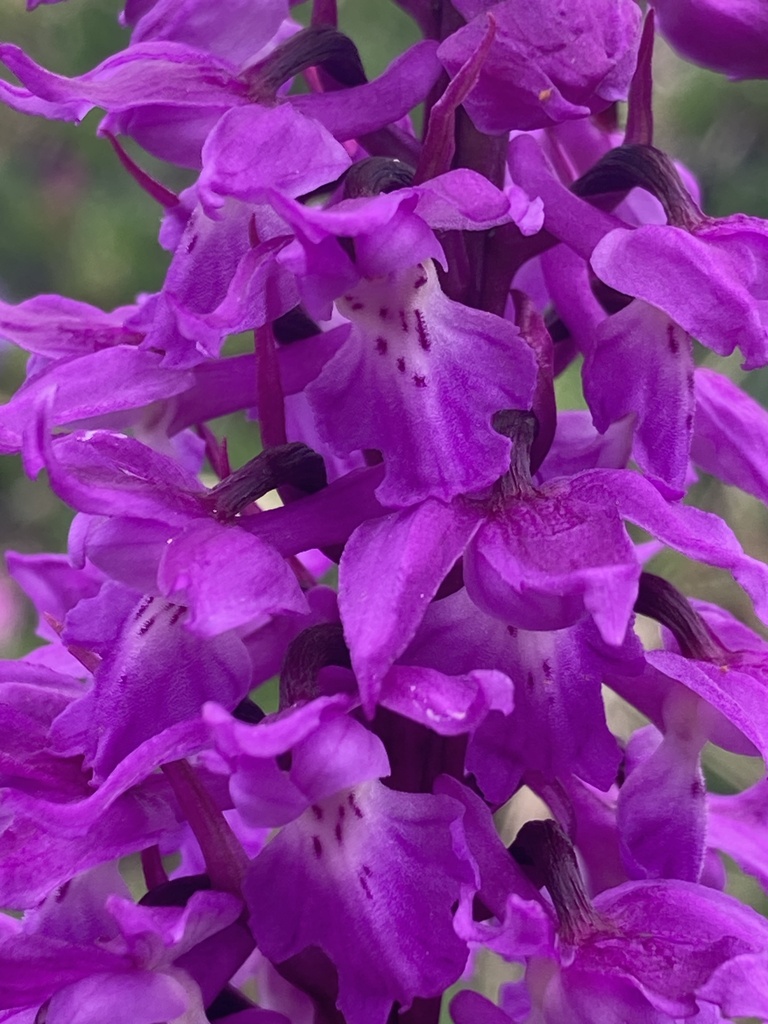
Individual flowers are modest in size, approximately 2.5 centimetres across. Colour ranges from pinkish-purple to deep purple, with variation between populations and individual plants. The compact, densely-packed arrangement of these small flowers creates the characteristic spike that makes the species recognizable during its spring flowering period.
Distribution and Habitat
Orchis mascula is predominantly distributed across western and central Europe, with records concentrated in France, Portugal, and Spain. GBIF records show France as the primary centre of occurrence with 132 documented sightings, followed by Portugal with 66 records and Spain with 37. The species is also present in northern Europe, including the United Kingdom, Germany, Belgium, Sweden, Denmark, and Norway, though at lower frequencies. Across its range, the orchid occupies 18 countries total, indicating a broad but discontinuous European presence.
The species exhibits a highly seasonal phenology, with flowering concentrated in early spring. GBIF records indicate March as the peak month of observation, with 212 sightings recorded during this period. February shows 37 observations, while April records 47 sightings. After April, documented occurrences cease entirely through the remainder of the year, reflecting the orchid’s early emergence and rapid completion of its above-ground lifecycle. This narrow temporal window makes early spring the critical period for field survey and identification.
Specific elevation data for this species are not currently available in compiled records. The taxon occupies diverse habitat types across its range, from lowland meadows and grasslands to woodland margins and semi-natural vegetation in temperate zones. Its ability to persist across Atlantic maritime climates in western Europe and continental conditions in central regions suggests broad ecological tolerance within suitable temperate environments.
Growth and Cultivation
Growth
Orchis mascula is a herbaceous perennial orchid that grows from underground tubers. Plants typically reach 20–60 centimetres in height, producing a single unbranched stem topped with a dense flower spike. The leaves are lance-shaped and often spotted with dark purple or brown markings, emerging from the base of the plant and clasping the stem partway up. Growth follows a seasonal cycle tied to the tubers, which store energy for flowering and survival through dormant periods.
Flowering
The Early Purple Orchid flowers in early spring, typically from March to May depending on climate and latitude. The flower spikes bear 10–40 densely packed blossoms arranged in a cylindrical inflorescence. Individual flowers range from deep purple to pink or occasionally white, with a distinctive three-lobed lower lip that is often paler than the upper petals and sepals. The name “early” reflects this orchid’s habit of blooming well before many other temperate orchids.
After pollination—primarily by solitary bees and other insects—the flowers develop thin-walled seed capsules. These mature over several weeks, eventually drying and splitting to release thousands of tiny seeds adapted for wind dispersal. The entire flowering and fruiting cycle is rapid, allowing the above-ground plant to complete its reproductive effort before summer.
Cultivation
Early Purple Orchid thrives in grasslands and open woodland with well-drained soil and moderate light. The species prefers slightly alkaline to neutral conditions and does not tolerate waterlogging. In cultivation, it is best grown from tubers planted in autumn in gritty, well-draining compost enriched with organic matter; tubers should be placed just below the soil surface. Once established, plants require minimal intervention and perform well in temperate regions with cool winters.
Watering should be moderate during the growing season and withheld almost entirely during dormancy. The orchid benefits from a period of cold—essential for breaking dormancy and triggering flowering. Full sun to partial shade is suitable; in cultivation, dappled shade often produces the most robust plants. Feeding is rarely necessary if the soil is rich in organic matter, though a dilute balanced fertiliser applied during active growth can support flowering.
Conservation and Threats
Orchis mascula, the Early Purple Orchid, currently lacks an official IUCN Red List assessment. However, the species maintains a stable population trend across much of its range in Europe, suggesting it is not facing imminent extinction at present. This stability reflects the orchid’s adaptability to a range of grassland and woodland habitats, though regional variation in abundance exists depending on local land management practices.
Threats
The primary threat to Early Purple Orchid populations is habitat loss and degradation. Intensification of agriculture, particularly the conversion of traditional meadows and pastures to monoculture cropping or improved grassland, eliminates the wildflower-rich swards this orchid requires. Drainage of wet grasslands and the loss of woodland edge habitats further reduce available breeding grounds. Additionally, the application of herbicides and fertilisers in managed landscapes suppresses the orchid’s growth and reproduction, as these plants prefer nutrient-poor soils.
Selective collection poses a localised threat in some regions. The orchid’s attractive purple flowers and underground tubers—historically used in folk medicine and as food—have led to overpicking in accessible populations. Climate change may also influence flowering phenology and the availability of suitable pollinators, though current evidence suggests the species tolerates a broad range of conditions.
Conservation Efforts
Legal protection varies across Europe. In Britain and several continental countries, Orchis mascula is legally protected from picking and trade under national wildlife legislation and the European Habitats Directive. Conservation programmes focus on habitat management: the retention and restoration of species-rich grasslands through reduced-intensity grazing, delayed cutting regimes, and the protection of ancient woodlands and hedgerows all benefit populations. Botanical gardens and seed banks maintain genetic diversity as insurance against local extinctions.
Monitoring of populations through volunteer recording schemes and herbarium data helps track long-term trends and identify areas requiring intervention. Several UK and European nature reserves maintain Early Purple Orchid populations as part of broader grassland conservation objectives.
Cultural Significance
Orchis mascula is most famous for its probable connection to Shakespeare’s Hamlet. In Act 4, Scene 7, the character Gertrude describes Ophelia gathering flowers, including “long purples” alongside crow-flowers, nettles, and daisies. The passage hints at bawdy folk names for these plants—names that “liberal shepherds” used but “our cold maids” would not speak aloud, instead calling them “dead men’s fingers.” Many scholars believe the early purple orchid is the species Shakespeare had in mind, though this identification remains uncertain; no contemporary herbals from Shakespeare’s era explicitly link the names “long purples” or “dead men’s fingers” to Orchis mascula.
The orchid family earned crude folk names across Europe based on the shape of their tubers, which resemble testicles. Names recorded for Orchis species include “dogstones,” “dog’s cods,” “cullions,” and “fool’s ballocks”—euphemistic and explicit terms alike. Some scholars, including Sidney Beisly in 1864, proposed that “dead men’s fingers” originally referred to orchid species with palmate (hand-shaped) roots, and that the name may have been mistakenly transferred to Orchis mascula over time. However, this theory remains unverifiable. The enduring ambiguity about which orchid Shakespeare referenced highlights how folk nomenclature and literary allusion can intertwine across centuries, often without definitive proof.
Fun Facts
- The early purple orchid blooms noticeably earlier than most other orchid species in temperate regions, often flowering in spring before many woodland plants have fully emerged from dormancy.
- Male and female early purple orchid flowers are visibly different—plants produce flowers with distinctly different shapes and colors depending on the pollinator species they attract, an adaptation called sexual dimorphism in floral form.
- The species name mascula (meaning “male”) refers to the masculine appearance of its flowers, which feature pronounced protruding structures that resemble male reproductive anatomy—a taxonomic naming choice that reflects 18th-century European naturalists’ observations.
- Early purple orchids rely on specific bee and wasp species for pollination, and they produce a scent that mimics the pheromones of their pollinators, essentially tricking insects into visiting the flowers.
- Unlike many orchids that store nutrients in a single bulb, early purple orchids develop paired tubers underground, which allow the plant to survive harsh winters and regenerate reliably each spring.
- The plant produces thousands of dust-like seeds in a single seed pod, yet fewer than one in a million will develop into a mature flowering plant—a reproductive strategy that compensates for extremely low germination rates in the wild.
Ecology
Growing Conditions
Photo Gallery
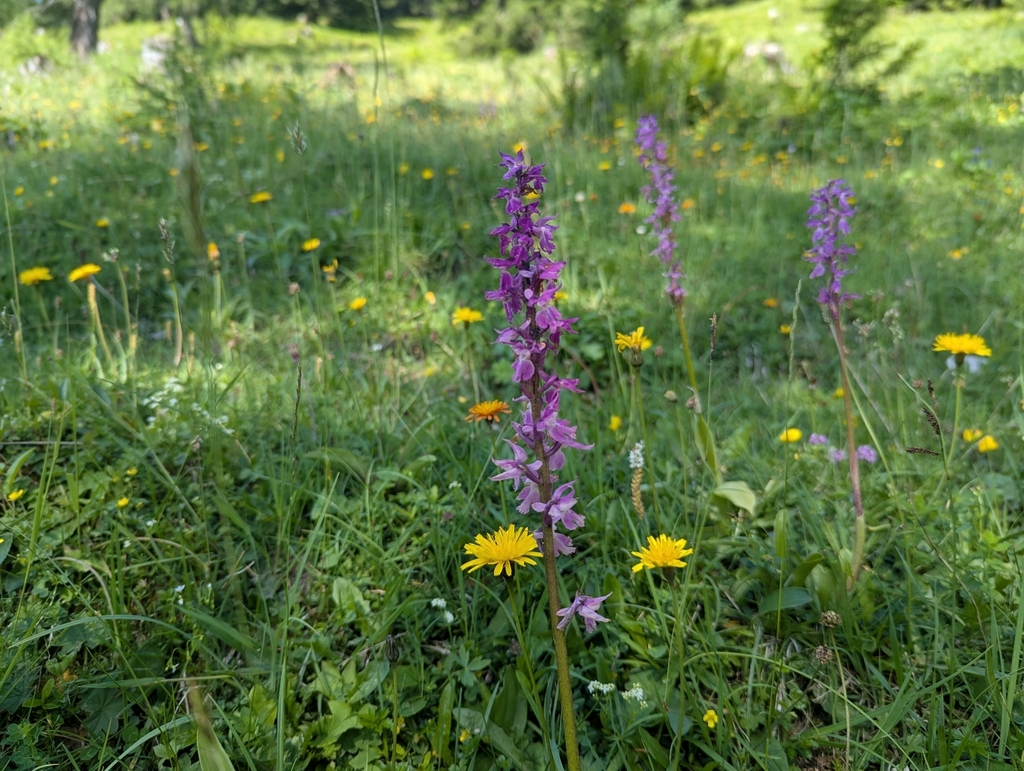
Antoine MARNAT · CC BY 4.0
Related Species

Was this profile helpful?