
Liliopsida · Asparagales
Lady’s Slipper Orchid
Cypripedium calceolus
EndangeredAlso known as: Lady's-Slipper, Lady's-slipper, Lady's-slipper Orchid, Lady's-slipper orchid, Ladyu2019s Slipper Orchid
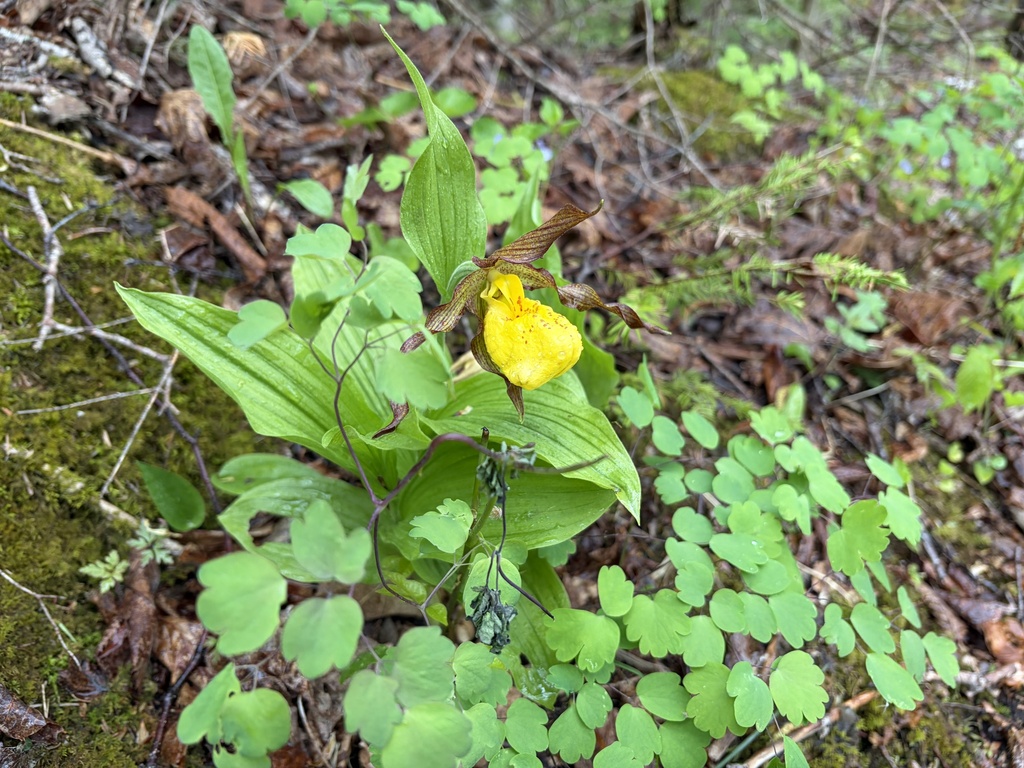
© Margaret Northfield · iNaturalist · CC BY 4.0
Scientific Classification & Quick Facts
Classification
Known For
Detailed measurements for this species are still being verified.
Cypripedium calceolus, the Lady’s Slipper Orchid, is instantly recognizable by its distinctive pouch-shaped labellum—a modified petal that resembles a tiny golden slipper. Found across 14 countries in temperate regions of Europe and Asia, this orchid ranks as Least Concern on the IUCN Red List, though populations remain locally vulnerable. The flower’s unusual morphology is far more than decoration; it represents an exquisite evolutionary solution to attracting specific pollinators.
What makes this orchid particularly compelling is the intersection of its specialized reproduction and its cultural significance. Across its range, the Lady’s Slipper has captivated human attention for centuries, featured in folklore, horticulture, and botanical art. Understanding the ecology and biology of this temperate orchid offers insight into how flowering plants have evolved extraordinary mechanisms to ensure their survival in competitive ecosystems.
Identification and Appearance
Cypripedium calceolus is the largest-flowered orchid species in Europe, reaching heights of up to 60 centimetres. The flowers themselves are remarkably broad, expanding to 9 centimetres across, making them unmistakable when in bloom. Before flowering, the plant can be distinguished from other orchids by its notably large, ovate leaves—each measuring up to 18 centimetres long and 9 centimetres wide. Like all orchids, the leaves display parallel venation running lengthwise along the blade.
Flower and Petal Characteristics
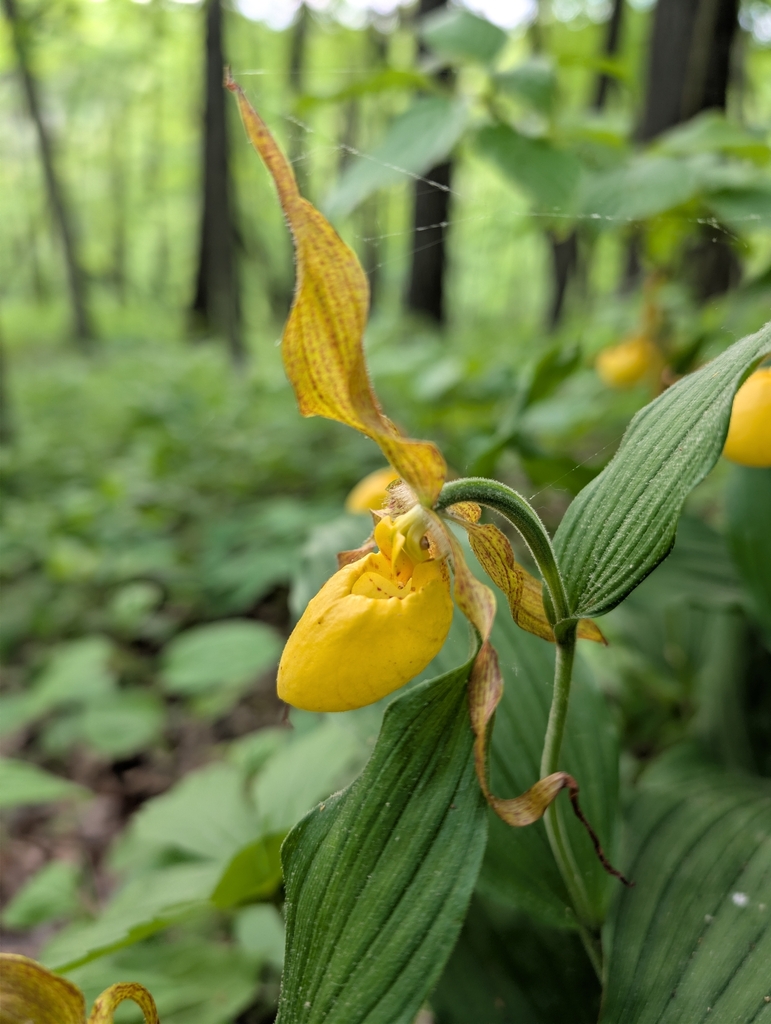
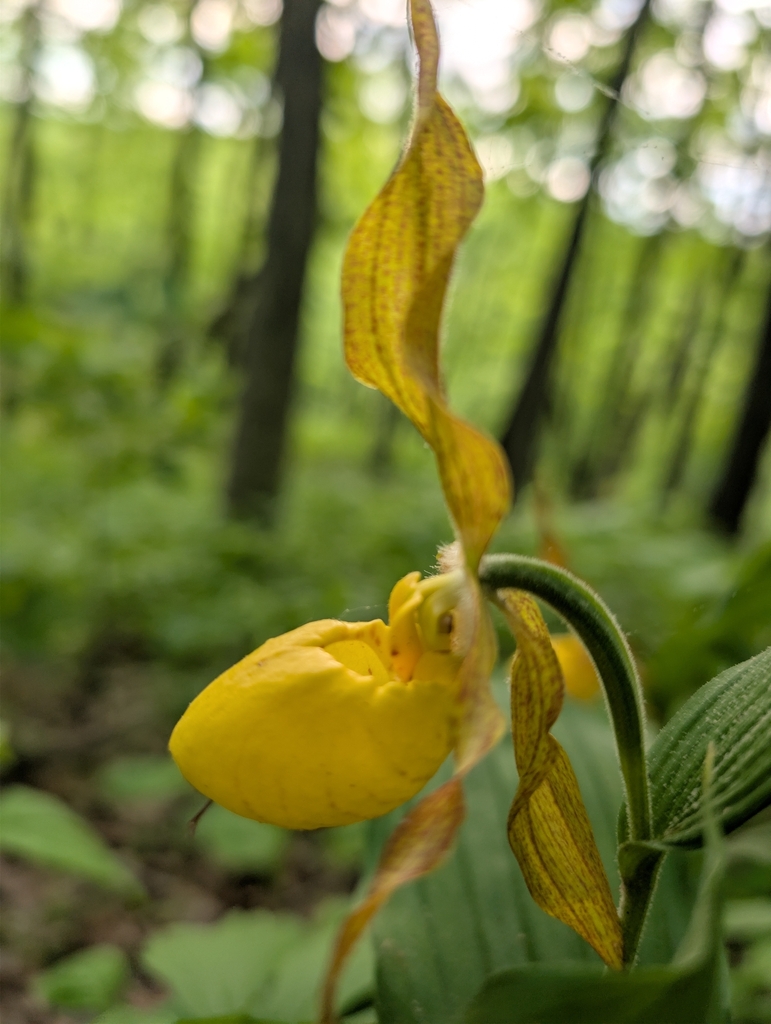
Each shoot typically produces one or two flowers with distinctive long petals that are often twisted. The sepals and petals vary considerably in colour, ranging from red-brown to black, with rare green forms occasionally observed. The flower’s most distinctive feature is the inflated, slipper-shaped labellum (lower lip), which gives the species its common name and traps visiting pollinators. This labellum is usually bright yellow, contrasting strikingly with the darker upper petals.
Vegetative Structure
Individual shoots produce up to four leaves arranged along the stem. The parallel veination typical of orchids is clearly visible on all foliar surfaces. The overall morphology reflects the plant’s status as a perennial herbaceous species adapted to temperate European habitats, typically growing at an average elevation of 722 metres.
Distribution and Habitat
Cypripedium calceolus is distributed across central and northern Europe, with a pronounced concentration in the Alpine and sub-Alpine regions. Austria and Norway host the largest populations, with 79 and 71 records respectively. Germany, the Czech Republic, and Ukraine follow as secondary strongholds, together with smaller but significant populations in Sweden, Switzerland, Russia, Poland, and Slovakia. The species occurs across 14 countries in total, reflecting its preference for cool temperate and boreal climates.
This orchid occupies elevations between 516 and 1,347 metres, with an average of 722 metres. It thrives in mountainous terrain, particularly in limestone-rich woodlands, meadows, and scrubland habitats characteristic of Central European uplands. The species favors calcareous soils and partial shade, conditions typical of transitional forest edges and open woodland communities.
Flowering and observation records show a striking seasonal concentration. May is overwhelmingly the peak month, accounting for 264 of 301 total records, with April representing a secondary period of activity at 27 records. Records from March and June are minimal, and the species is essentially absent from observation records between July and December. This pattern reflects the tight phenology of the orchid, which emerges, flowers, and sets seed within a compressed spring window before summer dormancy.
Growth and Cultivation
Growth
Cypripedium calceolus is a herbaceous perennial orchid that grows from a rhizomatous root system. The plant develops upright stems bearing alternate, pleated leaves that emerge from the base. Mature plants typically reach 20–60 centimetres in height, though height varies with growing conditions and population. Growth is slow and steady, with plants establishing gradually over several seasons before reaching reproductive maturity.
The species forms tight clumps that expand slowly through rhizome extension. Individual shoots may take three to four years to flower after first emerging, making patience essential for cultivators. Once established, populations can persist for decades in suitable sites, though disturbance or overcollection can severely damage wild colonies.
Flowering
Lady’s Slipper Orchid produces distinctive flowers in late spring to early summer, typically from May through June in temperate regions. Each stem terminates in a single flower (occasionally two or three in vigorous plants) that is remarkable for its modified lower petal, which forms a prominent pouch or “slipper”—a structure that gives the species its common name. The pouch is typically yellow or greenish-yellow with reddish-brown markings, while the lateral petals and sepals are greenish-brown or purplish.
Flowers are insect-pollinated, relying primarily on small bees and flies that enter the pouch and exit through specific openings, depositing pollen in the process. Successful pollination leads to capsule development containing thousands of minute, dust-like seeds. These seeds require specific mycorrhizal fungi to germinate and establish; this fungal dependency makes propagation from seed difficult outside natural or carefully controlled laboratory conditions.
Cultivation
Successful cultivation demands cool, well-drained conditions that mimic the orchid’s native woodland habitats. The species thrives in damp but not waterlogged soil with good organic content. Partial shade is essential—full sun exposure often stresses plants, while dense shade may prevent flowering. In areas with cold winters, hardy specimens can survive freezing temperatures once established, though young plants benefit from winter protection in exposed sites.
Gardeners should source nursery-propagated stock rather than attempting field collection, which harms threatened wild populations. Plants benefit from cool dormancy during winter months and may decline in consistently warm climates. Transplanting is best done in early spring before growth begins. Regular monitoring for the orchid’s fungal partners and avoidance of chemical pesticides—which can disrupt beneficial fungi—are key to long-term success.
Conservation and Threats
Cypripedium calceolus, the Lady’s Slipper Orchid, holds a Least Concern status on the IUCN Red List, indicating that the species is not currently at high risk of extinction. This classification reflects its wide distribution across temperate regions of Europe and Asia, though its status varies significantly by region. The global population trend is increasing, a positive sign that conservation efforts and legal protections in key areas are yielding results.
Threats
Despite its Least Concern designation, Cypripedium calceolus faces localized threats that continue to impact populations in specific regions. Habitat loss remains a primary concern, particularly in Western Europe where wetlands, woodland margins, and calcareous grasslands have been converted to agricultural land or urban development. The orchid’s dependence on particular soil conditions and associated mycorrhizal fungi makes it vulnerable to habitat fragmentation, which disrupts both its physical growing space and the fungal partnerships essential for seed germination and root nutrition.
Illegal collection and trade pose an additional threat to wild populations. The plant’s ornamental appeal and difficulty in cultivation drive demand for wild-collected specimens, especially in regions where enforcement is weak. Climate change also presents an emerging risk, as shifting precipitation patterns and temperature extremes may disrupt the delicate ecological balance that sustains these orchids in their native habitats.
Conservation Efforts
Across much of its range, Cypripedium calceolus benefits from strong legal protection. The species is listed on Appendix II of the Convention on International Trade in Endangered Species (CITES), restricting commercial trade. Many European countries have designated it as a protected species under national legislation, with habitat protection laws in place to safeguard its woodland and meadow habitats. In regions such as Scandinavia and parts of Central Europe, populations have stabilized or increased following the establishment of protected areas and habitat restoration programmes.
Cultural Significance
Cypripedium calceolus holds a prominent place in European heraldry and philately. The orchid appears on postage stamps from over 20 countries, including Austria, France, Norway, Sweden, Russia, and the United Kingdom. Snåsa Municipality in Norway has even incorporated the flower into its official coat-of-arms, reflecting deep regional attachment to this distinctive species.
In Russian folklore, the plant features prominently in traditional medicine and spiritual practice. A znakharka—a Russian wise woman—calls it by several evocative names: Adam’s head, Adam’s grass, and Cuckoo’s slippers. Folk tradition ascribes it healing power against various ailments and the ability to ward off evil spirits. Across Asia and the Old World more broadly, Cypripedium preparations have been valued for their reputed properties as an analgesic, diuretic, and nervine agent.
Historically, lady’s slipper became a standard remedy for nervous disorders in Western herbalism, used as a mild stimulant and antispasmodic. The plant earned contradictory reputations in folklore—described simultaneously as both a stimulant and a sedative—though no scientific evidence currently supports either claim. In some traditional practices, the flower was applied topically to soothe skin irritations and calm inflamed tissue.
Fun Facts
- Cypripedium calceolus is the type species for the entire genus Cypripedium, meaning all other lady’s-slipper orchids are classified by comparison to this single species. This foundational status reflects its importance in orchid taxonomy and its distinctive characteristics.
- The flower’s distinctive pouch-shaped labellum (lip) functions as a trap for pollinators—insects enter the hollow chamber to collect nectar but must squeeze past the column to escape, picking up pollen in the process. This clever mechanism has evolved over millions of years to ensure reliable pollination.
- Native to both Europe and Asia, Cypripedium calceolus spans an enormous geographic range across temperate and boreal regions, from the British Isles to Japan. Its broad distribution reflects its ability to thrive in diverse woodland and grassland habitats.
- The species depends on mycorrhizal fungi to germinate and establish itself in nature, meaning it cannot survive without this fungal partnership in the soil. Even cultivated specimens often require careful fungal inoculation to grow successfully.
- In Europe, populations have declined dramatically due to habitat loss, overcollection, and illegal trade, earning the species protected status in many countries. Restoration projects now focus on reintroducing the orchid to traditional meadows and woodlands where it once flourished.
- Lady’s slipper orchids are among the slowest-growing orchids; a plant from seed may take 7 to 12 years or more to produce its first flower. This extended juvenile period makes the species particularly vulnerable to disturbance in wild populations.
- The flower’s yellow pouch and deep burgundy sepals create a striking visual display that has made it prized by gardeners and botanists for centuries, driving both legitimate cultivation efforts and destructive wild collection. Today, most specimens in horticulture come from nursery propagation rather than wild collection.
Conservation Status
LC · NT · VU · EN (Endangered) · CR · EW · EX
Photo Gallery
Margaret Northfield · CC BY 4.0
Related Species

Was this profile helpful?