
Liliopsida · Liliales
Turk’s-cap Lily
Lilium martagon
Also known as: Martagon, Martagon Lily, Turban Lily, Turk's-cap, Turkscap Lily
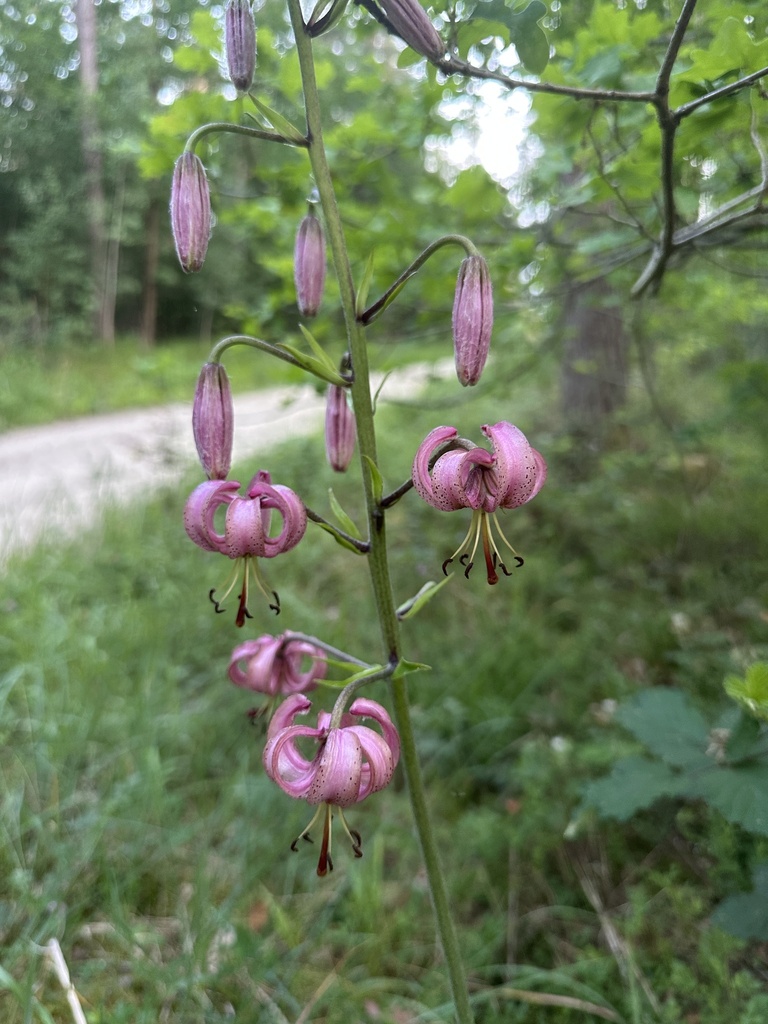
© Katrin Simon · iNaturalist · CC BY 4.0
Scientific Classification & Quick Facts
Classification
Known For
Detailed measurements for this species are still being verified.
Lilium martagon, the Turk’s-cap Lily, is a striking perennial flower native to temperate regions across Europe and Asia. Named for its distinctive reflexed petals that curl backward like a turban, this lily produces clusters of pendant blooms in shades of pink, purple, or occasionally white, each flower nodding downward on slender stems. The species has colonized a remarkable geographic range, now recorded across 25 countries, making it one of the most widespread lilies in the Northern Hemisphere.
While its conservation status remains unknown, the Turk’s-cap Lily continues to thrive in wild populations and cultivation alike, earning favour among naturalists and horticulturists for its elegant form and reliable hardiness. The species demonstrates remarkable adaptability to diverse climates and soils, from montane meadows to woodland margins, positioning it as a resilient representative of temperate lily diversity and a valuable subject for understanding how perennial bulbs persist across fragmented landscapes.
Identification and Appearance
Lilium martagon, the Turk’s-cap Lily, is a robust herbaceous perennial that grows between 1 and 2 metres tall. The plant is stem-rooting, meaning it develops roots along the buried portion of the stem as well as at its base, an adaptation that provides stability and nutrient uptake across a wider zone of soil.
Flowers and Colour
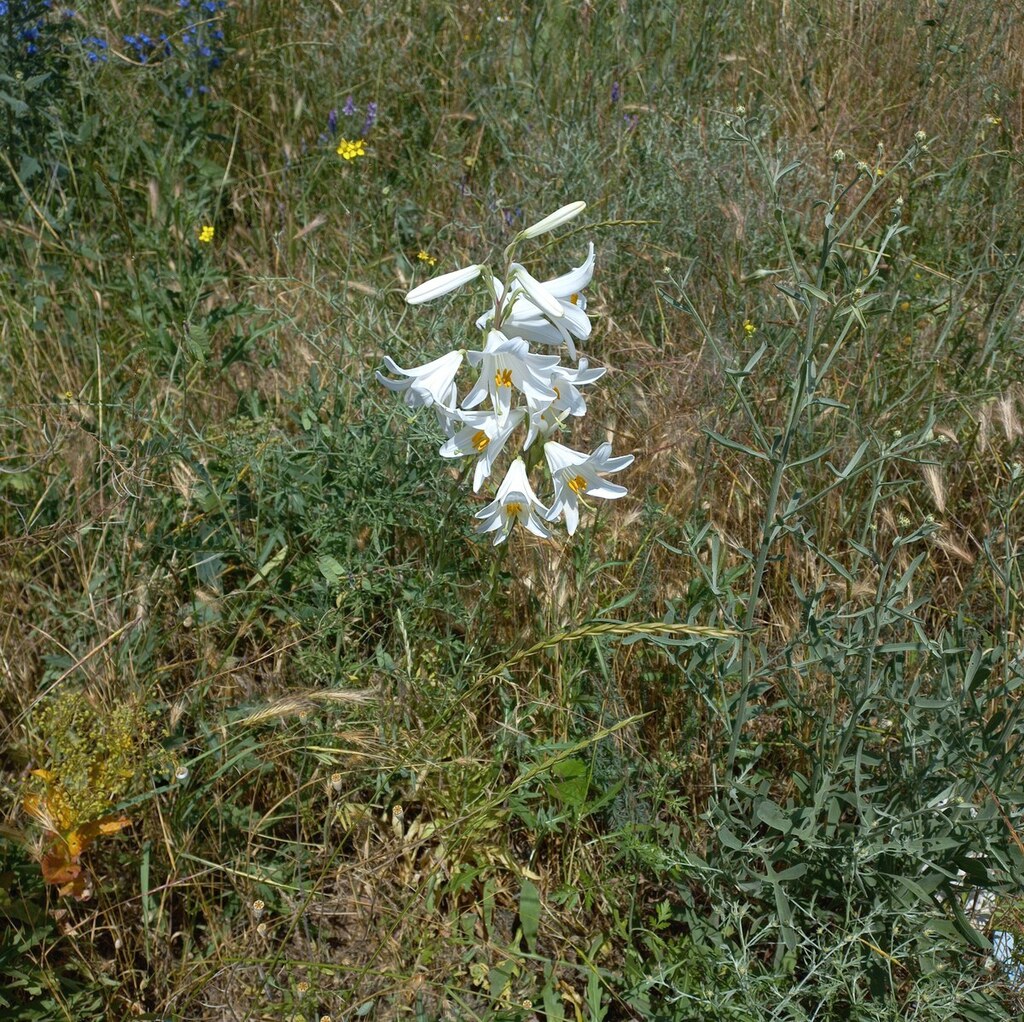
The flowers are the plant’s most distinctive feature. Typically pink-purple with dark spots, the blooms exhibit considerable colour variation across populations, ranging from near white through intermediate shades to near black. Each flower is sweetly scented. A single vigorous plant can bear numerous flowers—up to 50 have been recorded—arranged in a loose raceme along the stem, creating a dramatic display that justifies the common name, which refers to the reflexed (curved backward) petals that resemble a Turkish turban.
Stems and Foliage
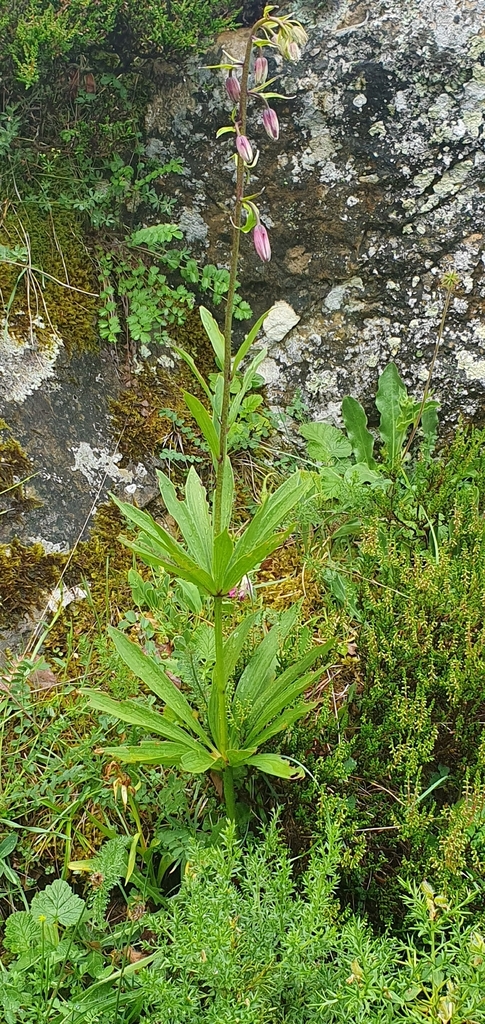
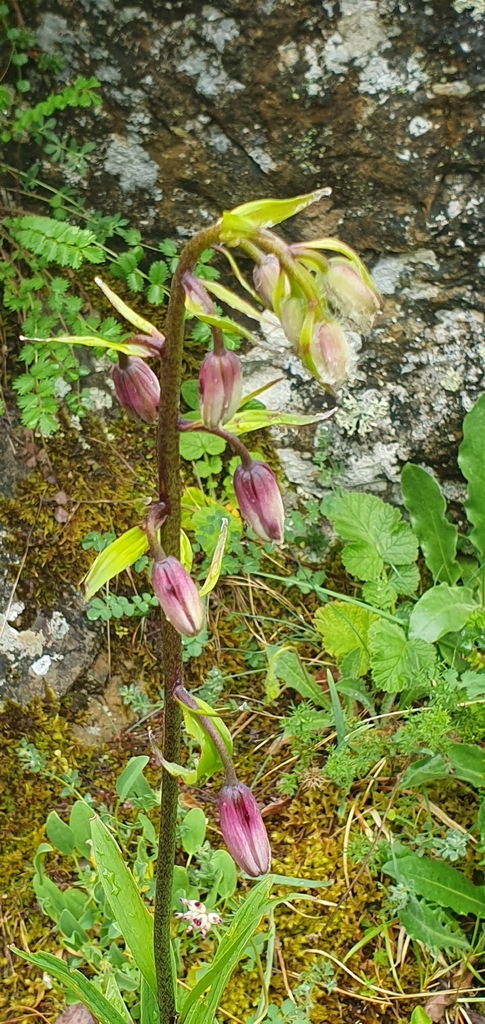
The green stems are often flushed with purple or red pigmentation, particularly toward the base. Leaves are elliptic to inversely lanceolate and arranged mostly in whorls around the stem. They reach up to 16 centimetres in length and are often covered with fine hairs on their undersurfaces. This hairiness, combined with the whorled arrangement and stem colouration, helps distinguish L. martagon from related lily species in the field.
Distribution and Habitat
Lilium martagon is distributed across central and eastern Europe, with recorded occurrences spanning 25 countries. Austria and Germany represent the strongholds of its range, accounting for 109 observations combined, followed by Sweden and the Czech Republic with 32 records each. France, Ukraine, Hungary, and Italy also support established populations, while Russia and Spain mark the periphery of its known distribution.
The species occurs at an elevation of approximately 1,610 metres, indicating a preference for montane environments. This elevation suggests the plant thrives in cooler, higher-altitude zones where growing conditions differ markedly from lowland regions.
Phenological data reveal a pronounced seasonal pattern strongly concentrated in spring months. April emerges as the dominant observation period with 247 records, representing the peak of documented flowering and sighting activity. March records (38) and the transition months of January–February (15 combined) suggest early emergence and flowering. The complete absence of observations from May through December indicates either dormancy or reduced visibility during the growing and dormant seasons, typical of temperate bulbous perennials that flower in mid-to-late spring and then retreat underground.
Growth and Cultivation
Growth
Lilium martagon, the Turk’s-cap Lily, is a bulbous perennial that grows from underground bulbs. The plant develops tall, slender stems that typically reach 0.6 to 1.5 metres in height, though mature specimens may grow taller under optimal conditions. Growth emerges annually from the bulb, with new shoots appearing in spring.
The species produces lance-shaped leaves arranged alternately or in whorls along the stem. Foliage emerges early in the growing season and remains until late summer. The bulbs themselves gradually increase in size with age, allowing established plants to become more robust and produce additional flowering stems.
Flowering
Turk’s-cap Lily flowers in mid to late summer, typically from June through August depending on latitude and local climate. Each plant produces numerous flowers arranged in a pyramidal raceme, with blooms opening progressively from bottom to top. The distinctive flowers are small to medium-sized, with strongly reflexed petals that curl backward dramatically—a characteristic that inspired the common name “Turk’s-cap,” as the shape resembles a Turkish fez.
Flower colour ranges from pale pink to deep reddish-purple, often with darker spots or papillae on the inner surfaces. The blooms are fragrant and attract pollinators. Following pollination, the plant develops seed capsules containing numerous small, flat, winged seeds that disperse naturally in autumn.
Cultivation
Turk’s-cap Lily thrives in well-drained soil and prefers locations with good sunlight, though it tolerates partial shade better than many lily species. The plant is winter-hardy across a wide temperate range and requires no special frost protection in most regions. Bulbs should be planted in autumn or early spring at a depth of 15–20 centimetres, with spacing of 20–30 centimetres between plants.
Water the bulbs regularly during the growing season, but ensure drainage is excellent to prevent bulb rot. Once established, Turk’s-cap Lily is relatively low-maintenance and tolerates moderate dry periods. Mulching around the base helps conserve moisture and regulates soil temperature. After flowering, allow foliage to die back naturally before removing it, as the plant redirects energy back to the bulb for next season’s growth.
Conservation and Threats
Lilium martagon, the Turk’s-cap Lily, has not been formally assessed by the IUCN Red List, so no official conservation status designation exists. However, the species shows an encouraging population trend: numbers are increasing across its range. This positive trajectory reflects both the plant’s resilience and successful local management practices in key regions.
Population Status and Trend
Unlike many wild plants, L. martagon is not currently in steep decline. Its wide distribution across temperate Europe and Asia, combined with thriving populations in protected meadows and woodland margins, supports the upward population trend. The species benefits from its presence in multiple nature reserves and its appeal to horticulturists, which has indirectly promoted habitat awareness and protection.
Conservation Efforts and Legal Protections
Several European countries recognize L. martagon in their flora protection lists. In parts of Central Europe, including sections of the Alps and Carpathians, the species is legally protected from picking and trade. Botanical gardens and seed-banking initiatives also preserve genetic diversity, reducing reliance on wild collection. These measures, combined with habitat restoration projects in traditionally managed grasslands and forests, have helped sustain populations.
Fun Facts
- The Turk’s-cap lily spans one of the widest native ranges of any lily species, stretching from Portugal in western Europe across the entire Eurasian continent to Mongolia—a geographic reach of over 8,000 kilometres that reflects its remarkable adaptability to diverse climates and soils.
- The distinctive reflexed petals that give this lily its common name (resembling a Turkish turban) serve a functional purpose: they protect the stamens and style from rain and excessive moisture, improving pollination success in humid European meadows.
- Turk’s-cap lilies produce bulbils—small bulblets that form along the stem underground—allowing a single plant to clone itself without relying on seeds, making it a survivor in variable growing conditions.
- The bulbs of Lilium martagon are edible and have been harvested and eaten by rural communities across Europe and Asia for centuries, though they are now primarily left in the wild to support declining populations.
- This lily is a favourite of hoverflies and long-tongued bees, which feed on its abundant nectar; in return, the insects provide pollination services that help produce viable seed for the next generation.
- The flowers emit a subtle, sweet fragrance in the evening that intensifies at dusk, attracting nocturnal moths that visit when daytime pollinators have ceased their activity.
- Turk’s-cap lilies can take 7–8 years to reach flowering size from seed, but once established, individual bulbs can persist in the same location for over 20 years with minimal disturbance.
Ecology
Growing Conditions
Photo Gallery
Katrin Simon · CC BY 4.0
Related Species
Was this profile helpful?