
Liliopsida · Liliales
Garden Tulip
Tulipa gesneriana
Also known as: Didier's Tulip, Didier's tulip, Gesner's Tulip, Gesner's tulip, Tulip
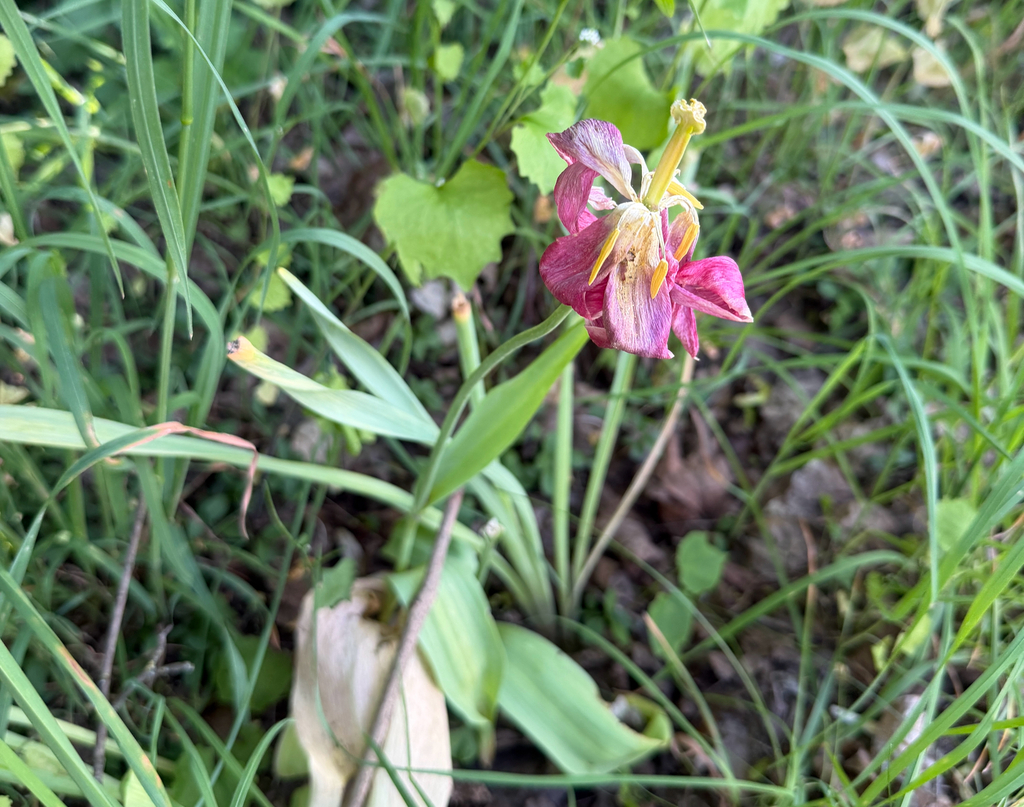
© no rights reserved · iNaturalist · CC0 1.0
Scientific Classification & Quick Facts
Classification
Known For
Detailed measurements for this species are still being verified.
The garden tulip is one of the world’s most recognizable flowers—a spring-blooming harbinger celebrated in gardens across six continents. Its bold, cup-shaped petals come in nearly every colour imaginable: crimson, gold, lavender, white, and bicolours that seem almost artificially vibrant. What most gardeners and admirers do not realize is that this beloved ornamental is the result of centuries of selective breeding, and its wild ancestry remains partly mysterious.
Tulipa gesneriana now grows in cultivation across 25 countries, with a conservation status currently classified as Unknown. Its dominance in the global ornamental trade—particularly in the Netherlands, which produces millions of bulbs annually—has made it far more widespread than any of its wild relatives. Beyond its aesthetic appeal, the garden tulip represents a remarkable chapter in plant domestication and the complex ties between horticulture, trade, and cultural identity that have shaped the flora of modern gardens.
Identification and Appearance
Vegetative Characteristics
Tulipa gesneriana is a bulbous herb that grows from underground storage organs. The leaves are ovate-lanceolate in shape, emerging directly from the bulb in a basal rosette. The bulb itself produces lateral offsets, allowing the plant to spread vegetatively over successive growing seasons. These offsets develop into daughter bulbs that eventually mature into flowering plants, making the species capable of forming dense colonies where conditions are favourable.
Generative Characteristics
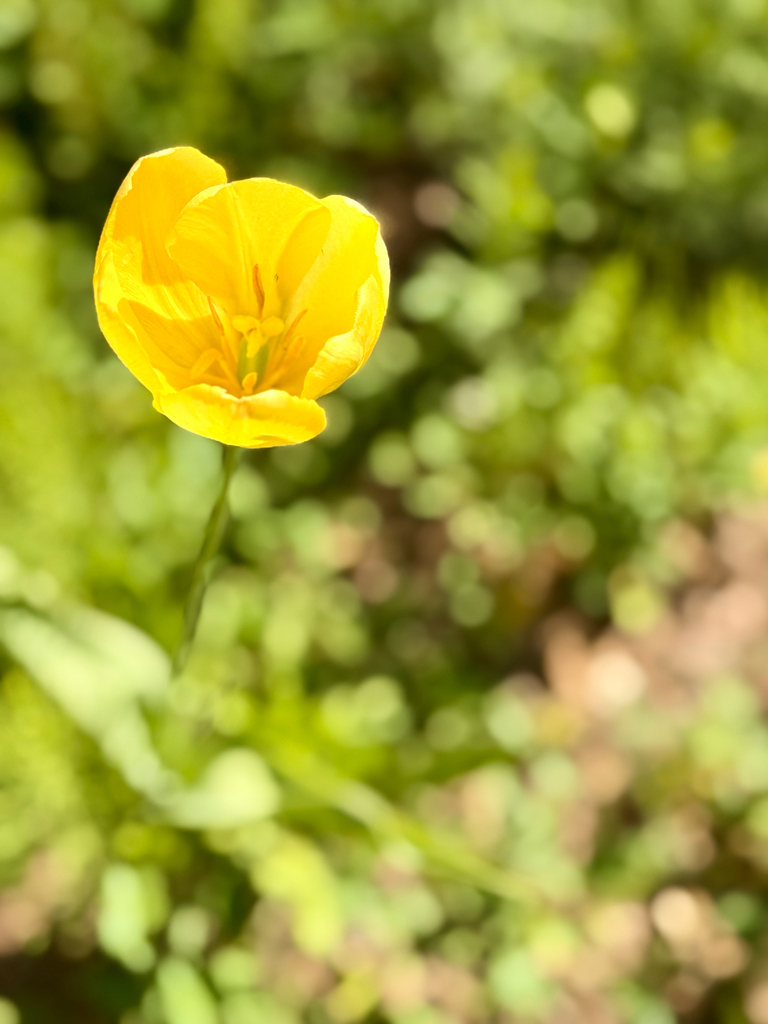
The flowers are the most distinctive feature of Tulipa gesneriana. They are borne erect on unbranched stems and display broadly campanulate (bell-shaped) petals. The tepal surfaces are glabrous (smooth) and characteristically obtuse at the apex, giving the bloom a rounded, open appearance. Flower colour in garden forms ranges widely across reds, yellows, oranges, purples, whites, and bicolour combinations, though the wild progenitor species typically exhibits red or yellow tones.
The flowers lack significant sexual dimorphism—both the reproductive organs and floral envelope are present in each bloom. The stamens and pistil occupy the flower centre, surrounded by the six tepals that form the visible perianth. Mature fruits develop as three-chambered capsules containing numerous small seeds, though most garden tulips are propagated vegetatively from bulb offsets rather than from seed.
Distribution and Habitat
Tulipa gesneriana, the garden tulip, is found across 25 countries worldwide, with the strongest presence in northern Europe and extending into parts of Asia and North America. Sweden leads in recorded observations (75), followed by Russia (44), Germany (32), and the United Kingdom (29). The species also appears in Austria, Ukraine, Norway, and the United States, with smaller populations in Belgium and South Korea, reflecting its widespread cultivation as an ornamental flower.
The garden tulip thrives in temperate regions and shows a marked seasonal pattern aligned with spring flowering. Records concentrate heavily in April, the peak bloom month, with 192 observations recorded during this period. March and May also show significant activity (23 and 83 observations respectively), indicating the species flowers across a broad spring window in cooler climates. The absence of summer and autumn records reflects the dormant period of the bulb after flowering.
No elevation data limits precise understanding of altitudinal preferences in wild or naturalized populations. However, the species is predominantly encountered in cultivated gardens, parks, and horticultural settings rather than natural habitats. Its distribution across such varied climates—from Scandinavia to temperate regions of continental Europe and North America—demonstrates the garden tulip’s adaptability to cool-season environments where spring conditions favour reliable flowering.
Growth and Cultivation
Growth
Tulipa gesneriana, the garden tulip, is a herbaceous perennial that grows from an underground bulb. The plant produces a single unbranched stem that rises from the soil, typically reaching 10–70 centimetres in height depending on cultivar and growing conditions. Leaves are linear and somewhat glaucous, arranged alternately along the stem, with a bluish-grey waxy coating that helps reduce water loss. Growth begins in autumn when temperatures drop and soil moisture is adequate, with the bulb requiring a period of winter cold to break dormancy and trigger flowering in spring.
Tulips are relatively modest in their annual growth cycle. The bulb stores energy during the growing season, flowers briefly in spring, and then the foliage dies back as summer heat arrives. Well-maintained bulbs can persist for several years, though garden tulips often perform best when treated as annuals and replanted each season. In cooler climates with adequate winter chilling, established plants will naturalise in suitable locations.
Flowering
Garden tulips flower in spring, typically from March to May in the Northern Hemisphere, though timing varies with local climate and cultivar. Flowers are cup-shaped or star-shaped, with six tepals (petals) in colours ranging from white, yellow, and pink to red, purple, and bi-colours. A single flower appears at the stem apex, with petals often showing darker bases or blotches. The flower typically lasts 1–2 weeks before petals drop.
After pollination, the plant produces a three-chambered capsule fruit containing numerous small seeds. Most garden tulips in cultivation are sterile or produce few viable seeds, as many cultivars have been selected for showy flowers rather than reproductive vigour. The seed pods are rarely left to mature in ornamental plantings, as gardeners typically remove spent flowers to redirect energy toward bulb strengthening for the following season.
Cultivation
Garden tulips thrive in full sun to partial shade, requiring at least 6 hours of direct sunlight daily for optimal flowering. They prefer well-drained soil and are sensitive to waterlogging; heavy clay or poorly drained soils should be amended with sand or organic matter to prevent bulb rot. Specific soil pH requirements are not strict, though neutral to slightly alkaline soils (pH 6–7.5) are generally suitable. In autumn, plant bulbs 10–15 centimetres deep and 10–15 centimetres apart in prepared beds.
Water bulbs thoroughly after planting and again in early spring if soil is dry. Once growth is underway, tulips need moderate moisture during the flowering and foliage period, but excess water should be avoided. After flowering, reduce watering as the foliage naturally senesces. In regions with cold winters (hardiness zones 3–8), bulbs typically survive outdoors year-round. Warmer climates may require bulbs to be lifted after flowering, stored dry during the hot months, and replanted in autumn to provide the necessary winter chill for flowering.
Conservation and Threats
Tulipa gesneriana, the Garden Tulip, has not been formally assessed by the IUCN Red List. This absence of a conservation status reflects the species’ secure position as a widely cultivated ornamental plant with extensive global distribution across gardens, parks, and horticultural collections. Unlike wild tulip species facing habitat loss in their native ranges, the Garden Tulip benefits from deliberate human cultivation that has ensured its survival and proliferation for centuries.
Threats and Conservation Considerations
The Garden Tulip itself faces minimal extinction risk, as its status as a staple ornamental crop means its survival is guaranteed through ongoing cultivation. However, the species originated from hybridization and selection of wild tulip species, particularly Tulipa suaveolens and Tulipa acuminata, some of which occur in threatened habitats across Central Asia. Habitat loss in native ranges, over-collection for the trade in wild bulbs, and fragmentation of steppe and mountain ecosystems pose indirect pressures on the wild relatives from which the Garden Tulip ultimately derives.
From a horticultural perspective, monoculture production in bulb-growing regions (notably the Netherlands, which supplies the majority of the world’s tulip bulbs) creates vulnerability to pests and diseases. Tulip breaking virus, historically responsible for the striking variegated patterns that sparked “tulip mania” in 17th-century Europe, and contemporary fungal infections can affect commercial crops. These threats, however, do not jeopardize the species globally, as alternative growing regions and disease-resistant cultivars mitigate loss.
Conservation Efforts
No formal species-level conservation programme exists for the Garden Tulip, as its status as a cultivated plant places it outside the scope of traditional wildlife protection frameworks. However, gardeners and horticulturists globally practice in situ conservation by maintaining diverse cultivars and heirloom varieties. Some botanical institutions preserve historic and rare tulip cultivars as part of their living collections. Protection of wild tulip species in their native ranges—through habitat conservation initiatives and legal restrictions on bulb collection—indirectly supports the genetic heritage underpinning the Garden Tulip.
Cultural Significance
The Garden Tulip has become one of the world’s most economically important ornamental flowers, cultivated extensively for its sweet-scented bisexual blooms that appear during April and May. Its horticultural significance rests partly on a remarkable biological adaptation: the bulbs are extremely resistant to frost and can tolerate temperatures well below freezing. This cold tolerance is not merely incidental—a period of low temperature is actually necessary to induce proper growth and flowering. The mechanism involves an increase in sensitivity to auxin, a plant hormone that becomes more influential once temperatures rise, triggering the flowering response. This physiological requirement has made the species particularly suited to cultivation in temperate regions worldwide.
Originating from Mediterranean Europe and Africa, Tulipa gesneriana spread globally following the age of European exploration. The species is classified as a neophyte in regions it colonized after 1500—established through human cultivation rather than natural dispersal. Today it dominates the global cut-flower and garden bulb trade, bred into thousands of cultivars spanning nearly every colour except true blue. The flowers’ elegant form, vibrant hues, and reliable springtime performance have made them central to garden design across cultures, though the species itself is not listed as endangered under IUCN criteria.
Fun Facts
Tulipa gesneriana, the garden tulip, is not a single wild species but rather a complex hybrid that arose centuries ago through intentional and accidental crossing. What we now call the “garden tulip” is technically a neo-species—a stabilized hybrid that has become so uniform in cultivation that it functions as a distinct botanical entity, even though its wild ancestors remain debated among taxonomists.
Notable Facts
- The garden tulip produces a single, large flower per stem rather than branching clusters, which makes it ideal for cutting and formal garden displays.
- Most commercially available tulip varieties worldwide—estimated at thousands of named cultivars—are descended from or directly derived from Tulipa gesneriana breeding programs.
- Despite its predominantly temperate origin, garden tulips have naturalized in parts of central and southern Europe as well as scattered locations in North America, where they grow wild in meadows and disturbed areas.
- The leaves are distinctly linear or broadly lanceolate (lance-shaped), a trait that helps distinguish cultivated forms from many wild tulip species.
- Garden tulips are classified as late bloomers in the tulip world, flowering weeks after early spring varieties and extending the tulip season well into late April and May.
- The petals of garden tulips are edible and non-toxic, leading to their use in contemporary cuisine as garnishes and in salads, particularly in Nordic and Dutch gastronomy.
- Historical records indicate that the “tulip craze” of 17th-century Holland—when single bulbs traded for more than the price of Amsterdam townhouses—was largely driven by virus-infected Tulipa gesneriana varieties that produced striking striped and variegated flower patterns.
Ecology
Growing Conditions
Edibility
Photo Gallery
no rights reserved · CC0 1.0
Related Species
Was this profile helpful?