
Liliopsida · Asparagales
Gold Of Kinabalu Orchid
Paphiopedilum rothschildianum
EndangeredAlso known as: Rothschild's Paphiopedilum
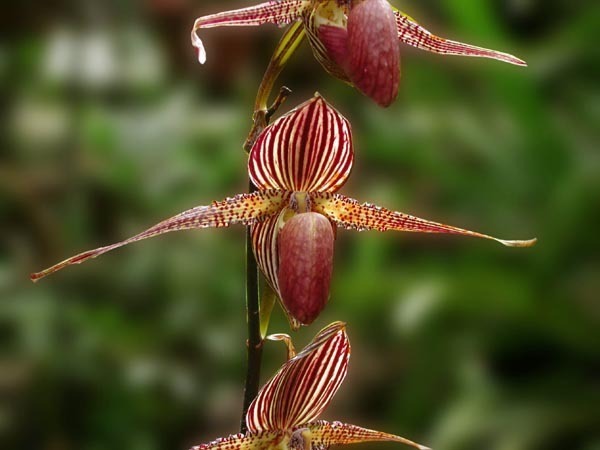
© Barry Stewart · iNaturalist · CC BY 4.0
Scientific Classification & Quick Facts
Classification
Known For
Detailed measurements for this species are still being verified.
Paphiopedilum rothschildianum, the Gold of Kinabalu Orchid, is one of the world’s most sought-after and rarest flowering plants. Its distinctive golden-yellow petals and intricate pouch-like labellum make it instantly recognizable to orchid enthusiasts, yet few have ever encountered it in the wild. Native to just two countries and found in the most restricted range of any slipper orchid, this species exists at the razor’s edge of extinction.
Listed as Critically Endangered by the IUCN, Paphiopedilum rothschildianum faces relentless pressure from illegal collection, habitat loss, and its own biological constraints as a slow-growing, difficult-to-cultivate orchid. Its story is one of beauty threatened by human demand, making it a symbol of why conservation action matters for the world’s most vulnerable plants.
Identification and Appearance
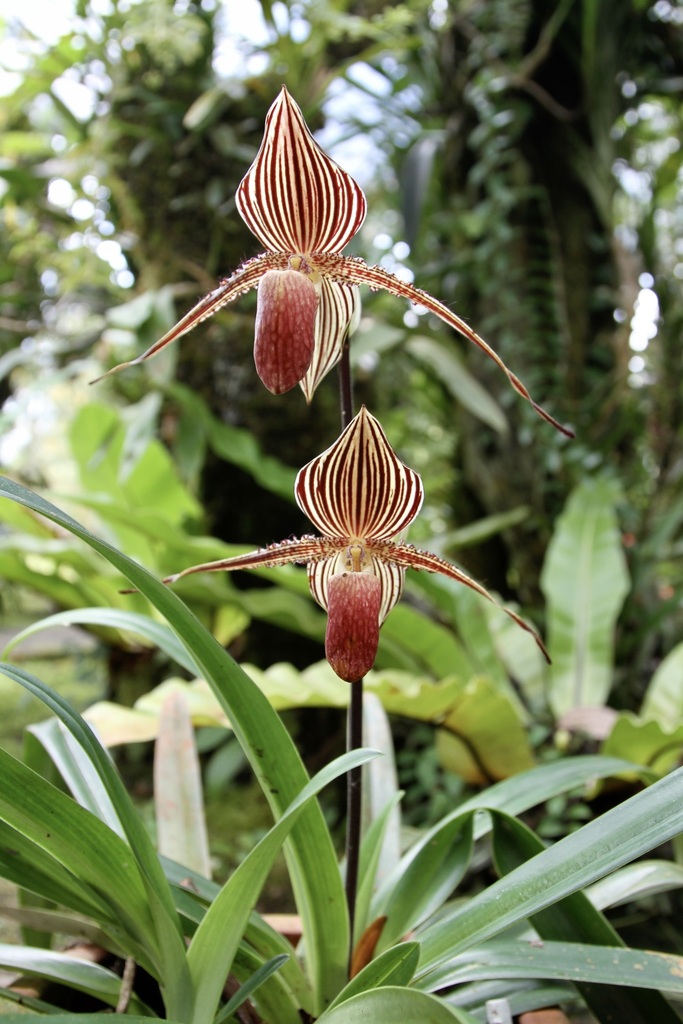
Paphiopedilum rothschildianum, commonly known as the Gold of Kinabalu Orchid, is a distinctive and highly prized orchid species characterized by its striking floral morphology. The plant produces large, complex flowers that display a remarkable blend of coloration ranging from deep burgundy to golden yellow, particularly concentrated on the sepals and petals. The flowers emerge on tall, arching inflorescences that can produce multiple blooms in succession, creating an impressive display when the plant reaches maturity.
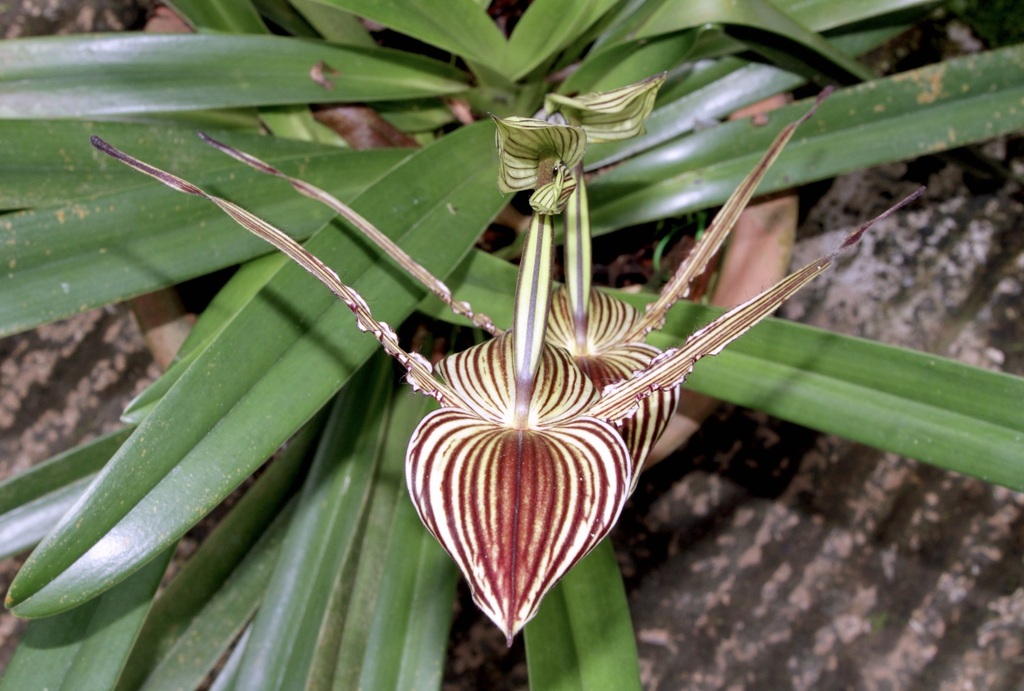
The flowers possess the characteristic pouch-like labellum (lip) typical of the Paphiopedilum genus, which functions as an insect trap in its native habitat. The dorsal sepal dominates the flower’s appearance, often displaying a bold pattern with darker veining or striping against a lighter background. Lateral petals extend horizontally and can be notably long and narrow, sometimes curving or twisting in distinctive ways. The overall flower diameter typically measures several centimetres across, making it a commanding presence among orchid blooms.
The plant itself is a medium-sized epiphytic orchid with characteristic pleated, strap-like foliage arranged in a basal rosette. The leaves are dark green and leathery, contributing to the plant’s robust appearance. Growth is relatively slow, and the orchid typically takes several years to reach flowering maturity. Individual plants rarely exceed substantial proportions, remaining compact compared to many other tropical orchid species, which contributes to their appeal for specialized cultivation in controlled environments.
Distribution and Habitat
Paphiopedilum rothschildianum, the Gold of Kinabalu Orchid, is endemic to Southeast Asia, with recorded occurrences limited to Malaysia and Indonesia. Malaysia accounts for the vast majority of documented observations, with six records, while Indonesia has contributed a single record. This extremely restricted range makes the species one of the rarest orchids in the region.
The species exhibits a clear seasonal pattern in its flowering or observation records, with peak activity occurring in May. Secondary records appear in August, suggesting possible bimodal flowering or collection timing. The absence of records across most months underscores the species’ rarity and the difficulty in locating wild populations or cultivated specimens.
Specific elevation data for this species are not currently documented in available occurrence records. The extremely limited number of observations across its entire range reflects both the orchid’s scarcity in nature and its status as a highly prized horticultural specimen. Conservation efforts remain critical given its narrow geographic distribution and the historical pressure from wild collection.
Growth and Cultivation
Growth
Paphiopedilum rothschildianum, the Gold Of Kinabalu Orchid, is an epiphytic orchid native to the mountains of Borneo. It develops as a medium-sized plant with distinctive strap-like leaves that form a rosette pattern characteristic of the slipper orchid genus. Growth is typically slow, reflecting the species’ adaptation to high-altitude cloud forest conditions where nutrient availability and growing seasons are limited.
Flowering
This orchid flowers from April to May, producing striking blooms that justify its “Gold of Kinabalu” epithet. The flowers are prized by collectors for their unique color and form, which feature the characteristic pouch-like labellum typical of Paphiopedilum species. Each inflorescence typically bears a single large flower, though well-established plants may produce multiple stems.
Cultivation
Cultivating Paphiopedilum rothschildianum successfully requires replicating its cloud forest habitat. The species demands cool to intermediate temperatures, high humidity, and excellent air circulation to prevent fungal infections. Mount plants on bark or tree fern fiber rather than potting soil, as the species is naturally epiphytic and requires fast-draining conditions that prevent water from pooling around the roots.
Light requirements are moderate; the orchid thrives in bright, indirect light but will suffer in full sun. Water regularly during the growing season to keep the medium consistently moist but never waterlogged. During cooler months when growth slows, reduce watering frequency slightly. Unlike many tropical plants, this species benefits from a modest temperature drop during winter, which helps trigger flowering in spring.
Conservation and Threats
Paphiopedilum rothschildianum, the Gold Of Kinabalu Orchid, holds the designation of Critically Endangered on the IUCN Red List. This classification reflects an extremely high risk of extinction in the wild, meaning the species faces imminent and severe population decline. Despite this dire status, the population trend is currently increasing, suggesting that conservation interventions and legal protections may be having a positive effect on wild populations.
Threats
The primary threat to P. rothschildianum has historically been illegal collection for the orchid trade. This slipper orchid, prized by enthusiasts for its distinctive pouch-shaped labellum and long petals, was heavily harvested from its native habitat in Borneo, particularly on Mount Kinabalu. The combination of slow growth rate, late reproductive maturity, and restricted geographic range made wild populations especially vulnerable to overexploitation. Habitat loss due to land conversion and forest degradation also contributes to population pressure, though the species’ occurrence in protected areas within Kinabalu National Park has provided some refuge.
Conservation Efforts
The species benefits from legal protection under CITES Appendix I, which prohibits international trade in wild-collected specimens and their derivatives. Its presence within Kinabalu National Park, a UNESCO World Heritage Site, ensures habitat protection and management. Captive breeding programmes in orchid collections worldwide have also been instrumental in maintaining genetic diversity and reducing pressure on wild populations. International coordination among botanical institutions and orchid societies has helped enforce trade restrictions and promote sustainable cultivation practices.
Cultural Significance
Paphiopedilum rothschildianum, known as the Gold of Kinabalu Orchid, holds significant meaning within the Sabah region of Malaysian Borneo. As an endemic species found only on Mount Kinabalu, it embodies the botanical wealth and ecological identity of the mountain itself. The orchid’s dramatic appearance—with its distinctive shape and golden hues—has made it a powerful symbol of Sabah’s natural heritage and biodiversity.
The species carries cultural weight beyond its immediate ecosystem. Its rarity and endemic status have elevated it to iconic status in conservation circles and among orchid enthusiasts worldwide. The common name “Gold of Kinabalu” reflects both the orchid’s visual characteristics and its perceived value as a treasure of the mountain. For local communities and conservation advocates, the species represents the irreplaceable natural heritage of Kinabalu and the broader urgency of protecting Borneo’s forests from deforestation and habitat loss.
Fun Facts
Paphiopedilum rothschildianum is one of the most sought-after orchids in the world, prized for its extraordinary floral display and rarity in its native habitat. Here are some fascinating facts about this botanical treasure.
- The flowers can reach 5 to 13 inches across, making them among the largest blooms in the entire orchid family and rivalling some tropical flowers in sheer presence.
- A single plant can produce up to six large flowers on one inflorescence, creating a spectacular and densely packed floral arrangement during peak bloom.
- Its petals hold themselves almost horizontally, a distinctive posture found nowhere else within the Corypetalum group of slipper orchids and giving the flower an unusually flat, open appearance.
- The orchid flowers from April to May, a concentrated seasonal window that makes observing it in its natural habitat a rare privilege reserved for those visiting Mount Kinabalu during these months.
- Endemic to the steep cliffs and rocky outcrops of Mount Kinabalu in Sabah, Malaysia, this orchid grows at high elevations where few other plants survive, clinging to rock faces and tree branches in harsh microhabitats.
- Its rarity and beauty have made it one of the most heavily poached orchids in the world, with collectors willing to pay premium prices for wild specimens on the black market.
- Unlike many orchids, Paphiopedilum rothschildianum is extremely difficult to cultivate in captivity, requiring precise temperature, humidity, and air-movement conditions that mimic its cloud-forest environment.
Conservation Status
LC · NT · VU · EN (Endangered) · CR · EW · EX
Photo Gallery
Barry Stewart · CC BY 4.0
Related Species

Was this profile helpful?