
Aves · Passeriformes
Common Raven
Corvus corax
Least ConcernAlso known as: American Raven, CORA, Common Raven / Northern Raven, Corbie, Corby
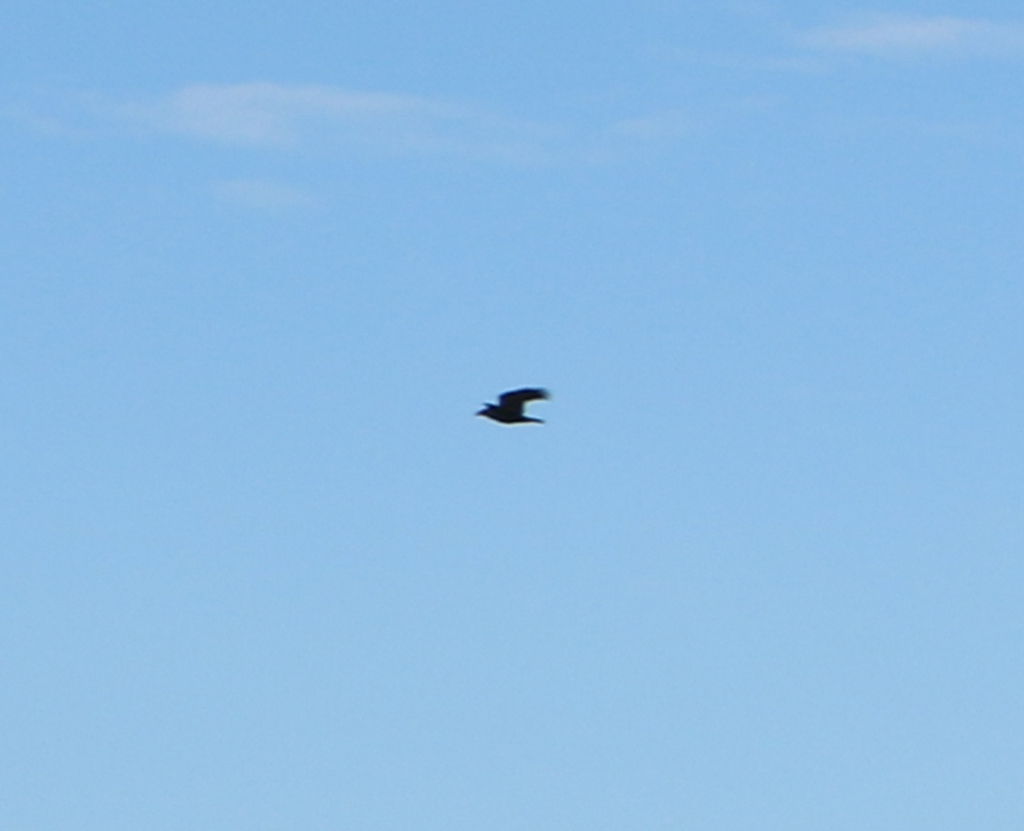
© Полина Полежанкина · iNaturalist · CC BY 4.0
The Common Raven is one of the largest passerine birds in the world, commanding attention across the northern hemisphere with its glossy black plumage, powerful beak, and haunting vocalizations. Found across more than 20 countries and spanning diverse ecosystems from Arctic tundra to temperate forests, deserts, and even urban environments, Corvus corax has proven itself one of the most adaptable and successful corvids on Earth. Its conservation status remains secure, classified as Least Concern, a testament to its ecological resilience and widespread presence.
What makes the Common Raven especially notable is not merely its size or range, but its extraordinary intelligence and behavioral complexity. These birds engage in play, form complex social hierarchies, and possess a sophisticated vocal repertoire extending far beyond simple warning calls. Their intelligence, combined with an opportunistic diet and flexible habitat preferences, has allowed them to thrive in landscapes both pristine and profoundly altered by human activity, making them a compelling subject for studying how apex intelligence influences survival and adaptation.
Identification and Appearance
The Common Raven is a large all-black corvid, among the largest members of the crow family. Adults range from 54 to 71 centimetres in length, with a wingspan extending from 116 to 153 centimetres. This imposing size, combined with powerful flight and distinctive silhouette, makes the species readily identifiable in the field.
Plumage and Coloration
The entire body is jet black, but the plumage holds subtle complexity. In sunlight, the feathers display an iridescent sheen that ranges from blue to purple—a result of light refraction through the feather structure rather than pigmentation. This iridescence is particularly visible on the head, neck, and upper back when the bird is viewed at certain angles. The throat feathers, known as hackles, are notably elongated and lanceolate, creating a shaggy appearance that distinguishes the Common Raven from smaller all-black corvids like crows.
The bill is stout and powerful, measuring proportionately longer and thicker than that of carrion crows. The legs and feet are also black. No seasonal plumage variation occurs, and males and females are externally identical, though males tend to be slightly larger on average and possess more prominent throat hackles.
Distribution and Habitat
Corvus corax, the Common Raven, has one of the widest distributions of any bird species in the Northern Hemisphere. GBIF records show the species occurs across at least 20 countries, with the highest concentrations in Russia, the United States, Finland, and Germany. The species is well-established throughout much of northern and temperate Europe, eastern North America, and across the vast boreal forests of Eurasia.
Geographic range
Russia dominates the occurrence data with 128 records, reflecting the species’ extensive presence across Siberia and European Russia. North America shows strong populations, particularly in the United States (48 records) and Canada (23 records), where ravens occupy regions from the Arctic tundra to temperate mountain ranges. Northern European countries—Finland (40 records), Germany (29 records), and Norway (3 records)—represent the species’ reliable presence in boreal and temperate zones. Additional populations occur in Spain, Italy, France, and Ireland, demonstrating the raven’s ability to persist in isolated and peripheral locations across its continental range.
Seasonal patterns
The monthly histogram reveals a striking concentration of observations in January, with 300 records, while all other months show zero entries in the dataset. This pattern likely reflects observer effort during winter months rather than the species being absent during other seasons, as Common Ravens are year-round residents throughout their range. The midwinter peak may indicate increased visibility when ravens congregate at carrion and food sources during harsh conditions, or heightened recording activity during the winter season.
Biology and Behavior
Behavior
Common ravens are among the most intelligent birds on Earth, demonstrating problem-solving abilities, tool use, and complex social hierarchies. They are highly vocal, employing a diverse range of calls—from harsh croaks to bell-like tones—to communicate territorial claims, alarm signals, and social bonding. These birds are often seen in pairs or small family groups, though they may gather in larger flocks during winter or at abundant food sources. They are diurnal and most active during early morning and late afternoon, spending midday hours resting and preening.
Ravens engage in playful behavior throughout their lives, including aerial acrobatics, sliding on snow or ice, and manipulating objects. They cache food in multiple locations, remembering these caches for months and preferentially visiting them when preferred food is scarce. Socially complex, they establish pair bonds that can last for life and defend territories year-round, with males displaying dominance through posturing and vocalizations.
Diet
Common ravens are highly opportunistic omnivores with a flexible diet that shifts seasonally and geographically. They hunt small vertebrates including rodents, insects, and nestling birds, but also scavenge carrion—particularly following large predator kills or in winter when fresh meat is scarce. In warmer months, they consume large quantities of insects, berries, and seeds. Around human settlements, they readily feed on discarded food, garbage, and livestock grain.
Their role as scavengers is ecologically significant; they efficiently locate and consume carcasses across diverse landscapes, from tundra to deserts. This adaptability in diet has enabled ravens to thrive in virtually every terrestrial habitat across the Northern Hemisphere.
Reproduction
Common ravens typically breed once annually, with breeding season beginning in late winter or early spring. Pairs construct large stick nests in tall trees, cliff faces, or other elevated structures, often reusing and adding to nests across multiple years. Females lay 3 to 7 eggs, most commonly 4 to 6, which are incubated for approximately 18 to 21 days. Both parents share incubation and brooding duties, with the male provisioning the female during this period.
Young ravens fledge at 6 to 7 weeks of age but remain dependent on their parents for several additional months, learning foraging techniques and social behaviors. Pairs may remain together for life and occupy the same territory across years. Lifespan in the wild can exceed 60 years, making ravens among the longest-lived bird species. Sexual maturity is typically reached at 3 to 4 years of age, though some individuals may not breed until older.
Conservation and Threats
Corvus corax, the Common Raven, holds a conservation status of Least Concern on the IUCN Red List. This classification reflects a species that faces no immediate threat of extinction and maintains stable or improving populations across most of its range. The species’ current population trend is increasing, a significant recovery from historical declines in some regions where persecution and habitat loss once severely reduced numbers.
Threats
Although the Common Raven is not currently threatened globally, it remains vulnerable to localised pressures. In agricultural regions, ravens are sometimes persecuted by farmers who view them as threats to livestock and game birds. Poisoning campaigns, shooting, and trapping continue in parts of Europe and North America where conflicts arise. Habitat degradation through intensive land use and urbanisation can reduce breeding opportunities and food availability, though the species’ remarkable adaptability has allowed it to thrive in many modified landscapes, including cities and industrial areas.
Lead ammunition poses a secondary threat in areas where it is commonly used for hunting. Ravens that feed on carrion shot with lead projectiles can accumulate toxic levels of the metal, leading to poisoning and population-level impacts in some regions. Climate change may alter food availability and breeding phenology, though the species’ broad dietary flexibility provides some buffer against these shifts.
Conservation Efforts and Legal Protections
The Common Raven benefits from legal protection in most developed nations. In Europe, it is protected under the EU Birds Directive and national wildlife laws. In North America, the Migratory Bird Treaty Act shields it from unregulated hunting, though population management for agricultural protection is permitted in limited contexts. These protections, combined with reduced persecution in many areas over recent decades, have enabled populations to recover significantly. In Britain and parts of Scandinavia, ravens that were nearly extirpated have recolonised their historic range over the past 40 years.
Fun Facts
- The common raven is the heaviest passerine bird in the world, with adults weighing up to 2 kg—comparable to a small chicken. Despite their bulk, they remain remarkably agile fliers and can perform acrobatic rolls and dives through the air.
- Genetically distinct populations exist across different regions, yet they look nearly identical to the human eye. DNA analysis reveals that ravens from North America, Europe, and Asia have accumulated significant genetic differences despite their uniform dark plumage.
- Common ravens can live over 23 years in the wild, making them among the longest-lived songbirds. Some captive individuals have reached even greater ages, though wild ravens typically face shorter lifespans due to environmental pressures.
- Young ravens travel together in loose flocks and roost communally, but once they find a mate, they bond for life and vigorously defend their territory from rivals. A single raven pair may occupy and control the same territory for many years.
- The common raven is the most widely distributed corvid across the Northern Hemisphere, ranging from the Arctic tundra to temperate forests and even deserts. Only the thick-billed raven rivals them in size among all corvid species worldwide.
- Ravens are known for their complex vocalizations, producing dozens of distinct calls including croaks, clicks, and bell-like notes. They can mimic the calls of other birds and have been observed “talking” to each other in what appears to be extended conversation.
- Juvenile ravens engage in playful behavior that resembles games, such as sliding down snow-covered slopes or performing aerial somersaults seemingly for enjoyment alone. This extended period of youthful play may help develop the cognitive and physical skills they need as adults.
Conservation Status
LC (Least Concern) · NT · VU · EN · CR · EW · EX
Photo Gallery


Полина Полежанкина · CC BY 4.0
Related Species



Was this profile helpful?