
Aves · Apodiformes
Ruby Throat
Archilochus colubris
Least ConcernAlso known as: Ruby-Throated Hummingbird, Ruby-throated Hummingbird, Ruby-throated/Black-chinned Hummingbird, Ruby-throated/black-chinned Hummingbird
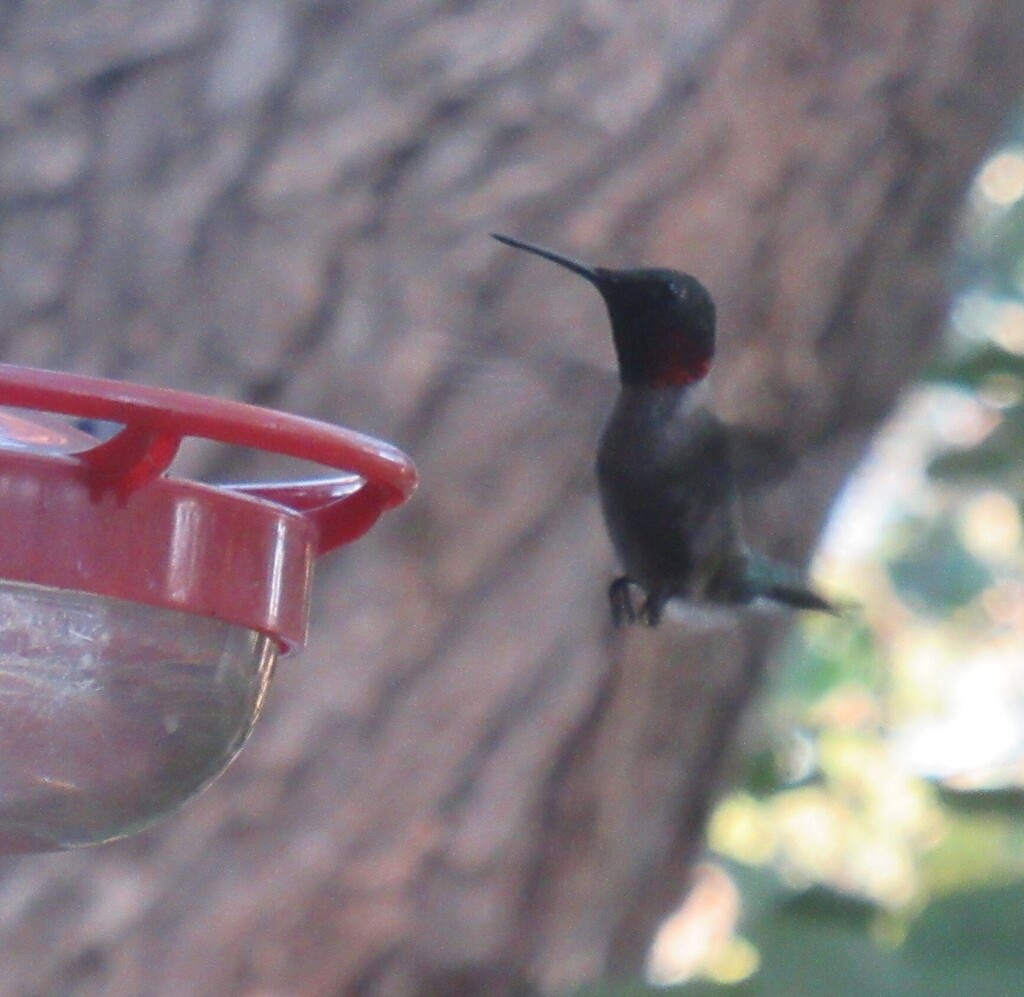
© Linda Jo Conn · iNaturalist · CC BY 4.0
Scientific Classification & Quick Facts
Classification
At a Glance
The Ruby Throat is a jewel of the Americas—a hummingbird so small it weighs less than a penny, yet possesses a gorget that flashes like liquid fire in the sunlight. Found across nine countries from Canada to Central America, Archilochus colubris is one of the few hummingbird species to breed in North America and undertake epic migrations spanning thousands of kilometers. Its iridescent throat feathers, which give the species its common name, represent one of nature’s most striking color displays, produced not by pigment but by the precise structure of microscopic feathers that scatter light.
Listed as Least Concern by conservation authorities, the Ruby Throat remains common throughout much of its range, though its reliance on flowering plants and migration corridors makes it sensitive to habitat loss and climate shifts. What makes this species especially compelling is not merely its diminutive size or brilliant plumage, but the sheer determination encoded in its physiology—a creature built for extremes, requiring refueling stops every ten minutes and capable of entering torpor at night to survive the cold.
Identification and Appearance
The Ruby-throated Hummingbird is among the smallest birds in North America. Adults measure 7 to 9 centimetres in length with a wingspan of 8 to 11 centimetres. Despite their diminutive size, these birds are robust fliers with compact, muscular bodies built for sustained aerial manoeuvres. Weight varies between males and females, with males averaging 3.4 grams and females slightly heavier at 3.8 grams, though overall weight ranges from 2 to 6 grams depending on season and individual variation.
Plumage and Distinctive Features
Both sexes display metallic green upperparts that shimmer iridescent in direct light. The throat and underparts are whitish-grey. The most striking feature—and the source of the bird’s common name—is the male’s brilliant ruby-red throat, or gorget, which flashes scarlet under optimal lighting conditions and appears almost black when viewed from certain angles. This gorget is unique to males and serves as a critical signal during territorial and courtship displays.
Sexual Dimorphism
Females lack the conspicuous red throat entirely, instead showing a plain greyish-white throat with occasional red spotting. Female plumage is otherwise similar to males but slightly duller overall. Females are also marginally larger in body size, which helps distinguish them from males in the field when the gorget is not visible. Immature males develop the red gorget gradually as they mature, initially resembling females before acquiring their full adult colouration.
Distribution and Habitat
Archilochus colubris occurs across North and Central America, with a heavily skewed distribution centered in the United States. GBIF records show 188 observations from the US, which accounts for the vast majority of documented sightings. The species also ranges into Mexico with 61 records, and appears irregularly throughout Central America, including El Salvador (14 records), Costa Rica (11 records), Nicaragua (9 records), Honduras (7 records), Guatemala (6 records), Belize (3 records), and Panama (1 record).
The temporal pattern of occurrence is highly seasonal. Peak activity occurs in March, with 129 GBIF records documented in that month. February shows 82 records and January 89 records, indicating a concentration of sightings during the early calendar year. Records drop to zero from April through December, suggesting either migration out of surveyed regions or reduced detectability during other seasons.
Specific elevation data are not currently available in the distribution records. Habitat type information is similarly absent from the dataset, though the species’ presence across diverse Central American countries suggests ecological flexibility across multiple vegetation types typical of its range.
Biology
Behavior
Ruby-throated hummingbirds are solitary birds that show aggression toward one another except during brief courtship encounters. Both males and females defend feeding territories vigorously, attacking and chasing rival hummingbirds that intrude on their space. Adults provide no social bonds beyond mating—which lasts only minutes—and parental care by females of their young.
Migration defines the annual cycle of this species. During spring, populations fly northward from wintering grounds in the Yucatan Peninsula of Mexico, crossing the Gulf of Mexico in a remarkable non-stop journey spanning 800 kilometres. This feat astounds researchers: the birds weigh only 3 grams yet undertake a 20-hour flight over open water with no opportunity to feed or drink. Ruby-throated hummingbirds prepare by doubling their fat mass beforehand, then metabolize this entire calorie reserve to fuel the crossing.
Diet
Ruby-throated hummingbirds are nectarivores, feeding almost exclusively on floral nectar. They visit flowers throughout the day, consuming up to half their body weight in sugar daily to fuel their rapid metabolism and high-speed flight. The birds also capture tiny insects and spiders, which provide essential proteins and minerals unavailable in nectar alone.
Reproduction
Males attract females through display flights and vocalizations; the courtship interaction is brief and non-pair-bonding. Females build tiny cup nests from plant down and spider silk, typically laying two white eggs. Incubation lasts approximately 12 days, with fledging occurring around 18–26 days after hatching. Females alone incubate eggs and rear young, showing no assistance from males. The lifespan reaches approximately 9 years in the wild, allowing individuals to breed across multiple seasons.
Conservation and Threats
Archilochus colubris, the Ruby Throat, holds a secure position on the IUCN Red List as Least Concern. This classification reflects the species’ wide distribution across eastern North America and its stable to increasing population trajectory. The population is currently increasing, a positive indicator that current conditions support breeding and survival across its range.
Threats
The Ruby Throat faces relatively modest direct threats compared to many bird species. Habitat loss remains a concern in parts of its breeding range, particularly where forests are cleared for development and agriculture. Pesticide use, especially the widespread application of neonicotinoid insecticides, reduces insect populations that form the bird’s primary food source. Window collisions during migration present a localized mortality risk in urban and suburban areas. Climate change may alter flowering phenology and insect availability, though long-term impacts remain uncertain.
Conservation Efforts and Legal Protections
The Ruby Throat benefits from protection under the Migratory Bird Treaty Act in the United States and Canada, which prohibits capture, harm, or killing of the species. Its increasing population suggests that existing protections and habitat management practices are effective. The species’ flexibility in using gardens, parks, and ornamental plantings as supplementary habitat has helped it adapt to human-modified landscapes.
Cultural Significance
The ruby-throated hummingbird has long captivated human attention due to its diminutive size and iridescent plumage. During the nineteenth century, the species became a prized collector’s item, hunted for its brilliant feathers and compact form. Despite this intense pressure, the population proved resilient—the species never became threatened, remaining widespread and common throughout its range. This distinction underscores the bird’s inherent robustness, even when faced with direct exploitation for commercial purposes.
Today, the ruby-throated hummingbird holds no official conservation concern at the federal level and is classified as Least Concern by the International Union for the Conservation of Nature. Population surveys show that numbers have steadily increased since 1966, reflecting the species’ continued abundance across North America. Yet this stable status does not eliminate the need for vigilance. While the species is not listed as endangered or threatened, its long-term survival depends on ongoing conservation efforts as it faces mounting environmental pressures in its range.
Fun Facts
The ruby-throated hummingbird is a marvel of endurance, ambition, and sheer biological efficiency. Despite its tiny frame, this species undertakes one of the animal kingdom’s most impressive migrations, crosses entire continents, and maintains a heartbeat that can exceed 1,200 beats per minute. Here are some of the most compelling facts about this eastern North American icon.
- The ruby-throated hummingbird is the most common hummingbird in eastern North America, dominating the region from spring through autumn and serving as the primary hummingbird species most people in the eastern United States encounter.
- These birds undertake a truly hemispheric migration, breeding across Canada and the eastern United States during summer months, then retreating to winter grounds in Mexico, Central America, and Florida—a round-trip journey that takes them across thousands of kilometres.
- A ruby-throated hummingbird’s heart can beat up to 1,200 times per minute during active flight, yet slows dramatically to just 250 beats per minute during sleep or torpor to conserve precious energy reserves.
- Males perform a dramatic dive display during courtship, reaching speeds of approximately 60 kilometres per hour while producing a loud chirping sound—created not by their vocal cords but by the vibration of their tail feathers as they pull out of the dive.
- Ruby-throated hummingbirds are fiercely territorial despite their diminutive size, with individuals defending nectar sources and aggressively chasing away rivals many times their size, including larger bird species.
- These birds must visit hundreds of flowers each day to meet their metabolic demands, consuming roughly half their body weight in sugar daily—an energy requirement so extreme that a human equivalent would need to consume over 45 kilograms of food each day.
Ecology
Habitats
Diet
Behavior
Conservation Status
LC (Least Concern) · NT · VU · EN · CR · EW · EX
Photo Gallery
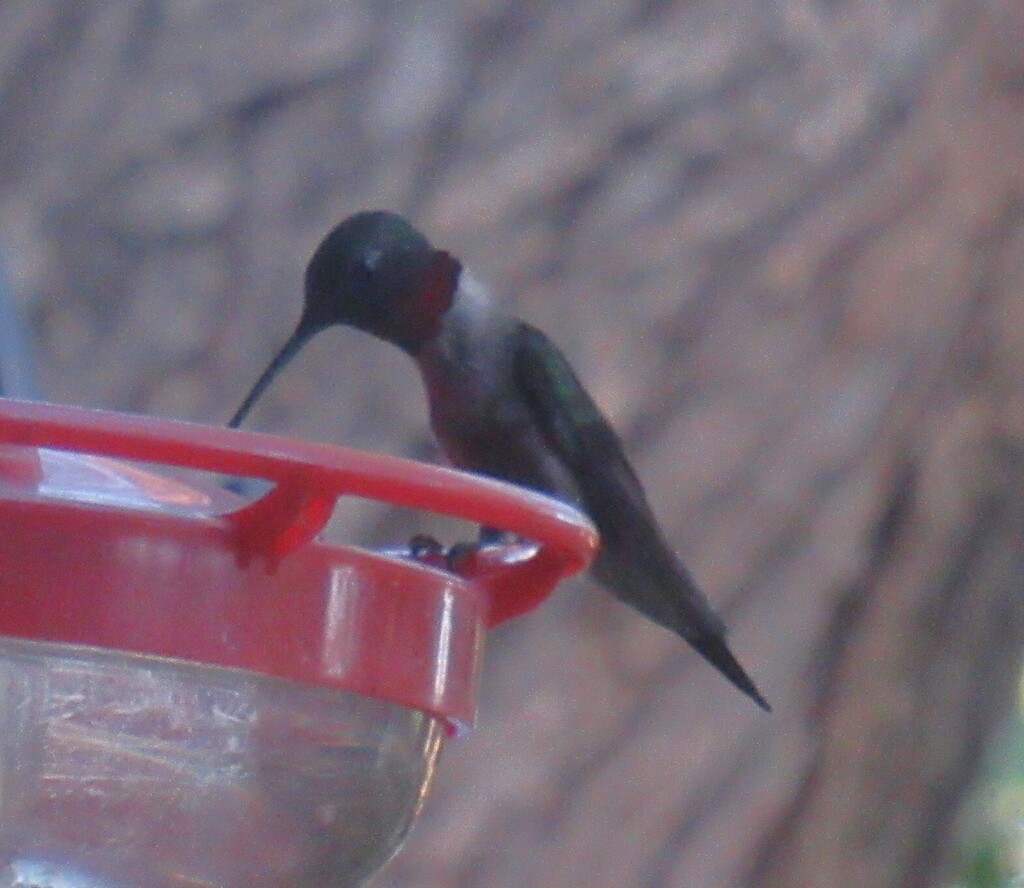
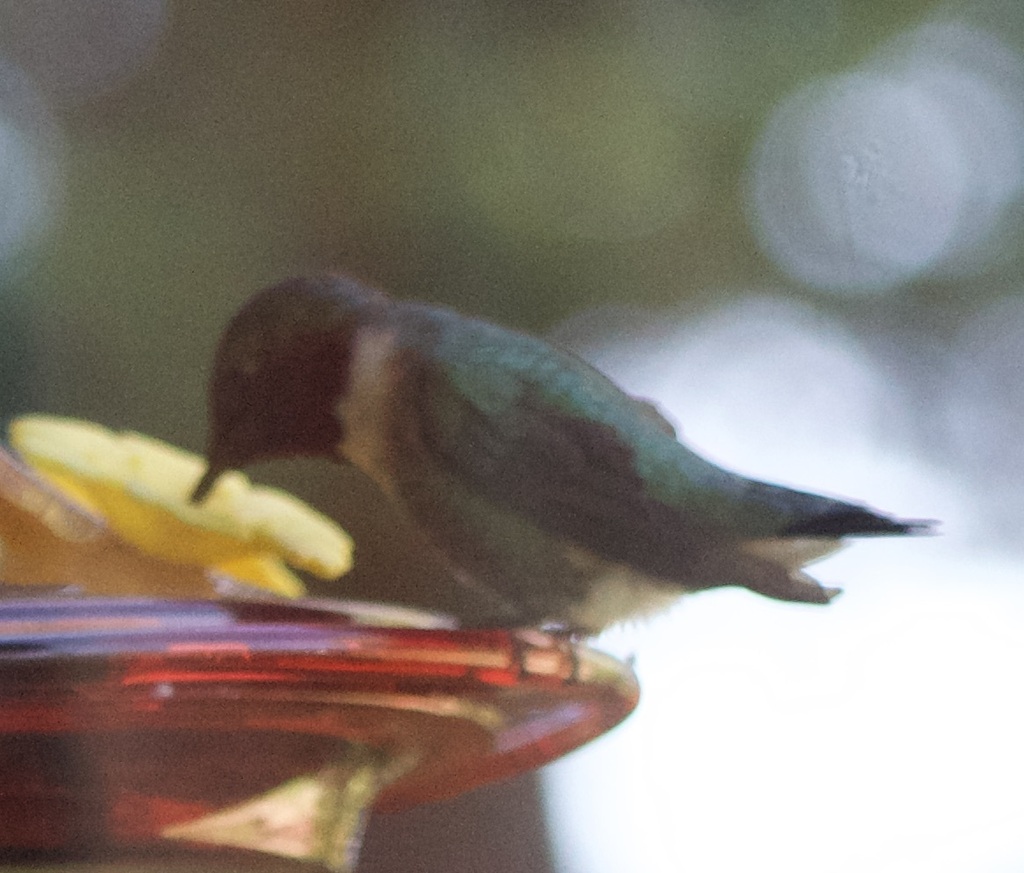
Linda Jo Conn · CC BY 4.0
Related Species

Was this profile helpful?