
Agaricomycetes · Polyporales
Sulfur Shelf
Laetiporus sulphureus
Also known as: Chicken Of The Woods, Chicken of The Woods, Chicken-Of-The-Woods, Crab of the woods, Ojishtad
© Zac Peterson · iNaturalist · CC BY 4.0
Scientific Classification & Quick Facts
Classification
Known For
Detailed measurements for this species are still being verified.
Laetiporus sulphureus, commonly known as Sulfur Shelf, is a striking bracket fungus that grows in bright golden-yellow and orange tiers on tree trunks and dead wood across the globe. Its vivid coloration and substantial shelf-like fruiting bodies make it instantly recognizable in forests and woodlands, where it appears as if someone has stacked luminous plates against a tree. The fungus has spread to at least 23 countries worldwide, indicating both its ecological adaptability and its appeal to foragers and naturalists who encounter it.
Conservation status data for Laetiporus sulphureus remains undocumented on the IUCN Red List, reflecting gaps in fungal monitoring and the difficulty of assessing populations of wood-decay organisms that occupy countless host trees across multiple continents. Despite this lack of formal assessment, the species’ wide distribution and robust fruiting strategy suggest it faces no immediate threat. What makes Sulfur Shelf particularly compelling is its role as both a decomposer—breaking down dead wood and recycling nutrients—and a target for foragers, making it a species where ecological function and human interaction intersect in complex ways.
Identification and Appearance
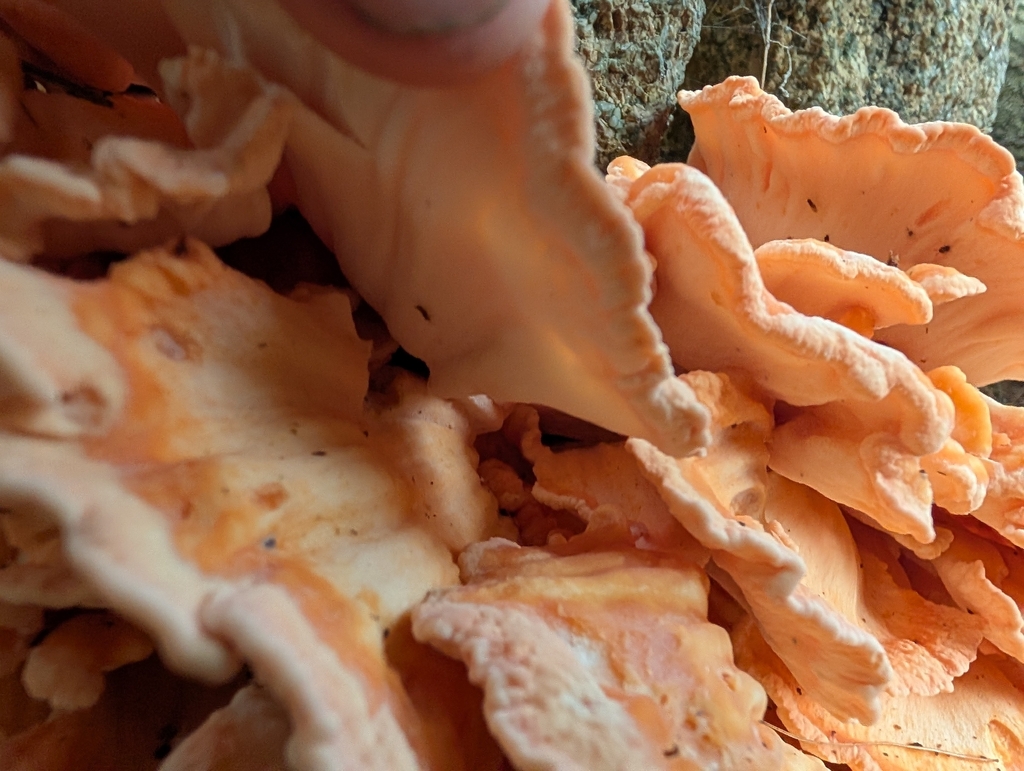
Laetiporus sulphureus is immediately recognizable by its vivid coloring and distinctive shelf-like growth form. The fruiting body emerges directly from tree trunks without a stem, initially appearing as a knob before expanding into fan-shaped or bracket-like shelves that often overlap in tiered clusters. Individual shelves range from 5 to 60 centimetres across and measure 4 to 12 centimetres thick, making this a substantial and visually striking fungus.
Color and Texture
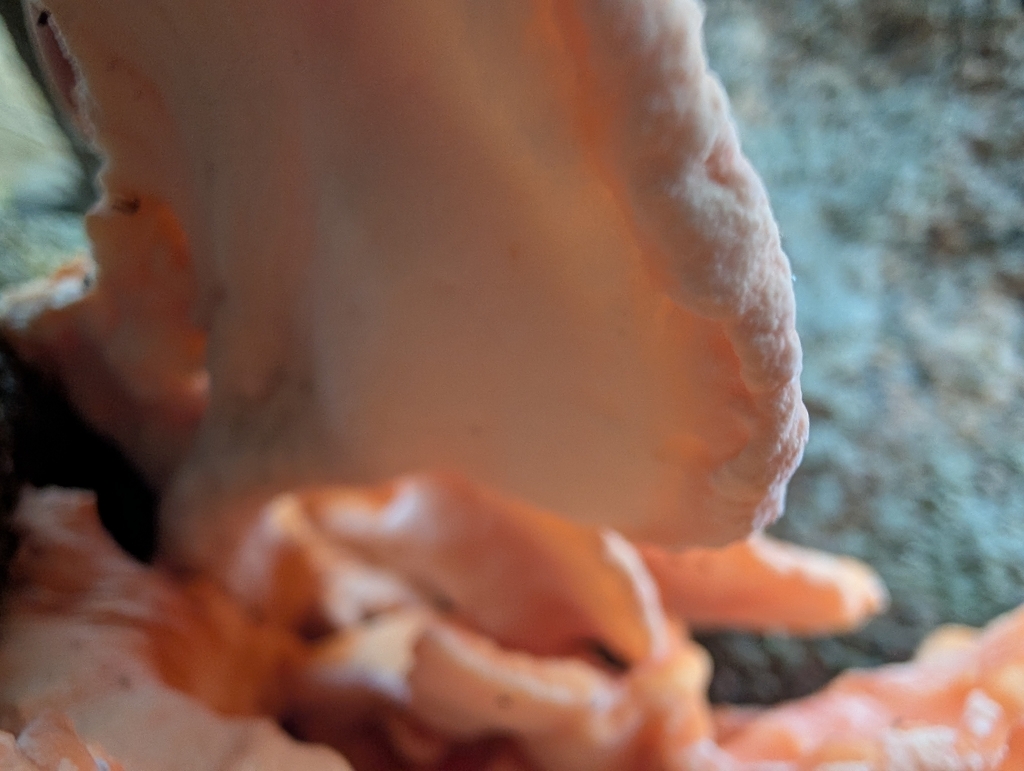
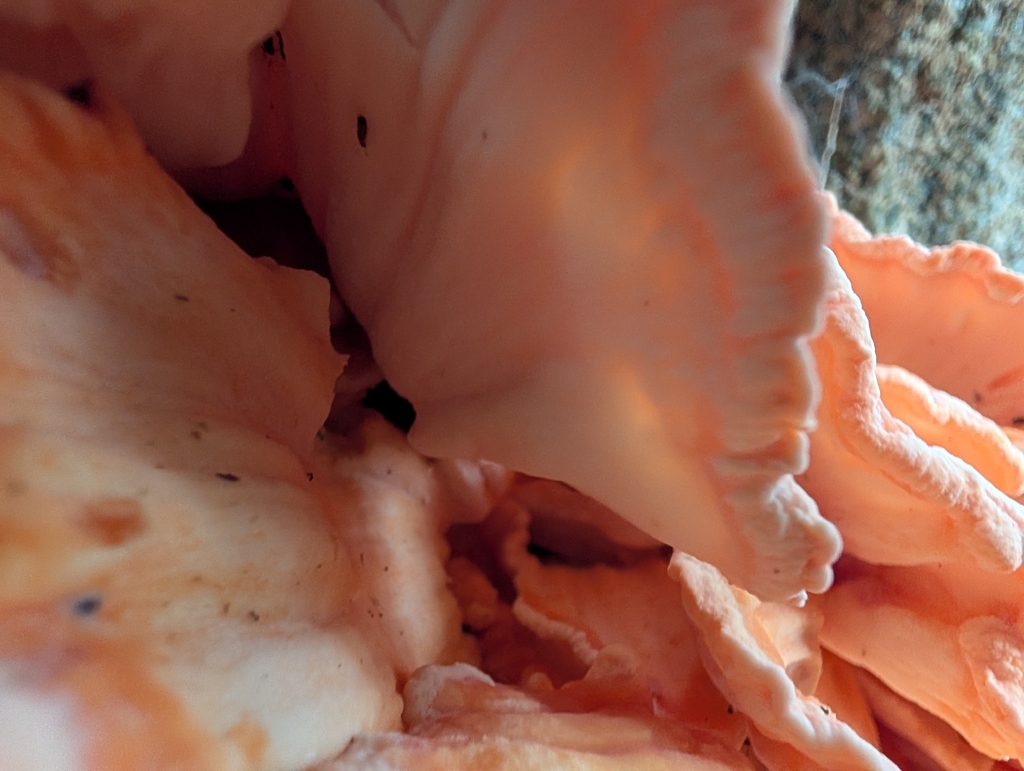
Young fruiting bodies display bright sulphur-yellow to orange coloring, with a distinctive suedelike texture on the upper surface. As the fungus ages, this vibrant hue fades to tan, cream, or whitish tones, creating a visible change in appearance over time. The undersurface is also yellow to orange and features fine pores rather than gills, which give it a slightly different tactile quality than the upper surface.
Seasonal Appearance
The fruiting bodies persist on their host trees for extended periods, allowing observers to track color changes from the bright yellow-orange of fresh growth through the pale, weathered appearance of older specimens. This visible aging process makes it possible to identify different growth phases on a single tree, with younger shelves showing the characteristic bright coloration while older portions bleach to pale cream.
Distribution and Habitat
Laetiporus sulphureus has a wide global distribution across the Northern Hemisphere and into the Southern Hemisphere, with records from 23 countries. GBIF records show the species is most abundant in Central and Northern Europe, particularly Germany (110 records), Sweden (47 records), and the Netherlands (29 records). Significant populations also occur in the United States (34 records), Norway (17 records), the United Kingdom (13 records), Austria (4 records), and Switzerland (4 records). The species also appears in Australia and South Africa, indicating its capacity to establish in temperate regions beyond its native range.
Elevation data indicates L. sulphureus occurs at approximately 68 metres, suggesting a preference for lowland and foothill zones rather than high-altitude environments. The fungus is a wood-decay specialist that colonizes dead or weakened hardwood trees and logs, thriving in woodland edges, parks, and gardens where suitable host material is available.
Seasonal fruiting follows a pronounced winter-to-early-spring pattern in the recorded range. GBIF observations peak sharply in March (126 records), with substantial fruiting also in February (109 records) and January (65 records). No records appear from April through December, indicating the species fruits almost exclusively during the cool, moist months of winter and early spring. This pattern aligns with the fungus’s preference for conditions that favour mycelial activity and moisture retention in decaying wood.
Ecology and Lifecycle
Lifecycle
Laetiporus sulphureus begins its life as microscopic mycelium—thread-like fungal cells that colonize dead or weakened wood. The mycelium spreads through the timber over months or years, breaking down the cellulose and lignin that make up the wood structure. When environmental conditions align—typically in spring or autumn with adequate moisture and warmth—the fungus directs energy into fruiting body formation.
The bright yellow and orange shelf-like fruiting bodies emerge from the wood surface, often in clusters or tiered arrangements. These structures produce spores on their underside in gill-like or pore-like structures. Millions of microscopic spores are released into the air and dispersed by wind, settling on new wood substrates where the cycle begins anew. A single fruiting body can persist for several weeks before decomposing, though the mycelium within the host tree remains active for years.
Ecological Role
Laetiporus sulphureus functions as a wood decomposer, a crucial ecological role in forest ecosystems. It breaks down dead wood from various hardwood and softwood species, returning nutrients locked in timber back to the soil. This recycling process enriches the forest floor and makes nutrients available to herbaceous plants, shrubs, and young trees. Without such decomposers, fallen logs and dead standing trees would accumulate indefinitely, disrupting nutrient cycling.
The fungus also provides food for wildlife. Certain deer species have been documented consuming this mushroom, making it part of the broader food web in forests where it grows. Its seasonal fruiting bodies offer sustenance to herbivorous mammals during periods when other food sources may be scarce.
Uses
In culinary traditions, particularly in Europe and Asia, Laetiporus sulphureus is harvested as an edible mushroom. Young fruiting bodies with tender pores are preferred; they offer a mild, slightly fruity flavor and firm texture. Cooks often slice and sauté them with butter or olive oil, or include them in soups and stews. The mushroom must be cooked thoroughly before consumption.
Traditional medicine systems have attributed immune-supporting and anti-inflammatory properties to this species, though rigorous clinical evidence remains limited. Modern research has isolated bioactive compounds from the fruiting bodies, sparking interest in potential therapeutic applications, but these remain largely investigational.
Conservation and Threats
Laetiporus sulphureus, the Sulfur Shelf, has not been formally evaluated by the IUCN Red List, meaning no official conservation status designation exists. This absence of assessment reflects the species’ widespread distribution and lack of documented population declines that would trigger conservation concern. The available data indicate a population trend that is increasing, suggesting the species is expanding or maintaining robust numbers across its range.
Threats and Conservation Status
No specific threats to Laetiporus sulphureus have been formally documented in conservation literature. The species is a saprotroph and facultative parasite of dead or dying hardwoods, particularly oak and other broad-leaved trees. Its ecological role in nutrient cycling and wood decomposition remains valuable regardless of forest management practices. The lack of identified threats, combined with the increasing population trend, indicates that this fungus is well-adapted to persist in both natural and human-modified landscapes.
The absence of formal conservation programmes reflects the stable ecological status of the species. Laetiporus sulphureus is not subject to legal protections in most jurisdictions, nor is it listed as threatened or endangered. Its ability to fruit prolifically on dead wood in urban parks, gardens, and managed forests demonstrates ecological flexibility that buffers it against habitat loss.
Cultural Significance
Laetiporus sulphureus, commonly known as Sulfur Shelf or Chicken of the Woods, occupies a notable place in human food culture across multiple continents. Its bright yellow and orange fruiting bodies, resembling shelf-like brackets on tree trunks, make it one of the most visually distinctive fungi in temperate forests. The distinctive appearance and edible status have made it a target for foragers and mushroom hunters throughout Europe and North America.
The fungus has become increasingly prominent in contemporary culinary traditions, particularly among foragers and chefs seeking wild ingredients. Its firm texture and chicken-like flavor when cooked have earned it a place on restaurant menus and in home kitchens, contributing to growing interest in wild mushroom gastronomy. This dual role—both as a prized edible species and a visible woodland organism—has cemented its cultural relevance in food traditions and ecological awareness among communities that forage or practice wild food harvesting.
Fun Facts
- Despite its fungal nature, Laetiporus sulphureus is prized as food and has earned the nickname “chicken-of-the-woods” for its texture and flavour when cooked. However, raw specimens can cause severe digestive upset in some people, making proper preparation essential.
- Young fruit bodies display a striking golden-yellow colour that fades dramatically over time to pale beige or grey as the fungus ages. This colour shift is so pronounced that specimens at different life stages can appear to be entirely different species.
- Rather than releasing spores through traditional gills, Laetiporus sulphureus uses tubelike pores on its undersurface—a characteristic shared with all polypore fungi. These microscopic tubes are far more efficient at dispersing spores than gills.
- The fungus grows as a bracket or shelf fungus, meaning it forms distinctive shelf-like structures that jut directly from tree trunks and branches without a central stem. A single tree can host multiple fruit bodies stacked in layers.
- Laetiporus sulphureus is a wood-decay specialist that feeds on dead or weakened trees, breaking down the complex cellulose in wood into simple sugars. This role as a decomposer is vital to nutrient cycling in forests.
- The species is parasitic on living trees as well, particularly oaks, fruit trees, and other hardwoods, where it can weaken the trunk before eventually causing branch failure. Foresters monitor for this fungus as an indicator of tree health problems.
Ecology
Edibility
Photo Gallery
Zac Peterson · CC BY 4.0
Related Species
Was this profile helpful?