
Magnoliopsida · Caryophyllales
Saguaro Cactus
Carnegiea gigantea
Least ConcernAlso known as: Giant Saguaro, giant cactus, sage-of-the-desert, saguaro, Saguaro
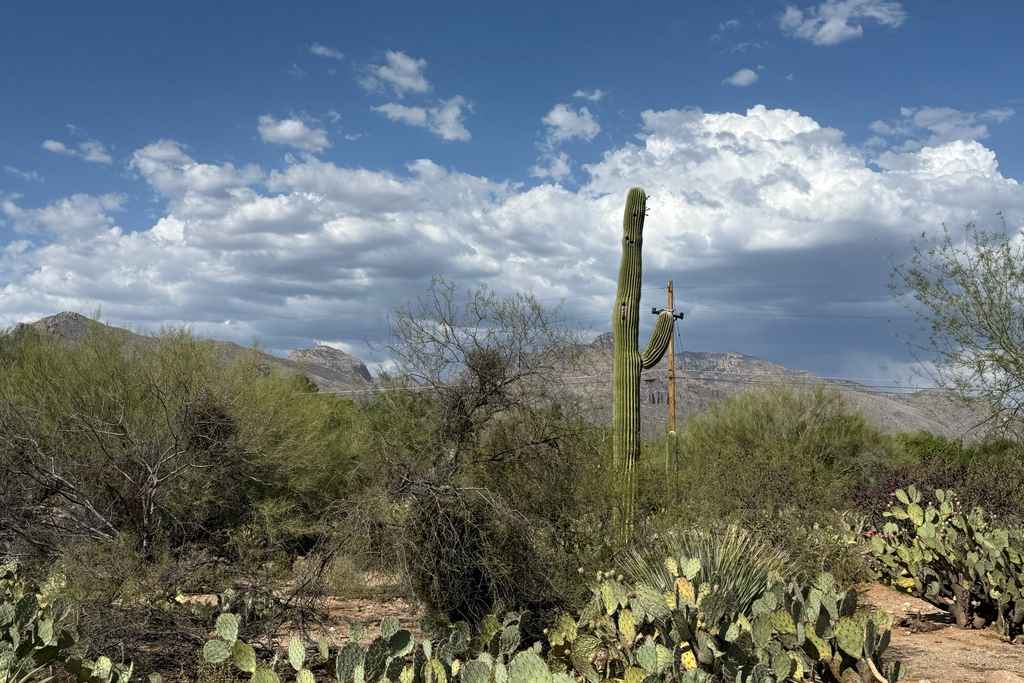
© Cole Wolf · iNaturalist · CC BY 4.0
Scientific Classification & Quick Facts
Classification
At a Glance
The saguaro cactus towers above the Sonoran Desert like a leafless sentinel, its massive columnar body crowned with thick, upright arms that seem to reach toward an unforgiving sun. Carnegiea gigantea is one of North America’s most iconic desert plants, instantly recognizable by its distinctive silhouette and commanding presence. Found across just two countries—primarily the United States and Mexico—this slow-growing succulent endures in one of the harshest environments on Earth, yet remains classified as Least Concern by conservation authorities. What makes the saguaro truly exceptional, however, is not merely its size or striking appearance, but the intricate ecological relationships it forges and the remarkable biological strategies it has evolved to thrive where few other organisms can survive.
The saguaro’s ecological importance extends far beyond its visual dominance. Its tall frame and flowering crown provide crucial food and shelter for over 60 species of birds, mammals, and insects, while its thick, waxy skin and water-storing tissues represent a masterclass in desert adaptation. The relationship between saguaro and desert life reveals how a single plant species can anchor an entire ecosystem, transforming barren ground into zones of biological productivity and refuge.
Identification and Appearance
The saguaro is a columnar cactus distinguished by its impressive upright stem and numerous lateral branches, commonly called arms. These arms typically begin to develop after the plant reaches considerable age and size. Individual plants may produce over 50 arms, with some exceptional specimens exceeding 70—one documented saguaro bears 78 arms. The plant’s form is unmistakable: a tall, thick central column with symmetrically distributed ascending branches that give mature specimens a candelabra-like silhouette.
Saguaros achieve enormous proportions, growing between 3 and 16 metres (10 to 52 feet) tall and reaching diameters of up to 75 centimetres (30 inches). These dimensions make the saguaro the largest cactus species in the United States. Growth is slow but steady; individual plants routinely live 150 to 200 years, allowing them to accumulate their characteristic mass and branching architecture over centuries. The thick, waxy skin is typically pale green to grey-green, with a dense covering of sharp spines arranged in vertical ridges that run along the stem and arms. During the flowering season, creamy white blooms appear near the stem tips, followed by red or magenta fruits that ripen in summer.
Distribution and Habitat
Carnegiea gigantea, the saguaro cactus, is endemic to the Sonoran Desert region of North America. Its range is restricted almost entirely to the southwestern United States, with the vast majority of observations occurring in Arizona. A small population also exists in Sonora, Mexico, making this species predominantly a U.S. desert dweller.
The saguaro occupies the hot, arid landscapes characteristic of the Sonoran Desert, thriving in areas where summer monsoons and occasional winter rainfall support growth. While specific elevation data are not available, the species is known to occur across a range of desert elevations within its restricted habitat, from lower desert valleys to slightly elevated bajadas and foothills. It favors well-drained sandy and gravelly soils typical of desert washes and open desert plains.
Occurrence records show concentrated observation and documentation activity in January, likely reflecting the season when field surveys and botanical expeditions are most common in the region. The absence of records in other months does not indicate seasonal migration or dormancy—saguaros are stationary perennial plants—but rather reflects patterns in human observation and data collection efforts.
Growth and Cultivation
Growth
Carnegiea gigantea, the saguaro cactus, is one of the tallest cacti in North America, developing a distinctive columnar form with thick, upright stems. The plant grows extremely slowly in the wild, taking 75 years or more to reach just 1.8 metres in height and 150 years to attain its full mature stature of up to 12 metres tall. The characteristic side arms that define the saguaro’s iconic silhouette do not emerge until the plant is 75–150 years old, making young saguaros difficult to distinguish from other columnar cacti. A mature saguaro can weigh up to 4,500 kilograms when fully hydrated, as the plant stores enormous quantities of water in its spongy tissue to survive desert droughts.
Flowering and Fruiting
Saguaros produce large, creamy-white flowers that bloom in late spring and early summer, clustered near the stem tips and at the bases of the side arms. The flowers open at night and close by afternoon, adapted to pollination by long-nosed bats as well as native bees and hummingbirds. Following successful pollination, the plant develops fleshy, red fruits approximately 5 centimetres in diameter that ripen in early summer and split open to reveal numerous small black seeds embedded in sweet, edible pulp.
Cultivation
Saguaros thrive in full sun and well-draining, sandy or gravelly soil typical of the Sonoran Desert. The species is extremely drought-tolerant once established and requires minimal supplemental water in cultivation outside its native range. While specific soil pH, hardiness zones, and precise water schedules for cultivated specimens are not fully documented in standard horticultural databases, the plant’s natural habitat in the arid American Southwest indicates it tolerates alkaline to neutral soils and cannot survive sustained freezing temperatures or excessive moisture.
Propagation from seed is possible but slow and requires patience; seeds germinate in warm, dry conditions and seedlings develop at a glacial pace. Growing saguaros from seed indoors or in controlled conditions can accelerate early growth compared to wild conditions, yet the plant still demands decades to reach ornamental size. In cultivation, saguaros are best suited to hot, dry climates with minimal rainfall and full daylight exposure. Protection from cold winters is essential in regions where temperatures regularly drop below freezing.
Conservation and Threats
Carnegiea gigantea holds a conservation status of Least Concern on the IUCN Red List, reflecting a stable to increasing population trend. This favourable assessment does not mean the species faces no challenges—rather, current populations remain resilient enough that the species is not at immediate risk of extinction across its range. However, emerging and accelerating threats demand active management to maintain this status.
Threats
Drought and climate change pose the most severe long-term threat to saguaro populations. Saguaro seedlings are highly sensitive to water stress, and prolonged drought combined with record heat has severely restricted seedling establishment and survival in recent decades. Rising daytime and nighttime temperatures reduce the water use efficiency of mature saguaros, forcing them to consume more water and increasing their vulnerability to die-off during extended dry periods.
Invasive species, particularly buffelgrass and Sahara mustard, destabilise the Sonoran Desert ecosystem by accelerating wildfire frequency and intensity. Buffelgrass outcompetes saguaros for limited water resources while establishing dense stands that fuel larger, hotter fires—a critical threat in an ecosystem where saguaros have limited fire tolerance. Human vandalism, including shooting cacti, also damages individual plants, though modern legal protections have reduced this pressure.
Conservation Efforts and Legal Protection
Arizona law provides robust protection for saguaros on state land. Harming, vandalizing, or removing a saguaro is classified as a class-four felony, with potential sentences up to 3 years and 9 months. This legal framework has significantly deterred the deliberate destruction that once threatened populations.
Broader conservation strategies focus on managing invasive plants, maintaining habitat corridors, and understanding how local environmental conditions influence saguaro recovery. Long-term monitoring of population dynamics continues across the Sonoran Desert, providing early warning of range-wide declines.
Fun Facts
The saguaro cactus is one of the most iconic plants of the American Southwest, and its biology is full of surprising details that reveal why these giants command such respect in their desert habitat.
- Giants of the cactus world: Saguaros can exceed 12 metres (39 feet) in height, making them among the tallest cacti on Earth. Their massive columnar shape allows them to dominate the desert skyline.
- High-altitude desert dwellers: Despite thriving in arid regions, saguaros grow at elevations up to 1,500 metres (5,000 feet), where temperatures drop significantly and moisture is slightly more abundant than in lower deserts.
- Arizona’s floral emblem: The delicate white or pink saguaro blossom holds the distinction of being Arizona’s official state wildflower, blooming in late spring and early summer.
- A limited native range: Saguaros are found only in parts of Arizona and Sonora, Mexico, with a small population in California’s Whipple Mountains and Imperial County—a restricted distribution that reflects their specific climatic and soil requirements.
- Protected by national park status: Saguaro National Park, established in 1933 near Tucson, Arizona, was created specifically to protect this species from overharvesting and development, underscoring its ecological and cultural significance.
- Slow-motion growth: A saguaro may take 75 years or more to reach reproductive maturity, and the arms that give them their distinctive silhouette do not appear until they are 75–150 years old.
- Wildlife dependency: Gila woodpeckers, gilded flickers, and other desert birds rely on saguaro cavities for nesting, while bats and bees pollinate their flowers—making each saguaro a miniature ecosystem supporting dozens of species.
Conservation Status
LC (Least Concern) · NT · VU · EN · CR · EW · EX
Photo Gallery
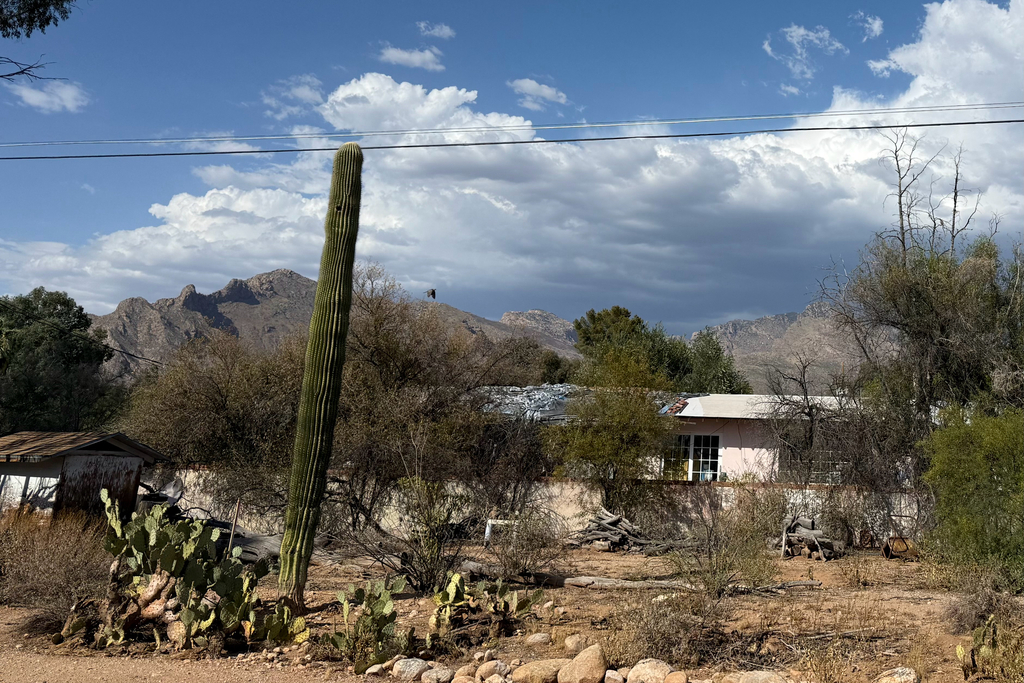
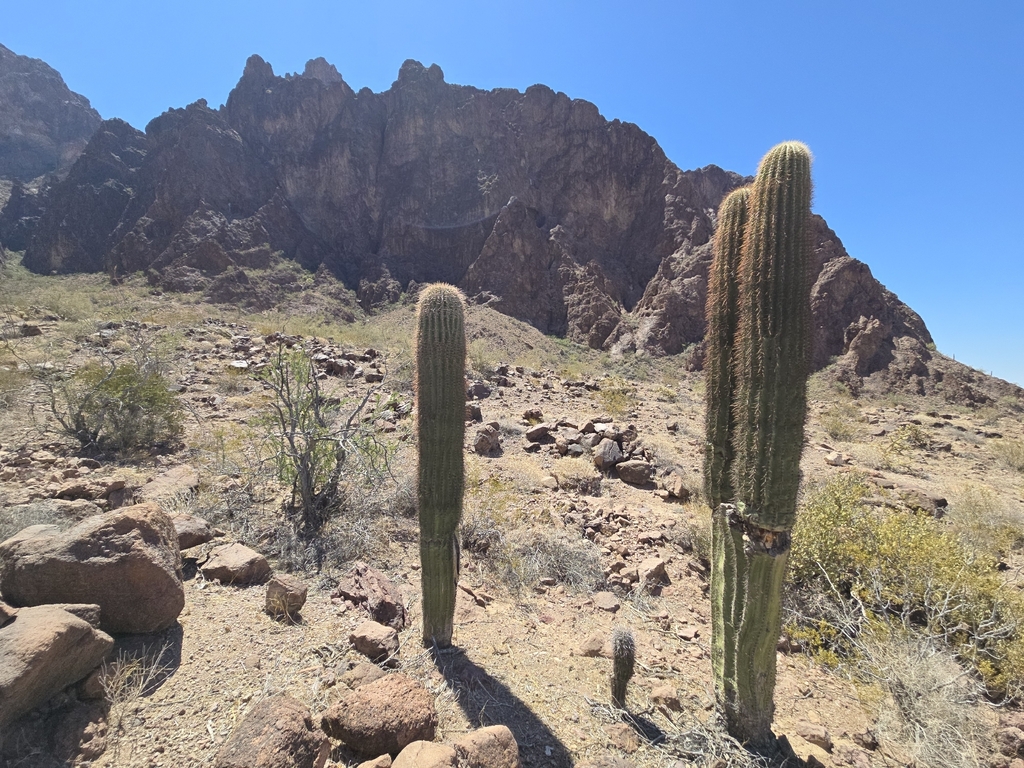
Cole Wolf · CC BY 4.0
Related Species
Was this profile helpful?