
Magnoliopsida · Rosales
Rowan
Sorbus aucuparia
Least ConcernAlso known as: European Mountain-ash, European mountain ash, European mountain-ash, Mountain Ash, Quickbeam
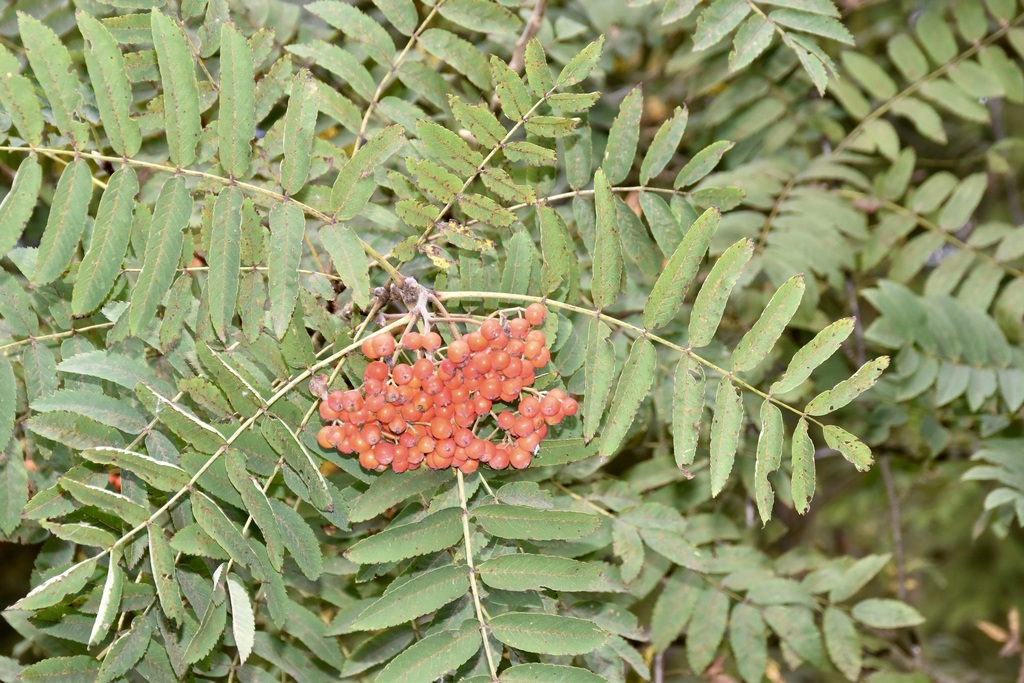
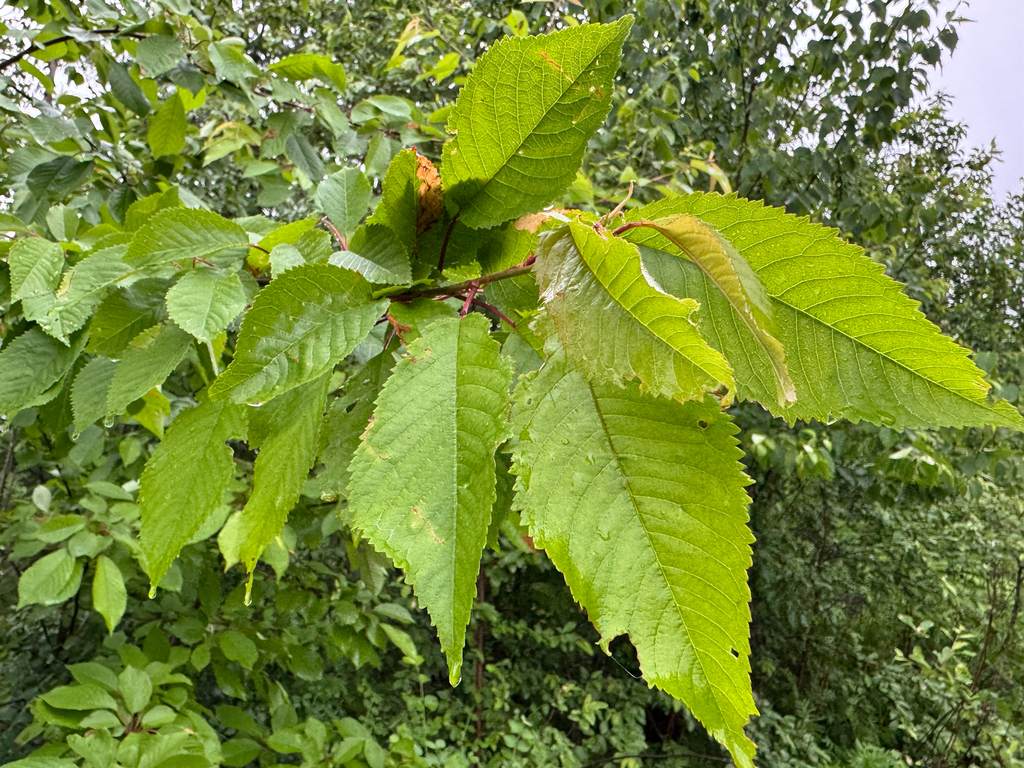
© Nasser Halaweh · iNaturalist · CC BY 4.0
Scientific Classification & Quick Facts
Classification
Known For
Detailed measurements for this species are still being verified.
The rowan is a small to medium tree with slender branches that glow crimson in autumn, its clusters of bright orange-red berries hanging like lanterns against the cool season light. Found across 21 countries spanning temperate and boreal regions of Europe and Asia, Sorbus aucuparia has earned its place in both wild forests and cultivated gardens through centuries of human appreciation. Listed as Least Concern by the IUCN, this resilient member of the Rosaceae family demonstrates the kind of ecological stability that defines truly successful species.
What makes the rowan especially notable is its dual nature: hardy enough to thrive in harsh mountain conditions and marginal soils, yet ornamental enough to have become a favourite in parks and streetscapes worldwide. Its ecological and cultural significance extends far beyond its modest stature, offering lessons in how modest-sized plants can anchor entire food webs and inspire deep connections between human communities and the natural world.
Identification and Appearance
Sorbus aucuparia, commonly known as Rowan, is a small deciduous tree or shrub reaching heights between 5 and 15 metres. The crown is loose and roundish, though often irregularly shaped and wide, and the plant frequently develops multiple trunks from the base. Individual trunks are slender and cylindrical, typically reaching up to 40 centimetres in diameter, with branches that extend outward and angle slightly upward.
Bark and Surface Features
Young specimens display yellowish-grey bark with a glossy sheen. As the tree matures, the bark darkens to grey-black and develops lengthwise cracks, eventually scaling away in small flakes. A distinctive feature is the presence of elongated lenticels—the pores through which the tree breathes—which appear bright ochre-yellow against the darker bark.
The tree typically does not exceed 80 years in age. Its relatively short lifespan and modest stature make it well-suited to cool temperate and boreal regions, where it occupies an average elevation of around 355 metres, though it thrives across a wider altitudinal range depending on latitude.
Distribution and Habitat
Sorbus aucuparia, the rowan, has a wide distribution across the Northern Hemisphere, recorded in 21 countries with the strongest concentrations in Russia, Scandinavia, and the British Isles. Russia hosts the largest number of documented records (67), followed by Sweden (58) and Norway (44). New Zealand (37 records) and the Netherlands (33) also show substantial populations, indicating both native and introduced populations across temperate regions. Smaller but established populations exist in the United Kingdom (12), France (9), Finland (7), Germany (7), Austria (5), and scattered locations elsewhere.
Elevation preferences span a modest range from 17 metres to 693 metres above sea level, with an average occurrence at 355 metres. This flexibility allows the rowan to thrive in lowland valleys and hillside communities, adapting to varied topographic conditions across its range. The species does not demonstrate a pronounced preference for specific habitat types within available records, suggesting broad ecological tolerance across woodlands, hedgerows, and disturbed ground.
Seasonal observation patterns show a marked concentration in winter months. January records peak at 181 observations, while February shows 119 records. Observations drop sharply after February, with no documented sightings recorded from March through December in the dataset. This seasonal bias likely reflects fruiting phenology—rowan berries mature in autumn and persist conspicuously through winter—making the plant more easily detected during colder months when foliage has fallen and bright red fruit clusters are most visible against bare branches.
Growth and Cultivation
Growth
Sorbus aucuparia, commonly known as rowan, is a small to medium deciduous tree that typically reaches 4–15 metres in height at maturity, though exceptional specimens may grow taller. The tree develops a rounded, open crown with a single main trunk and ascending branches, creating an upright form well-suited to many garden and landscape settings. Rowan establishes relatively quickly once planted, making it a popular choice for forestation and urban green spaces across temperate regions.
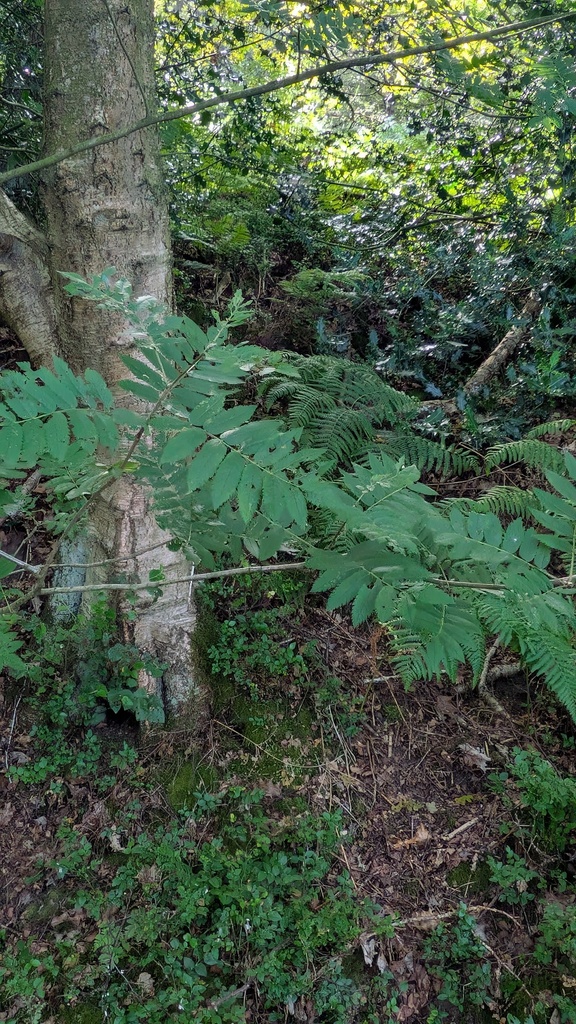
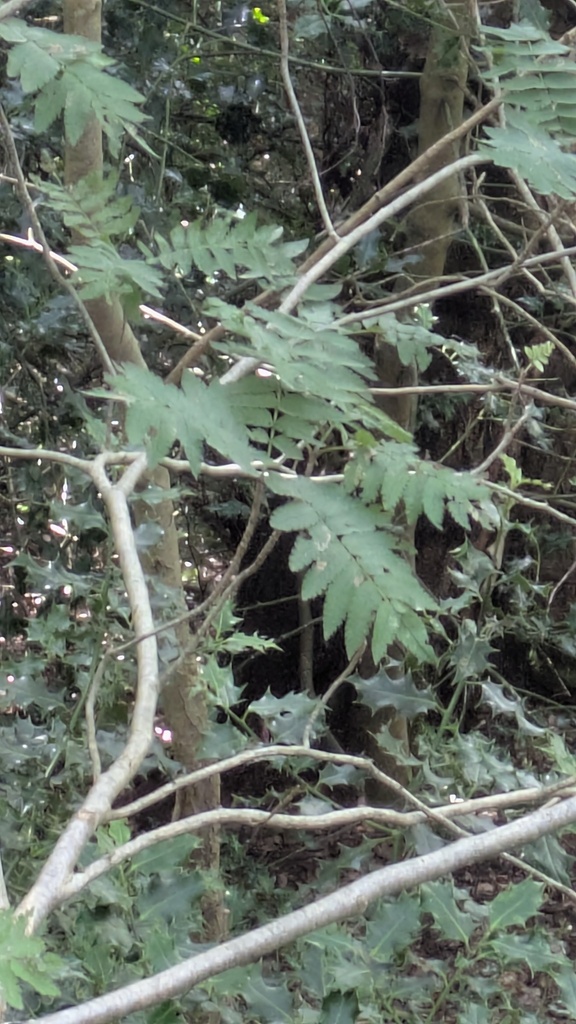
The foliage is pinnately compound, with leaflets arranged along a central rachis in the distinctive feathery pattern characteristic of the genus. Leaves emerge in spring and turn vibrant orange, red, or yellow in autumn before dropping, providing reliable seasonal colour. The bark is smooth and grey when young, becoming rougher and more fissured with age.
Flowering and Fruiting
Rowan produces small, white to cream flowers arranged in dense, flat-topped clusters called corymbs. Flowering typically occurs in late spring, usually May in the Northern Hemisphere. The flowers are hermaphroditic and attract a wide range of pollinators, particularly bees and other insects. Following successful pollination, the tree develops distinctive spherical berries, generally bright red or orange in colour, which mature in late summer and persist well into autumn and early winter.
These berries are highly valued by birds and wildlife—thrushes, waxwings, and many other species feed on them, dispersing seeds across the landscape. The fruit is technically a pome (like apples and pears) and has been used traditionally in jams, jellies, and liqueurs across Europe, though the berries are tart and astringent when raw.
Cultivation
Rowan is a hardy, adaptable tree that tolerates a wide range of soil conditions, including poor, sandy, and rocky soils where many ornamental trees struggle. It performs well in full sun to partial shade, though flowering and fruiting are more prolific in sunnier locations. The tree shows good tolerance to wind and frost, making it particularly valuable in exposed upland and northern sites. It prefers well-drained soil and established trees are relatively drought-tolerant once their root systems are mature, though young plants benefit from regular watering during their first growing season.
For successful establishment, plant rowan in autumn or early spring in a location with adequate air circulation to minimize fungal diseases. Minimal pruning is required beyond removing dead or crossing branches; the tree naturally develops a balanced form. Rowan is exceptionally cold-hardy and thrives across much of temperate Europe and North America, making it an excellent choice for gardens and landscapes in cool climates where conventional ornamentals may fail.
Conservation and Threats
Sorbus aucuparia, the rowan, holds a secure conservation status on the IUCN Red List as Least Concern. This classification reflects the species’ wide distribution across temperate and boreal regions of Europe and western Asia, combined with its ability to thrive in diverse habitats from lowland woodlands to mountainous terrain. The rowan’s population is currently increasing, indicating that the species faces no immediate threats to its survival at a global scale.
Threats
The rowan encounters minimal conservation challenges across most of its range. No major threats have been formally documented in recent assessments. Localized pressures such as habitat conversion, woodland management practices, and climate-driven changes in growing conditions may affect individual populations, but these do not threaten the species’ long-term viability. The rowan’s capacity to establish itself in disturbed areas, including urban and agricultural landscapes, provides a degree of resilience against habitat loss.
Conservation Efforts and Legal Protections
Formal conservation programmes specifically targeting the rowan are not widespread, as the species does not require intensive management at the species level. However, rowans benefit indirectly from broader woodland conservation initiatives and European habitat protection schemes. In some regions, particularly where native tree diversity is a priority, rowans are actively planted to restore degraded habitats and support biodiversity. The species is recognized for its ecological and cultural value, with traditional ecological knowledge across northern Europe reflecting its long-standing importance.
Cultural Significance
Mythology and Folklore
Rowan holds deep significance in Norse mythology. In the Prose Edda, the god Thor saves himself from a rapid river created by the giantess Gjálp by grasping a rowan tree, an act that earned the species the name “Thor’s protection.” This association linked the rowan to divine intervention and safety in Scandinavian tradition.
English folklore attributed protective powers to rowan twigs, which were believed to ward off evil spirits and witches. This apotropaic use—hanging branches in homes or barns to repel malevolent forces—reflects widespread medieval and early modern European beliefs in the plant’s spiritual potency. The rowan’s bright red berries and distinctive appearance made it a visually symbolic marker of supernatural defense in folk practice.
Fun Facts
- Sorbus aucuparia belongs to the rose family (Rosaceae), making it a close botanical relative of apples, pears, and cherries—not true ash trees, despite its misleading common name ‘mountain-ash’. This family connection explains why rowan berries resemble tiny apples in structure.
- The species is deciduous, shedding its leaves each autumn to conserve water and energy in harsh mountain environments where evergreen strategies would waste resources during freezing winters. This seasonal leaf drop is a key adaptation that allows rowan to thrive at high elevations across northern Europe and Asia.
- Regional naming creates confusion: the same tree is called both ‘rowan’ and ‘mountain-ash’ depending on geographic location and cultural tradition, yet they refer to exactly the same species. This dual nomenclature reflects the tree’s wide distribution across different linguistic and cultural regions.
- Rowan berries are a vital food source for migratory birds, particularly thrushes and waxwings, which disperse seeds across vast distances during autumn and winter movements. A single tree can produce hundreds of bright orange-red berries that persist on branches well into winter.
- The wood of rowan is exceptionally hard and was traditionally used to make walking sticks, tool handles, and fishing rods—a testament to its dense grain structure that develops over decades of growth. Its strength-to-weight ratio made it prized by rural craftspeople across Europe.
- Rowan berries are edible and rich in vitamin C, though they are astringent when raw; they have been used for centuries in jams, syrups, and traditional medicines across Scandinavia and Eastern Europe. Modern foragers value them for their tartness and nutritional profile in fermented beverages and preserves.
- The tree can live for 200 years or more, gradually thickening its trunk and expanding its canopy in exposed mountain settings where few other trees can establish. Some ancient rowans in remote Scottish glens are among the oldest living organisms in their harsh alpine ecosystems.
Ecology
Growing Conditions
Edibility
Conservation Status
LC (Least Concern) · NT · VU · EN · CR · EW · EX
Photo Gallery
Nasser Halaweh · CC BY 4.0
Related Species
Was this profile helpful?