
Aves · Charadriiformes
Northern Lapwing
Vanellus vanellus
Also known as: Green Plover, Lapwing, Lapwing, Northern Lapwing
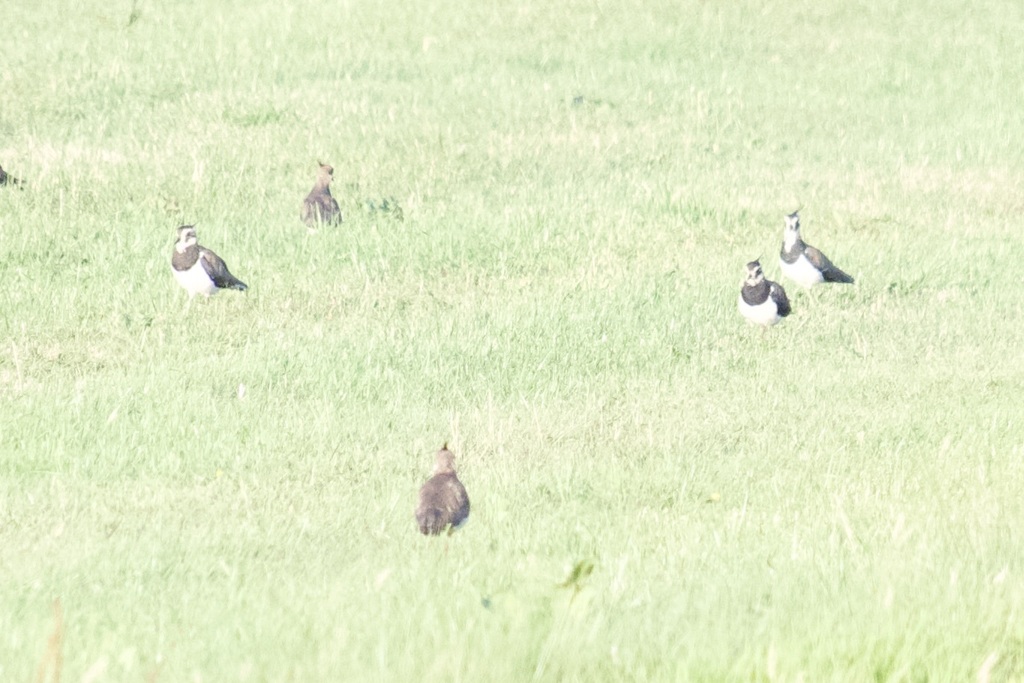
© no rights reserved · iNaturalist · CC0 1.0
Scientific Classification & Quick Facts
Classification
At a Glance
The Northern Lapwing is a medium-sized wading bird instantly recognizable by its striking black-and-white plumage, wispy crest, and acrobatic flight. Found across 17 countries spanning Europe and Asia, this charadriid inhabits open grasslands, wetlands, and cultivated farmland where it hunts insects and small invertebrates with characteristic head-bobbing movements. Despite its wide distribution, the species has been classified as Near Threatened, reflecting recent population declines across much of its range.
What sets the Northern Lapwing apart is its remarkable adaptability to human-modified landscapes and its role as a cultural symbol in European folklore and art. Yet this flexibility has become complicated: while the species thrives in agricultural regions, intensive farming practices, wetland drainage, and pesticide use have fragmented populations and reduced breeding success in key areas. Understanding the lapwing’s ecology and conservation needs remains essential for reversing these declines and maintaining this charismatic bird’s presence in open country habitats.
Identification and Appearance
The Northern Lapwing is a medium-sized wading bird measuring 28–33 cm in length with a wingspan of 67–87 cm. Body mass ranges from 128–330 grams, making it a relatively lightweight species despite its robust build. The bird possesses distinctly rounded wings and a prominent crest, along with notably short legs compared to other lapwing species.
Plumage is predominantly black and white, with a subtle green tint across the back that becomes more apparent in strong light. The upperparts display iridescent green-bronze tones, while the underparts are predominantly white. A striking white face contrasts sharply with darker markings, and the tail shows white outer feathers against darker inner feathers, visible in flight.
Sexual dimorphism
Males are distinctly more striking than females. They display a long, prominent crest and possess a complete black crown, throat, and breast that creates a dramatic contrast with the white facial patches and underparts. Females and juveniles show noticeably shorter crests and far less defined head markings, with reduced black coloration on the crown and throat. Despite these differences, their overall plumage pattern remains similar to males, though less dramatic in appearance.
Distribution and Habitat
Vanellus vanellus, the Northern Lapwing, occupies a broad Eurasian range with a notable concentration across northern and western Europe. GBIF records indicate the species is present in 17 countries, with Denmark recording the highest observation count at 140, followed by the United Kingdom with 41 records. The Netherlands, Norway, France, and Sweden contribute significant sightings, each with 18–27 observations, while other European nations including Spain, Germany, and Italy show lower but consistent presence.
The species also reaches eastward into Asia, with records from Taiwan representing its documented range extension beyond the traditional European zone. This wide geographic footprint reflects the Northern Lapwing’s adaptability to varied conditions across temperate and boreal regions.
Seasonal patterns show marked variation in detection. January represents the peak observation month with 300 records, while data for all other months are absent from current records, indicating either a strong winter concentration or differential recording effort. This pronounced January peak suggests the species may be most conspicuous or abundant during winter months in its primary range, though breeding and migration patterns for individual populations require field verification across seasons.
Biology and Behavior
Behavior
Northern Lapwings are highly vocal and conspicuous birds, known for their energetic flight displays and loud alarm calls. They are often seen in small flocks outside the breeding season, though they become fiercely territorial during spring and summer. Males perform dramatic aerial displays, climbing steeply and tumbling through the air while calling repeatedly, a behavior that advertises territory and attracts mates. On the ground, these birds walk with a characteristic bouncing gait and often pause to listen for movement beneath the soil surface.
The species is primarily diurnal, foraging actively during daylight hours and spending much time on open ground. Lapwings are partly migratory, with northern populations moving south in autumn, though some birds remain year-round in milder regions. Their lifespan in the wild extends to around 24.5 years, making them relatively long-lived waders. During the breeding season, adults are aggressive defenders of their nesting territories and will dive-bomb and harass predators, including humans and dogs, that approach their nests too closely.
Diet
Northern Lapwings are carnivorous, feeding primarily on invertebrates found in soil and short grass. They hunt insects, earthworms, beetle larvae, and other small arthropods by walking across open ground and picking food items from the surface or shallow soil. They often feed in wetland margins, pastures, and cultivated fields where invertebrate prey is abundant. During harsh winters when ground conditions freeze, lapwings may shift to coastal areas or move southward to find accessible feeding habitat.
Reproduction
Breeding occurs in spring and early summer, typically from March to June depending on latitude and climate. Northern Lapwings are ground nesters, laying their eggs in shallow scrapes lined with grass or plant material on open ground, grassland, or wetland margins. A typical clutch consists of three to four speckled eggs, which both parents incubate for approximately 26 to 28 days. The chicks are precocial, meaning they leave the nest soon after hatching and can feed themselves, though parents continue to protect and brood them for several weeks.
Parental care is biparental and intense, with both male and female defending the nest and young chicks aggressively against intruders. If a predator or human approaches, parents perform distraction displays, feigning injury and calling loudly to draw attention away from the nest. Chicks fledge at around 35 to 40 days old but remain dependent on parents for guidance and protection into late summer. Many pairs rear only one brood per season, though double-brooding occurs in favorable conditions.
Conservation and Threats
The Northern Lapwing is classified as Vulnerable on the IUCN Red List, indicating that this species faces a moderate risk of extinction in the wild. This status reflects documented declines across much of its range, particularly in western Europe where populations have contracted significantly over recent decades. The listing signals that without targeted conservation action, the species could slip into a more threatened category.
Threats
Northern Lapwings face multiple, interconnected pressures across their breeding, migration, and wintering grounds. Agricultural intensification represents the foremost threat: the conversion of traditional grasslands and wetlands into monoculture crops, the widespread use of pesticides that deplete their invertebrate food sources, and the drainage of marshy fields have eliminated critical breeding habitat. Mechanical drainage systems and nutrient runoff further degrade the shallow-water habitats these birds depend on during breeding season.
Predation and disturbance amplify these habitat losses. Mammalian predators, particularly foxes and corvids, take eggs and chicks from ground nests with increasing success in fragmented landscapes where adult lapwings lack protective vegetation. Human activities—including recreational activity on protected sites, infrastructure development, and wetland management practices that create unsuitable nesting conditions—compound breeding difficulties. Climate variability also affects their timing: late spring frosts can destroy eggs, while altered precipitation patterns affect the availability of marshy breeding grounds.
Conservation Efforts
Legal protections exist across much of the Northern Lapwing’s range. In Europe, the species benefits from strict protection under the EU Birds Directive and similar domestic wildlife legislation in many countries. Several reserves and protected areas now manage habitat specifically for lapwing breeding success, implementing measures such as maintaining shallow water levels during spring and removing aggressive predators. Agri-environment schemes in the United Kingdom, Netherlands, and Scandinavia provide financial incentives to farmers for maintaining suitable grassland conditions and delaying harvest to allow chicks to fledge.
Cultural Significance
The Northern Lapwing has occupied a modest but distinct place in European culture, particularly across the regions where it breeds and winters. Its distinctive appearance—with the striking black and white plumage and characteristic crest—has made it recognizable to rural and agricultural communities for centuries. The bird’s presence in farmland and wetlands, combined with its vocal nature and conspicuous breeding displays, has ensured it remains familiar to people who work the land or observe birds in natural settings.
In some European traditions, the lapwing appears in folklore and local naming practices, often reflecting its behavior and habitat use rather than deep mythological significance. The bird’s association with spring and open landscapes has given it cultural resonance in temperate regions, and its decline in recent decades has made it a subject of conservation concern and nostalgia among naturalists and environmental advocates. The species remains a common subject for birdwatchers and ornithologists across its range.
Fun Facts
The Northern Lapwing is one of Europe’s most recognizable birds, famous not only for its striking appearance but also for its remarkable behaviors and deep cultural roots across multiple continents. Below are key facts that reveal why this species has captured human attention for centuries.
- The species has accumulated at least seven distinct common names—peewit, pewit, tuit, tewit, green plover, pyewipe, and lapwing—reflecting its widespread presence and the different regional traditions across Eurasia. Many of these names imitate its distinctive call.
- Northern Lapwings belong to a specialized subfamily of lapwings, a group of plovers characterized by their elongated crests, patterned plumage, and acrobatic flight displays. This family relationship distinguishes them from other wading birds.
- The species is distributed across temperate Eurosiberia, one of the largest geographic ranges of any lapwing, extending from the Atlantic coasts of western Europe eastward across Russia and into Asia. This continental span makes them a truly Eurasian bird.
- Male Northern Lapwings perform dramatic aerial dives during breeding season, rolling and tumbling through the air while making loud, wheezing calls to defend territory and attract mates. These acrobatic displays are among the most conspicuous behaviors of any ground-nesting wader.
- The bird’s scientific name, Vanellus vanellus, derives from the Latin word for “fan,” referring to the fan-like appearance of their wings during their elaborate flight maneuvers. Renaissance naturalists chose this name based on these distinctive displays.
- Northern Lapwings are highly vocal birds with complex repertoires of calls that vary by context: alarm calls sound sharp and piercing, while breeding calls are soft and melodious. Their calls are so distinctive that many European languages incorporated their sounds into the bird’s vernacular names.
- Unlike many wading birds that migrate to distant tropical wintering grounds, Northern Lapwings often winter within their breeding range or in nearby regions, making them partial migrants rather than obligate long-distance travelers. Population responses to severe winters can be dramatic, with entire local populations temporarily displaced.
Photo Gallery
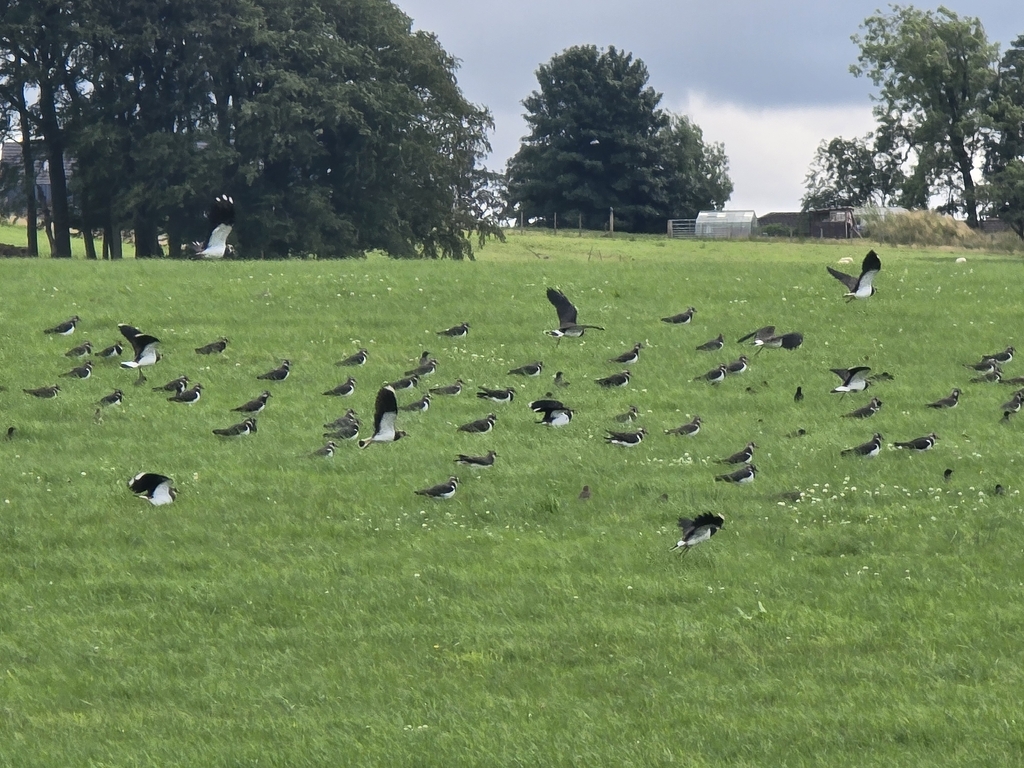
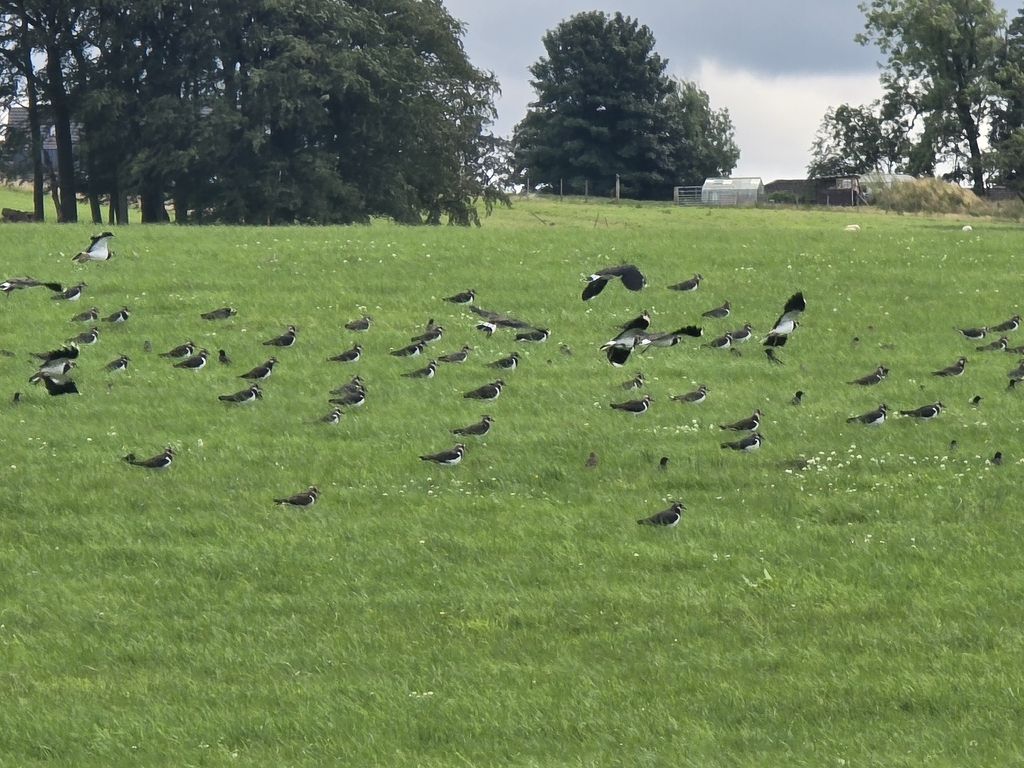
no rights reserved · CC0 1.0
Related Species
Was this profile helpful?