
Insecta · Odonata
Broad Bodied Chaser
Libellula depressa
Least ConcernAlso known as: Broad-Bodied Chaser, Broad-Bodied Libellula, Broad-bodied Chaser, Broad-bodied Chaser Dragonfly, Broad-bodied chaser
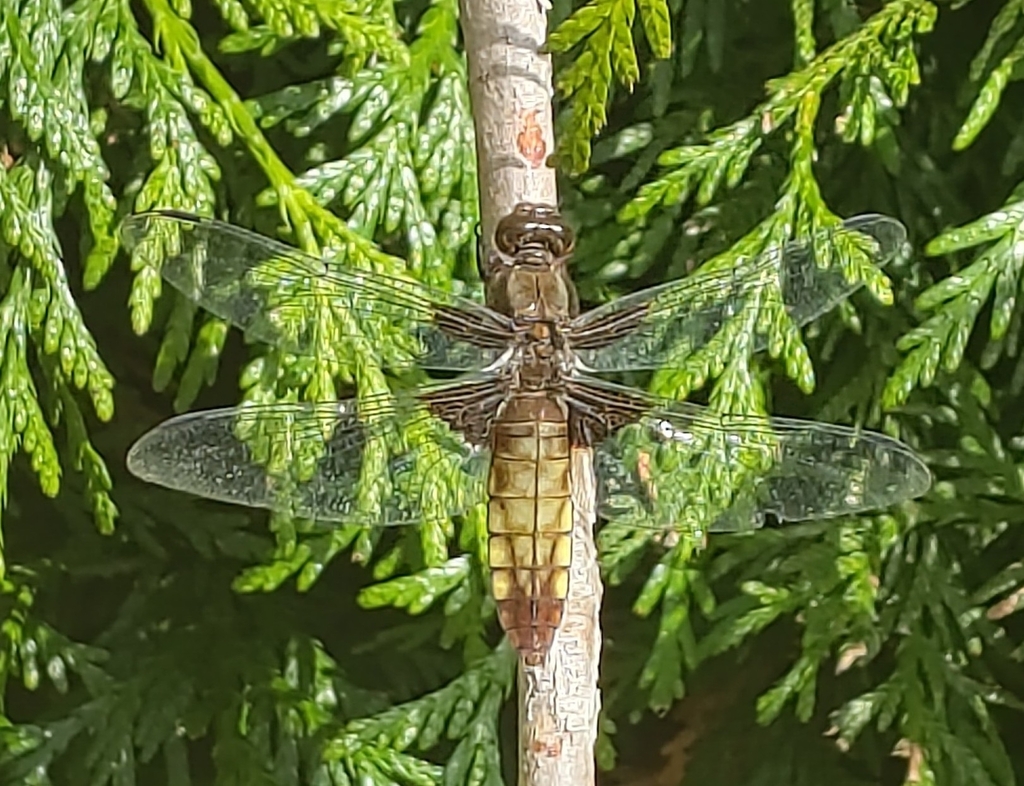
© no rights reserved · iNaturalist · CC0 1.0
Scientific Classification & Quick Facts
Classification
Known For
Detailed measurements for this species are still being verified.
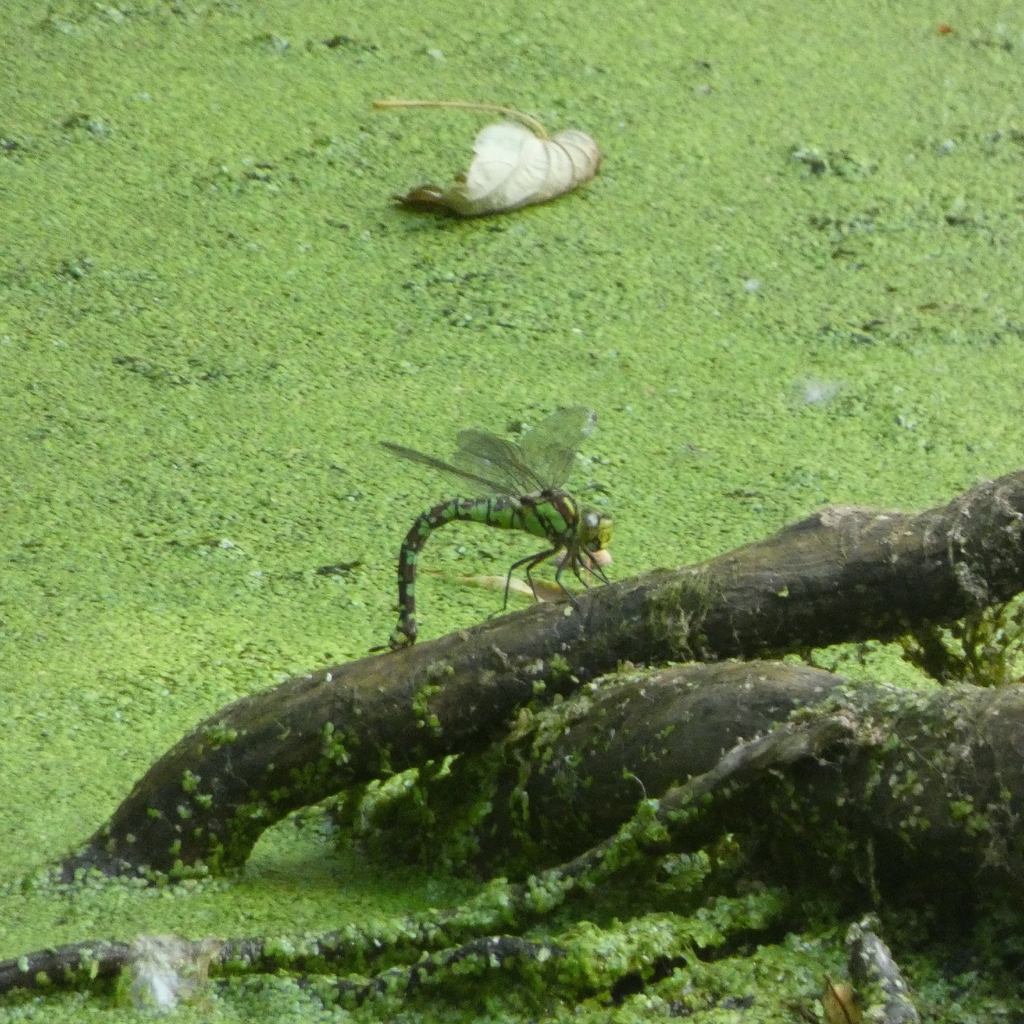
The Broad Bodied Chaser is a stocky, powerfully built dragonfly that commands attention wherever it patrols. With its characteristically flattened abdomen and robust frame, Libellula depressa is one of the most recognisable dragonflies across its range, often seen hawking over water with tireless precision. This species belongs to the family Libellulidae, a diverse group of dragonflies found on every continent except Antarctica.
Found across 18 countries, primarily in Europe and temperate Asia, this dragonfly thrives in a variety of freshwater habitats from small ponds to larger lakes and slow-moving rivers. Its listing as Least Concern by the International Union for Conservation of Nature reflects its adaptability and stable populations, though like all odonates, it depends on clean water and healthy riparian ecosystems. The Broad Bodied Chaser’s combination of widespread distribution, distinctive appearance, and dynamic hunting behaviour makes it a flagship species for wetland conservation and a favourite among dragonfly enthusiasts worldwide.
Identification and Appearance
Libellula depressa, the Broad Bodied Chaser, is a medium-sized dragonfly instantly recognizable by its notably flattened, robust abdomen and powerful build. The species earned its common name from this characteristically broad, dorsally compressed body, which distinguishes it from many other chasers at a glance. Males and females differ strikingly in coloration, making sex identification straightforward in the field.
Male Appearance
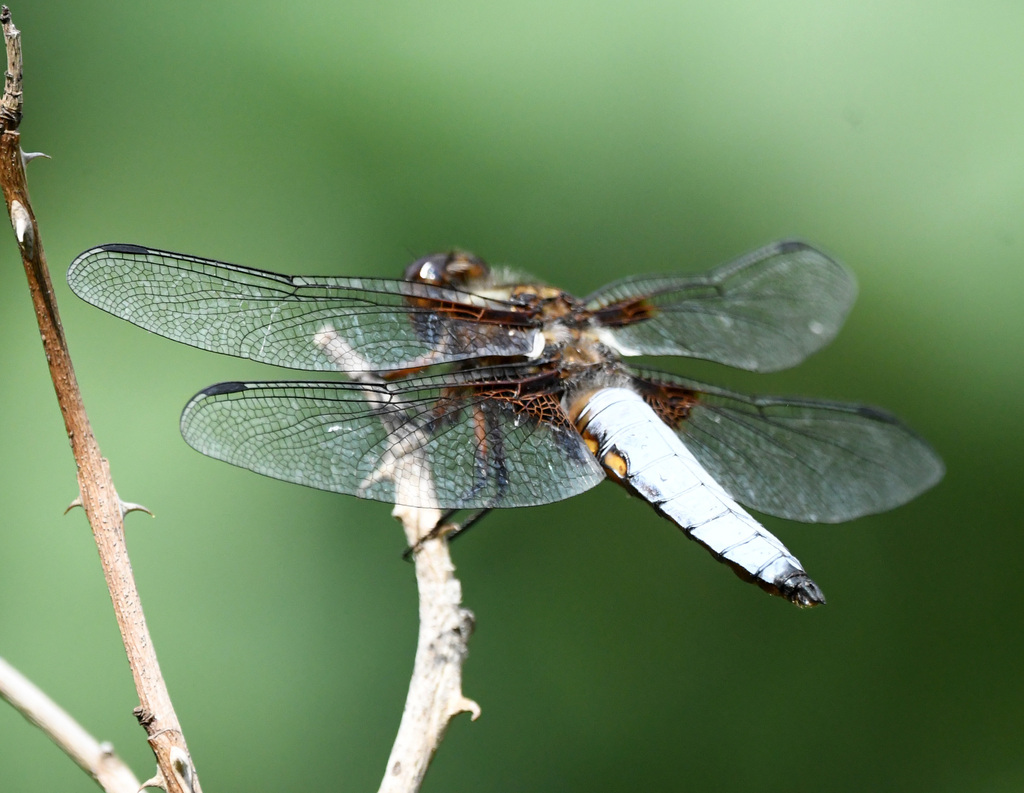
Males develop a distinctive powder-blue or grey coloration covering much of the thorax and abdomen as they mature. This pruinose coating—a waxy bloom that accumulates with age—gives the body a frosted appearance, particularly evident on the face and along the abdominal segments. The wings are clear and held outstretched at rest, typical of the genus Libellula. Yellow or amber markings may appear along the wing bases and on the legs, providing additional visual contrast against the blue body.
Female Appearance
Females retain a more vibrant yellow or golden-brown coloration throughout their lives, lacking the blue pruinescence of mature males. The thorax shows distinct dark markings and stripes, while the abdomen displays bold yellow and black patterning along its length. This brighter, more contrasting palette makes females easily distinguishable from the subdued males, even in poor light conditions. The wings, like those of males, remain clear and are held flat when the dragonfly rests.
Distribution and Habitat
Libellula depressa, the Broad Bodied Chaser, is primarily distributed across western and central Europe. Occurrence records show a strong concentration in France, which accounts for the highest number of documented sightings, followed by the Netherlands, Germany, and Great Britain. The species is also present in smaller numbers across Italy, Spain, Portugal, Croatia, Switzerland, and Austria, with a total range spanning at least 18 countries across the continent.
The species exhibits a highly seasonal activity pattern, with virtually all records concentrated in April. This pronounced spring peak suggests the Broad Bodied Chaser emerges and is most visible during this month, while remaining largely inactive or unrecorded during the remainder of the year. The lack of elevation data prevents identification of specific altitude preferences, though the species’ presence across both lowland regions (such as the Netherlands) and more varied terrain in central European countries indicates broad tolerance for different elevations.
Within its European range, L. depressa favors freshwater habitats typical of dragonfly communities, including ponds, shallow lakes, and ditches where emergent and aquatic vegetation provides breeding and hunting grounds. The concentration of records in France and the Netherlands—regions rich in wetland environments—underscores the species’ dependence on permanent or semi-permanent water bodies for reproduction and larval development.
Biology and Behavior
Behavior
The Broad Bodied Chaser is a highly territorial dragonfly that spends much of its time perching on exposed surfaces near water. Males establish and vigorously defend stretches of shoreline or emergent vegetation, darting out to intercept passing insects and chase away rival males with aggressive aerial displays. This species is diurnal and most active during warm, sunny conditions when it patrols its territory or rests on prominent perches.
Flight is rapid and agile, enabling quick pursuit of prey and evasion of predators. The dragonfly typically hunts by sight, scanning from a perch before launching into swift aerial attacks. It often returns to the same perch to feed, consuming prey in mid-air or shortly after capture. Territorial males will chase anything that moves within their patch—females, rival males, and even larger insects—making them conspicuous and energetic inhabitants of their wetland habitats.
Diet
Broad Bodied Chasers are carnivorous aerial predators that feed exclusively on insects. Their diet includes small flying insects such as midges, gnats, small flies, and occasionally smaller dragonflies or damselflies. The species hunts by flying pursuit, using exceptional maneuverability and the precision of compound eyes to track and intercept prey in flight.
Reproduction
Breeding occurs throughout the summer months in temperate regions, typically from June through September. Males defend territories along waterbodies and will mate opportunistically with females that enter their domain. During copulation, the male grasps the female in tandem, a characteristic dragonfly mating position that can last several minutes.
After mating, females lay eggs directly into water or into emergent vegetation and substrate at the water’s edge. Depending on conditions and female body size, a single female may deposit hundreds of eggs over multiple oviposition events. Nymphs hatch and develop entirely in the aquatic environment, passing through multiple instars over one to two years before emerging as adults. There is no parental care; development is independent from egg through to adult emergence.
Conservation and Threats
Libellula depressa, the Broad Bodied Chaser, is classified as Least Concern on the IUCN Red List. This status reflects a species with a stable to secure position across its range, facing no immediate threat of extinction. The population trend is increasing in many regions, a positive indicator of the species’ resilience and adaptive capacity in the face of environmental change.
Threats
Despite its favourable conservation status, L. depressa remains vulnerable to habitat loss and degradation. Wetland destruction—whether through drainage, urbanisation, or pollution—directly reduces breeding habitat and prey availability. The species depends on clean freshwater environments, making it sensitive to water quality degradation, agricultural runoff, and industrial contamination. Climate change poses a secondary threat through altered water temperatures and shifts in phenology that may desynchronise larval development with food availability.
Conservation Efforts
The species benefits from broad freshwater habitat protections in many European countries, particularly through water framework directives and wetland conservation designations. No species-specific recovery programme exists, as the Broad Bodied Chaser is not in need of intensive management. However, its presence in protected wetlands and natura 2000 sites across Europe provides indirect conservation benefit. The increasing population trend suggests that existing habitat protections are effective.
Fun Facts
- The broad-bodied chaser’s abdomen is flattened and unusually wide compared to other dragonfly species, a distinctive adaptation that gives the species its memorable common name. This flattened shape may improve heat absorption and aerodynamic stability during rapid flight and territorial displays.
- Male broad-bodied chasers undergo a striking color transformation as they mature, developing a waxy blue coating called pruinescence on their abdomens. This blue coloration intensifies with age and serves as a signal of maturity to females and rivals during competitive encounters.
- This dragonfly species bears four distinct wing patches—a relatively uncommon marking pattern among European dragonflies. These patches may play a role in species recognition or visual signaling during the complex aerial maneuvers of courtship and combat.
- Libellula depressa is one of the most common dragonflies across Europe and central Asia, demonstrating exceptional adaptability to diverse climates and freshwater habitats. Its success across such a wide geographic range reflects its flexibility in breeding habitat selection and prey capture strategies.
- Broad-bodied chasers are highly territorial and will perch on vegetation or floating objects for extended periods, launching rapid aerial attacks on passing insects and rival males. A single individual may patrol the same stretch of water for weeks, defending its breeding territory with aggressive chasing displays.
- These dragonflies are generalist predators capable of catching small flying insects mid-flight, including mosquitoes, small flies, and even smaller dragonflies. Their broad, flattened body design may provide advantages in maneuverability when pursuing prey in confined or vegetation-dense waters.
Ecology
Behavior
Conservation Status
LC (Least Concern) · NT · VU · EN · CR · EW · EX
Photo Gallery
no rights reserved · CC0 1.0
Related Species

Was this profile helpful?