
Insecta · Coleoptera
Seven-spot Ladybird
Coccinella septempunctata
Also known as: 7-spot Ladybird, 7-spot ladybird, C7, Seven-spot Ladybird Beetle, Seven-spotted Lady Beetle
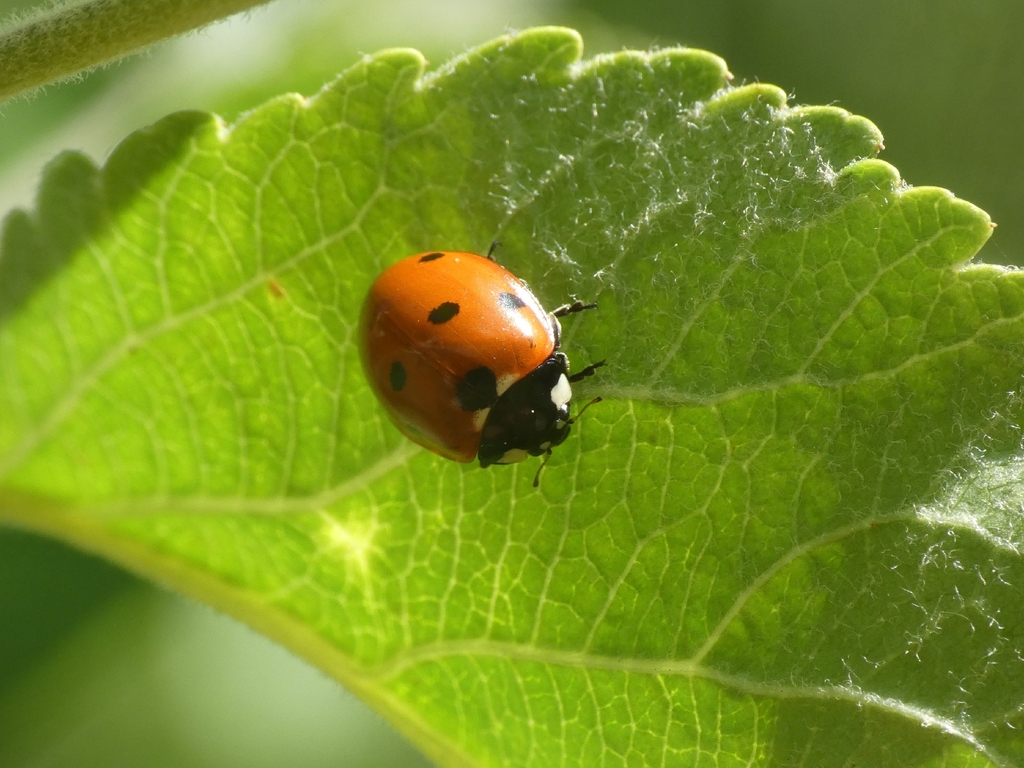
© Ross McCallum · iNaturalist · CC BY 4.0
Scientific Classification & Quick Facts
Classification
At a Glance
Few insects capture human affection as readily as the seven-spot ladybird. Its compact, dome-shaped body—scarlet red with precisely seven black spots arranged in a distinctive pattern—makes it one of the most recognizable beetles on Earth. Found across 24 countries spanning Europe, Asia, and beyond, Coccinella septempunctata has earned a place in folklore, gardens, and agricultural ecosystems as both a beloved garden visitor and a voracious pest controller. Its conservation status remains undetermined by the International Union for Conservation of Nature, yet its widespread presence and ecological success need no official designation to speak to the species’ resilience.
What makes this species truly noteworthy is not merely its aesthetic appeal or helpful appetite, but its status as a bridge between human interests and natural pest control. Gardeners have long cherished ladybirds as allies against destructive aphid infestations, while entomologists study them to understand beetle diversity, population dynamics, and the ecological consequences of introducing non-native biological control agents. The seven-spot ladybird is both a humble garden beetle and a window into the complex relationship between humans and the insects that surround us.
Identification and Appearance
The seven-spot ladybird is a small, oval beetle with a distinctly convex shape. Adults measure 6.5–7.8 mm in body length and approximately 4 mm in width, making them easily observed with the naked eye despite their compact size. The most striking feature is the bright orange-red colouration of the elytra (hardened forewings), which contrasts sharply with the predominantly black head and thorax.
Spot Pattern and Markings
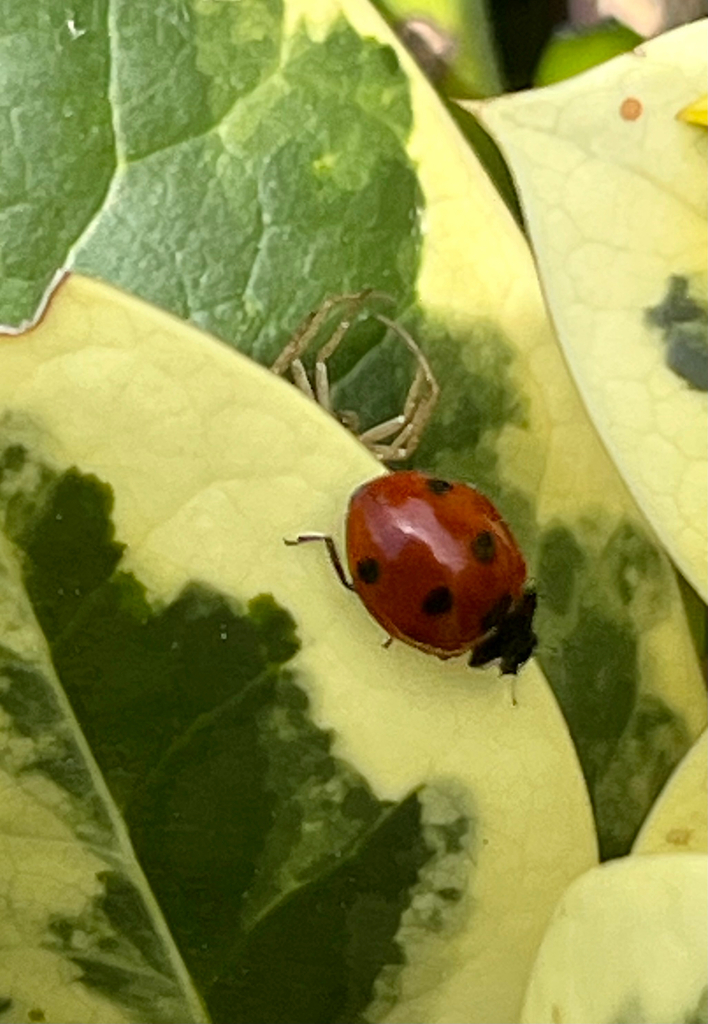
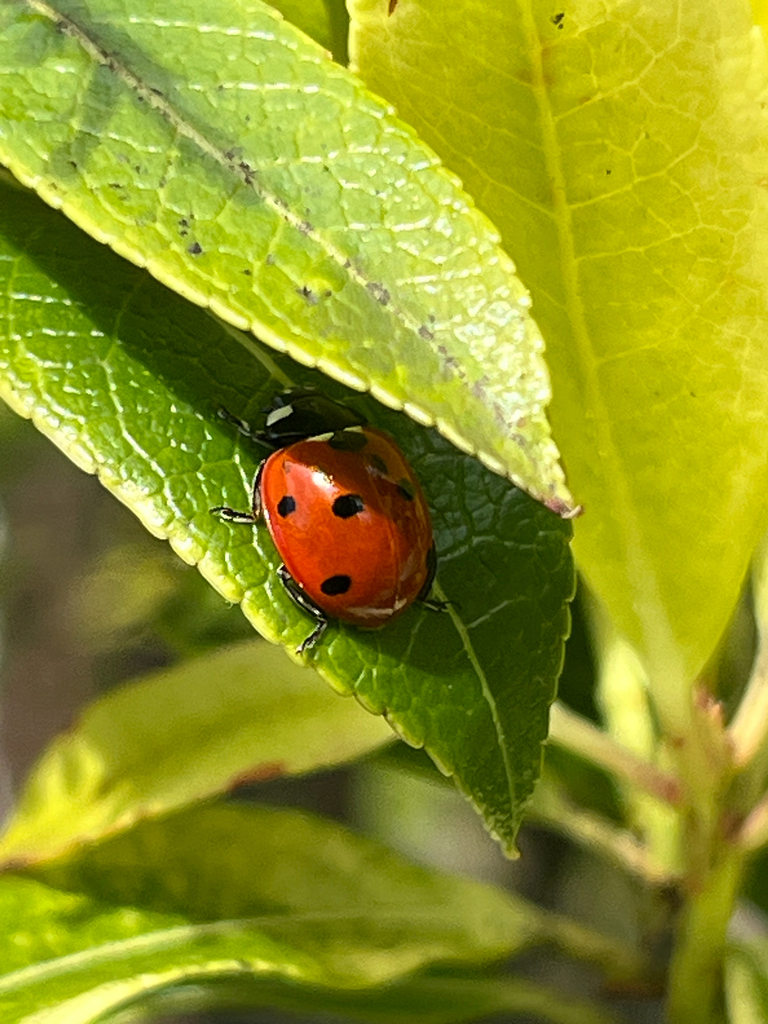
The seven black spots that give this species its common name are distributed across the elytra in a highly characteristic arrangement. A single black spot appears on each elytron adjacent to the scutellum (the shield-like plate where the two elytra meet). Just ahead of this central spot are two white patches, visible on each side. The remaining six black spots are arranged with three on each elytron, though their exact size and position vary considerably between individuals. Spot fusion and melanic (dark pigmentation) forms are rare, but do occasionally occur in some populations.
The pronotum (the region immediately behind the head) bears two distinctive white spots on its front edge, positioned on either side of the midline. This combination of white patches alongside the black spots creates a strong visual signature that distinguishes Coccinella septempunctata from related ladybird species. No marked sexual dimorphism exists in appearance between males and females.
Distribution and Habitat
Coccinella septempunctata has established a presence across at least 24 countries, with documented records spanning North America, Europe, and the Middle East. GBIF records show the highest concentration in the United States (97 records) and the United Kingdom (87 records), followed by Germany (55 records). France, Denmark, Spain, Belgium, and Hungary all maintain smaller but confirmed populations. Additional sightings extend into Canada and Israel, indicating the species’ capacity to persist across diverse climatic zones.
Within Europe, the species exhibits a strong foothold across the continent, from western populations in Britain and France to central and eastern regions including Germany, Hungary, and the Nordic countries. This geographic spread reflects both the beetle’s natural dispersal capacity and its successful establishment through human-mediated introductions, particularly in agricultural and horticultural settings where it has become valued as a biological control agent.
Seasonal presence data reveals a striking pattern concentrated in January, when GBIF records peak at 300 observations. The complete absence of recorded sightings from February through December suggests either a strong overwintering phenomenon or significant gaps in observation effort during other months. C. septempunctata is known to enter diapause—a dormant state—during winter months, clustering in sheltered locations such as leaf litter, bark crevices, and building crevices, which may explain why records cluster in the early calendar year when beetles emerge or are encountered during winter habitat checks.
Specific elevation data are not currently available in existing distribution records. The species occupies a broad range of landscape types wherever suitable prey (particularly aphids and other soft-bodied arthropods) and shelter are available, including agricultural fields, gardens, hedgerows, woodlands, and parks across temperate regions.
Biology and Behaviour
Behavior
Coccinella septempunctata is diurnal, remaining active throughout daylight hours and becoming dormant at night. The species is capable of sustained flight, enabling movement between feeding sites and overwintering locations. During autumn, adults gather in clusters to prepare for hibernation, clustering together for shared warmth and protection during the dormant season. This aggregation behavior also has a reproductive advantage: by overwintering in close proximity, adults ensure they will have potential mates available when they emerge from dormancy in spring.
Chemical communication is central to the species’ ecology. When preparing to hibernate, seven-spot ladybirds release a pheromone—identified as 2-isopropyl-3-methoxy-pyrazine—to attract other individuals to their overwintering sites. Beyond social signaling, the species uses chemical detection to locate prey. Aphids themselves emit warning pheromones when threatened, and infested plants release characteristic volatile compounds. Seven-spot ladybirds respond to both types of chemical cues, allowing them to pinpoint concentrated aphid populations across the landscape.
Diet
Both adult and larval seven-spot ladybirds are specialized aphid predators. Aphids form their primary and essential food source, supporting growth, development, and reproductive success throughout the species’ lifecycle. The ladybirds consume at least twenty-four different aphid species, demonstrating flexibility in prey selection while remaining firmly committed to this food class. Individual feeding rates can be substantial, with each ladybird removing significant numbers of aphids from plant hosts over the course of a season.
Reproduction
The reproductive cycle of C. septempunctata is tightly synchronized with aphid availability and seasonal temperature fluctuations. Mating occurs in spring following emergence from hibernation, with females fertilized by males encountered during the overwintering aggregation or shortly after spring dispersal. Females lay eggs in clusters on or near aphid-infested plants, ensuring that emerging larvae will have immediate access to abundant food. Development from egg to adult progresses through four larval instars, with each stage feeding voraciously on aphids. Larval growth is rapid when prey is abundant, allowing multiple generations to complete within a single growing season in temperate regions, though the precise timing depends on local temperature and aphid population dynamics.
Conservation and Threats
Coccinella septempunctata, the Seven-spot Ladybird, has not been formally assessed by the IUCN Red List. This absence of assessment reflects the species’ widespread distribution and general resilience across Europe and beyond. The lack of a formal conservation status does not indicate that the species faces no challenges—rather, it suggests that immediate conservation action at the global level is not deemed critical at present.
Threats
The Seven-spot Ladybird faces several environmental pressures that warrant attention. Habitat loss due to agricultural intensification, particularly the conversion of hedgerows and wildflower margins to monoculture, reduces the diversity of prey species (especially aphids) on which these beetles depend. Pesticide use, especially insecticides, directly harms ladybird populations and depletes their food sources. Climate change may alter the timing of aphid outbreaks and plant phenology, creating phenological mismatches that affect the ladybird’s feeding and reproduction. Additionally, the introduction and spread of non-native ladybird species—particularly Harmonia axyridis (Harlequin Ladybird)—poses a competitive and predatory threat to native populations in some regions.
Conservation Efforts
No species-specific international conservation programme currently protects Coccinella septempunctata. However, the species benefits indirectly from broader biodiversity initiatives and habitat protection schemes. In the European Union and United Kingdom, environmental stewardship programmes that promote hedgerow management, reduced pesticide application, and wildflower establishment create favorable conditions for ladybird populations. Supporting these habitat-focused conservation efforts remains the most effective approach to maintaining healthy Seven-spot Ladybird populations.
Cultural Significance
The seven-spot ladybird holds a prominent place in medieval Christian folklore, particularly in European farming culture. According to legend, farmers in the Middle Ages prayed to the Virgin Mary for protection against crop-destroying insects. When red beetles with black spots arrived and consumed these pests, the grateful farmers attributed the intervention to divine assistance. They named the beetles “The Beetle of Our Lady,” a title that evolved into the common names “ladybug” and “ladybird” used across English-speaking regions today.
The beetle’s appearance became deeply intertwined with Marian symbolism. The vivid red wing covers were believed to represent the red cloak traditionally depicted in paintings of the Virgin Mary, while the seven spots carried religious significance—interpreted as representing either the Seven Joys of the Virgin or her Seven Sorrows, depending on the version of the legend. This symbolic association reinforced the beetle’s status as a beneficial and blessed creature rather than merely an insect, embedding it firmly in European cultural and religious imagination for centuries.
Fun Facts
The seven-spot ladybird is far more than a garden curiosity—it is one of nature’s most effective pest controllers and a globally significant player in agricultural ecology. These small beetles pack remarkable appetite and adaptability into their spotted bodies.
- There are approximately 5,000 ladybird species worldwide, yet the seven-spot ladybird remains one of the most recognisable and widely distributed across temperate regions globally.
- This species is abbreviated as C-7 in scientific literature, a shorthand that reflects its iconic status among entomologists and pest management specialists.
- The seven-spot ladybird is native to Europe, most of Asia, and North Africa, but has been deliberately introduced to North America and other temperate regions as a biological control agent for crop pests.
- Its extraordinary adaptability to different habitats—from agricultural fields to gardens to hedgerows—has earned it recognition as one of the most successful aphidophagous (aphid-eating) insects on record.
- A single ladybird consumes massive quantities of aphids relative to its body size, with individuals capable of feeding on dozens of pests daily during peak seasons.
- The distinctive seven spots on its wing covers serve as warning coloration; predators learn to avoid the beetle because of its toxic alkaloid defence chemicals, which make it unpalatable.
- Despite their effectiveness as pest controllers, seven-spot ladybirds face emerging competition in some regions from invasive Asian ladybird species, which are larger and more aggressive competitors for food resources.
Photo Gallery
Ross McCallum · CC BY 4.0
Related Species
Was this profile helpful?