
Insecta · Lepidoptera
Red Admiral
Vanessa atalanta
Least ConcernAlso known as: Red admiral butterfly
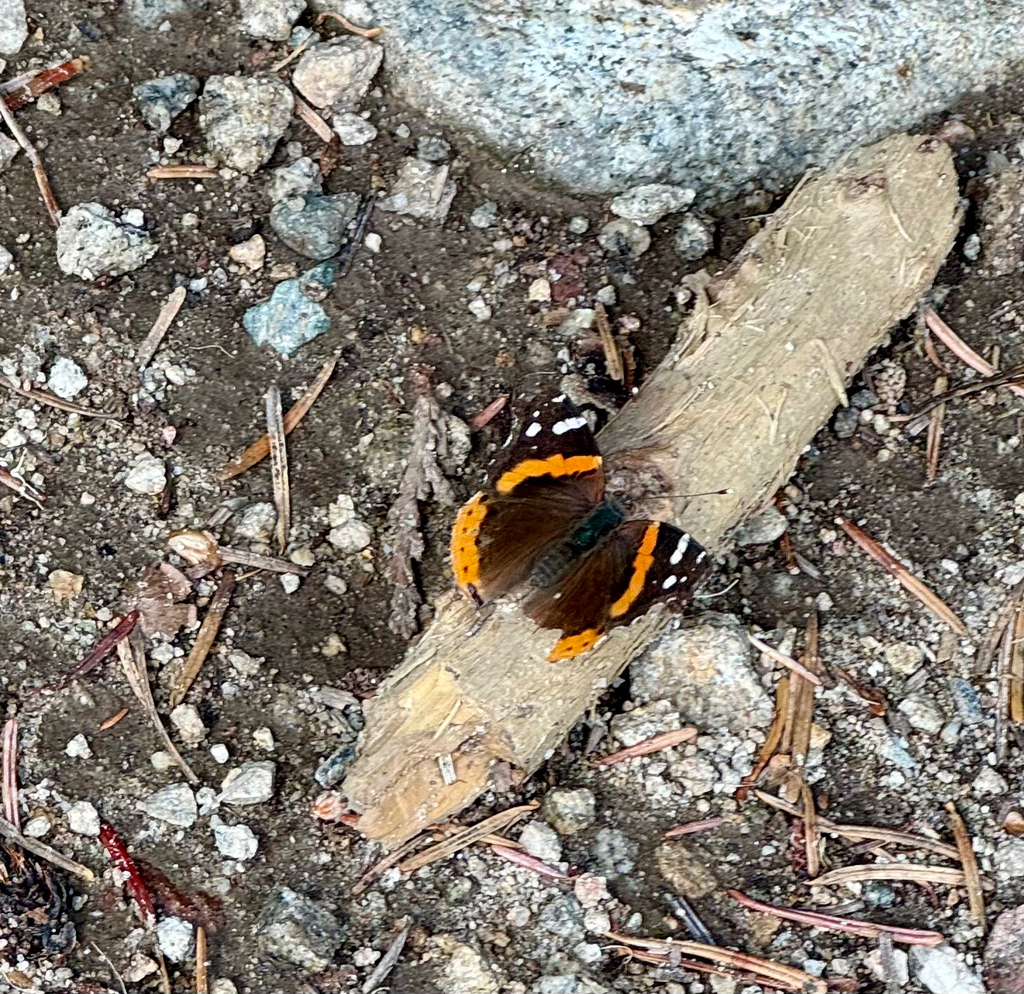
© Caleb Catto · iNaturalist · CC BY 4.0
Scientific Classification & Quick Facts
Classification
At a Glance
The Red Admiral is one of the most recognizable butterflies across the Northern Hemisphere, instantly identifiable by its striking red bands cutting across dark wings. Vanessa atalanta is a member of the family Nymphalidae, a group renowned for their vibrant coloration and robust flight. Found across at least 18 countries spanning temperate and subtropical regions, this species has earned widespread admiration from naturalists and casual observers alike. Its conservation status is Least Concern, reflecting a stable and resilient population across much of its range.
What distinguishes the Red Admiral from many other butterfly species is its combination of aggressive territoriality, rapid flight, and unusual preference for fermenting fruit and animal droppings over nectar. This butterfly is equally at home in urban gardens, wild meadows, and forest margins, demonstrating the behavioral flexibility that has made it so successful. Its ability to thrive in human-modified landscapes alongside its striking appearance has secured its place as a cultural icon across Europe, Asia, and North America.
Identification and Appearance
Vanessa atalanta, the Red Admiral, is a striking medium-sized butterfly instantly recognizable by its bold black and red patterning. The forewing displays a distinctive oblique vermilion band set against a black ground, accented with a group of white subapical spots. The hindwing is predominantly red along the distal margin, marked with a row of small black spots and a striking elongate blue spot at the anal angle. This combination of colours and markings makes the Red Admiral unmistakable in flight or at rest.
The underside reveals a more intricate design, with extensive blue variegation and brightly clouded areas. The forewing’s undersurface broadly mirrors the upper pattern, while the hindwing shows black markings of particular interest—those in the cell region famously resemble numerals, appearing as 18, 98, 81, or 89 depending on the individual wing. A pale patch marks the middle of the costal area, and the distal marginal region bears a row of ocellus-like spots that add to the wing’s complexity.
Sexual dimorphism
The female Red Admiral sometimes displays a small white spot in the middle of the red band on the forewing, a feature rarely seen in males. Otherwise, the sexes are broadly similar in overall pattern and colouration, though females may show slightly more pronounced markings.
Distribution and Habitat
Vanessa atalanta, the Red Admiral, has been recorded across 18 countries, with its strongest presence in North America. The United States dominates the occurrence data, with 235 recorded observations. The species also appears throughout southern Europe, including Greece (17 records), Spain (12), Germany (6), Italy (6), and the United Kingdom (4). Its range extends to Mexico in North America and to Portugal, France, and Switzerland in Europe, indicating a remarkably broad distribution across temperate and subtropical zones.
Observation patterns show a pronounced seasonal concentration, with the vast majority of records clustered in January. This peak suggests either a strong winter presence in overwintering grounds or an artifact of recording effort during that month. The absence of records in all other months in the current dataset indicates incomplete year-round sampling across the species’ range, though the Red Admiral is known to be active during warmer months in most of its range.
Specific elevation data for this species are not currently available in the dataset. The Red Admiral historically inhabits open and semi-open landscapes including gardens, parks, hedgerows, and meadows across lowland and moderate elevations throughout its range.
Biology and Behavior
Behavior
Red Admirals are highly active and alert butterflies with a distinctive flight pattern characterized by rapid, jerky wing beats interspersed with brief glides. They are solitary and territorial, with males perching on low vegetation or bare ground to watch for passing females and rivals. Males engage in “puddling” behavior, gathering at damp soil, mud patches, and animal droppings to extract minerals and salts essential for reproduction and survival. This species is most active during warm, sunny days and has been observed flying close to the ground while hunting for food sources.
Red Admirals are migratory in temperate regions, with populations undertaking long-distance movements between summer breeding grounds and overwintering sites. In spring and autumn, they can be seen flying in open areas, gardens, and along hedgerows. These butterflies are also known to enter a state of torpor during cooler months, reducing their metabolism to survive periods of low temperature. They are relatively long-lived for butterflies, remaining active over several months in favorable conditions.
Diet
Red Admirals are primarily nectarivorous, feeding on the nectar of a wide variety of flowering plants including teasels, thistles, brambles, and cultivated flowers. They also consume rotting fruit, particularly overripe or fermented fruits such as plums, apples, and bananas. This opportunistic feeding behavior allows them to obtain sugars and nutrients even when flowering plants are scarce. The caterpillars, by contrast, are strictly herbivorous and feed on plants in the nettle family, with stinging nettles (Urtica dioica) being the primary host plant across their range.
Reproduction
Red Admirals breed over multiple generations per year in warm climates, with up to three or four broods occurring in favorable conditions. Females lay eggs singly on the upper surfaces of nettle leaves, where they hatch within 3–5 days. The caterpillar stage lasts approximately 4–6 weeks, during which larvae feed voraciously and pass through five instars before pupating. The pupation stage lasts 10–14 days in warm weather, though overwintering pupae may remain dormant for several months.
Males locate females through a combination of visual cues and pheromone detection, engaging in aerial chases and courtship displays before mating. After fertilization, females begin seeking suitable nettle plants to deposit their eggs within hours. The butterfly’s capacity for multiple generations annually, combined with its migratory behavior, enables rapid population expansion during spring and summer months across temperate and tropical regions.
Conservation and Threats
Vanessa atalanta holds a conservation status of Least Concern on the IUCN Red List, reflecting its wide geographic range, adaptability, and stable populations across much of its distribution. This classification indicates the species faces no immediate risk of extinction at a global scale. However, regional populations remain sensitive to environmental pressures, particularly in temperate zones where climate and habitat conditions directly influence breeding success.
Threats
Climate change presents the most significant long-term threat to Red Admiral populations. Between 1976 and 1998, spring temperatures in central England rose by 1.5 degrees Celsius, with summer temperatures increasing by 1 degree Celsius. While some warming may initially extend the breeding season in cooler regions, more frequent droughts associated with continued climate change would severely reduce egg survival and destroy both host plants and broader habitat quality. The species depends on nettles as larval food plants; drought stress compromises these plants’ nutritional value and availability, directly limiting reproductive output.
Habitat loss and fragmentation also threaten Red Admiral populations in developed regions. Intensive agriculture, urban expansion, and the removal of wild vegetation reduce the abundance of nettles and nectar-rich flowers essential for adult feeding. In some areas, pesticide use on agricultural land contaminates host plants and reduces insect prey availability, indirectly affecting butterfly survival rates.
Conservation Efforts
The Red Admiral’s Least Concern status means it is not subject to formal international protection agreements. However, its inclusion in butterfly monitoring schemes across Europe and North America—such as the UK Butterfly Monitoring Scheme—provides valuable data on population fluctuations and helps track responses to climate and habitat change. These monitoring programmes inform regional conservation strategies and policy decisions affecting broader insect protection.
Cultural Significance
Vanessa atalanta has captured the imagination of writers and continues to interest researchers as a subject for understanding insect behaviour and ecology. The red admiral appears prominently in several works by Vladimir Nabokov, including Speak, Memory (1951), Pale Fire (1962), and King, Queen, Knave (1968)—a reflection of the butterfly’s cultural presence in European literature. The species also features in Patrick O’Brian’s naval novel HMS Surprise (1973), demonstrating its appeal across different literary genres and contexts.
Beyond its role in fiction, the red admiral has become a model organism for scientific research into butterfly migration and the impacts of climate change on insect populations. Researchers have established the species as an applicable model for studying navigation strategies in migratory butterflies, providing insights into broader movement patterns across human-dominated environments. The red admiral’s globally distributed range and complex migration behaviour make it an ideal subject for understanding how insects adapt their timing and phenology—including the synchronisation of larval hatching with the developmental stages of host plants—in response to varying climatic conditions.
Fun Facts
Vanessa atalanta, the Red Admiral, is a butterfly with a surprisingly bold personality and several counterintuitive traits that set it apart from many of its relatives.
- The Red Admiral is unusually calm for a butterfly, often allowing humans to approach closely and even landing on skin as a temporary perch—behaviour rarely seen in wild insects.
- Males compete fiercely for territory, and females will only mate with males that successfully defend their patches; butterflies with superior flight abilities win these territorial contests and gain more mating opportunities.
- Caterpillars feed almost exclusively on stinging nettles, one of nature’s most heavily defended plants, and have evolved immunity to the plant’s painful defensive hairs.
- Red Admirals undertake impressive long-distance migrations, moving north in spring to colonize temperate regions, with some populations migrating again in autumn as conditions cool.
- Adults fuel their flights and reproduction on a varied diet of flower nectar from plants like Buddleja and fermenting fruit—they are attracted to overripe or rotting fruit with the same intensity that some birds are.
- The species is compact, with a wingspan of just 5 centimetres (2 inches), making it a relatively small butterfly despite its bold red and black colouration.
- Carl Linnaeus, the founder of modern taxonomic classification, formally described this species in the 10th edition of Systema Naturae in 1758, cementing its place in scientific history.
Conservation Status
LC (Least Concern) · NT · VU · EN · CR · EW · EX
Photo Gallery
Caleb Catto · CC BY 4.0
Related Species
Was this profile helpful?