
Testudines
Galápagos Giant Tortoise
Chelonoidis nigra
Also known as: Charles Island Giant Tortoise, Floreana Giant Tortoise, Floreana giant tortoise

Scientific Classification & Quick Facts
Classification
At a Glance
The Galápagos Giant Tortoise, Chelonoidis nigra, once roamed the volcanic islands of the Galápagos archipelago as one of Earth’s most iconic reptiles. These colossal creatures, weighing hundreds of kilograms and living for well over a century, shaped the very islands that gave Charles Darwin his revolutionary insights into evolution. Today, the species is classified as Extinct (EX) by the IUCN, marking a tragic loss of biodiversity from a single country—Ecuador—where it evolved in isolation for millions of years.
The extinction of Chelonoidis nigra resulted from centuries of human exploitation—whalers and sailors harvested tortoises for meat and oil, while introduced species ravaged their populations and habitats. What remains of the species today exists only in scientific records and museum specimens, a sobering reminder of humanity’s capacity to erase ancient lineages. Understanding this loss is crucial to appreciating both the fragility of island ecosystems and the imperative to protect the few surviving Galápagos tortoise populations that persist on nearby islands.
Identification and Appearance
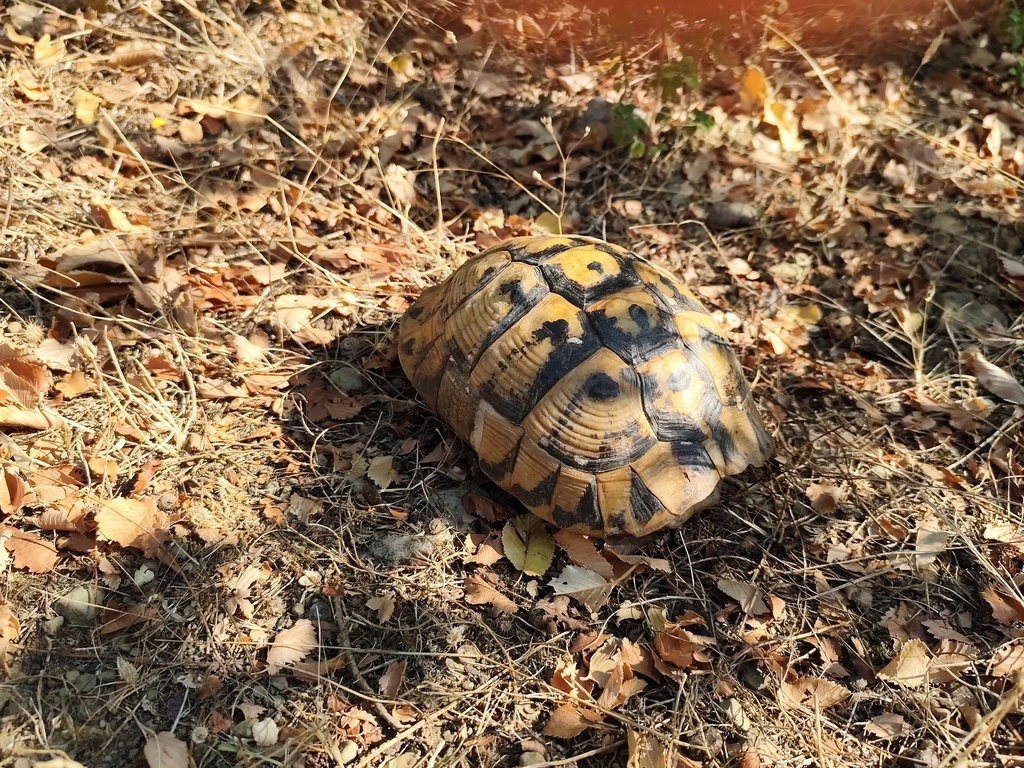
The Galápagos giant tortoise is instantly recognisable by its massive, domed shell—the defining feature of this iconic species. Adults weigh between 150 and 200 kilograms, making them among the heaviest terrestrial tortoises on Earth. The shell itself is large and bony, coloured in dull browns or greys, with deep scutes (individual shell segments) that remain distinctive throughout the animal’s lifetime. These scute patterns are unique to each individual, allowing researchers to identify specific tortoises. The shell plates are fused directly to the ribs, creating a rigid protective structure that is integral to the skeleton rather than a separate covering.
The tortoise’s head, neck, and limbs are dark and heavily scaled, capable of being fully retracted into the shell for protection. Lichens frequently colonise the shell surfaces of these slow-moving animals, adding to their weathered appearance. One notable feature is that the annual growth bands visible on the shell are not reliable for age determination, since the outer layers wear away over time through use and weathering. Despite their massive size and longevity—individuals can live up to 177 years—these tortoises move with characteristic slowness across their rocky, arid island habitats.
Distribution and Habitat
Chelonoidis nigra, the Galápagos Giant Tortoise, is endemic to Ecuador, where it inhabits the Galápagos Archipelago. This species has an extremely restricted range, occurring only on select islands within this remote Pacific territory. The archipelago’s isolation has shaped the evolution of multiple subspecies and populations, each adapted to their particular island environment.
The species occurs across varied terrain within the Galápagos, from coastal lowlands to interior highlands. Different populations occupy distinct islands and microclimates, reflecting centuries of isolation and local adaptation. Specific elevation data for this species is limited, but populations are known to range from sea-level zones to higher volcanic elevations depending on the island.
Observation records indicate seasonal variation in detection patterns, with February recording the highest number of sightings. This peak may reflect breeding behaviour, increased activity during favourable environmental conditions, or heightened survey effort during that month. Activity levels across other months show more modest recording numbers, suggesting either genuine seasonal presence variation or fluctuating observation intensity throughout the year.
Biology and Behavior
Behavior
Galápagos giant tortoises are solitary animals with minimal social interaction outside the breeding season. They spend much of their day grazing and moving slowly across the volcanic terrain of their island homes, covering only short distances despite their long lifespans. These reptiles are diurnal, active during daylight hours when they feed and thermoregulate by basking in the sun. They may rest in shallow burrows or under vegetation during cooler periods, though they do not enter true hibernation.
The species shows remarkable site fidelity, often remaining within the same general area for decades. Individuals have been observed returning to favorite feeding grounds and resting sites year after year. Males occasionally engage in dominance displays involving head-bobbing and shell-ramming, but serious aggression is rare. When threatened, they withdraw entirely into their thick shells, relying on this impenetrable defense rather than fleeing.
Diet
Galápagos giant tortoises are herbivorous grazers that consume a wide variety of vegetation available on their islands. They feed on grasses, cacti, leafy plants, and fallen fruits, adjusting their diet seasonally based on what is available. Their large body size and slow metabolism allow them to exploit food sources that smaller herbivores cannot reach or cannot sustain themselves on. Tortoises on different islands have developed distinct feeding preferences and even shell shapes adapted to their local vegetation—those on islands with abundant low-growing grasses have domed shells, while those in areas with sparser vegetation have more elevated carapaces that allow them to reach higher branches.
Water intake occurs mainly through drinking from pools and succulents, though they also obtain moisture from the plants they consume. Individuals may travel considerable distances to reach freshwater sources during dry seasons, demonstrating knowledge of their territory and water locations.
Reproduction
Galápagos giant tortoises reach sexual maturity slowly, typically not breeding until 20 to 25 years of age. Breeding occurs throughout the year, though peaks in frequency during wetter seasons when food is abundant. Males compete for access to females through combat, and successful males may mate with multiple partners. Females lay eggs in shallow nests dug in sandy or volcanic soil, typically depositing 2 to 16 eggs per clutch, though larger females produce larger clutches.
Incubation lasts 4 to 8 months depending on soil temperature and moisture conditions, with hatchlings emerging during the warmer, wetter months. Hatchlings receive no parental care and must survive independently from the moment they emerge from the egg. Their small size makes them vulnerable to predation and harsh environmental conditions. The extraordinarily long lifespan of this species—recorded at up to 177 years—means that individuals may reproduce successfully for many decades, contributing to multiple generations over a single lifetime.
Conservation and Threats
Chelonoidis nigra, the Galápagos Giant Tortoise, carries the conservation status of Extinct (EX) on the IUCN Red List. This designation reflects the loss of the species as a whole, though some of its subspecies persist through intensive captive breeding and reintroduction programmes in the Galápagos Islands. The extinction of wild populations occurred over centuries of human activity, making this one of the most significant losses in recent conservation history.
Historical Threats and Drivers of Extinction
The Galápagos Giant Tortoise was hunted to extinction in the wild over more than three centuries. Spanish sailors and later whalers and traders exploited the tortoises ruthlessly, collecting thousands as a source of fresh meat during long ocean voyages. Their slow reproduction rate and inability to escape human predation made them uniquely vulnerable. Introduced species—including rats, goats, and feral pigs—devastated tortoise eggs and competed for vegetation. Habitat destruction through goat grazing stripped islands of the vegetation upon which tortoises depend. By the mid-20th century, wild populations had effectively vanished.
Conservation Efforts and Current Status
The Galápagos has been designated a UNESCO World Heritage Site and a national park, providing legal protection for the remaining tortoises and their habitats. Conservation programmes, particularly at the Charles Darwin Research Station and Galápagos National Park Service breeding centres, have successfully bred thousands of tortoises in captivity. Selective breeding and genetic management ensure maximum diversity. Reintroduced populations now inhabit several islands, with numbers steadily rising. Eradication of introduced predators and habitat restoration continue on multiple fronts. These efforts represent one of conservation’s most ambitious species recovery operations.
Fun Facts
- Galápagos giant tortoises can weigh up to 417 kilograms (919 pounds), making them the largest living tortoise species and the largest extant terrestrial cold-blooded animals on Earth. This achievement is remarkable because, as ectotherms, they lack the metabolic advantages of warm-blooded animals, yet they have evolved to dwarf all other reptiles.
- The species comprises 15 distinct subspecies distributed across different Galápagos islands, each with its own genetic lineage and likely morphological differences. This subspecific diversity reflects millions of years of isolation on separate islands, creating a natural laboratory of evolutionary variation within a single species.
- Despite being cold-blooded, Galápagos tortoises have become the largest terrestrial reptiles alive—a counterintuitive outcome given that ectothermy typically limits body size compared to endothermy. Their slow metabolism and the stable tropical climate of the Galápagos allowed them to grow to colossal proportions without the energy demands of maintaining constant body temperature.
- Individual Galápagos giant tortoises can live well over 100 years, with some individuals documented to have survived more than 150 years in captivity. Their extraordinary longevity is linked to their slow growth rates, low metabolic demands, and resistance to age-related decline.
- These tortoises can store water in their bladders for extended periods, allowing them to survive droughts that last several months without drinking. This adaptation was critical for survival on arid islands with unpredictable rainfall patterns.
- Galápagos giant tortoises migrate seasonally between different elevations on their islands, moving to higher, moister zones during dry seasons to find vegetation and water. Their landscape-scale movements shape plant communities and soil dynamics wherever they travel.
- The shell of a Galápagos giant tortoise continues to grow throughout its entire life, with growth rings visible on the scutes (shell plates) that can be used to estimate age—similar to counting rings in a tree. Older individuals often display heavily worn, smooth shells from decades of weathering.
Related Species
![Abingdon Island Giant Tortoise [abingdonii]](https://plantnimals.com/wp-content/uploads/2026/05/chelonoidis-niger-featured.jpg)
Was this profile helpful?