
Magnoliopsida · Gentianales
Yellow Gentian
Gentiana lutea
Also known as: bitter root, bitterwort, centiyane
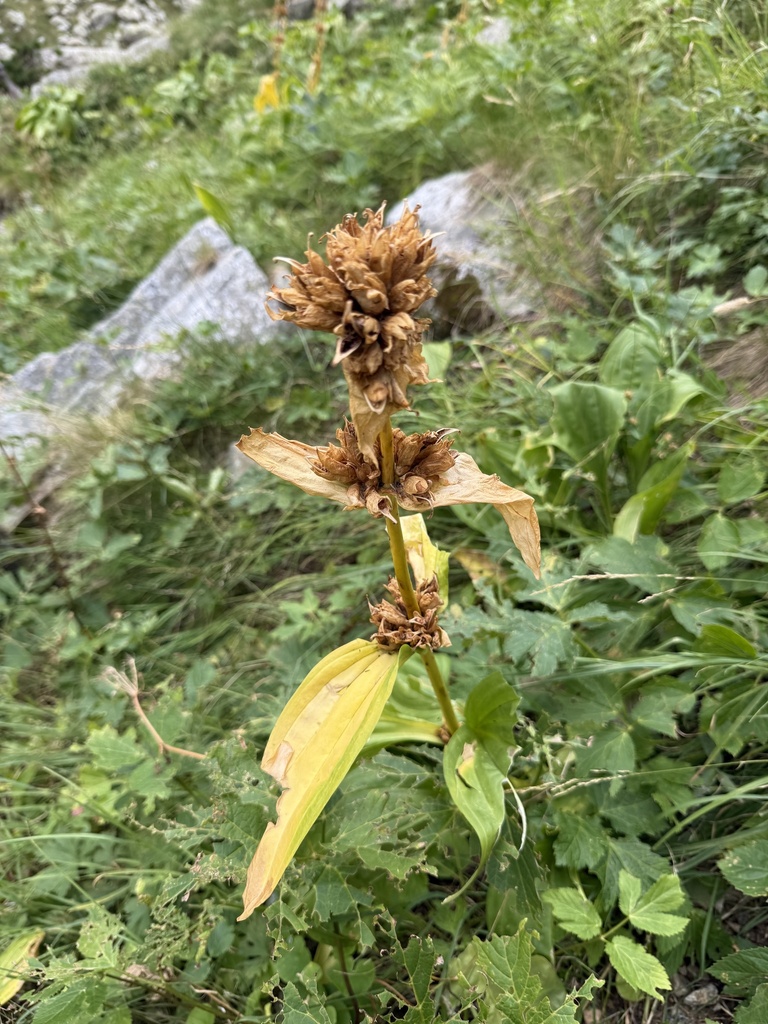
© Tony KM · iNaturalist · CC BY 4.0
Scientific Classification & Quick Facts
Classification
Known For
Detailed measurements for this species are still being verified.
Gentiana lutea, the Yellow Gentian, is a striking alpine herb whose golden-yellow flowers and powerful bitter compounds have earned it a place in both mountain ecosystems and human medicine cabinets across Europe. This robust perennial thrives in high-altitude meadows and rocky slopes, where few other plants dare to establish themselves. Its deep taproot can penetrate the thin alpine soil to depths that would seem impossible for such exposed terrain, anchoring the plant firmly against mountain winds and harsh seasonal swings.
Distributed across at least 12 countries in central and southern Europe, Gentiana lutea inhabits a range of alpine and subalpine habitats, from Switzerland and France to the Balkans. Though its conservation status remains uncertain, the species’ widespread distribution and cultural significance in Alpine regions have kept it relatively secure—though localized harvesting pressure in some areas warrants monitoring. Its combination of ecological resilience, striking appearance, and deep ethnobotanical history makes it one of the most fascinating plants of the high mountains.
Identification and Appearance
Gentiana lutea is a robust herbaceous perennial that reaches 1–2 metres in height, making it one of the tallest gentian species. The plant develops broad lanceolate to elliptic leaves arranged in opposite pairs along the stem. Each leaf measures 10–30 cm long and 4–15 cm wide, with a smooth, hairless surface that gives the foliage a polished appearance.
Flowers and Blooming
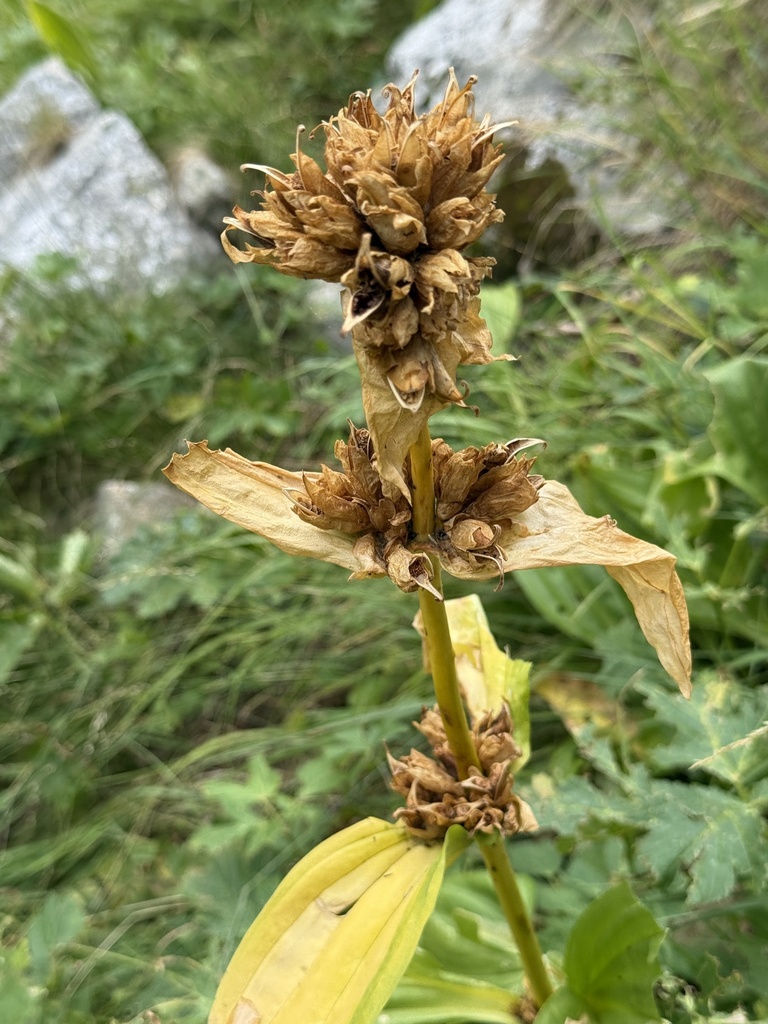
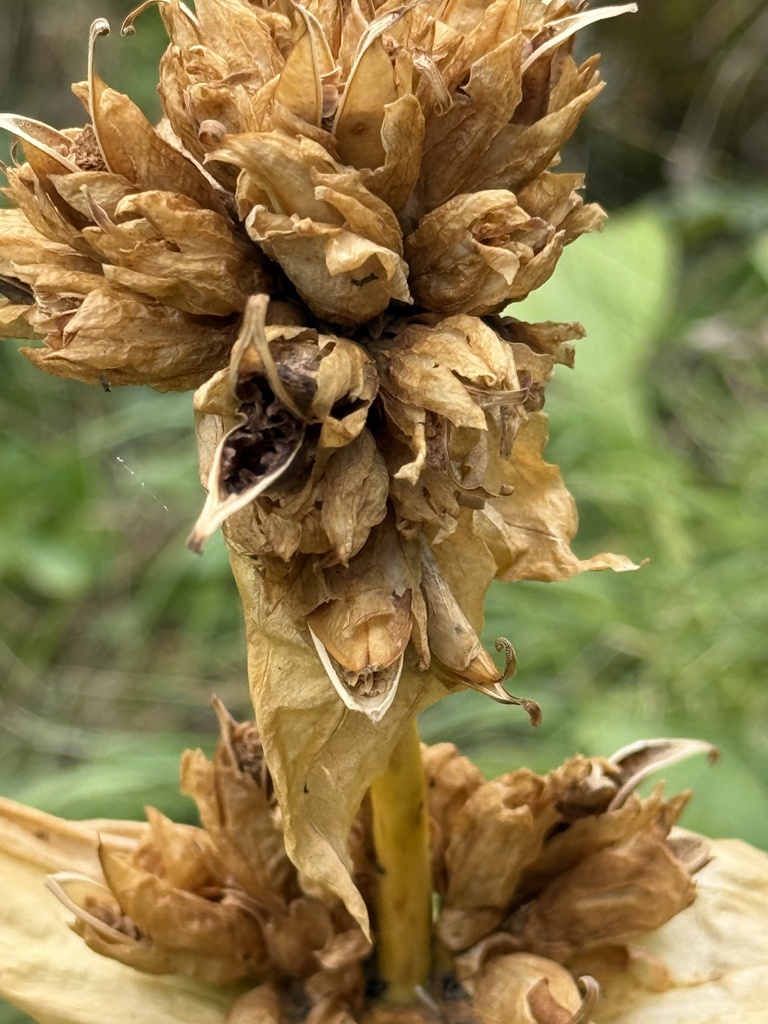
The flowers are unmistakably yellow and relatively small at 18–24 mm in length. Each bloom has a corolla that separates nearly to the base into 5–7 narrow, distinct petals—a defining feature of the species. Rather than blooming individually, the flowers are produced in dense whorls of 3–10 flowers clustered together on the upper portions of the stem, creating a striking and characteristic appearance. The flowering period extends from June through August, coinciding with the alpine and sub-alpine growing season.
The species shows no apparent sexual dimorphism in its external morphology. It thrives in grassy alpine and sub-alpine pastures, typically on calcareous soils, and occurs naturally at elevations up to 2500 metres where cool temperatures and nutrient-rich alpine conditions support its growth.
Distribution and Habitat
Gentiana lutea, the Yellow Gentian, is primarily distributed across central and southern Europe, with the strongest populations concentrated in France, Germany, and Italy. GBIF records document 134 observations from France alone, followed by 58 from Germany and 37 from Italy, indicating these nations form the core of the species’ range. The plant also occurs in Spain, Switzerland, and smaller populations in Sweden, Slovenia, Austria, Croatia, and Bosnia and Herzegovina, reflecting its presence across Mediterranean and Alpine regions across twelve countries in total.
Specific elevation data for this species are not currently available in standardized records, though Gentiana lutea is widely recognised as an Alpine and subalpine plant, typically occurring in upland meadows and mountain grasslands throughout its range. The species shows a highly concentrated seasonal presence, with the vast majority of observations—193 records—occurring in June, the species’ peak month. Secondary activity appears in May with 84 observations and April with 15, indicating the plant is primarily documented during its flowering and early growth period. No observations are recorded from July through January, suggesting either dormancy or reduced visibility during summer and winter months when the above-ground portions may senesce or become obscured.
Growth and Cultivation
Growth
Gentiana lutea is a long-lived herbaceous perennial that develops a substantial taproot system, anchoring it firmly in alpine and subalpine soils. The plant grows as a rosette of large, elliptic leaves in its first years, building energy reserves before investing in reproductive growth. Mature plants reach 0.6 to 1.2 metres in height when flowering, with robust unbranched stems that emerge from the basal foliage.
The species is notably slow-growing and can take 4 to 7 years to reach flowering maturity from seed. This extended juvenile period is typical of long-lived alpine perennials and reflects the harsh, nutrient-limited environment in which they naturally occur. Once established, individual plants may persist for several decades, with some records suggesting lifespans exceeding 50 years in protected settings.
Flowering
Yellow gentian produces striking yellow flowers arranged in dense whorls along the upper stem, opening from midsummer through early autumn. Each flower is a five-lobed star approximately 15–20 millimetres across, appearing in successive tiers as the flowering stem extends upward. The blooms are insect-pollinated, primarily by bees and butterflies attracted to abundant nectar.
Following pollination, the plant develops elongated seed capsules that mature in autumn, splitting at the apex to release numerous tiny seeds. These seeds are wind-dispersed and retain viability for several years when stored dry and cool, making seed banking a practical conservation tool for this species.
Cultivation
Yellow gentian thrives in cool climates with well-drained, moderately fertile soils. It performs best in full sun to partial shade and requires consistent moisture during the growing season, though waterlogged soils should be avoided. The plant tolerates poor, acidic to neutral soils typical of mountain meadows and grasslands, but benefits from mulching with stone chips or grit to improve drainage around the crown.
In cultivation, seeds benefit from cold stratification (4–8 weeks of moist chilling) to break dormancy and improve germination rates. Nursery-grown plants establish more readily than field-collected specimens and should be positioned where they will not be overshadowed by taller vegetation. Once established, mature plants require minimal intervention and are resistant to pests and diseases. Harvesting roots for commercial use requires removal of plants after 5–10 years of growth, so ornamental gardens should avoid this practice if the goal is long-term flowering displays.
Conservation and Threats
Gentiana lutea, the Yellow Gentian, does not currently hold a formal assessment on the IUCN Red List, meaning its conservation status remains unclassified at the global level. Despite the absence of an official threat designation, the species shows an encouraging population trend: populations are increasing across its native range in the mountainous regions of Europe. This positive trajectory suggests that existing management practices and natural recovery in some areas are supporting the species’ expansion.
Threats and Conservation Pressures
No specific, quantified threats have been formally documented for Gentiana lutea at present. However, the species historically faced pressure from over-harvesting for its medicinal roots, particularly for use in traditional herbal remedies and liqueurs. While modern regulations and cultivation practices have reduced direct extraction from wild populations in many European countries, localized collecting in less protected regions can still occur. Habitat loss from agricultural intensification and climate-driven changes to alpine and subalpine ecosystems remain latent concerns, though current data do not indicate they are driving population decline.
Conservation Efforts and Legal Protection
The increasing population trend reflects the effectiveness of regional protection frameworks across much of Gentiana lutea‘s range. In numerous European countries, the species benefits from legal protections that restrict or prohibit wild harvesting in protected areas. Cultivation initiatives have also reduced pressure on wild stocks by supplying the horticultural and pharmaceutical industries with commercially grown material. Several Alpine regions now support sustainable management programmes that balance traditional use with population stability.
Cultural Significance
The cultural notes provided for Gentiana lutea contain no documented folklore, mythology, artistic references, culinary uses, medicinal traditions, or symbolic associations. Without verified ethnobotanical or historical records specific to this species, no cultural significance claims can be responsibly presented.
Yellow Gentian may have regional uses or historical importance in Alpine and Mediterranean communities where it grows naturally, but these would require documented sources to describe accurately. If you have access to ethnobotanical surveys, historical herbals, or community knowledge about this species, those sources would provide the foundation for a meaningful cultural section.
Fun Facts
- Type species status: Gentiana lutea is the type species of the entire genus Gentiana, meaning it serves as the reference specimen against which all other gentian species are scientifically defined and compared. This distinction makes it the foundational reference for one of Europe’s most recognisable alpine plant families.
- Alpine distribution across five mountain systems: Despite its common name “great yellow gentian,” this species is native exclusively to European mountains, with populations spanning the Alps, Carpathians, Pyrenees, Apennines, and Balkan ranges. Its range reflects the geography of high-altitude European terrain rather than global distribution.
- Extremely deep root system: Gentiana lutea develops thick, fleshy roots that can penetrate 1–2 metres into the soil, allowing it to access water and nutrients far below the surface in alpine environments where topsoil is shallow and unstable.
- Long pre-flowering juvenile period: Individual plants may take 5–10 years to produce their first flowers, investing heavily in root development before any reproductive effort—a strategy that maximises survival in harsh mountain conditions.
- Bitter compound production: The roots and rhizomes accumulate intensely bitter alkaloid compounds, particularly secoiridoid glycosides, which have been harvested for centuries to produce gentian bitters used in herbal medicines and alcoholic liqueurs across Europe.
- Slow-growing longevity: Yellow gentian plants can live for 50 years or more in their natural alpine habitat, with their slow growth rate and delayed flowering reflecting adaptation to an environment where resources are scarce and conditions are unpredictable.
Ecology
Growing Conditions
Edibility
Photo Gallery
Tony KM · CC BY 4.0
Related Species
Was this profile helpful?