
Liliopsida · Asparagales
Saffron Crocus
Crocus sativus
Also known as: Italian Crocus, autumn crocus, saffron
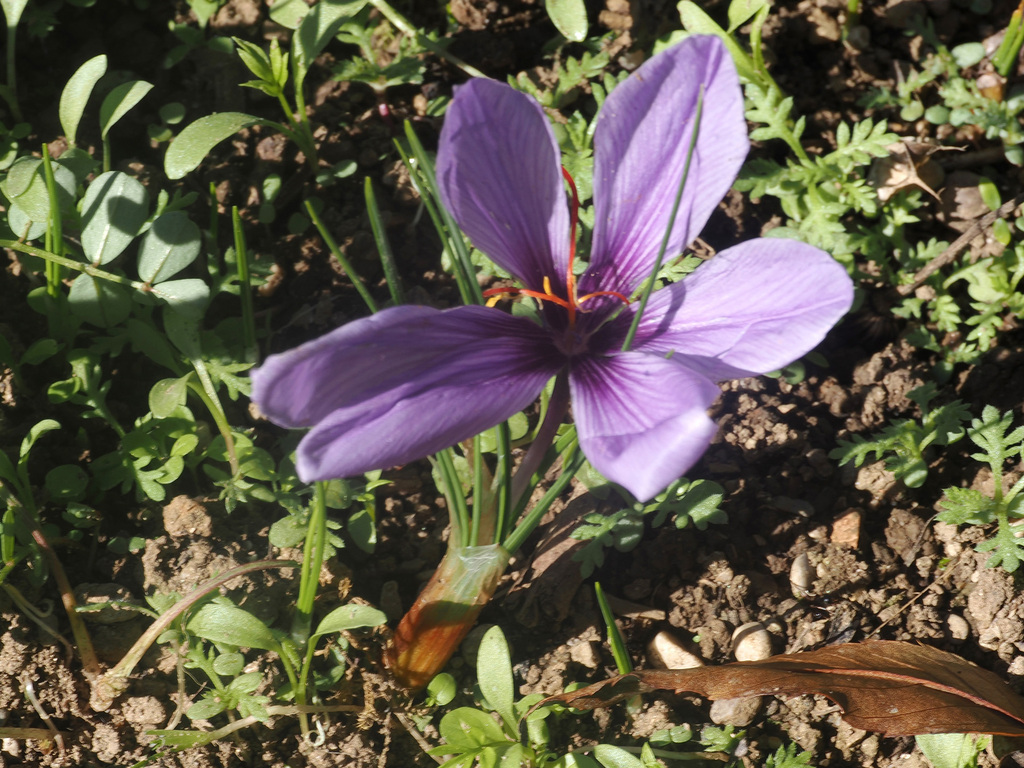
© Felix Riegel · iNaturalist · CC BY-NC 4.0
Scientific Classification & Quick Facts
Classification
Known For
Detailed measurements for this species are still being verified.
Crocus sativus, the saffron crocus, is a small but extraordinarily valuable flowering plant whose brilliant crimson stigmas have shaped trade routes, cuisines, and economies for millennia. This delicate member of the Iridaceae family produces the world’s most expensive spice by weight—a distinction earned through labour-intensive hand harvesting and the plant’s modest yield of just three stigmas per flower. Found across at least 16 countries today, primarily in Iran, Kashmir, and the Mediterranean region, saffron represents a remarkable intersection of horticulture, commerce, and cultural heritage.
Despite its uncertain conservation status on the IUCN Red List, saffron remains under continuous cultivation pressure and faces threats from climate variability, soil depletion, and economic competition. What distinguishes this modest crocus from thousands of other flowering plants is not size or abundance, but rather the exquisite chemistry locked within its tiny reproductive structures—compounds that have earned saffron epithets ranging from “red gold” to “threads of gold” across multiple continents and languages.
Identification and Appearance
Crocus sativus is a compact perennial herb that typically reaches 10 to 30 centimetres in height. The plant grows from an underground corm—a solid, bulb-like stem that serves as the primary storage organ and regenerates each growing season. This corm produces all the plant’s aerial structures: narrow leaves, protective bracts, and a single flowering stalk per plant.
The flowers are unmistakable and distinctive. Each bloom displays a striking violet-purple perianth (the petal-like segments) with a diameter of roughly 2.5 to 3 centimetres. Inside the flower, three prominent bright-red or deep-crimson stigmas (the female reproductive structures) extend downward—these are the parts harvested and dried to produce the valuable saffron spice. The stigmas are notably long and delicate, often extending well beyond the flower’s centre. Unlike many flowering plants, Crocus sativus is functionally sterile and does not produce viable seeds; it reproduces exclusively through division of its corms.
The plant’s foliage consists of very narrow, grass-like leaves that emerge from the base and may be present during flowering or appear shortly after, depending on local growing conditions. The overall structure is refined and delicate, reflecting its adaptation to cultivation in temperate climates at moderate elevations. No sexual dimorphism is evident, as the plant lacks separate male and female individuals.
Distribution and Habitat
Crocus sativus is primarily distributed across southern Europe and the Mediterranean region, with Spain and Italy hosting the largest cultivated populations. GBIF records show Spain leading with 114 observations, followed closely by Italy with 107, reflecting the commercial and botanical significance of saffron cultivation in these countries. Greece, the Netherlands, Germany, and Switzerland each contribute notably to the dataset, while smaller populations occur in Czechia, Turkey, France, and Morocco, bringing the documented range to 16 countries overall.
The species tolerates a wide elevation range, from approximately −48 metres to 1,612 metres, with an average documented elevation of 477 metres. This vertical flexibility reflects both the plant’s adaptability and the varied altitudes at which saffron is commercially cultivated across Mediterranean regions. Observations are scattered throughout the year but show a pronounced seasonal peak in October, when 188 records were logged—the primary flowering and harvest period for saffron crocus. November remains active with 72 observations, while summer months (June through August) show minimal activity, indicating the species’ strong autumnal phenology.
The geographic concentration of saffron crocus records in Spain and Italy underscores the historical and ongoing importance of these regions for cultivation. While the species occurs across a relatively compact band of Mediterranean and temperate Europe, its presence at sea level (in lowland cultivation zones) and above 1,600 metres demonstrates that elevation constraints are minimal where conditions suit its propagation. The autumn peak reflects the plant’s natural flowering window and the labour-intensive harvesting period that defines saffron production worldwide.
Growth and Cultivation
Growth
Crocus sativus is a low-growing herbaceous perennial that rarely exceeds 15 centimetres in height at maturity. The plant develops from underground corms, which are bulb-like storage organs that cluster over time to form colonies. Each corm produces narrow, grass-like foliage that emerges either before or after flowering, depending on growing conditions. The leaves are threadlike and grey-green, typically appearing in dense tufts around the base of the flowers.
Saffron crocus spreads vegetatively through corm division rather than sexual reproduction, making it entirely dependent on human cultivation for propagation. Corms gradually multiply underground, with mature plants forming dense clusters within 3–4 years. This spreading habit allows established plantings to become increasingly productive, though individual corms must be dug, divided, and replanted every 4–5 years to maintain vigour and prevent overcrowding.
Flowering
The species flowers reliably in autumn, typically from September through November in the Northern Hemisphere. Each corm produces one to three delicate flowers with purple-mauve petals and a distinctive three-lobed red stigma. The flowers are ephemeral, opening on sunny days and closing by evening, with the entire bloom period lasting only a few hours. The three stigmas are the source of saffron, the world’s most expensive spice by weight.
Saffron crocus is sterile or nearly sterile in most populations, producing little to no viable seed. Reproduction occurs almost exclusively through natural corm multiplication, which explains why wild populations are rare or absent and why all commercial cultivation relies on corm propagation from established stock. The stigmas must be hand-harvested immediately after flowering, as they dry quickly and lose potency within days of being picked.
Cultivation
Saffron crocus thrives in well-drained soil and full sun to partial shade. It tolerates a wide range of soil types but prefers loamy, fertile conditions with good drainage to prevent corm rot. The species is hardy in temperate regions and has been successfully cultivated across Europe, Asia, and North America. Plant corms 7–10 centimetres deep in late summer, spaced 10–15 centimetres apart, and allow natural rainfall to meet most water needs once established. Irrigation may be necessary during prolonged dry spells or in arid regions.
Minimal maintenance is required beyond weed control and occasional feeding with balanced fertiliser in spring. Corms should be dug and divided every 4–5 years to prevent decline in flower production. Harvest stigmas in the morning on the day of flowering by carefully plucking them with tweezers, then dry them immediately on a clean cloth in a warm, well-ventilated space. A single kilogram of dried saffron requires approximately 150,000 flowers, illustrating why hand harvesting remains labour-intensive and why saffron commands such high prices in global markets.
Conservation and Threats
Crocus sativus, the saffron crocus, has not been formally assessed by the International Union for Conservation of Nature (IUCN Red List). This absence of formal status reflects the species’ position as a widespread cultivated plant rather than a wild organism subject to standard biodiversity monitoring. The population trend is currently increasing, driven by sustained global demand for saffron spice and expansion of cultivation across multiple continents.
Threats
Although no threats have been formally documented in peer-reviewed assessments, saffron cultivation faces several practical pressures. The species depends entirely on human cultivation—wild populations have not been reliably documented—making it vulnerable to shifts in agricultural practice, disease, and climate variability. The labour-intensive hand-harvesting of stigmas exposes crops to economic pressures that may incentivize shortcuts or abandonment of cultivation in marginal regions.
Conservation Efforts
No formal conservation programmes specifically protect Crocus sativus, as the species is maintained through active cultivation rather than habitat preservation. However, geographical diversification of saffron production—including established cultivation in Iran, Spain, India, Italy, and New Zealand—provides de facto protection against localized crop failure or regional disruption. Several regions recognize saffron as a culturally and economically significant crop and support farming through agricultural extension services and protected designation of origin (PDO) status for regional products.
The increasing global population trend suggests that saffron cultivation is economically viable and expanding rather than contracting. Preservation of traditional cultivation knowledge and support for small-scale growers in established saffron-growing regions remains the most direct conservation approach.
Cultural Significance
The saffron crocus holds a position of exceptional economic and cultural importance across multiple civilizations. For over three millennia, the crimson stigmas of Crocus sativus have been harvested as one of the world’s most expensive spices, commanding premium prices in global markets due to the labour-intensive hand-harvesting process required to extract each delicate thread. This high value has shaped trade routes, regional economies, and the cultural identity of major producing regions, particularly in Iran, Kashmir, and Spain.
Beyond its culinary applications in risottos, pilafs, and traditional breads, saffron has deep roots in medicinal and ritual traditions. Historical records document its use in Persian, Indian, and Mediterranean folk medicine for digestive complaints, mood support, and various inflammatory conditions—applications that continue in Ayurvedic and Unani medicine systems today. The vibrant golden-red colour imparted by saffron to food carries symbolic weight in numerous cultures, often associated with prosperity, purity, and celebration in religious ceremonies and festive meals.
The plant’s striking purple flowers and the rarity of its productive crocus variety have also secured its place in decorative horticulture and art across centuries. Literary references and paintings throughout European and Asian history reflect the cultural reverence for both the flower and its precious harvest, cementing saffron crocus as more than a botanical specimen—it represents the intersection of agriculture, commerce, medicine, and human creativity.
Fun Facts
Saffron crocus stands apart from its relatives in nearly every way—a plant so intensively cultivated that it has forgotten how to exist in the wild, and so valuable that just three delicate threads from each flower can command premium prices on global markets. Below are some of the most striking facts about this ancient and extraordinary species.
- No wild populations exist anywhere on Earth. Crocus sativus is unknown in the wild, existing solely as a cultivated plant with no natural habitat or feral populations—a testament to thousands of years of selective breeding that has severed it completely from its wild origins.
- It flowers in autumn, not spring. While most crocus species bloom in early spring, saffron crocus unusually flowers in autumn, making it a rare exception among iris family members and a counterintuitive harbinger of the coming cold rather than the arriving warmth.
- Each flower yields only three harvestable stigmas. The entire culinary value of saffron crocus lies in its three thread-like stigmas per flower, meaning that producing just one kilogram of dried saffron requires harvesting and hand-processing between 150,000 and 170,000 individual flowers—an extraordinarily labor-intensive feat.
- It has been cultivated for over 3,500 years. Saffron crocus ranks among humanity’s longest-continuously-cultivated plants, with evidence of its use spanning ancient Persia, Egypt, Greece, Rome, and beyond, making it a living link to agricultural practices older than most written civilizations.
- It reproduces without seeds through corms. Rather than relying on seeds, Crocus sativus survives and spreads via underground corms—bulb-like structures that store energy and clone the parent plant, a reproductive strategy that makes each new saffron field a genetic copy of its predecessors.
- Saffron’s color and flavor come from just one compound. The distinctive golden hue and complex flavor of saffron derive largely from crocin, a single carotenoid compound concentrated in the stigmas, making this molecule one of the most economically valuable substances in the plant kingdom.
- Iran produces roughly 90% of the world’s saffron. The Khorasan region of northeastern Iran has become the global epicenter of saffron cultivation, dominating production to such an extent that the spice has become deeply woven into Persian cuisine, culture, and economy.
Ecology
Growing Conditions
Edibility
Photo Gallery
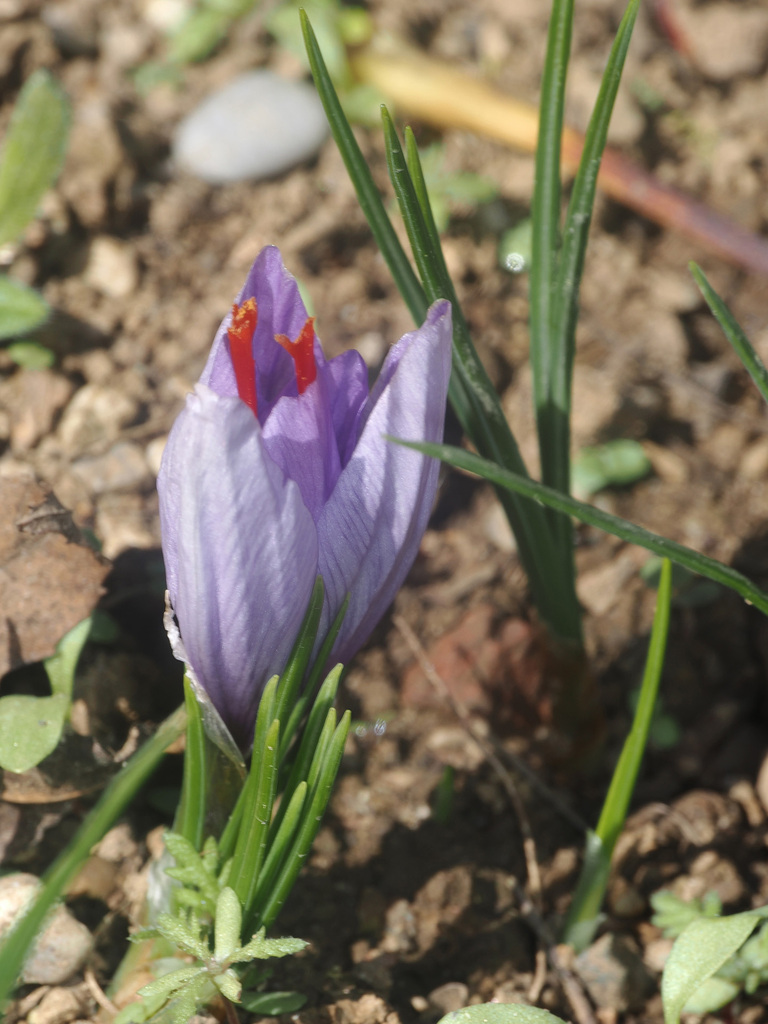
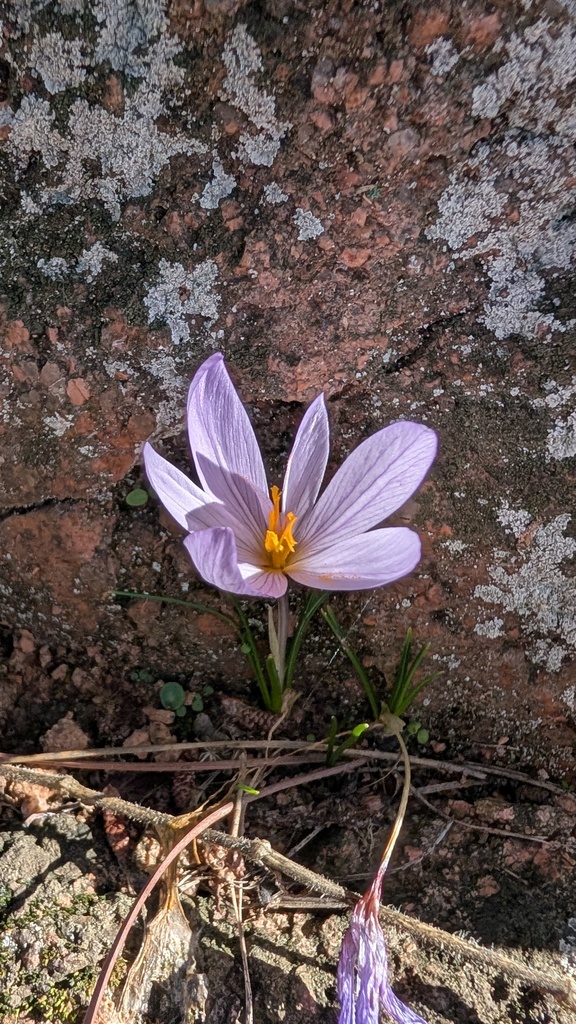
Felix Riegel · CC BY-NC 4.0
Related Species

Was this profile helpful?