
Liliopsida · Asparagales
Vanilla Orchid
Vanilla planifolia
EndangeredAlso known as: Flat-leaved Vanilla, Vanilla, vanilla, vanilla bean, vanilla pod
© Rafael Silva · iNaturalist · CC BY-SA 4.0
Scientific Classification & Quick Facts
Classification
Known For
Detailed measurements for this species are still being verified.
Vanilla planifolia, the Vanilla Orchid, is the sole orchid species cultivated at commercial scale for human consumption. Unlike the thousands of ornamental orchids prized for their flowers, this climbing vine produces elongated, fleshy seed pods that yield the vanilla flavoring treasured in cuisines and perfumery worldwide. Native to Mexico’s tropical forests, it has spread across 33 countries in pursuit of ideal growing conditions, yet today it faces an uncertain future as populations decline in the wild.
The species is classified as Endangered by conservation authorities, reflecting habitat loss in its native range and the strain of wild collection for commercial propagation. Its cultivation remains geographically concentrated in Madagascar, Mexico, and a handful of other tropical regions, making global vanilla production vulnerable to climate fluctuations and disease. What makes Vanilla planifolia particularly significant is the tension between its economic importance—supporting livelihoods across developing nations—and its ecological fragility as a species pushed to the brink of wild extinction.
Identification and Appearance
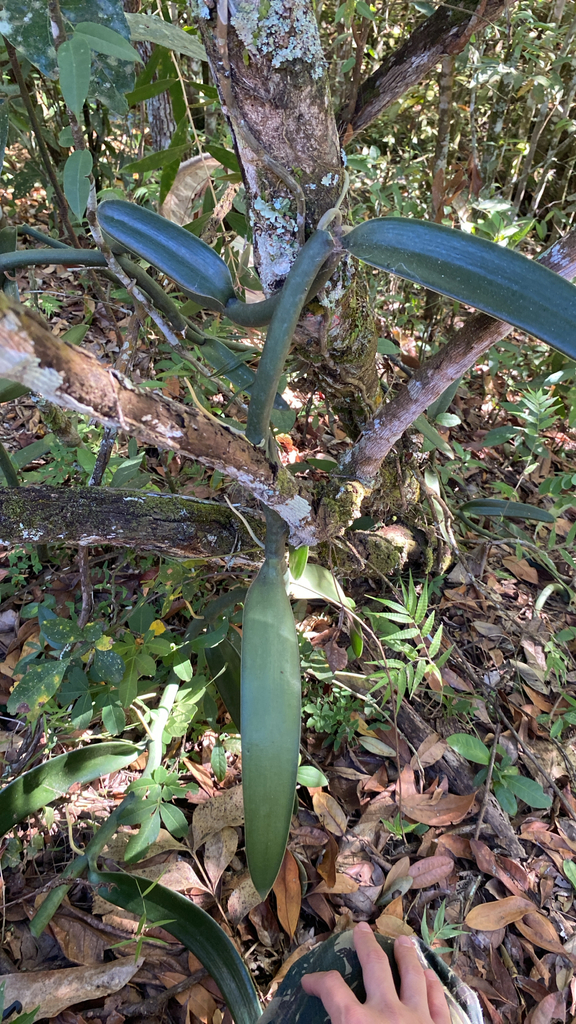
Vanilla planifolia is an evergreen vine that grows either rooted in soil or as an epiphyte clinging to trees without anchoring in earth. In wild conditions, the plant reaches lengths of 15 metres, making it a substantial climbing orchid capable of covering large vertical and horizontal surfaces. The vine produces branched terrestrial roots when soil-rooted, with fine root hairs that form symbiotic relationships with mycorrhizal fungi—partnerships essential for nutrient uptake in its natural environment.
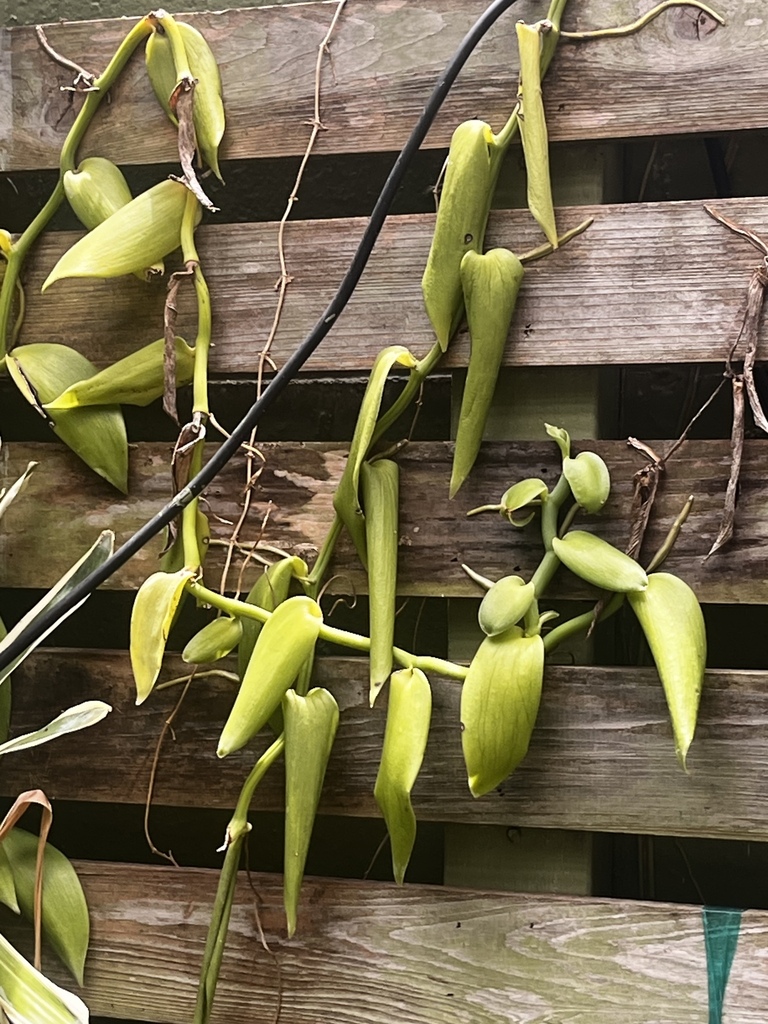
The plant’s vegetative structure consists of succulent, fleshy stems bearing alternately arranged, lance-shaped leaves. Its true identity emerges only during flowering, when cream-coloured to pale yellow blooms appear along the vine’s length. These flowers are ephemeral, opening for just a single day, and when successfully pollinated, develop into long, thin, green seed pods (vanilla beans) that mature over months. The mature pods turn dark brown and develop the distinctive vanilla flavour and aroma prized in the spice trade.
Distribution and Habitat
Vanilla planifolia is cultivated and naturalized across tropical and subtropical regions worldwide, with its greatest concentration in the Indian Ocean islands and Mexico. GBIF records show Mexico (49 records) and Seychelles (49 records) as the leading documentation sites, followed by Réunion (40 records), Guadeloupe (31 records), and Madagascar (28 records). The species has been recorded in 33 countries total, reflecting centuries of global trade and cultivation driven by demand for vanilla flavoring.
The orchid grows across a wide elevation range, from sea level (−35.56 metres) to 1,083 metres, with an average elevation of 170.6 metres. It thrives in warm, humid tropical environments where it naturally climbs trees and other supporting structures. Observations peak in May, suggesting seasonal flowering or assessment patterns coincide with late spring in cultivation regions.
Beyond the primary centers, Vanilla planifolia occurs in secondary populations across the Caribbean (Martinique, 14 records; Costa Rica, 15 records), Southeast Asia (Indonesia, 8 records), South America (Brazil, 8 records), and North America (United States, 16 records). This geographic spread reflects both wild naturalization in suitable tropical zones and horticultural establishment in botanical collections and commercial vanilla-growing regions.
Growth and Cultivation
Growth
Vanilla planifolia is a vigorous climbing orchid that thrives as an epiphytic vine in its native tropical habitat. The plant develops long, fleshy stems with aerial rootlets that allow it to cling to tree trunks and branches. Mature vines can extend several metres in length, producing thick, succulent leaves arranged alternately along the stem. The orchid grows vigorously in warm, humid conditions but remains relatively slow-growing under suboptimal cultivation, requiring patience from growers accustomed to faster-growing houseplants.
Flowering
The vanilla orchid produces delicate, pale green to yellowish flowers that bloom in clusters along the stem. These blooms are ephemeral, typically lasting only a single day, making hand-pollination necessary in cultivation to ensure fruit set. After successful pollination, the plant develops long, slender seed pods—the vanilla bean of commerce—which must cure for several months to develop the characteristic flavour and aroma. In its native range, flowering occurs seasonally, though the timing varies with local climate conditions.
Cultivation
Vanilla orchids demand warm temperatures year-round, ideally between 20 and 30 °C, with high humidity levels of 60–80 percent. They require bright, indirect light and benefit from partial shade, as direct sun can scorch the fleshy leaves. Well-draining, orchid-specific potting media or bark-based compost works best; these plants tolerate neutral to slightly acidic conditions. Regular watering during the growing season is essential, though the substrate should dry slightly between waterings to prevent root rot.
In cultivation outside tropical regions, vanilla orchids are typically grown in greenhouses or warm conservatories where temperature and humidity can be controlled. Vertical supports or trellises allow the vine to climb naturally, mimicking its epiphytic growth habit. Feeding with a dilute, balanced orchid fertilizer during the growing season promotes vigorous stems and healthy flowering. Propagation occurs through stem cuttings, which should include at least two nodes and aerial rootlets for the highest success rate.
Conservation and Threats
Vanilla planifolia, the source of natural vanilla flavouring, is listed as Endangered on the IUCN Red List. This classification reflects the species’ vulnerability to habitat loss, over-harvesting, and the pressures of commercial cultivation. Despite this precarious status, the population trend is increasing, suggesting that current conservation efforts and managed cultivation practices are having a positive effect on species recovery.
Threats
The primary threat to wild vanilla orchids is habitat destruction. Native to tropical rainforests of Mexico and Central America, Vanilla planifolia has lost extensive areas of forest to deforestation for agriculture, logging, and urban development. This destruction fragments remaining populations and reduces genetic diversity in the wild.
Over-collection for the commercial vanilla trade has historically driven population declines. While most vanilla now comes from cultivated plants—particularly from Madagascar—wild populations have not fully recovered from decades of harvesting pressure. Additionally, the species’ dependence on specific pollinating insects, primarily stingless bees and hummingbirds, makes it vulnerable to changes in pollinator populations caused by pesticide use and habitat fragmentation.
Conservation Efforts and Legal Protections
Vanilla planifolia is protected under CITES Appendix II, which regulates international trade to prevent unsustainable harvesting. Several tropical countries have established protected areas within the species’ native range, and botanical gardens and research institutions maintain ex situ collections to preserve genetic diversity. The shift toward sustainable farming practices in vanilla-producing regions, particularly in Madagascar and other tropical nations, has reduced pressure on wild populations by meeting global demand through cultivation.
The increasing population trend reflects the combined effect of legal protections, habitat conservation in key regions, and the establishment of commercial cultivation as an alternative to wild harvesting. Continued investment in protecting remaining forest habitat and supporting indigenous communities in vanilla-growing regions remains essential for long-term recovery.
Cultural Significance
Vanilla planifolia is the commercial source of vanilla, one of the world’s most widely used flavoring agents. The plant’s cultural significance is rooted almost entirely in the economic and culinary value of its fruit—the vanilla pod or bean. This orchid transformed global food culture after Spanish conquistadors encountered it in Mesoamerica in the 16th century, where the Totonac people had cultivated vanilla for centuries as a luxury flavoring reserved for chocolate drinks among the Aztec elite.
The global vanilla trade shaped colonial and post-colonial economies, particularly in Madagascar, which now produces the majority of the world’s vanilla supply. The spice became a marker of wealth and refinement in European cuisine and continues to define the flavor profile of desserts, beverages, and confections across virtually all cultures with access to global trade networks. Beyond culinary use, vanilla appears in traditional medicine systems in various regions, though its primary cultural role remains inseparable from its role as a staple ingredient in modern food production and luxury goods.
Fun Facts
Vanilla planifolia is one of the world’s most economically important orchids, yet most people know it only through its flavoring rather than the plant itself. Here are some surprising facts about this remarkable tropical vine.
- The species is native to a vast region spanning Mexico, Central America, Colombia, and Brazil, yet it remained scientifically unnamed until 1808—more than three centuries after Europeans first encountered it in the Americas.
- Vanilla’s commercial value depends almost entirely on its chemical composition: Vanilla planifolia produces exceptionally high levels of vanillin, the compound responsible for vanilla’s characteristic flavour and aroma, which is why it dominates the global vanilla market over other vanilla species.
- Vanilla orchids are climbing vines that naturally grow as epiphytes, clinging to trees in tropical rainforests rather than rooting in soil, yet commercial growers cultivate them on trellises and poles to simulate this aerial lifestyle.
- The plant’s flowers last only a single day and must be hand-pollinated to produce beans, since the orchid’s natural pollinator—a specific bee species—is absent from most cultivation regions outside Mexico.
- Vanilla beans require a lengthy curing process lasting several months to develop their distinctive flavour; the fresh pod contains little vanillin, which develops only through careful fermentation and drying.
- A single vanilla plant can produce dozens of flowers over its blooming season, but each flower must be individually pollinated by hand to ensure pod development, making vanilla one of the most labour-intensive spice crops globally.
Ecology
Habitats
Growing Conditions
Edibility
Conservation Status
LC · NT · VU · EN (Endangered) · CR · EW · EX
Photo Gallery
Rafael Silva · CC BY-SA 4.0
Related Species

Was this profile helpful?