
Magnoliopsida · Fagales
Sweet Chestnut
Castanea sativa
Least Concern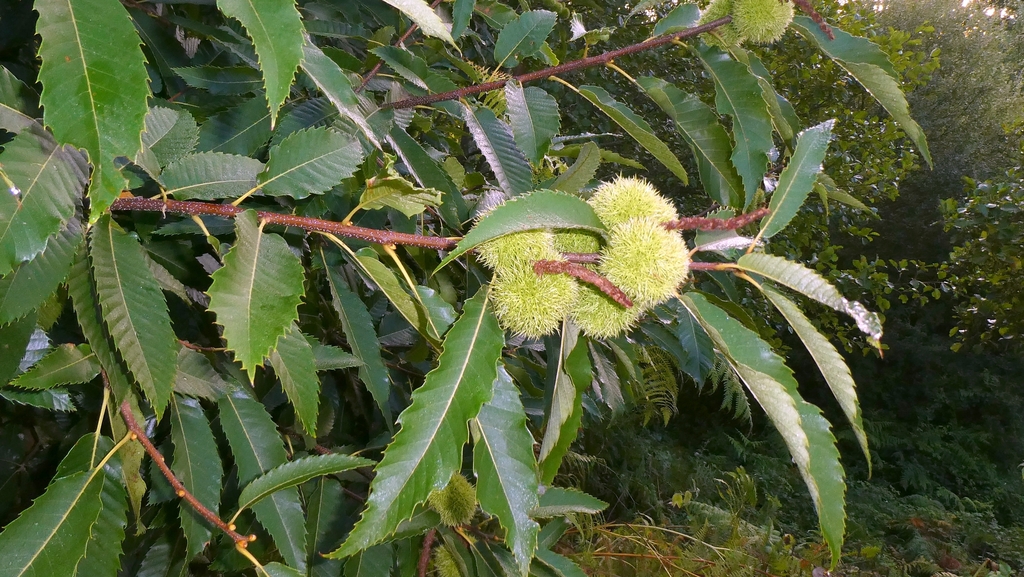
© no rights reserved · iNaturalist · CC0 1.0
Scientific Classification & Quick Facts
Classification
Known For
Full profile in progress — check back soon.
The Sweet Chestnut is a towering deciduous tree that has shaped human culture and cuisine across the temperate world for millennia. Native to the Mediterranean region and Asia Minor, Castanea sativa produces large, spiny husks that split open to reveal glossy brown nuts—a staple food source that sustained entire populations through harsh winters and continues to feature in regional cuisines from southern Europe to East Asia. Today, the species thrives across approximately 20 countries, from Portugal to Japan, and is classified as Least Concern by conservation authorities, reflecting its resilience and widespread cultivation.
What makes Castanea sativa particularly significant is its dual role as both a valued food crop and a keystone tree in mixed woodlands and cultural landscapes. The nuts are far lower in fat and higher in carbohydrates than other tree nuts, making them nutritionally distinct and especially important in traditional diets. Beyond its economic importance, the species supports diverse wildlife and has become central to conversations about climate-adaptive forestry in Europe, where it may increasingly replace less resilient species as temperatures rise.
Identification and Appearance
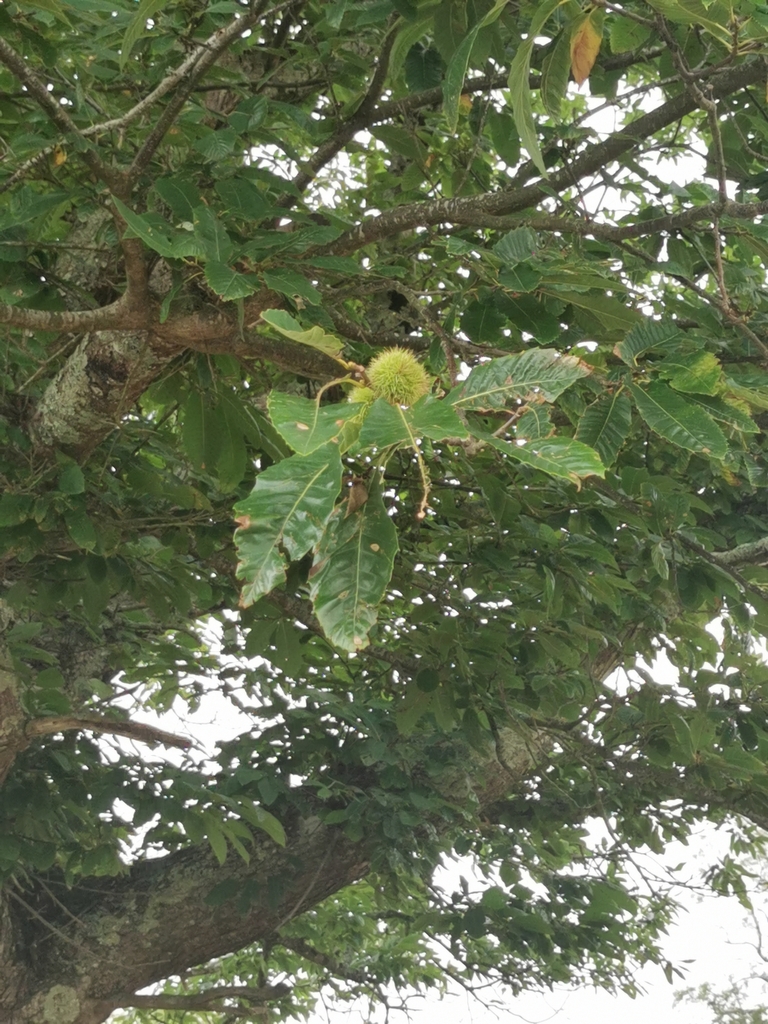
Castanea sativa is a large deciduous tree reaching heights of 20–35 metres, with a stout trunk often 2 metres in diameter. The bark is distinctive, marked by a net-shaped (retiform) pattern with deep furrows and fissures that run spirally around the trunk. This characteristic bark texture becomes increasingly pronounced with age and is one of the most reliable field marks for identifying the species at a distance.
Ancient specimens can achieve exceptional dimensions. Approximately 20 trees worldwide have been recorded with trunk diameters exceeding 4 metres, with the largest known specimen reaching 7.5 metres in diameter at breast height. The Hundred Horse Chestnut in Sicily, a famous ancient tree, was historically documented with a diameter of 18 metres, though it has since split into multiple trunks above ground. These giants are living monuments to the species’ longevity and capacity for sustained growth in favourable conditions.
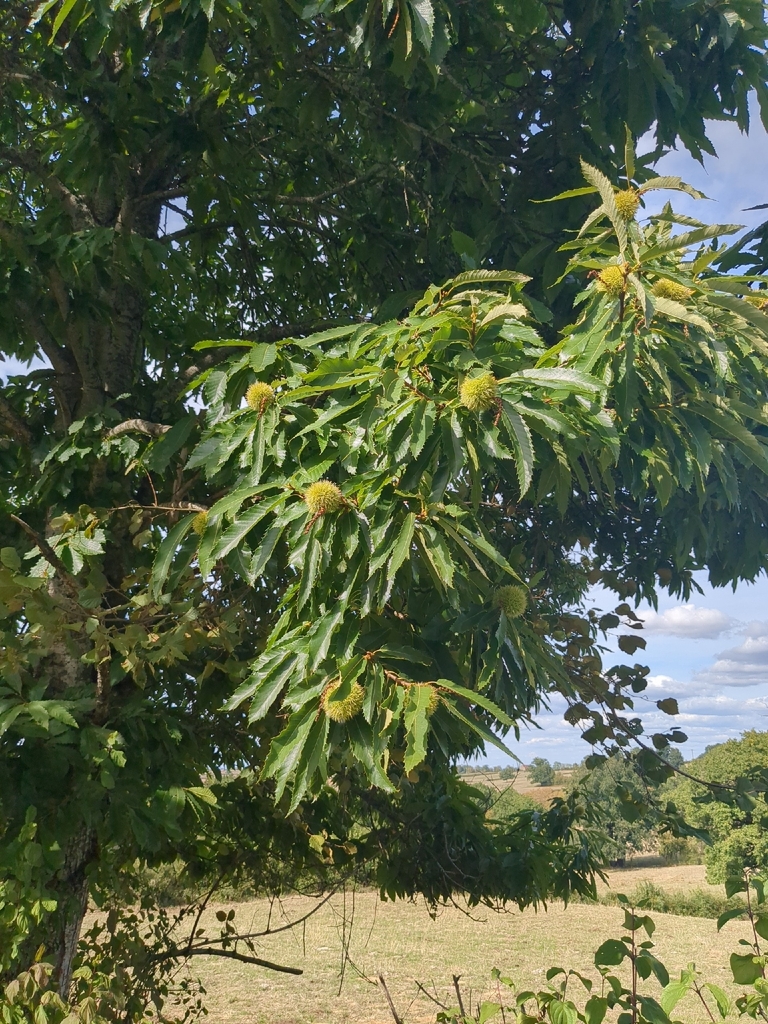
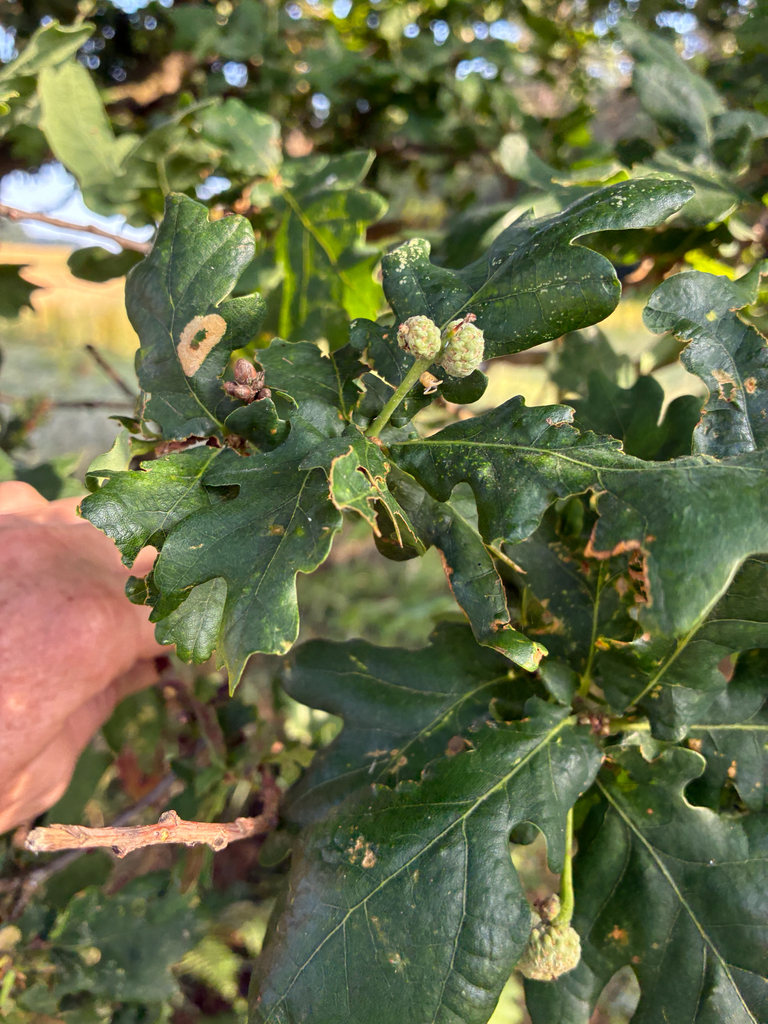
The canopy forms a broad, dense crown composed of large, lanceolate leaves with coarsely serrated margins. In spring, catkin-like flower clusters emerge; the tree produces spiky fruit capsules (cupules) containing 1–3 shiny brown nuts that fall in autumn. The wood is pale brown and highly durable, which historically made the species valuable for timber production across Europe.
Distribution and Habitat
Castanea sativa occurs across Europe, with recorded presence in 20 countries. The species shows the strongest populations in Belgium (81 records) and the Netherlands (66 records), followed by the United Kingdom (35 records), Italy (24 records), and France (24 records). Spain, Austria, Portugal, Germany, and Switzerland also support established populations. This distribution reflects both natural range and historical human cultivation for nut production across temperate and Mediterranean regions.
The species grows across a moderate elevation band, occurring between 392 and 845.5 metres, with an average elevation of 545.8 metres. This vertical range encompasses lowland valleys and foothill zones typical of European chestnut woodlands. Sweet chestnut tolerates diverse soil types and moisture conditions across its range, thriving in well-drained locations where it often forms dominant or co-dominant canopy layers.
Most sightings and herbarium records originate from western and central Europe, where the species has been actively managed in agroforestry and conservation contexts for centuries. Belgium and the Netherlands represent important nuclei for modern population monitoring and research, while Mediterranean populations in Spain, Italy, and Portugal represent the species’ natural southern limit. The absence of records during warmer months (March through December) in the available dataset likely reflects sampling bias rather than true seasonal absence, as Castanea sativa is evergreen in leaf during the growing season across its entire range.
Growth and Cultivation
Growth
Castanea sativa, the sweet chestnut, develops into a large deciduous tree that can reach 20–35 metres in height at maturity, with a broad, spreading crown. The trunk becomes deeply furrowed and columnar with age, and the bark develops characteristic spiral ridges. Young trees establish quickly once established, though precise growth rate data varies by site conditions and provenance.
The tree produces glossy, oblong leaves arranged alternately along the shoots, with prominent serrated margins. These leaves turn golden-bronze in autumn before dropping, a striking seasonal display in temperate woodlands.
Flowering and Fruiting
Sweet chestnut flowers in late spring to early summer, producing long, slender catkins that are pale greenish-yellow and powerfully fragrant. Male flowers dominate the catkins, while female flowers appear at the base of the catkins and develop into the characteristic spiky cupules.
The distinctive spiny, golf-ball-like burrs mature in autumn and split open to release the edible nuts. Each cupule typically contains 2–3 shiny brown seeds with a distinctive pale scar. Nut production is often heavy and reliable in suitable climates, making the species valuable for both wildlife and human harvest.
Cultivation
Sweet chestnut thrives in well-drained soils and prefers full sunlight for optimal growth and fruiting. The tree tolerates a wide range of soil types but performs best in neutral to slightly acidic conditions. It requires adequate moisture during the growing season, particularly when young, though established trees show reasonable resilience in drier summers.
The species is hardy across much of temperate Europe and suitable for cultivation in cool-temperate climates with adequate summer warmth to ripen the nuts. Plant in open, sunny positions with good air circulation to minimize fungal disease risk. Mature trees require little maintenance beyond occasional pruning to remove dead wood and maintain form. In its native and naturalized range, sweet chestnut has become a valuable timber and nut crop, with centuries-old management traditions still practised in parts of southern Europe.
Conservation and Threats
Castanea sativa, the Sweet Chestnut, is listed as Least Concern on the IUCN Red List. This designation reflects the species’ wide distribution across Europe and stable presence in both wild and cultivated settings. However, this favourable status masks significant regional challenges that require ongoing attention.
Threats
The primary threat to Sweet Chestnut populations is chestnut blight, caused by the fungal pathogen Cryphonectria parasitica. This disease has devastated chestnut forests across Europe since its introduction in the early 20th century, causing canker formation and branch dieback. While Sweet Chestnut displays greater resistance than some other chestnut species, blight remains a significant mortality factor in European woodlands.
Secondary threats include ink disease (caused by Phytophthora species), which attacks the root system and weakens trees, and climate change, which alters growing conditions and increases vulnerability to pests and diseases. Habitat loss through land conversion and fragmentation of ancient chestnut woodland also reduces viable populations, particularly in regions where traditional coppice management has declined.
Conservation Efforts
Several European countries have implemented breeding programmes to select and propagate blight-resistant chestnut varieties. In Italy, Spain, and France, genetic research focuses on hybridising Castanea sativa with Asian species that carry natural resistance. Legal protections exist in some regions—notably in the UK, where ancient chestnut coppices are designated as priority habitats under conservation legislation.
Restoration of traditional coppicing practices has proven beneficial, as active management reduces disease pressure and regenerates woodland structure. Community orchards and heritage chestnut conservation initiatives across Europe work to maintain genetic diversity and cultural links to the species.
Cultural Significance
The cultural notes provided for Castanea sativa contain no documented information about the species’ role in human culture, mythology, folklore, art, cuisine, medicine, or symbolism. Without reliable source data, claims about traditional uses, spiritual significance, or historical associations would be speculation rather than established fact.
To develop an accurate cultural significance section for Sweet Chestnut, additional documented sources would be needed—such as ethnobotanical records, historical texts, or scholarly studies on the species’ use across Mediterranean and European communities where it has been cultivated for millennia.
Fun Facts
- Chestnuts are oaks’ cousins, not nuts’ cousins. Despite producing seeds called “nuts,” Castanea sativa belongs to the Fagaceae family alongside oaks and beeches—making it botanically more closely related to forest dominants than to almonds, walnuts, or other nut-bearing species.
- Chestnuts have fed humans for thousands of years. Castanea sativa is one of the few tree species with a documented culinary history spanning millennia, with roasted and ground chestnuts appearing in ancient Mediterranean and European cuisines long before potatoes or corn arrived from the Americas.
- The tree conquered Europe from a tiny foothold. Though native only to Southern Europe and Anatolia, Castanea sativa has been successfully cultivated across Western and Central Europe—a range expansion driven largely by humans valuing its edible seeds.
- Size and longevity rarely go together in trees. Castanea sativa is both substantial and long-lived, a combination uncommon in fast-growing species; mature chestnuts can reach impressive heights while persisting for centuries.
- Chestnuts are unusually starchy for tree seeds. Unlike most tree nuts, chestnut seeds are low in fat and high in carbohydrates, making them nutritionally closer to grains than to their oily relatives like walnuts or hazelnuts.
- Medieval Europe depended on chestnut harvests. Before the arrival of maize and potatoes, chestnut flour and dried chestnuts were critical staple foods in Southern European mountain communities, often ground into flour for bread and porridge.
Conservation Status
LC (Least Concern) · NT · VU · EN · CR · EW · EX
Photo Gallery
no rights reserved · CC0 1.0
Related Species
Was this profile helpful?