
Magnoliopsida · Fagales
English Oak
Quercus robur
Least ConcernAlso known as: Common Oak, European Oak, Pedunculate Oak
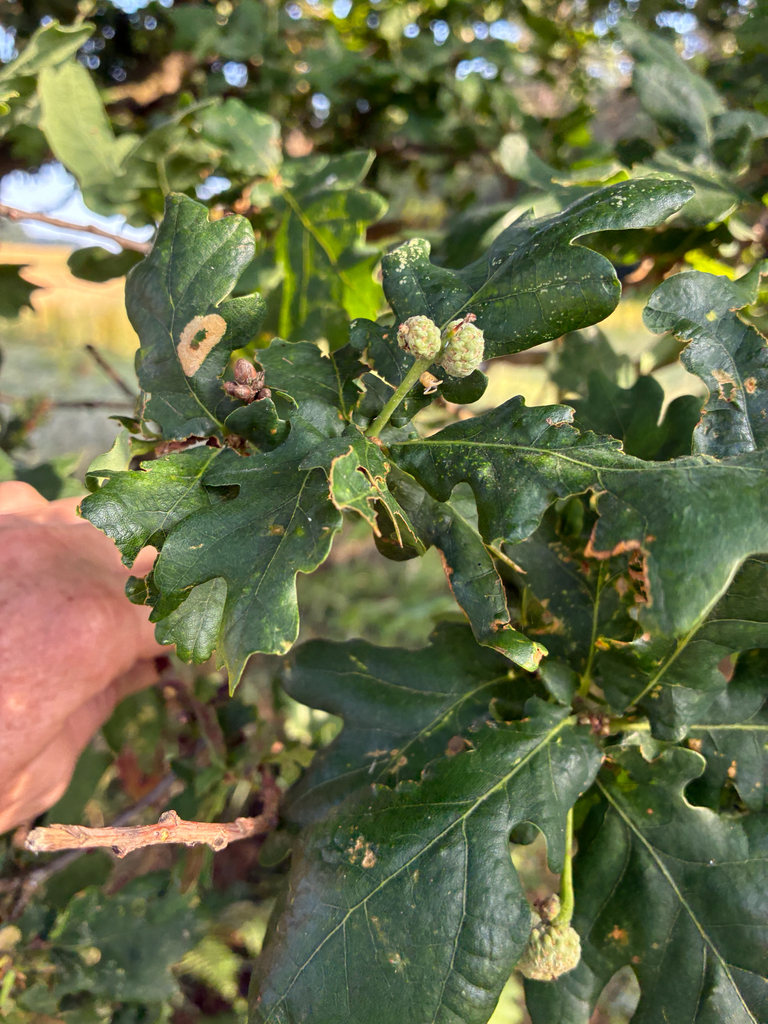
© Wendy Herniman · iNaturalist · CC BY 4.0
Scientific Classification & Quick Facts
Classification
At a Glance
Quercus robur, the English Oak, is one of Europe’s most iconic trees—a massive, long-lived deciduous species that has shaped landscapes, cultures, and economies for millennia. Found across 17 countries, it dominates temperate woodlands and has been championed in art, literature, and national heritage from Britain to the Mediterranean fringe. With a conservation status of Least Concern, this oak remains widespread, yet its ecological and cultural significance extends far beyond mere abundance.
The species thrives in woodlands, hedgerows, and parkland, where its sturdy trunk and sprawling crown become focal points of the landscape. Its acorns feed wildlife, its wood has built navies and cathedrals, and its longevity means individual trees witness the rise and fall of empires. Understanding the English Oak—its ecology, adaptations, and role in contemporary conservation—reveals why this single species matters so profoundly to both natural and human history.
Identification and Appearance
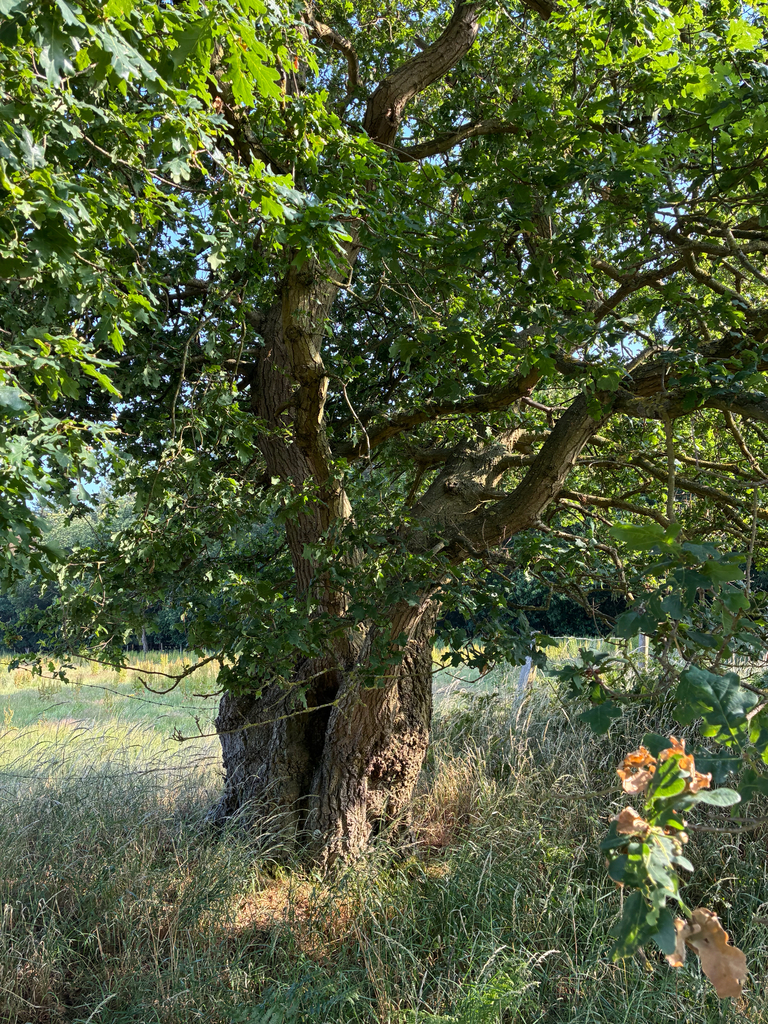
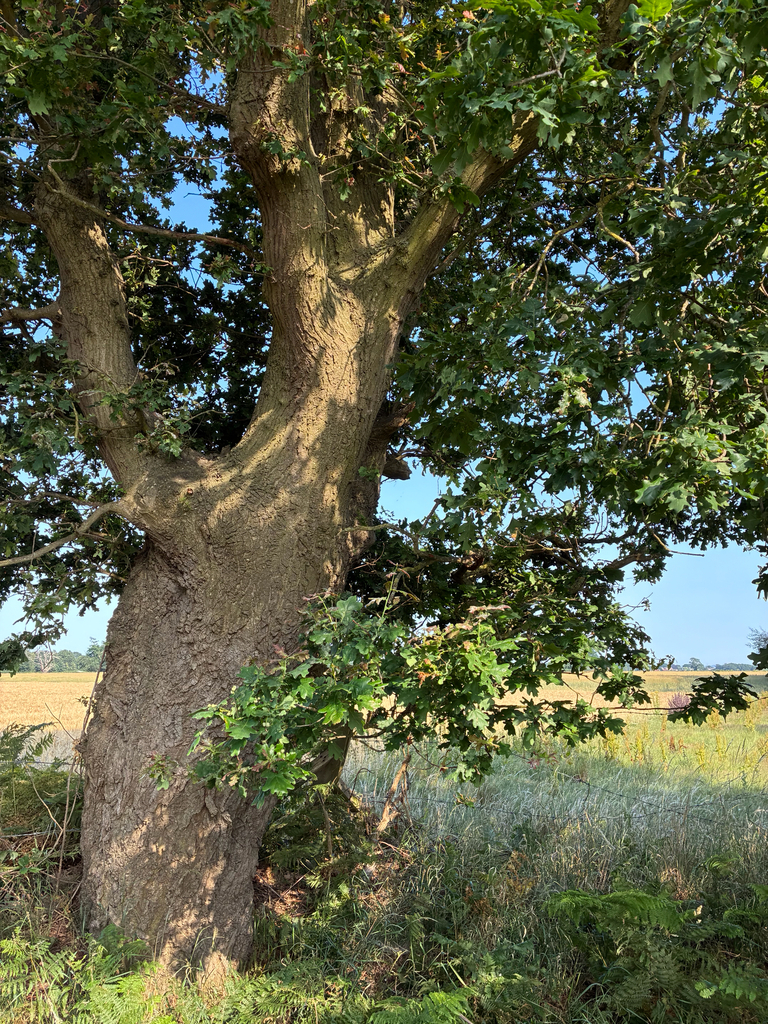
Quercus robur, commonly known as English Oak or Pedunculate Oak, is a large deciduous tree that typically reaches 20 metres in height at maturity, though exceptional specimens can exceed 40 metres. The tree develops a broad, spreading crown supported by a thick, deeply furrowed trunk that becomes increasingly gnarled with age. Bark colour ranges from grey to dark brown, developing prominent vertical ridges and furrows as the tree matures.
The leaves are the primary identification feature. They are deeply lobed with 5–9 lobes per leaf, arranged alternately along the stem, and measure approximately 7–14 centimetres in length. The leaf base is typically rounded or truncated (squared off), distinguishing it from similar oak species with wedge-shaped bases. Leaves are bright green during the growing season, turning russet-brown before dropping in autumn. The acorns are distinctive: they sit on long stalks (peduncles)—sometimes 5 centimetres or more—rather than being directly attached to the branch. Each acorn is enclosed in a shallow cup (cupule) with a warty texture, and the nut itself is roughly 2–2.5 centimetres long.
English Oak shows no obvious sexual dimorphism in overall appearance. Both male and female flowers appear on the same tree in spring: small, inconspicuous male catkins hang from branch tips, while female flowers develop closer to the base of new shoots. The species can live exceptionally long—individual trees have reached 930 years or older—and develop thick, characteristically gnarled branches that become increasingly prominent in ancient specimens.
Distribution and Habitat
Quercus robur, the English Oak, has a wide distribution across Europe and western Asia, with records documented in 17 countries. Russia dominates the species’ known range with 183 records, followed by Sweden with 46 records and Germany with 26. The species is also present in the United Kingdom, Switzerland, Denmark, Austria, Ukraine, and Finland, though in smaller numbers. A notable population exists in South Africa with 3 records, likely representing cultivated or naturalized specimens outside the species’ native range.
The species occurs at elevations between 513 and 600 metres, with an average recorded elevation of 574 metres. This moderate elevation range reflects its preference for lowland and submontane forests across temperate Europe. English Oak establishes itself in mixed deciduous and oak-dominated woodland ecosystems, where it competes with other broadleaf species for canopy dominance.
Observation data shows a pronounced seasonal pattern, with the vast majority of records (300) occurring in January, suggesting this peak reflects either winter identification activities or data collection timing rather than genuine absence during other months. This concentration may indicate when deciduous trees are most easily identified in their leafless state, or when herbarium and museum specimens are most frequently processed and catalogued.
Growth and Cultivation
Growth
Quercus robur, the English Oak, is a large deciduous tree that can reach 20–25 metres in height with a broad, spreading crown. Mature specimens develop thick, deeply furrowed bark and a substantial trunk that becomes increasingly gnarled with age. The tree’s growth is steady and long-lived; individual oaks can persist for several centuries, making them architectural features in landscapes where they establish.
The leaves are deeply lobed with 5–9 pairs of lobes and a short petiole (leaf stalk), appearing relatively late in spring compared to other oak species. Autumn colour is typically golden-brown before leaves drop. The tree tolerates a wide range of soil types and is remarkably adaptable to disturbed or compacted ground, though it prefers well-drained soils.
Flowering and Fruiting
English Oak produces separate male and female flowers on the same plant (monoecious). Male flowers appear as drooping catkins, while female flowers are inconspicuous, borne singly or in small clusters on the current year’s growth. Flowering occurs in spring, typically coinciding with leaf emergence. The species is wind-pollinated and produces abundant acorns in autumn, each enclosed in a shallow cup with warty scales—a diagnostic feature of Q. robur.
Acorn production is often irregular, with heavy mast years interspersed with lighter cropping. This variation is partly environmental and partly genetically programmed, ensuring that acorn reserves are not consistently depleted. The acorns germinate readily in autumn when conditions are moist and cool.
Cultivation
English Oak thrives in full sun to partial shade and reaches its best form in temperate maritime and continental climates across Europe. It is hardy in USDA zones 4–8 and tolerates periodic waterlogging as well as moderately dry conditions once established. The species shows good tolerance of both alkaline and acidic soils, though growth is most vigorous in neutral to slightly acidic loams. Compacted urban soils do not prevent establishment, though trees grow larger and live longer in uncompacted substrates.
Young trees benefit from shelter and consistent moisture during the first growing season. Once mature, English Oak requires minimal maintenance and is highly resistant to most pests and diseases. It responds well to light pruning of competing leaders in juvenile stages but should not be heavily cut as an adult, as the tree compartmentalises wounds slowly. In cultivation, Q. robur is valued as a specimen tree for parks, large gardens, and woodland management schemes across its native European range.
Conservation and Threats
Quercus robur, the English Oak, holds a Least Concern status on the IUCN Red List, meaning the species faces no immediate risk of extinction across its range. This designation reflects the oak’s wide distribution across Europe and its ability to persist in both natural and human-modified landscapes. Encouragingly, population trends are increasing, indicating that existing populations are expanding and new individuals are becoming established in suitable habitats.
Threats
Although English Oak is not currently threatened with extinction, it faces several localized pressures that merit attention. Habitat loss through urban development and agricultural intensification reduces the availability of mature oak woodland. Invasive pests, particularly the oak processionary moth and various fungal pathogens, damage foliage and can weaken individual trees. Climate change poses a longer-term challenge, as shifting temperature and precipitation patterns may alter the suitability of current oak habitats, particularly at the southern and eastern margins of the species’ range. Overgrazing by deer and livestock in woodlands also prevents young oaks from establishing, disrupting natural regeneration.
Conservation Efforts
English Oak benefits from legal protection in many European countries and is a priority species for woodland conservation programmes. The United Kingdom designates ancient oak woodlands as protected habitats under national and international law, and restoration projects actively plant young oaks to restore degraded woodland. Landowners and conservation organizations across Europe implement deer management and exclusion fencing to allow natural regeneration. Research into pest and disease resistance continues, with seed sources from genetically diverse populations being propagated for future planting initiatives.
Cultural Significance
Mythology and Religious Significance
The English Oak holds profound symbolic weight across European cultures, particularly in the north and west. In Scandinavian tradition, oaks were revered as “thunderstorm trees,” embodying Thor, the god of thunder. Finnish mythology describes a great oak as the World Tree—a cosmic giant whose felling released magical forces that created the Milky Way. Among the Gauls, certain oaks were deemed sacred, and druids performed ritual harvests of the mistletoe that grew upon them, viewing the parasite as a source of spiritual power. Even after Christianization swept through Europe, oak trees retained their protective symbolism; people believed lightning would strike the tree itself rather than nearby dwellings, and trees that survived lightning strikes often became sites of worship and pilgrimage, such as the Chêne chapelle in France.
Legal Protection and Civic Symbolism
The cultural value of oaks transcended mythology into formal law and national identity. In Finland, all oak trees were classified as royal property in 1746, having enjoyed legal protection since the 17th century, reflecting their scarcity and importance. The oak became the regional emblem of Southwest Finland. During the French Revolution and again in the 1848 uprisings, oaks were planted as Trees of Liberty—symbols of freedom and democratic ideals. One such tree, planted during the 1848 Revolution, endured the Nazi massacre and destruction of Oradour-sur-Glane in France, standing as a living monument to resistance and survival.
Fun Facts
The English oak is far more than a solitary forest giant—it is an ecological powerhouse that sustains hundreds of other species. Here are some of the most compelling facts about this iconic European tree.
- A single mature Quercus robur can support over 2,000 different insect species, many of them herbivorous larvae that feed directly on its leaves and bark. This makes it one of the most biodiverse individual trees in European ecosystems.
- English oaks produce acorns that are crucial food sources for mammals including jays, pigeons, and small rodents, which inadvertently disperse seeds by burying and forgetting caches across the landscape.
- The tree thrives exclusively on near-neutral to slightly acidic soils in lowland areas, making it a reliable indicator of soil chemistry in natural surveys.
- Its wood becomes denser and more valuable with age: timber from trees over 150 years old was traditionally preferred for shipbuilding and has been used to construct cathedrals and castles across Europe.
- English oaks form symbiotic relationships with multiple fungal species, including truffles and other mycorrhizal partners that enhance nutrient uptake from soil.
- Despite being native only to Europe and western Asia, Quercus robur has been successfully cultivated in temperate regions worldwide, making it one of the most widely planted oak species outside its native range.
- An old English oak can live for over 800 years, with some individuals in Britain still standing after a millennium, storing centuries of ecological history in their rings.
Conservation Status
LC (Least Concern) · NT · VU · EN · CR · EW · EX
Photo Gallery
Wendy Herniman · CC BY 4.0
Related Species
Was this profile helpful?