
Liliopsida · Poales
Common Wheat
Triticum aestivum
Also known as: Bread Wheat
© Maxton Strait · iNaturalist · CC BY 4.0
Scientific Classification & Quick Facts
Classification
Known For
Detailed measurements for this species are still being verified.
Triticum aestivum, or common wheat, is one of humanity’s most consequential plants. For over 10,000 years, it has sustained civilizations across continents, transforming from a wild grass into the staple crop that now feeds roughly one-third of the global population. Today, wheat grows in 26 countries worldwide and ranks among the three most important cereal crops, alongside rice and maize.
This member of the grass family Poaceae is remarkable not only for its agricultural dominance but also for its genetic complexity. Its journey from Near Eastern origins to global cultivation reflects both human ingenuity and the plant’s own inherent adaptability. Understanding wheat’s biology, cultivation, and ecological role remains essential to global food security and agricultural sustainability.
Identification and Appearance
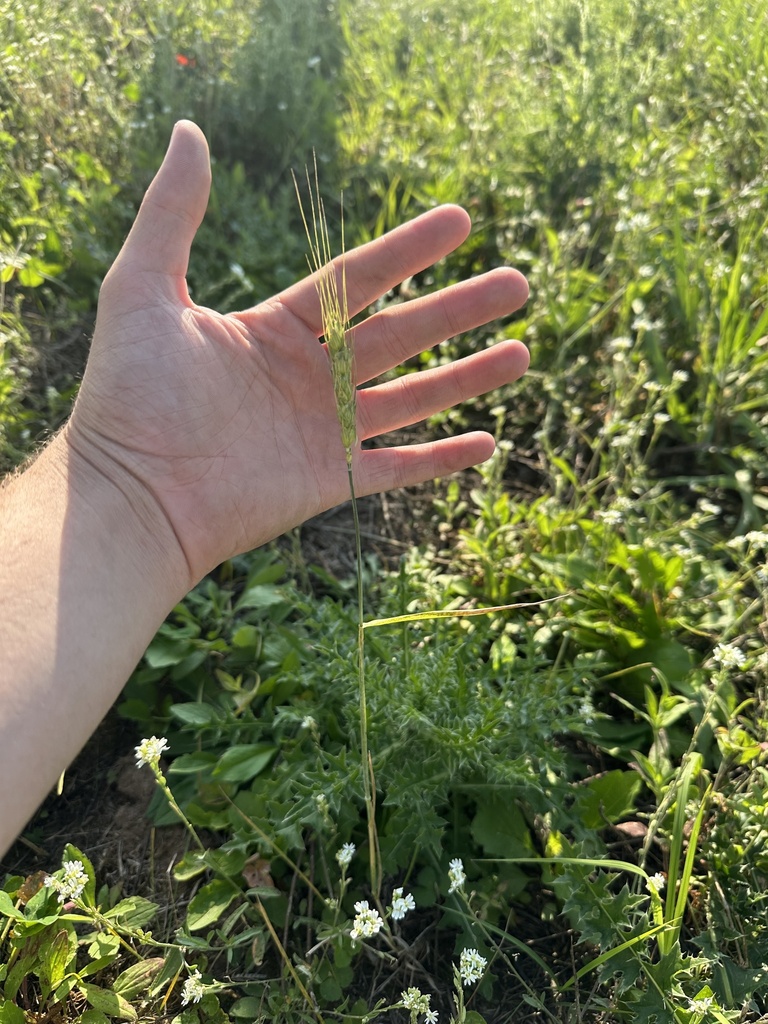
Triticum aestivum, or common wheat, is a tall annual grass that forms the foundation of global grain production. The plant displays the characteristic architecture of cereal crops: an upright stem (called a culm) that terminates in a dense, spike-like flower head known as the head or spike. Most cultivated varieties reach heights between 60 and 100 centimetres, though this varies significantly depending on growing conditions, cultivar, and management practices.
Stem and Leaves
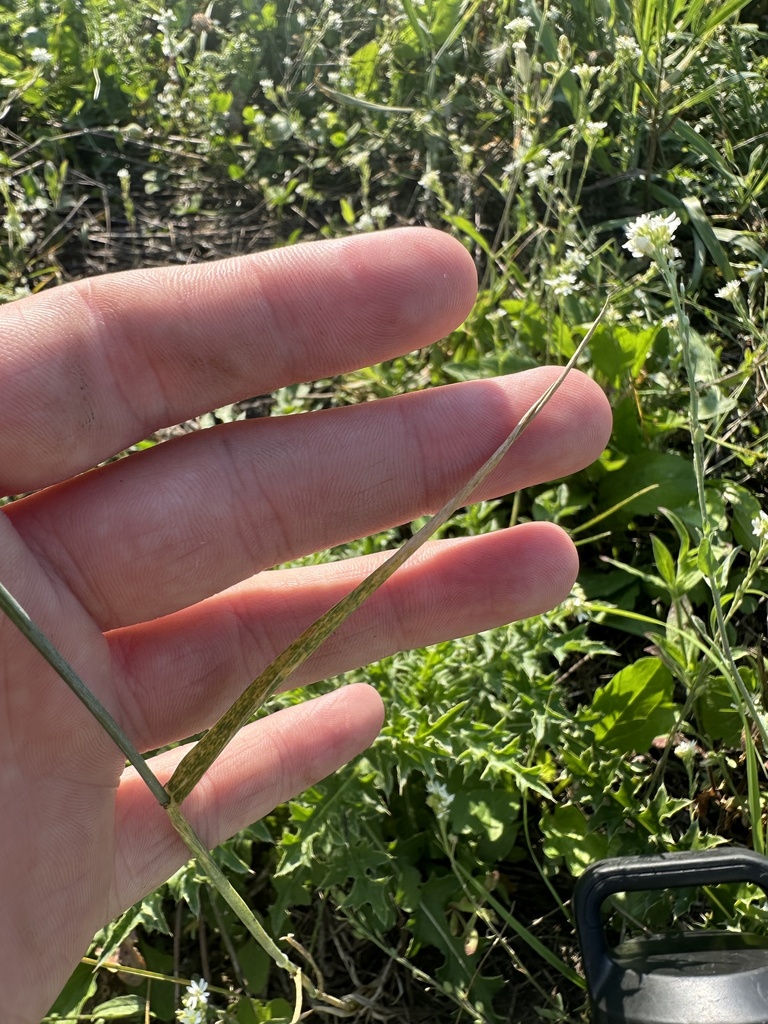
The stem is hollow, jointed, and typically smooth, ranging from pale green to reddish-brown in colour. It consists of several internodes separated by solid nodes where leaves and tillers (lateral shoots) emerge. Leaves are long, linear, and alternate in arrangement, with a distinctive midrib and parallel venation. The leaf surface is covered with fine hairs in some varieties. A small, membranous structure called the ligule sits at the junction between the leaf blade and sheath, and two small projections known as auricles clasp the stem at this point.
Head (Spike) and Grain
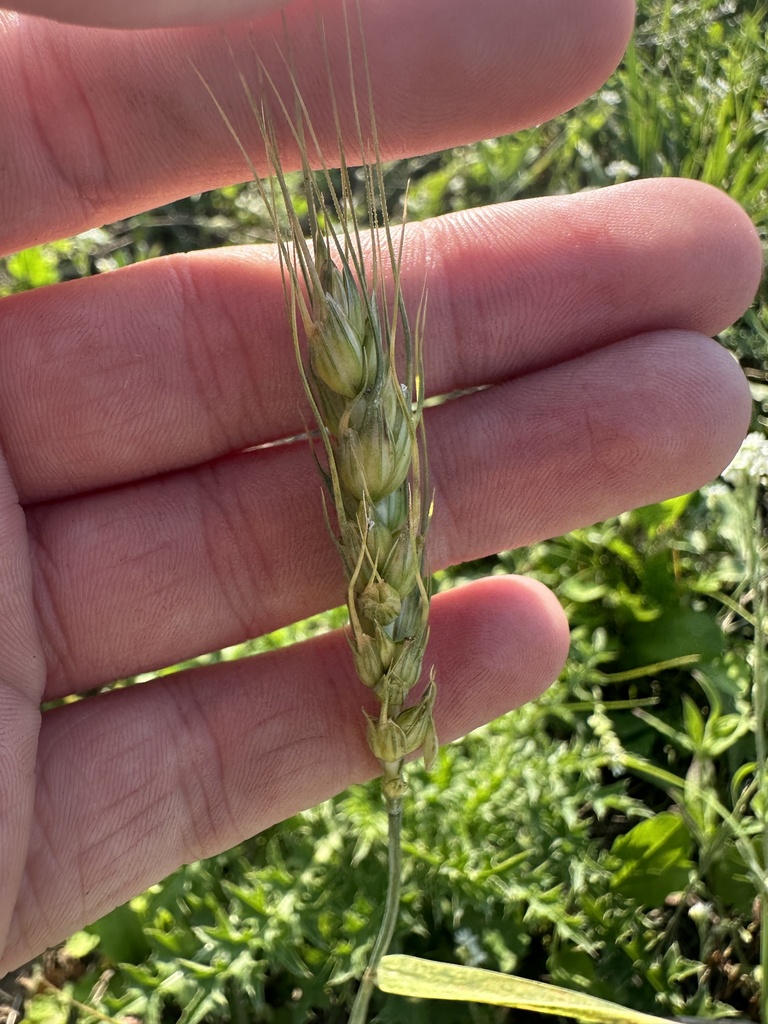
The wheat head comprises numerous small flowering units called spikelets arranged in two rows along a central axis (the rachis). Each spikelet contains two to three florets, each of which develops into a grain or caryopsis. The mature grain is typically golden-yellow to reddish-brown, oval or slightly rounded in shape, and about 6 to 8 millimetres long. The grain’s surface features a distinctive crease along one side and a tuft of hair at the far end. At the base of each spikelet are two bracts called glumes; extensions of these bracts, termed awns, may be present and can extend well beyond the grain, giving some varieties a distinctive bristly appearance. Winter wheat varieties often display a waxy, blue-grey coating (bloom) on the leaf sheaths and head.
Distribution and Habitat
Triticum aestivum, or common wheat, is cultivated across a wide geographic range spanning at least 26 countries. The Netherlands leads in documented records with 112 observations, followed by Belgium (72) and the United States (51). Significant populations are also recorded in Spain, China, the United Kingdom, India, Israel, Czechia, and France, reflecting its status as a major global crop commodity. This distribution reflects both large-scale agricultural production and the species’ adaptability to diverse climatic regions.
Wheat cultivation in these regions occurs primarily at low elevations, with observations concentrated around 200 metres above sea level. The species shows a pronounced seasonal peak in May, when 215 of 376 total monthly records occur—a clear indication of the flowering and grain-filling stage of the growing season. Activity is heavily weighted towards spring months, with significant records in April (49) and March (22), corresponding to the late growth and early flowering phases. After May, documented observations drop dramatically, suggesting harvesting occurs in early summer before records tail off through the remainder of the year.
The crop’s presence across both temperate and subtropical regions—from the cooler climates of northern Europe to the warmer agricultural zones of the Mediterranean, South Asia, and the Middle East—demonstrates its broad environmental tolerance. Wheat thrives in agricultural landscapes specifically prepared for grain production, requiring well-managed soil conditions and adequate moisture. Its concentration in well-developed agricultural regions of western Europe and North America underscores the importance of modern farming infrastructure for large-scale cultivation and monitoring.
Growth and Cultivation
Growth
Triticum aestivum, or common wheat, is a cool-season annual grass that forms dense stands of erect culms (stems). Individual plants typically reach 60–100 centimetres in height at maturity, though this varies widely depending on cultivar, soil fertility, and environmental conditions. The plant develops a fibrous root system that penetrates moderately deep into the soil, providing anchorage and water uptake. Leaf blades are long, narrow, and linear, arranged alternately along the stem in a characteristic two-ranked pattern.
Flowering and Fruiting
Wheat flowers in a compact inflorescence called a spike, composed of multiple spikelets arranged along a central axis. Each spikelet contains several florets with inconspicuous greenish flowers that are primarily wind-pollinated. The flowering window varies with planting date and local climate—winter wheat varieties typically flower in late spring (April–May in the Northern Hemisphere), while spring wheat varieties flower in early to mid-summer. After fertilization, the ovary develops into a caryopsis, the characteristic single-seeded fruit enclosed by the lemma and palea (chaff). Seeds mature within 3–4 weeks of flowering and remain viable for several years under dry storage conditions.
Cultivation
Common wheat is an extremely adaptable crop grown across diverse climates and soil types worldwide. The plant tolerates a broad range of soil conditions, from weakly acidic to neutral soils, though it performs best in well-draining loams and clay loams with moderate to good fertility. Winter wheat varieties require a period of cool temperatures (vernalization) during their vegetative phase to transition to flowering, making them suited to regions with cold winters. Spring wheat varieties lack this requirement and are planted in spring for summer harvest, making them ideal for cooler regions without sustained winter chilling or warmer regions where winter planting is impractical.
Wheat demands full sunlight for optimal grain filling and yield. Water requirements are moderate to moderately high—typically 375–650 millimetres annually depending on cultivar and regional evapotranspiration rates. The plant shows reasonable drought tolerance relative to many crops, particularly winter varieties with deep root systems established before summer stress. However, water stress during critical growth stages (heading and grain fill) significantly reduces grain weight and yield. Excessive moisture can promote fungal diseases and lodging (stem collapse). Cultivation practices include proper seedbed preparation, adequate plant density (typically 150–400 plants per square metre), and disease management to prevent foliar and root pathogens.
Conservation and Threats
Triticum aestivum, or common wheat, does not appear on the IUCN Red List because it is a domesticated crop species rather than a wild population subject to traditional conservation assessment. As a cultivated plant, its “conservation” status is fundamentally different from that of wild organisms—it exists in vast quantities across the globe and depends on human agricultural management rather than natural ecosystem health. However, the crop faces significant agronomic and genetic challenges that warrant attention from a food security and agricultural sustainability perspective.
Threats
Common wheat confronts multiple pressures in modern agriculture. Fungal diseases, particularly Puccinia rust species and Fusarium head blight, cause substantial yield losses annually. These pathogens evolve rapidly, requiring continuous breeding programmes to maintain resistant varieties. Climate variability—including drought, flooding, and temperature extremes—reduces productivity in key growing regions. Soil degradation from intensive monoculture, nutrient depletion, and erosion further constrains yields. Additionally, wheat’s genetic diversity has narrowed through selective breeding; modern commercial varieties represent a small fraction of the wild relatives and heritage landraces that once existed, reducing the crop’s adaptive capacity to future environmental challenges.
Conservation Efforts
Wheat conservation takes place primarily through seed banks and breeding programmes rather than habitat protection. The Global Crop Diversity Trust and national agricultural institutions maintain extensive germplasm collections of wheat varieties, landraces, and wild relatives. International breeding networks, coordinated through organizations such as the International Maize and Wheat Improvement Center (CIMMYT), develop new cultivars with improved disease resistance, climate resilience, and nutritional traits. Many countries protect wheat genetic resources through legislation that regulates seed saving and certification. Research into sustainable intensification—reducing chemical inputs while maintaining yields—also contributes to long-term viability.
Cultural Significance
Common wheat is one of the most economically significant food crops globally, underpinning human nutrition and food security across nearly every continent. Its cultivation and trade have shaped civilizations for over 10,000 years, making it central to the development of agriculture itself. The grain’s ability to be stored, transported, and processed into diverse food products—from bread and pasta to flour and cereals—has made it a staple in culinary traditions across Europe, Asia, Africa, and the Americas.
Beyond nutrition, wheat has held profound symbolic weight in human culture. Bread made from wheat flour features prominently in religious ceremonies across Christianity, Judaism, and Islam, where it carries spiritual significance in daily practice and sacred rituals. Agricultural societies have celebrated wheat harvests through festivals and traditions that persist in contemporary culture, reflecting the crop’s deep connection to human survival and prosperity. The plant’s image appears extensively in art, literature, and iconography as a symbol of abundance, fertility, and the cycle of seasons.
Wheat’s role extends into medicine and traditional health practices, where various preparations of the grain and its bran have been used to address digestive health and nutritional deficiencies. The crop remains emblematic of agricultural heritage and rural identity in many regions, particularly in wheat-growing areas of North America, Europe, and Asia, where farming traditions and grain trade continue to define local economies and cultural identity.
Fun Facts
Common wheat has shaped human civilization for eight millennia, yet most people don’t realize it’s a hybrid species born from an ancient cross between domesticated wheat and wild goatgrass. This accidental hybridization created one of agriculture’s most successful crops, now dominating global food systems in ways few other plants can claim.
- Common wheat accounts for approximately 95% of all wheat produced worldwide, making it vastly more dominant than other wheat species despite wheat itself representing multiple cultivated varieties.
- It is the most widely grown crop on Earth by cultivation area, surpassing rice, corn, and every other cultivated plant species in global prevalence.
- Despite competition from rice and corn, common wheat generates the highest monetary yield of any cereal crop, underscoring its unparalleled economic importance to global agriculture.
- The species originated through an unlikely hybridization event involving wild goatgrass, meaning modern wheat carries genetic material from a wild grass that still grows across the Near East today.
- Its domestication in the South Caucasus region made it one of the earliest crop species in human history, emerging alongside barley, lentils, and peas during the Neolithic agricultural revolution.
- A single common wheat plant can produce up to 60 grains per seed head, and a single grain can germinate to grow an entirely new plant—explaining how small ancient harvests multiplied into civilization-sustaining crops.
Ecology
Growing Conditions
Edibility
Photo Gallery
Maxton Strait · CC BY 4.0
Related Species

Was this profile helpful?