
Magnoliopsida · Gentianales
Common Milkweed
Asclepias syriaca
Also known as: Broadleaf Milkweed, Butterfly Flower, Kansas Milkweed, Silkweed, Silky Swallowwort
© Sandy Wolkenberg · iNaturalist · CC BY 4.0
Scientific Classification & Quick Facts
Classification
Known For
Detailed measurements for this species are still being verified.
Asclepias syriaca, known as Common Milkweed, is a robust perennial herb that dominates roadsides, meadows, and disturbed areas across much of North America. With its distinctive clusters of fragrant pink flowers and milky sap, this plant has earned a place in ecosystems and human culture alike. Found across eight countries, Common Milkweed thrives in temperate and subtropical regions, spreading readily through both seeds and underground rhizomes. Its conservation status remains unknown, reflecting the widespread and stable populations typical of this resilient species.
What makes Common Milkweed especially noteworthy is its dual role as both a prolific colonizer and an ecological cornerstone. Beyond hosting Monarchs, the plant supports numerous other insects and herbivores while providing nectar for pollinators. Its ability to quickly establish dense stands in disturbed ground has earned it both praise as a restoration pioneer and criticism as an aggressive competitor in cultivated landscapes. Understanding this species requires balancing its value as a native wildflower and biodiversity anchor against its competitive vigour and the ecological context where it grows.
Identification and Appearance
Asclepias syriaca is a robust perennial forb that grows from propagative roots, allowing individual plants to spread and establish colonies through vegetative reproduction. The most distinctive feature across all plant parts is the presence of white latex that exudes when stems, leaves, or roots are cut or broken. This milky sap is characteristic of the genus and serves as an immediate identification marker in the field.
Stem and Leaf Structure
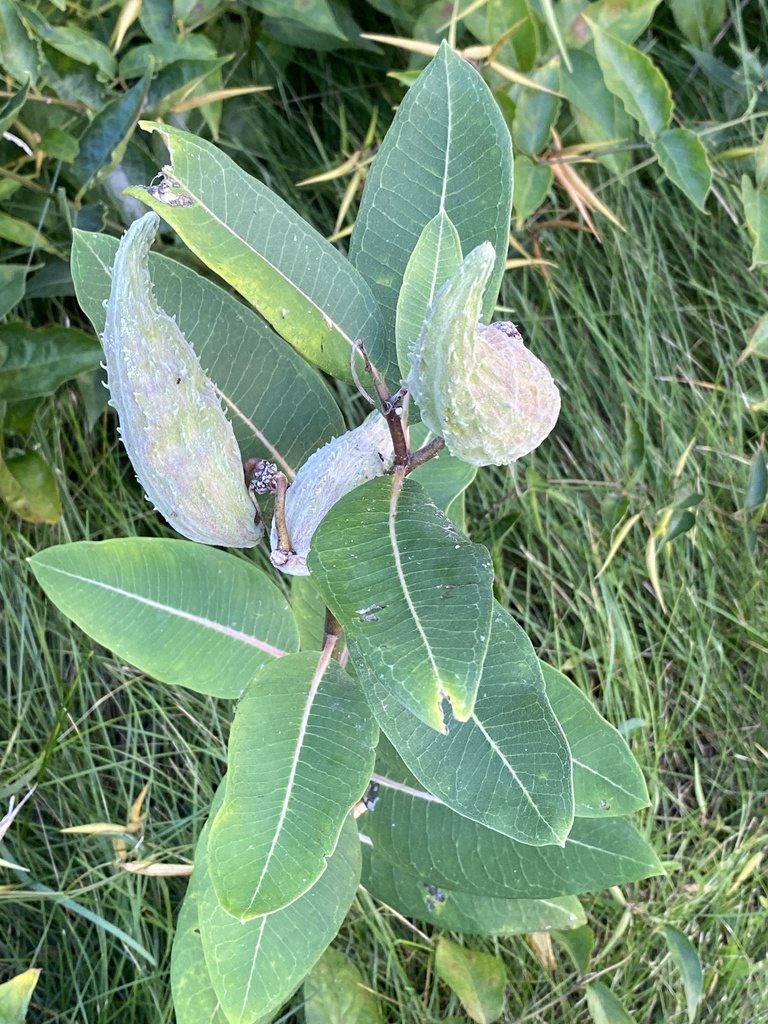
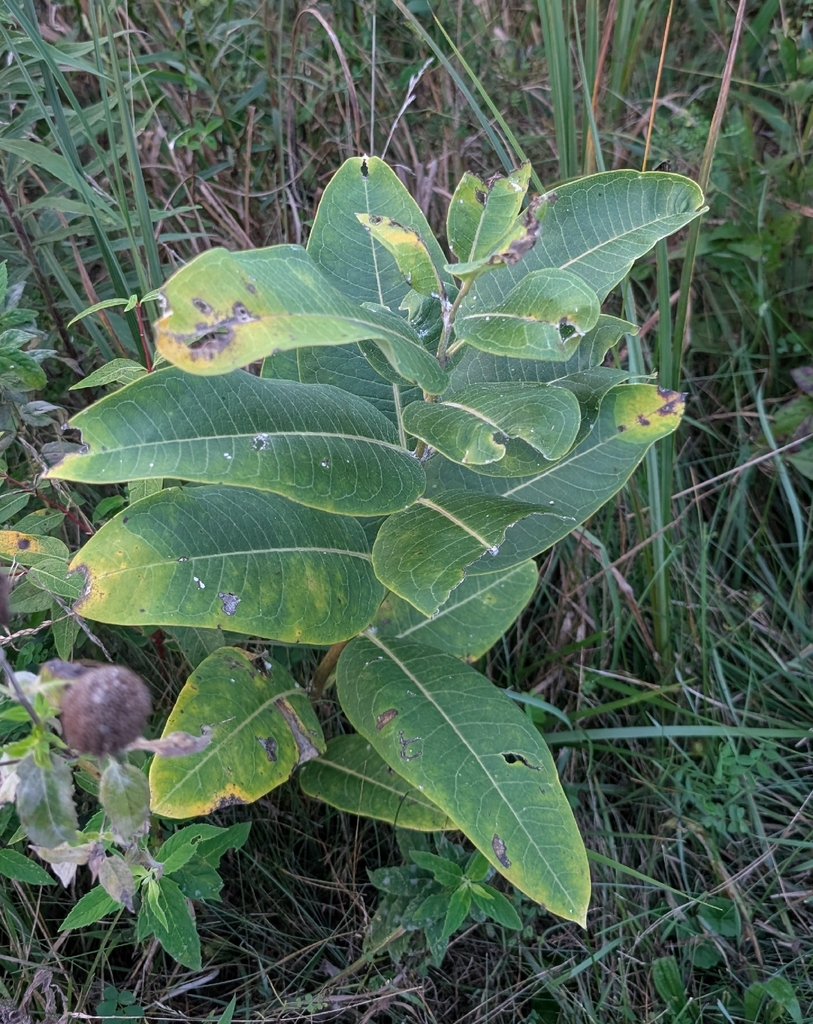
Common milkweed develops sturdy, unbranched or sparsely branched stems that rise upright from the base. The leaves are large, oblong to elliptic, and arranged opposite one another along the stem. They have a soft, slightly velvety texture and prominent parallel venation. The foliage is typically dull green, and both upper and lower leaf surfaces exude latex when damaged.
Flowers and Fruits
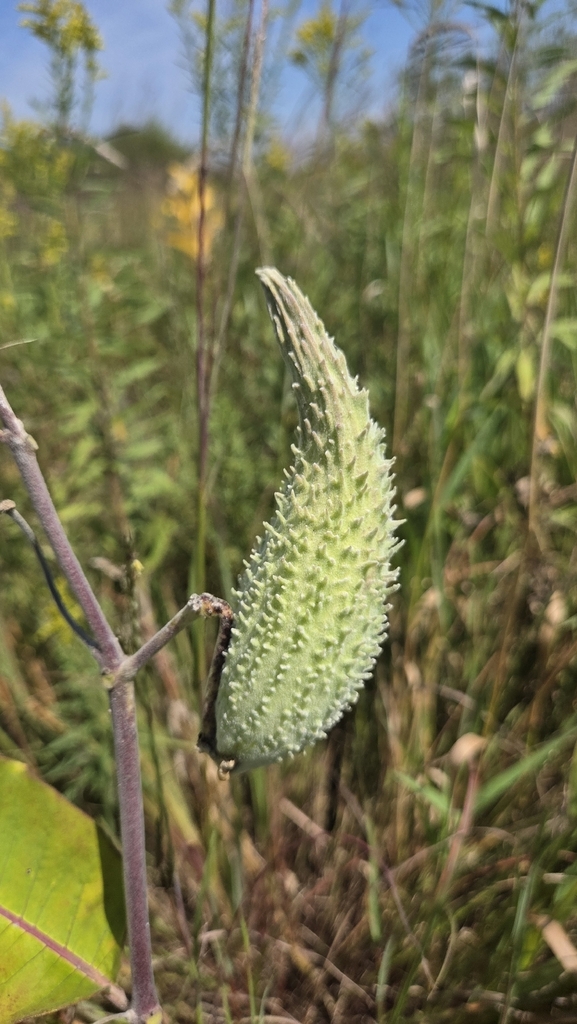
The plant produces dense, rounded clusters of small flowers that range in colour from pale pink to purplish-pink, occasionally appearing nearly white. These fragrant flower clusters bloom in mid-summer. Following pollination, the flowers develop into distinctive paired seed pods called follicles—elongated, warty or bumpy structures that stand erect or slightly spreading. When mature, each follicle splits open to release numerous seeds attached to silken, hair-like threads (called comae or pappus) that aid in wind dispersal. This combination of characteristic latex, opposite leaves, and unique seed pods makes A. syriaca readily identifiable throughout its lifecycle.
Distribution and Habitat
Asclepias syriaca is native to North America and has become established across a wider global range. GBIF records show the species is most abundant in the United States, with 221 occurrences documented across the country. Canada ranks second with 48 records, followed by scattered observations in Ukraine (16), Hungary (11), Russia (1), Croatia (1), Austria (1), and Belarus (1). This distribution pattern reflects both the plant’s natural eastern and central North American origins and its secondary spread to Europe as an introduced species.
The species occurs across eight countries in total, with North America accounting for the vast majority of observations. In the United States, common milkweed is widespread throughout eastern and central regions, from the Atlantic coast westward to the Great Plains. Canadian populations are concentrated in southern provinces where climatic conditions favour establishment.
Elevation data for this species are not currently available in GBIF records, preventing precise characterization of altitudinal preference. The seasonal histogram reveals a distinct winter peak, with 128 observations recorded in January, 97 in February, and 75 in March, likely reflecting the timing of herbarium collections and botanical surveys rather than actual flowering or fruiting periods. These records show minimal documentation from April onward, indicating a data collection bias toward the dormant season.
Growth and Cultivation
Growth
Asclepias syriaca, or common milkweed, is a robust herbaceous perennial that emerges from a deep taproot system. The plant grows as a single or multi-stemmed upright form, typically reaching 0.6 to 1.5 metres in height, though vigorous specimens may exceed 2 metres under ideal conditions. Stems are sturdy and unbranched or minimally branched, clothed in opposite, ovate leaves with prominent veining. The plant spreads vegetatively through underground rhizomes, allowing it to establish colonies in favorable habitats.
Growth is vigorous during the warm season, with rapid stem elongation in spring and early summer. Once established, common milkweed requires minimal maintenance and demonstrates reliable perennial performance across its native range in North America. The plant is long-lived and can persist for many years once roots are deep and extensive.
Flowering and Fruiting
Common milkweed produces dense, rounded clusters of fragrant pink, purple, or occasionally white flowers arranged in umbels at the stem tips and upper leaf axils. Individual flowers are small and intricate, composed of reflexed petals and a prominent corona of hood-like structures. The flowers attract diverse pollinators, particularly milkweed beetles and butterflies, and are visited regularly by monarch butterfly larvae’s host plant relationships. Flowering occurs in mid to late summer, typically from June through August depending on latitude and local growing conditions.
After pollination, the plant develops distinctive spindle-shaped seed pods (follicles) that mature to a papery tan or brown colour. Pods split open along a seam when dry, releasing numerous flat seeds attached to silken, hair-like structures that facilitate wind dispersal. A single plant can produce dozens of pods containing hundreds of viable seeds, ensuring prolific reproduction in undisturbed sites.
Cultivation
Common milkweed thrives in full sun and tolerates a wide range of soil types, from sandy loams to clay-heavy substrates. The plant establishes readily from seed sown directly in autumn or spring, or from root divisions of established clumps. Once established, it is drought-tolerant and requires minimal supplemental watering except during severe drought. Its adaptability to variable moisture and soil chemistry makes it suitable for meadow restoration, native plant gardens, and pollinator habitat projects across temperate North America.
Conservation and Threats
Asclepias syriaca, or Common Milkweed, is not formally assessed by the IUCN Red List, meaning it lacks an official conservation status designation. This absence of formal assessment reflects the species’ widespread distribution and general abundance across much of eastern North America, where it remains locally common in suitable habitats. The lack of a formal status should not be misinterpreted as evidence of robust population health; rather, it indicates that the species has not triggered conservation concern at the international level.
Threats
Common Milkweed faces several pressures that have reduced its occurrence in fragmented landscapes. Habitat loss through agricultural intensification, urban development, and land conversion ranks as the primary threat, as the species depends on open grasslands, roadsides, and disturbed areas that are increasingly lost or degraded. The application of herbicides—particularly glyphosate and other non-selective agents—directly kills milkweed plants and is widespread in managed agricultural and suburban settings. Mowing and vegetation removal at critical times of year can destroy plants before they set seed, disrupting reproductive cycles. Decline in native pollinator populations also indirectly threatens seed production, although this effect is harder to quantify than direct habitat loss.
Conservation Efforts
Common Milkweed benefits from growing awareness of its ecological importance, particularly its role as a critical food plant for Monarch butterfly caterpillars. Many conservation organisations and native plant societies now actively promote milkweed restoration and propagation, especially in regions where Monarch populations have declined sharply. Some jurisdictions have begun restricting herbicide use in sensitive areas or implementing native plantings along roadsides and in public spaces. However, formal legal protections at the federal or state level remain limited, and most conservation action relies on voluntary landowner participation and habitat restoration initiatives.
Fun Facts
- Common milkweed has earned at least four distinct common names—butterfly flower, silkweed, silky swallow-wort, and Virginia silkweed—each reflecting how different regions and historical periods valued this plant for its uses and ecological role.
- The plant’s native range spans southern Canada and most of the eastern United States west to the Rocky Mountains, yet it conspicuously avoids the drier portions of the prairies despite being remarkably hardy and adaptable to challenging conditions.
- Asclepias syriaca thrives in sandy soils as readily as in clay or loam, an unusual degree of soil flexibility for a species with such a geographically specific native distribution.
- The milky sap that gives the plant its name contains cardiac glycosides, alkaloids that make it toxic to most herbivores but are harmless to monarch butterfly caterpillars, which sequester these compounds for their own chemical defence.
- A single milkweed plant can produce hundreds of seeds packed inside distinctive silken-lined pods that split open to release seeds attached to feathery, parachute-like hairs designed for wind dispersal across vast distances.
- Before synthetic rubber and silk became available, milkweed fibre was commercially harvested and processed for use in textiles, parachutes, and insulation, particularly during World War II when the plant was cultivated on a large scale.
- Common milkweed flowers are pollinated almost exclusively by insects, and a single plant can support dozens of visiting bees, wasps, butterflies, and beetles in a single day during peak bloom.
Ecology
Growing Conditions
Edibility
Photo Gallery
Sandy Wolkenberg · CC BY 4.0
Related Species
Was this profile helpful?