
Magnoliopsida · Cornales
Dogwood
Cornus sanguinea
Also known as: blood-twig dogwood, bloodtwig dogwood, common dogwood, dogberry
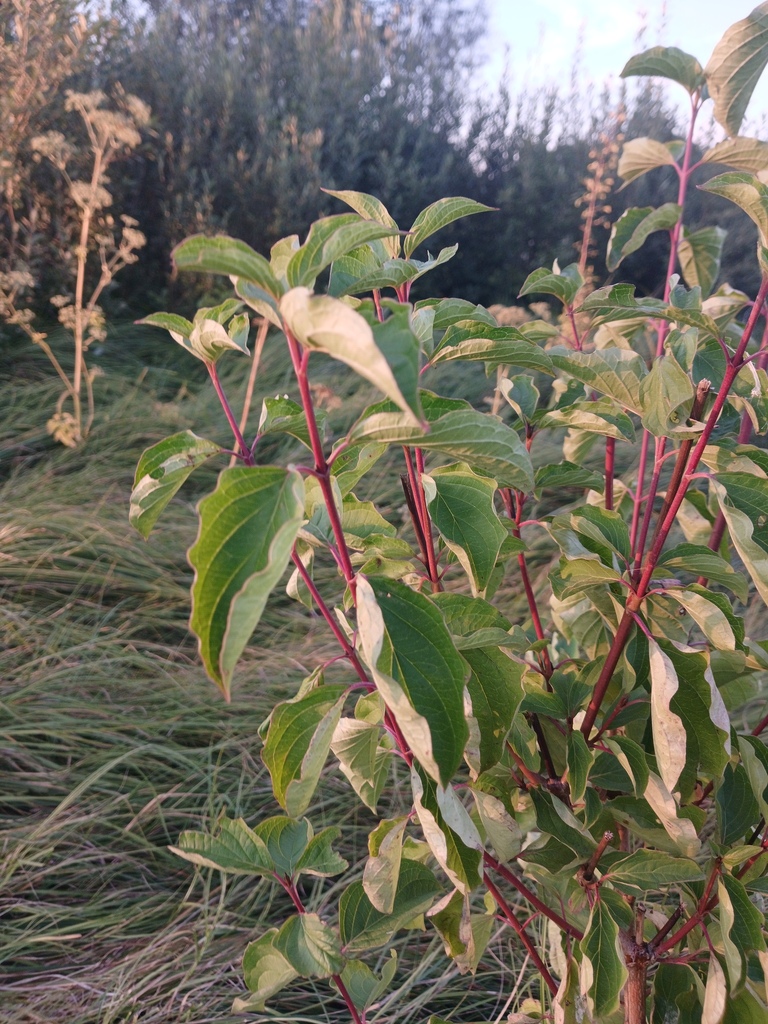
© no rights reserved · iNaturalist · CC0 1.0
Scientific Classification & Quick Facts
Classification
Known For
Detailed measurements for this species are still being verified.
Cornus sanguinea, commonly known as Dogwood, is a deciduous shrub celebrated for its striking blood-red winter stems that glow against grey skies and snow. Native to Europe and western Asia, this member of the Cornaceae family has established itself across 23 countries and thrives in hedgerows, woodland margins, and disturbed habitats where it provides both ecological value and aesthetic appeal. Its presence spans from temperate lowlands to moderate elevations, making it one of the more geographically resilient woody plants in its range.
Despite its widespread distribution and horticultural popularity, the conservation status of Cornus sanguinea remains poorly documented. What makes this species particularly noteworthy is its ecological adaptability—it colonizes disturbed ground readily, supports native fauna through its dark berries and dense branching structure, and serves as a functional component of European hedgerow systems that are themselves under pressure from agricultural intensification. Its dual role as both a wild plant and cultivated ornamental ensures its continued relevance to both naturalists and landscape managers.
Identification and Appearance
Cornus sanguinea, known as dogwood, is a medium to large deciduous shrub typically growing 2–6 metres tall. The plant is distinguished by its dark greenish-brown branches and twigs, which become particularly striking in winter when foliage is absent. These stems carry a characteristic roughness and remain visible throughout the year, making them a key identification feature even in bare seasons.
Leaves and Flowers
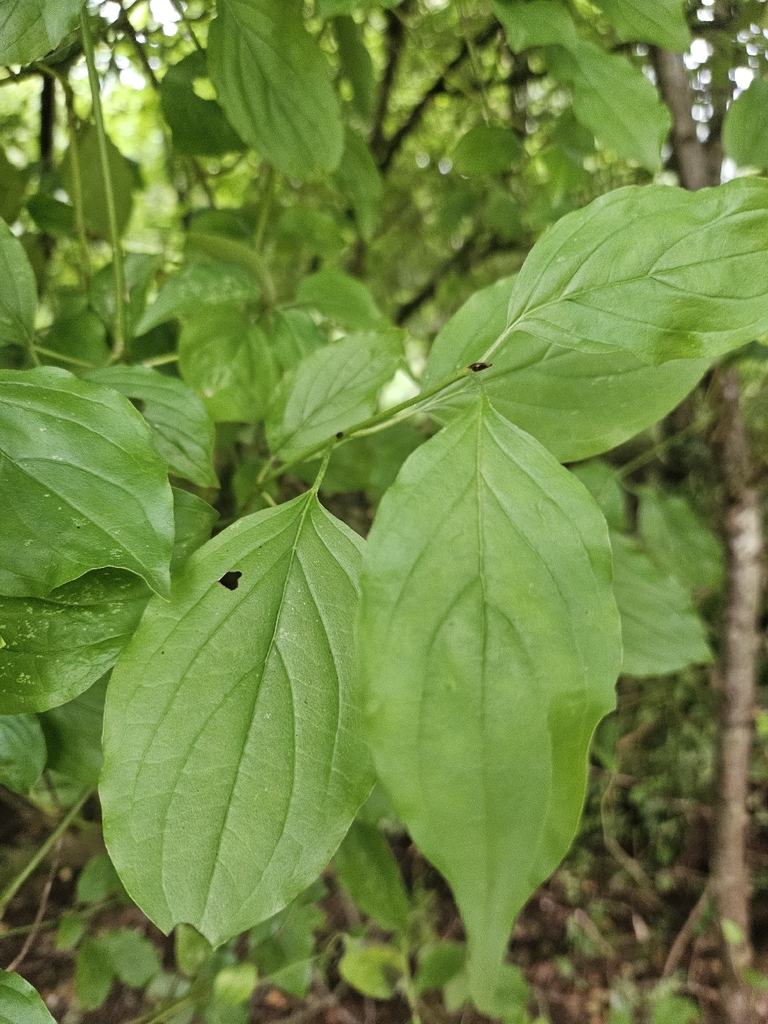
The leaves are arranged opposite one another along the stems, measuring 4–8 centimetres long and 2–4 centimetres broad with an ovate to oblong shape. The leaf margins are entire (unbroken), and the upper surface is green while the undersurface is slightly paler. Both surfaces are rough to the touch, covered with short stiff hairs, which is an important diagnostic feature distinguishing this species from related shrubs.
The flowers are hermaphrodite—each containing both male and female reproductive structures—and are notably small at 5–10 millimetres in diameter. They are creamy white and clustered in flattened arrangements 3–5 centimetres across. These clusters attract insect pollinators, which are essential for the plant’s reproduction and eventual fruit production.
Distribution and Habitat
Cornus sanguinea, commonly known as Dogwood, is distributed across central and western Europe, with its range concentrated in temperate regions. GBIF records document presence in 23 countries, with Austria emerging as the strongest distribution centre, accounting for 95 records. The Netherlands, United Kingdom, Belgium, and Germany follow as secondary strongholds, each with 27–41 records, indicating well-established populations across the Atlantic seaboard and continental interior. France, Poland, Switzerland, Spain, and Sweden round out the top ten, reflecting the species’ broader tolerance for varied European climates.
Elevation data shows Cornus sanguinea occupies a moderate altitudinal range, with records spanning 441 to 1,178 metres above sea level, averaging 619 metres. This suggests the species thrives in both lowland and foothills regions, avoiding both the strictest coastal plains and high alpine zones. The species demonstrates a marked winter and early-spring phenology, with peak observation records concentrated in January (133 records), followed by a sharp decline through February and March (98 and 69 records respectively), after which records cease almost entirely through the remainder of the year. This temporal pattern reflects the species’ deciduous nature and the heightened visibility of its distinctive red stems during the winter months when foliage has dropped.
The concentration of records in Austria and the Low Countries suggests optimal conditions in continental and oceanic temperate forests, where moisture availability and moderate temperatures align with the shrub’s ecological preferences. The presence across 23 countries indicates broad ecological flexibility, yet the sharp drop-off toward southern Europe and Scandinavia marks the practical limits of its natural range, with the species absent from Mediterranean and boreal zones.
Growth and Cultivation
Growth
Cornus sanguinea, commonly known as dogwood or blood-twig dogwood, is a deciduous shrub native to Europe and western Asia. It typically grows as a multi-stemmed woody plant, reaching 3–4 metres in height and spread, though it can occasionally exceed these dimensions in favourable conditions. The plant develops an upright, somewhat spreading form with a dense branching structure that becomes particularly ornamental in winter when the foliage falls, revealing distinctive deep red or blood-red stems—the characteristic that inspired both its common and scientific names.
Flowering
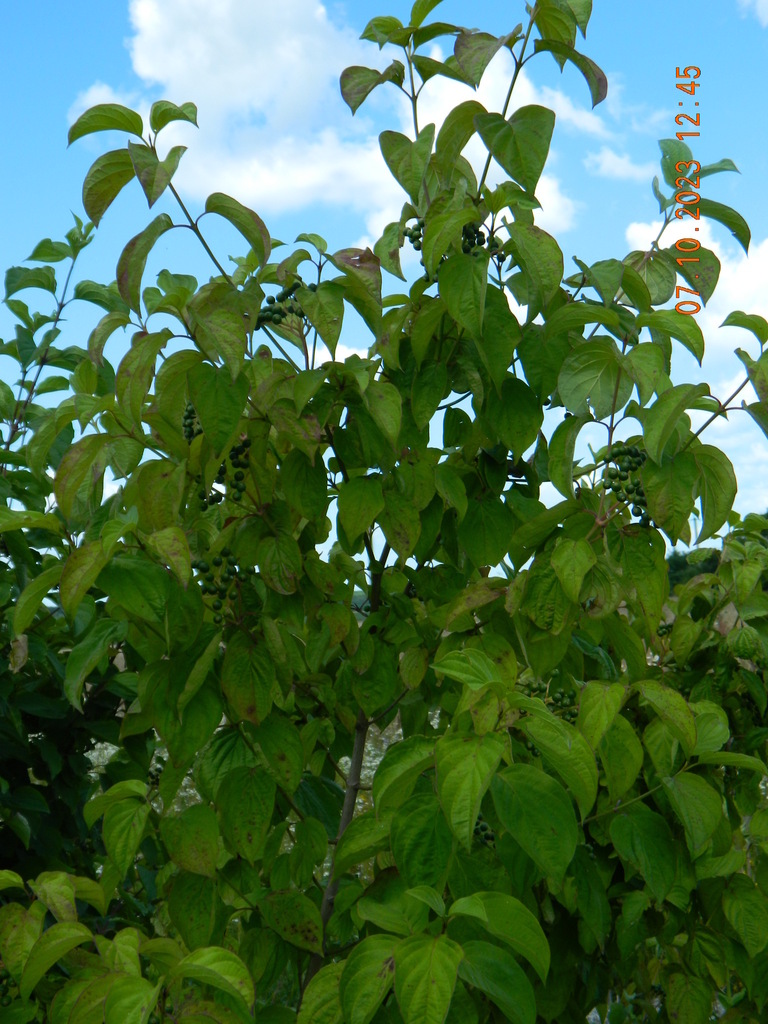
Dogwood produces small, creamy-white flowers arranged in flat-topped clusters called cymes. The flowers appear in late spring to early summer, typically from May onwards in temperate regions, and are modest in size but abundant enough to create a notable display against the green foliage. Following pollination, the plant develops small, dark blue to black berries in autumn, which persist on the branches and provide food for birds and other wildlife throughout the season.
Cultivation
Dogwood is a hardy, adaptable plant suited to temperate climates across much of northern Europe and beyond. It thrives in full sun to partial shade, though the most vibrant stem colouration develops when plants receive good light exposure. The species tolerates a wide range of soil types, including neutral to slightly alkaline soils, and shows reasonable resilience to both wet and relatively dry conditions once established, making it valuable for gardens with variable moisture regimes.
For best results, plant dogwood in well-drained soil enriched with organic matter. Water regularly during the first growing season to help establishment; mature plants require supplementary watering only during prolonged dry spells. Hard pruning in late winter encourages vigorous new stem growth, which displays the most intense colour. The shrub responds well to coppicing—cutting back to near ground level every two to three years—a technique that rejuvenates the plant and maximises the red stem display that gardeners prize.
Conservation and Threats
Cornus sanguinea, commonly known as Dogwood, has not been formally assessed by the IUCN Red List, meaning no official conservation status designation exists for this species. This absence of formal classification does not indicate a lack of conservation importance, but rather reflects the species’ relatively stable ecological position across much of its range. The lack of a threat assessment suggests the species is not currently considered globally at risk of extinction.
Population trends for Dogwood are encouraging. The species shows an increasing population trajectory across its native and naturalised ranges, indicating that current conditions are favourable for its persistence and expansion. This positive trend reflects the plant’s adaptability and resilience in the face of changing environmental pressures.
Threats and Conservation Efforts
No major documented threats to Cornus sanguinea have been formally recorded, which aligns with its increasing population status. The species faces no widespread disease outbreaks, invasive competitor pressures, or targeted exploitation that would compromise its long-term survival. Its hardiness and broad ecological tolerance mean it remains relatively buffered against localised disturbances.
Formal legal protection and dedicated conservation programmes specific to Dogwood are not prominently documented in the available literature. However, the species benefits indirectly from general habitat protection across Europe, particularly through woodland conservation initiatives and hedgerow management schemes that preserve its native shrubland and woodland-edge habitats. Many European nations recognise the ecological value of Dogwood in supporting wildlife and biodiversity, and its retention is often encouraged in landscape management planning.
Fun Facts
- The common name “bloody dogwood” refers to the striking crimson to deep purple coloration of its stems and branches, which intensifies in autumn and winter when the leaves fall. This vibrant pigmentation makes it a valuable ornamental choice for winter garden interest.
- Despite being native only to Europe and western Asia—ranging from England and central Scotland eastward to the Caspian Sea—Cornus sanguinea has become so popular in cultivation that it now appears in ornamental gardens across multiple continents far beyond its natural distribution.
- The plant produces clusters of small white or cream-colored flowers in late spring, which are highly attractive to pollinators and later develop into dark blue-black berries that persist well into autumn.
- In traditional European medicine and folklore, dogwood branches were historically used to make arrow shafts and walking sticks due to their straight growth and durable wood, earning it the alternative name “arrow wood” in some regions.
- The species thrives in a wide range of soil conditions, from chalky alkaline soils to acidic woodlands, making it exceptionally adaptable and resilient across its native geographic range spanning multiple climate zones.
- When crushed, the leaves and stems of Cornus sanguinea release a distinctive musty or slightly unpleasant odor, which is thought to be a chemical defense mechanism against herbivores.
Ecology
Growing Conditions
Photo Gallery
no rights reserved · CC0 1.0
Related Species
Was this profile helpful?