
Magnoliopsida · Cornales
Cornelian Cherry
Cornus mas
Least ConcernAlso known as: Cornejo Macho, Cornelian cherry dogwood, Cornelian-Cherry, Cornelian-cherry, European Cornel
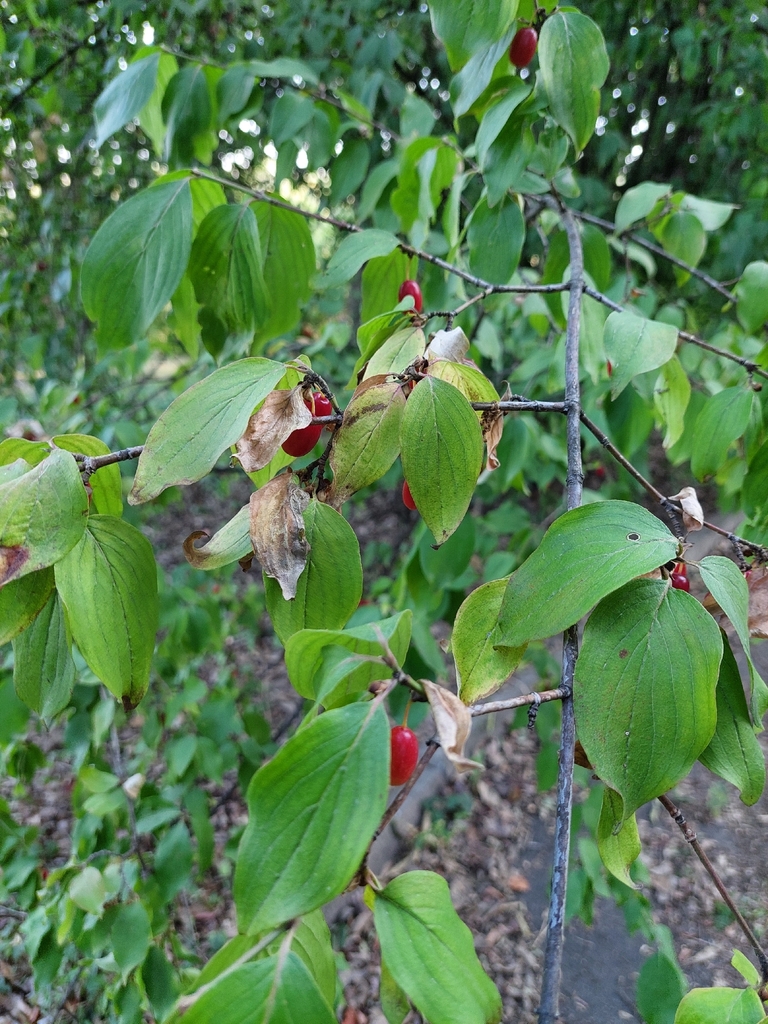
© Viktor Strenada · iNaturalist · CC BY 4.0
Scientific Classification & Quick Facts
Classification
Known For
Detailed measurements for this species are still being verified.
The Cornelian Cherry is a deciduous woody plant of the dogwood family that produces bright red fruits long prized by humans across Europe and western Asia. Despite its common name, Cornus mas bears no relation to true cherries—the name reflects the fruit’s cherry-like appearance and the shrub’s historical association with the Roman god Mars and ancient warfare. Found across 16 countries spanning temperate regions from central Europe to the Caucasus and into Turkey, this species remains common and widespread, classified as Least Concern by conservation authorities.
What distinguishes the Cornelian Cherry is its remarkable dual utility: the wood serves as a premium timber for tool handles and turnery, while the fruit—packed with vitamin C and malic acid—has sustained regional cuisines and folk medicine traditions for millennia. Early flowering and cold hardiness make it a pioneering species in recovering degraded woodlands, yet its commercial cultivation remains modest compared to its ecological and cultural significance across Eurasia.
Identification and Appearance
Cornus mas is a deciduous shrub or small tree typically reaching 5 to 12 metres in height. Dark brown branches support greenish twigs that form a dense, spreading crown. The overall form is compact and well-suited to garden or hedgerow settings, where it develops into a robust woody plant with considerable longevity.
Foliage and Stem Characteristics
Leaves are arranged opposite one another along the stems and measure 4 to 10 centimetres in length by 2 to 4 centimetres in width. They display an ovate to oblong shape with an entire (smooth) margin, providing a neat, uniform appearance throughout the growing season. The bark on older stems is distinctly dark brown, creating visual contrast with the paler greenish colouration of younger twigs.
Flowering and Bloom Timing
The flowers are among the earliest signs of spring, appearing in late winter between February and March in the United Kingdom. Individual flowers are small, measuring just 5 to 10 millimetres across, but they are produced in striking clusters of 10 to 25 blooms held together. The petals are a distinctive bright yellow, providing a cheerful display well before the leaves unfurl—an especially valuable trait for early-season pollinators. This precocious flowering pattern is one of the species’ most recognisable identifying features and makes it easily distinguishable from other Cornus species that leaf out and flower later in the season.
Distribution and Habitat
Cornus mas, the Cornelian Cherry, has a documented range across 16 countries, with the strongest presence in central and western Europe. GBIF records show the Netherlands leads with 202 observations, followed by Germany (19) and France (17). Austria and Italy each contribute 16 records, while Russia, the United Kingdom, Luxembourg, Sweden, and Georgia round out the distribution across both temperate and continental climates.
European Range
The species occurs primarily across temperate Europe, with concentrations in the lowlands and moderate elevations of Germany, the Netherlands, France, and Austria. Its presence extends into Italy and reaches eastward into Russia and the Caucasus region (Georgia). The widespread cultivation and naturalization of Cornus mas throughout these areas reflects its hardy nature and ornamental value in gardens and urban landscapes.
Seasonal Patterns
Observations peak sharply in February, when 274 records were documented—a tenfold spike compared to January (26 records). This concentration reflects the species’ early flowering season, when its bright yellow flowers become highly visible in late winter. No records were logged from March onwards in the available dataset, suggesting either a shift in observer interest after peak bloom or incomplete seasonal sampling during the growing and fruiting months.
Growth and Cultivation
Growth
Cornus mas, the Cornelian Cherry, is a deciduous shrub or small tree native to south-central Europe and western Asia. It typically grows as a multi-stemmed shrub, though it can be trained as a single-trunk tree. Mature specimens reach 6–8 metres in height, with a spreading, rounded crown and dense branching. The plant develops a strong, woody framework and lives for several decades in cultivation, making it a durable choice for long-term landscape schemes.
The bark matures to a warm brown-grey tone, flaking slightly with age to reveal lighter undersurfaces. Leaves are opposite and elliptical, turning shades of yellow, orange, and red in autumn before dropping. Growth is moderate and steady under favorable conditions; the plant does not demand exceptionally rich soil or heavy pruning to establish a balanced form.
Flowering
Cornelian Cherry flowers very early in spring, often before the leaves emerge—a distinctive feature that makes it valuable for providing color when little else is in bloom. The tiny, four-petaled flowers are bright yellow and arranged in small clusters along the stems. This early flowering habit can be a liability in regions with late spring frosts, which may damage flower buds and reduce fruit set in cold years.
Fruiting follows reliable flowering in mild to temperate climates. The fruits are small, oblong drupes that ripen from red to deep crimson by midsummer. They are edible and have been harvested for centuries in their native range for jam, liqueur, and preserves. Self-fertile cultivars exist, but cross-pollination between different plants often improves fruit yield.
Cultivation
Cornelian Cherry thrives in well-drained soil and is tolerant of a wide pH range; it performs well in neutral to slightly alkaline conditions. The plant is hardy in temperate climates and withstands winter cold without difficulty. Full sun to partial shade suits the species; it flowers most prolifically in sunny positions but tolerates light shade in warmer regions.
Water moderately during the establishment phase (the first two growing seasons) to encourage deep root development. Once mature, the plant is reasonably drought-tolerant and requires supplemental watering only during extended dry spells. Pruning is minimal and best done after flowering; remove crossing or diseased wood and shape the crown as needed. The plant is largely pest- and disease-free in cultivation, making it a low-maintenance addition to gardens, hedgerows, and ornamental landscapes.
Conservation and Threats
Cornus mas, the Cornelian Cherry, is listed as Least Concern on the IUCN Red List. This designation reflects a species with a wide geographic range, stable populations across much of its natural distribution, and no imminent threat of extinction. The species benefits from its long history of cultivation in temperate regions and its value as both a food source and ornamental plant.
Population trends for the Cornelian Cherry are encouraging. Across its range in Europe and western Asia, populations are increasing, driven by expanded cultivation, ornamental planting in gardens and parks, and recognition of its ecological and economic value. This upward trajectory contrasts with many wild plant species and indicates that human use has reinforced rather than depleted population numbers.
Threats
No major threats to Cornus mas have been formally documented. The species exhibits strong resilience across diverse climates and soil types, and it is not subjected to commercial harvesting at scales that would damage wild populations. Its hardy nature and capacity for natural regeneration make it less vulnerable to habitat conversion than many temperate shrubs.
Conservation Efforts
Legal protection and formal conservation programmes are minimal, as they are unnecessary given the species’ secure status. However, the Cornelian Cherry benefits indirectly from broad habitat protection in European nature reserves and national parks where it occurs naturally. Its inclusion in ornamental and fruit-breeding programmes across Europe ensures genetic diversity is maintained in cultivation.
Cultural Significance
The cultural significance of Cornus mas remains understudied in readily available English-language sources. While the Cornelian Cherry has been cultivated across Europe and western Asia for centuries, comprehensive records of its mythological, folkloric, or symbolic roles in specific cultures are limited in current documentation.
The species has practical historical importance as a food source and medicinal plant across its native and introduced ranges. Its tart fruits were preserved and used in traditional cuisines, and various parts of the tree have featured in folk medicine practices. However, detailed accounts of these uses and their cultural context require consultation of regional historical and ethnobotanical sources that extend beyond the scope of widely catalogued data.
Researchers and cultural historians interested in the Cornelian Cherry’s role in human societies are encouraged to investigate primary sources from communities where the species is native or long-established, particularly in southeastern Europe, western Asia, and the Mediterranean region.
Fun Facts
Cornus mas, the Cornelian Cherry, defies its misleading common name and spans three continents in its native range. Below are some of the most striking facts about this ancient and versatile dogwood.
- Despite its name, the Cornelian Cherry is not a cherry at all—it belongs to the dogwood family Cornaceae, making its common name a historical taxonomic misnomer that has persisted for centuries.
- The species is native to Western Europe, Southern Europe, and Southwestern Asia, giving it one of the broadest geographic ranges among dogwood species and reflecting its remarkable adaptability across distinct climatic zones.
- Cornus mas exhibits phenotypic flexibility, growing either as a multi-stemmed shrub or a single-stemmed small tree depending on environmental conditions, soil type, and management practices.
- The fruits ripen to a deep crimson or scarlet color and have been cultivated for thousands of years; ancient Romans valued them for food and medicinal purposes.
- In traditional medicine across Eastern Europe and the Mediterranean, the bark and fruit have been used to treat fever, inflammation, and digestive complaints, though modern clinical evidence remains limited.
- Cornelian Cherry wood is extremely hard and dense, making it historically prized for tool handles, walking sticks, and traditional woodworking in rural communities across its native range.
Ecology
Growing Conditions
Edibility
Conservation Status
LC (Least Concern) · NT · VU · EN · CR · EW · EX
Photo Gallery
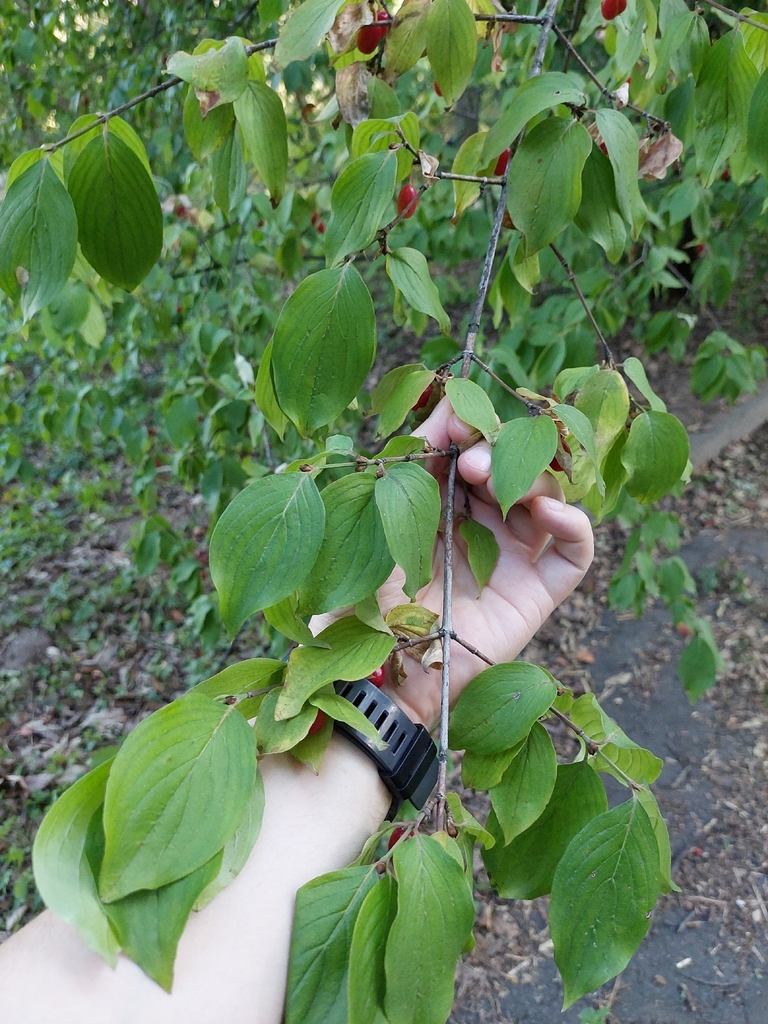
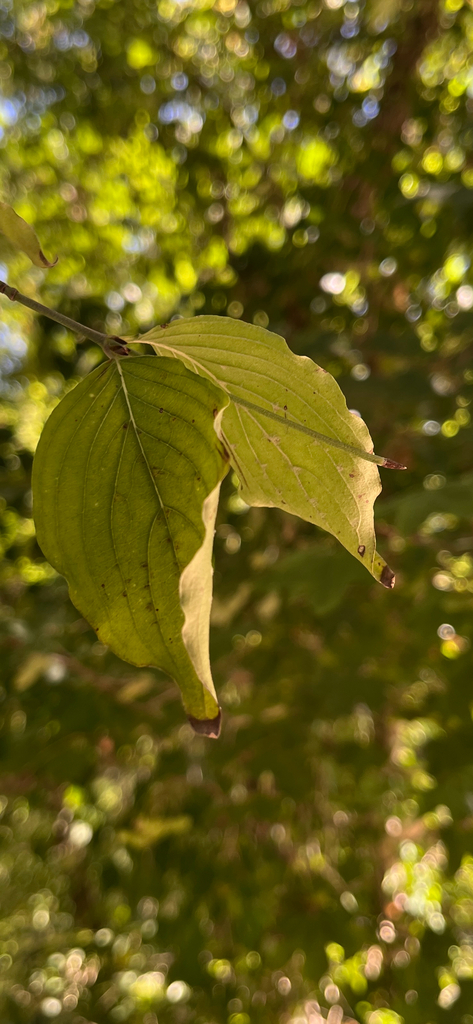
Viktor Strenada · CC BY 4.0
Related Species
Was this profile helpful?