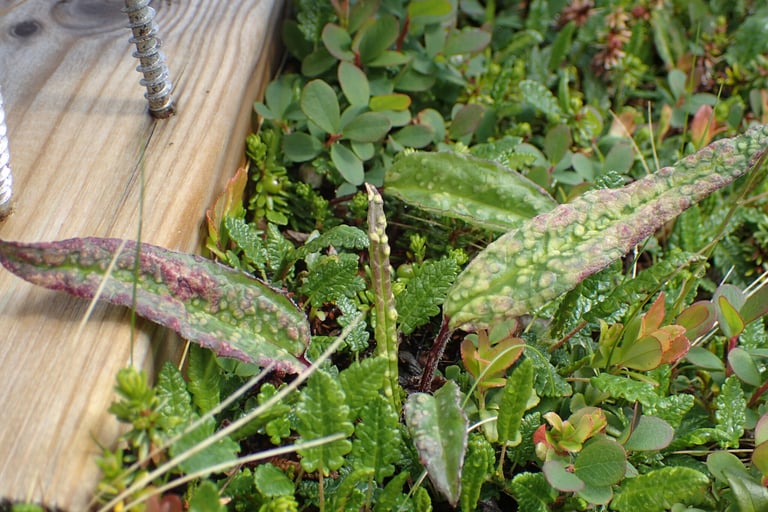
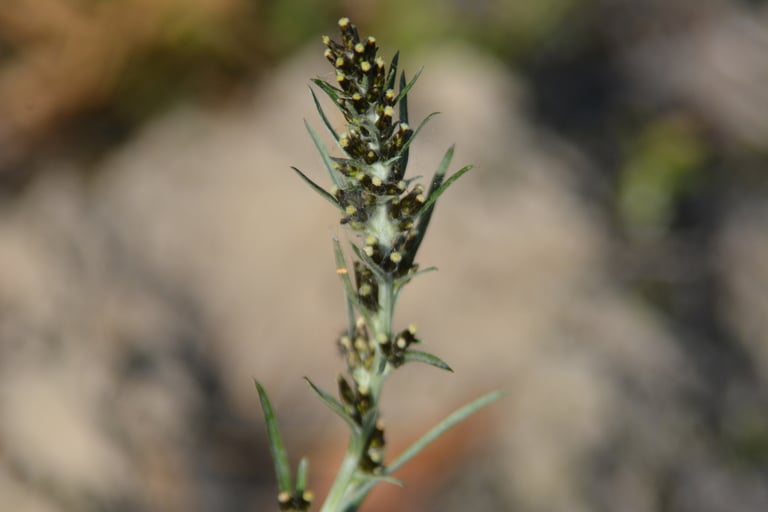
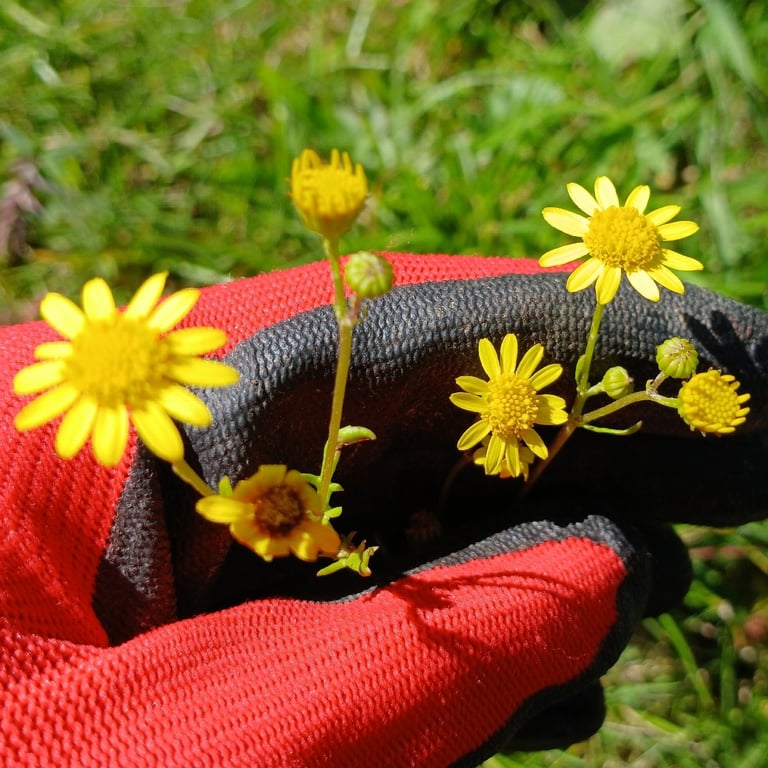
The titan arum produces a single, unbranched flower stalk, and between blooms it sends up one tall leaf branched like a tree. Both come from a heavy underground tuber that makes the plant's dramatic flowering possible.
Amorphophallus titanum is a flowering plant in the family Araceae. It is endemic to the rainforests of the Indonesian island of Sumatra, where it grows on steep hillsides in the wet tropical climate.
The species has become one of the most sought-after plants in botanic gardens. Its rare, short-lived blooms draw crowds, and its cultivation has taught growers a great deal about tropical tuber plants.
Distribution and Habitat
The titan arum grows in the rainforests of western Sumatra. It occupies steep hillsides between 120 and 365 metres above sea level, where the climate stays wet and tropical year-round.
The species is native only to Sumatra. Observations of it cluster most in August, which hints at a seasonal peak, though sightings are not a measure of how many plants exist.

Growth and Form
The titan arum is a tuberous geophyte. A heavy underground tuber stores the energy the plant needs to send up its flower stalk and leaf.
Between blooms, the plant produces a single tall leaf that branches like a tree. In cultivation, the tuber can grow very large: the largest on record at the Royal Botanic Garden Edinburgh weighed 153.9 kg (339 lb) after seven years of growth from a tuber about the size of an orange.
Reproduction and Life Cycle
In cultivation, the titan arum usually needs five to ten years of growth before it blooms for the first time. Afterward, the interval between blooms varies widely. Some plants wait seven to ten years, while others bloom every two or three years. At the Botanical Garden, Bonn, optimal care produced blooms every other year, and a plant at the Copenhagen Botanical Garden flowered every second year from 2012 to 2022.
During bloom, the spadix heats to 37 °C (99 °F) as the spathe opens. The heat drives a powerful scent that reaches up to 800 m (0.50 mi) away. The scent mixes compounds such as dimethyl trisulfide, which smells like rotting meat, and it peaks from late evening to the middle of the night. Carrion beetles and flesh flies, drawn by the smell and the deep red colour, act as its pollinators. The heated spadix also creates a micro-convection in the cool air that carries the scent further.
Self-pollination was once considered impossible. In 1992, botanists in Bonn hand-pollinated their plant with its own pollen, which produced fruit and hundreds of seeds. A titan arum at Gustavus Adolphus College in Minnesota also produced viable seed through self-pollination in 2011. The tallest inflorescence on record reached 3.225 metres (10.58 ft) at Meise Botanic Garden on 13 August 2024.
Uses and Human Relationships
The titan arum first flowered in cultivation at the Royal Botanic Gardens, Kew, London, in 1889. The plant grew from the single seedling that Kew received from Beccari. In 1894 it became the symbol of the Indonesian Botanic Gardens in Java, and the Botanical Garden in Bonn has grown it since 1932.
Its first flowerings in the United States took place at the New York Botanical Garden in 1937 and 1939. Those blooms drew crowds of thousands, and in the 21st century they have also drawn thousands of viewers through internet live streaming. The Bronx named the titan arum its official flower in 1939, a title the day lily replaced in 2000.
Because its care requirements are now well understood, more gardens bloom it each year, and five or more flowerings in a single year have become common worldwide. The plant remains hard for amateur gardeners to grow. In 2011, Roseville High School in California became the first school in the world to bring one into bloom, and it bloomed again in September 2020.
Photos
Photographs from via iNaturalist, licensed under CC0 1.0., by Kaden Slone via iNaturalist, licensed under CC BY 4.0., by Marco Zaccaria Di Fraia via iNaturalist, licensed under CC BY 4.0., by Dietmar K. L. Moser via iNaturalist, licensed under CC BY 4.0., by Jose Gutierrez Higa via iNaturalist, licensed under CC BY 4.0., and by Павлик Лисицын via iNaturalist, licensed under CC BY 4.0., credited on each photo.
Ecology and classification
Habitat
Classification
- Phylum
- Tracheophyta
- Class
- Liliopsida
- Order
- Alismatales
- Family
- Araceae
- Genus
- Amorphophallus
- Species
- Amorphophallus titanum
Sources
- GBIF Species names and classification
- iNaturalist Photos
- Wikidata Common names and conservation status
- Wikipedia Summary extract
- Encyclopedia of Life Habitat, diet and behavior traits
- Plants of the World Online Native range, life form and climate (WCVP)