Long before most trees stir from winter dormancy, the Cornelian cherry bursts into bloom, its bare branches studded with clusters of acid-yellow flowers that open weeks ahead of forsythia. This early flowering habit, paired with a fruit so dense it sinks in water, makes Cornus mas one of the more distinctive members of the dogwood family, Cornaceae.
Native to Western and Southern Europe and Southwestern Asia, this shrub or small tree carries a conservation status of Least Concern, reflecting a stable and widespread presence across its native range. Beyond its ornamental appeal, the species has a deep history intertwined with human tool-making, cuisine, and folk medicine, making it as culturally rich as it is botanically distinctive.
Identification and Appearance
The most useful identifying feature is timing: Cornus mas flowers in late winter, between February and March in places like the UK, producing its blooms well before any leaves appear. The small flowers, only 5–10 mm across, have four yellow petals and are borne in dense clusters of 10 to 25.
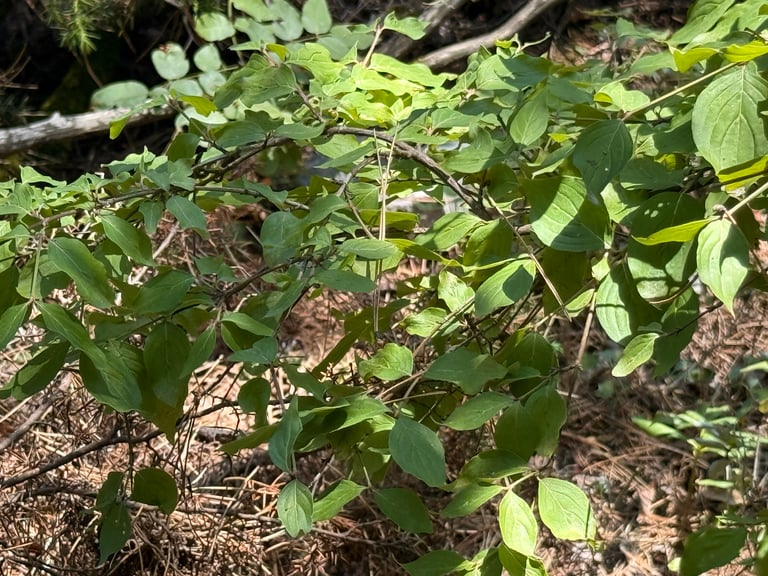
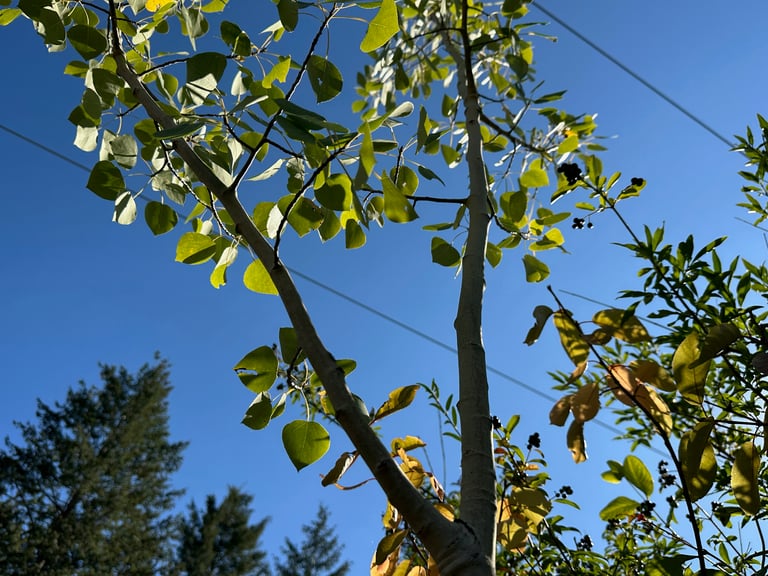
Mature plants reach 5 to 12 meters in height, growing as a medium to large deciduous shrub or a small tree with dark brown branches and greenish twigs. The opposite leaves are 4–10 cm long and 2–4 cm wide, ovate to oblong in shape with an entire, unbroken margin.
The fruit is an oblong red drupe about 2 cm long and 1.5 cm in diameter, containing a single seed. Ornamental cultivars extend the range of appearance: 'Aurea' has yellow leaves and flowers with red fruit, 'Golden Glory' produces especially profuse yellow blooms and shiny red berries, and 'Variegata' shows variegated foliage alongside glossy red fruit.
Compared with forsythia, another early yellow-flowering shrub often grown nearby, Cornus mas flowers are smaller and less showy, but the plant achieves a similar landscape effect through its overall shape and early bloom timing.
Distribution and Habitat
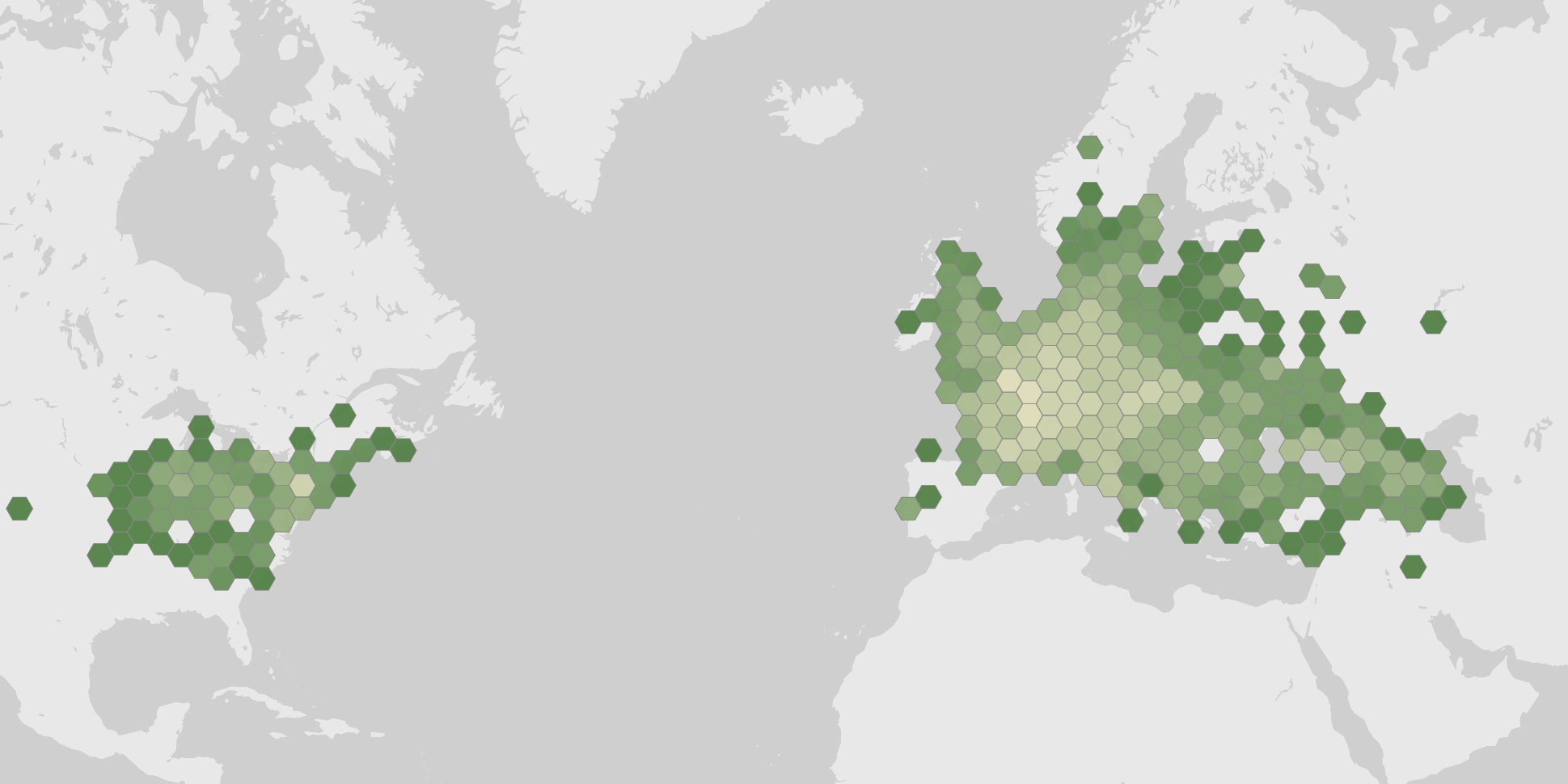
Cornus mas is native to Western Europe, Southern Europe, and Southwestern Asia, occupying a broad swath of temperate habitat across these regions. Monthly observation data, which reflect presence records rather than actual population size or abundance, show a clear seasonal pattern in reported sightings.
Observations rise sharply from a low of roughly 1,200 to 1,500 records in November and December to a peak near 24,000 in March, followed by a second smaller peak of similar magnitude in August. This pattern likely tracks human observation activity tied to the plant's two most visible phases: its distinctive late-winter flowering and its late-summer fruiting, rather than indicating changes in the species' actual abundance.
The drop in observations through autumn and early winter corresponds to the period when the plant is least visually conspicuous, bearing neither flowers nor ripe fruit and blending into the deciduous woodland or garden settings where it grows.
Uses and Human Relationships
The fruit of Cornus mas has been eaten and processed across a wide range of cultures for centuries. Ripe berries, which turn dark ruby-red or bright yellow, taste like a mix of cranberry and sour cherry, though unripe fruit is notably astringent. In Iran, the fresh fruit is enjoyed as a summer refreshment or infused into araq, and also preserved by drying, salting, or turning into fruit leather and paste used as a sour seasoning similar to plum or tamarind. Azerbaijan uses the berries in pickles, beverages, and rice dishes, Armenia distills them into vodka, Romania and Moldova ferment them into a drink called cornată, and Bulgaria uses them to make kompot. In Eastern Europe, the UK, and British Columbia, the fruit is most often made into jam.
Beyond food, the fruit and leaves have a place in traditional medicine: in Iran they are believed to offer health benefits, and in traditional Chinese medicine the fruit, known as shānzhūyú, has historically been used to retain jing, often paired with the related species Cornus officinalis.
The wood itself has an equally long history of practical use. Its exceptional density, unusual among woody plants for sinking in water, made it valuable for tool handles and machine parts. Greek craftsmen used it from the seventh century BCE onward to build spears, javelins, and bows, and it became the primary material for the sarissa pikes wielded by the infantry of Philip II and Alexander the Great, so closely associated with weaponry that its Greek name became a poetic synonym for "spear." In Italy's Maremma region, mounted herdsmen known as butteri traditionally carry a stick called the mazzarella, uncino, or bastone, made from cornel wood locally called crognolo or grugnale.
Fun Facts
- Ancient Greek craftsmen prized Cornus mas wood above all others for its toughness, using it from the seventh century BCE to make spears, javelins, and bows.
- The wood's reputation for strength was so strong that its Greek name doubled as a poetic word for "spear" during the fourth and third centuries BCE.
- Theophrastus described two kinds of cornel tree, male and female, with the male tree's wood considered especially sound and dense.
- In old herbal writing, the association between the plant's toughness and a sense of invulnerability lent it a near-mythic reputation as a material for crafting weapons and tools.
Conservation status
- LC
- NT
- VU
- EN
- CR
Least Concern
Ecology
Growth habit
- Shrub