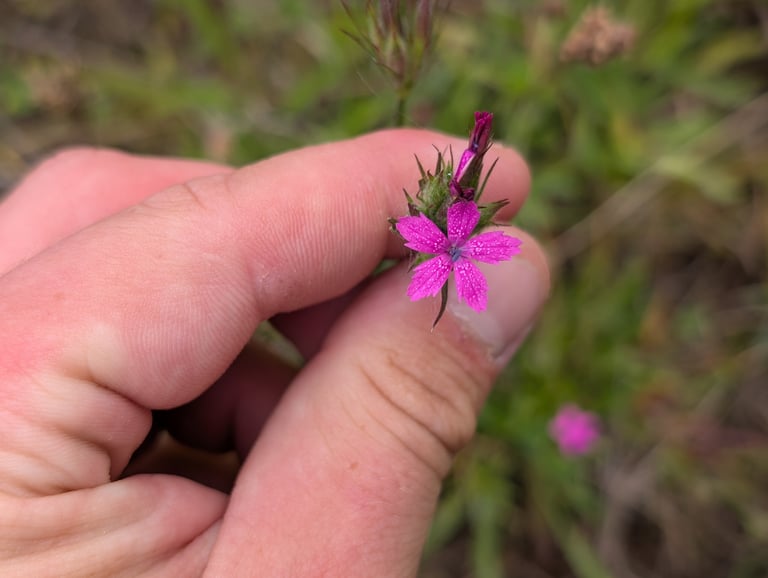
The maiden pink, Dianthus deltoides, is a wildflower that is native to most of Europe and western Asia, yet it has also spread across many parts of North America, where it is an introduced species.
A member of the genus Dianthus, the maiden pink belongs to the carnation family, Caryophyllaceae. Its close relatives include the carnation and the sweet william, so it is a familiar kind of pink to many gardeners.
The species is worth reading about for its wide reach. It grows in landscapes from western Europe to Siberia and has since colonized large parts of another continent.
Distribution and Habitat
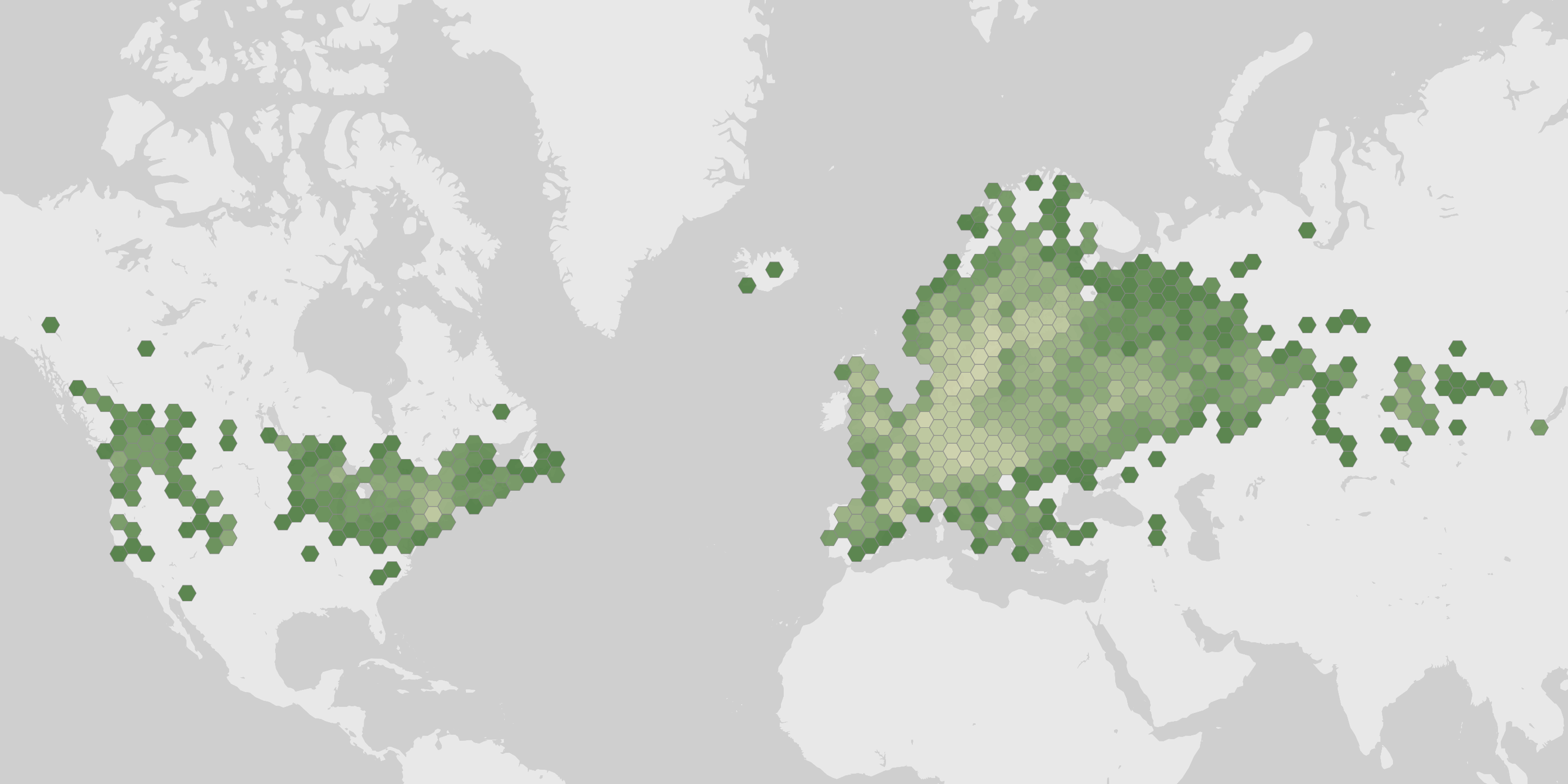
The maiden pink is native to most of Europe and western Asia. Its native range stretches from countries such as Spain, France, Italy and Greece in the south to Scandinavia and northwest Russia, and eastward across Siberia to Altay, Krasnoyarsk, Irkutsk and Buryatiya.
Outside its native range, the species has become established across much of North America. It has been introduced to many states, including New York, Ohio, Michigan, California and Wisconsin, and to several Canadian provinces, among them Ontario, Québec and British Columbia. It also grows in the Transcaucasus, in Primorye in the Russian Far East, and in the south of New Zealand and Argentina.
The climate of its native range is temperate. Observation records for the maiden pink cluster in June and July, with activity tapering off in late summer and autumn. These records show where the plant has been seen, not how abundant it is.
Growth and Form
The maiden pink is a perennial herb. It lives for more than one growing season and returns year after year from the same plant.
Ecology and Relationships
Passerine birds are among the main animals that feed on the maiden pink. Skylarks and common redpolls are two of the songbirds named as partners, and several other finches and buntings also eat it. Moth caterpillars belong to the main insect group that feeds on the plant.
Fewer groups feed on it occasionally or in smaller numbers. Pigeons, gamebirds, ducks and geese, as well as some true bugs, beetles and thrips, are minor eaters of the plant.
Flies are the main group of insects that visit its flowers. Moths such as Autographa gamma also visit regularly, while bees, wasps and beetles are minor flower visitors. Visiting insects are not known to be its pollinators.
Uses and Human Relationships
The maiden pink is widely grown in gardens. Horticulturists have developed many cultivars, such as 'Zing Rose', that are sold as ornamental plants. The flowers come in a range of pink shades, and some cultivars have darker green foliage.
In the United Kingdom, the Royal Horticultural Society has given the species its Award of Garden Merit, a mark of its value in gardens.
Photos
Photographs from via iNaturalist, licensed under CC0 1.0., by Denis Bastianelli via iNaturalist, licensed under CC BY 4.0., by Leonardo Rapisarda via iNaturalist, licensed under CC BY 4.0., by F. Bemmerlein-Lux via iNaturalist, licensed under CC BY 4.0., by Kai Löhr via iNaturalist, licensed under CC BY 4.0., by Ava Conroy via iNaturalist, licensed under CC BY 4.0., by Mikko Heikkinen via iNaturalist, licensed under CC BY 4.0., by gwynmwilliams via iNaturalist, licensed under CC BY 4.0., by Steven Lamonde via iNaturalist, licensed under CC BY 4.0., by Евгений Маринкин via iNaturalist, licensed under CC BY 4.0., by lekhaim katalpa via iNaturalist, licensed under CC BY 4.0., by Marcin Dyderski via iNaturalist, licensed under CC BY 4.0., and by Bobo-X via iNaturalist, licensed under CC BY 4.0., credited on each photo.
Ecology and classification
Growth habit
- Herb
Classification
- Phylum
- Tracheophyta
- Class
- Magnoliopsida
- Order
- Caryophyllales
- Family
- Caryophyllaceae
- Genus
- Dianthus
- Species
- Dianthus deltoides
Sources
- GBIF Species names and classification
- iNaturalist Photos
- Wikidata Common names and conservation status
- Wikipedia Summary extract
- Plants of the World Online Native range, life form and climate (WCVP)
- USDA Plants US plants: growth habit and growing conditions
- GloBI What it eats, what eats it, parasites and pollinators
- trophiCH
- DoPI
- EuPPollNet