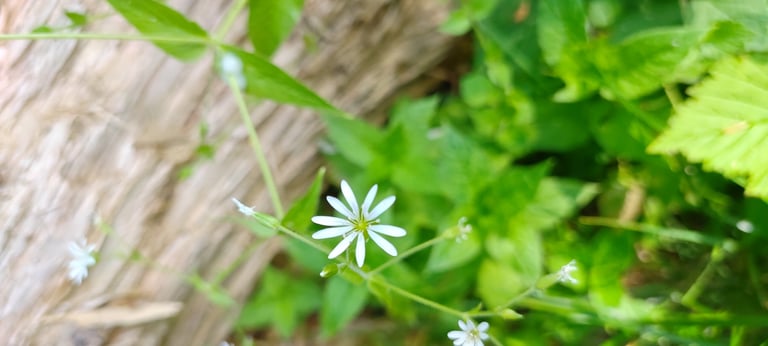
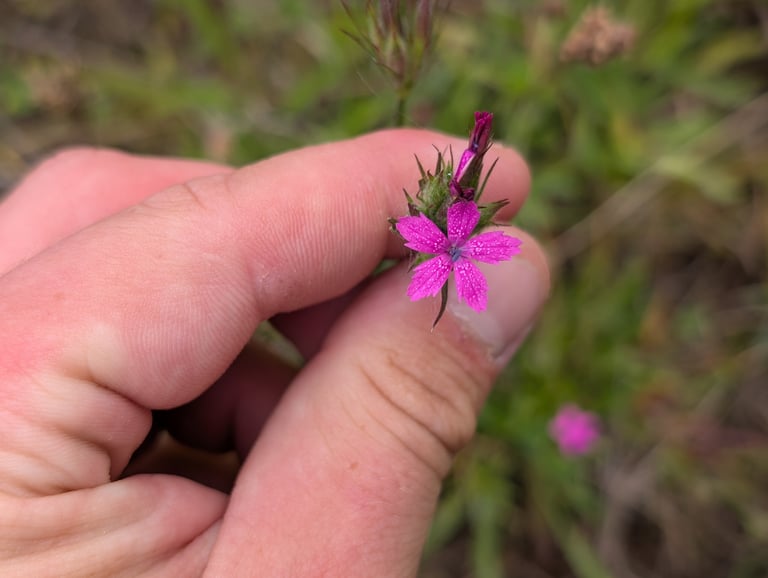
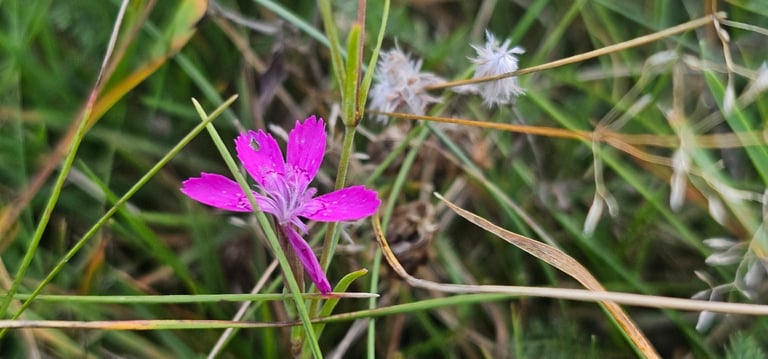
Water chickweed (Stellaria aquatica) is a perennial herb whose white flowers open in summer, from June to August. It belongs to the carnation family, Caryophyllaceae, and is also known as giant chickweed.
The plant grows naturally in the temperate regions of central and western Europe. It prefers humid, wet ground, where it can be found along the sides of gutters or under and between bushes.
Its stems can reach between 10 and 100 cm high, making it one of the larger chickweeds for a wet-ground plant.
Distribution and Habitat
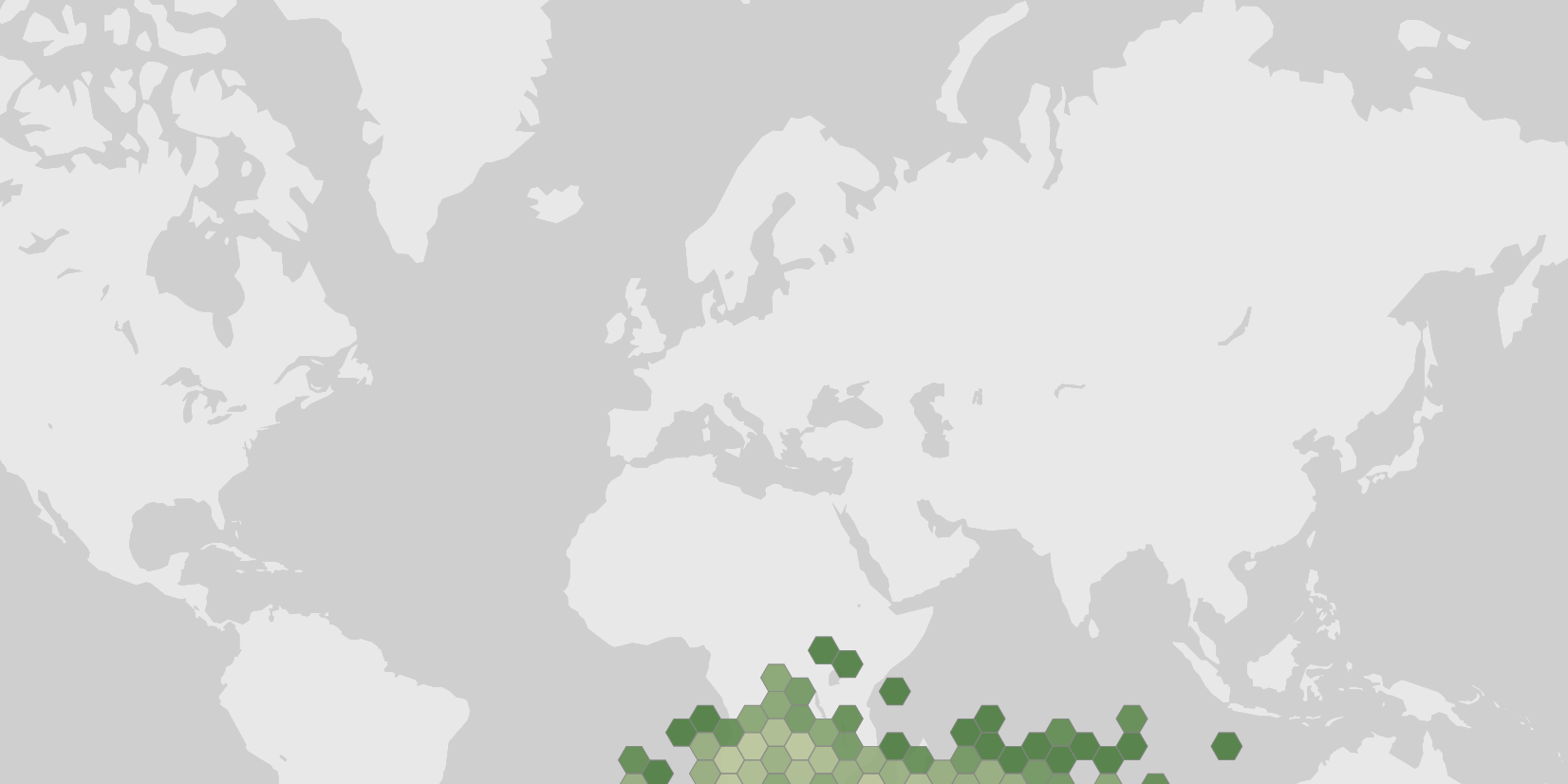
Water chickweed occurs naturally across much of temperate Eurasia, from western Europe through Central Europe and Scandinavia to Japan and parts of China. Its native range includes Great Britain, France, Germany, Spain, Italy, Poland, Sweden and Norway, as well as Turkey, Iran and Central Asia.
The plant has also been introduced in parts of North America, including several US states from New York to Wisconsin and the Canadian provinces of Ontario and Québec. It is also found in India and Thailand.
It grows in humid, wet habitats such as the sides of gutters and the shaded edges of bushes. Its moist-soil preference places it in freshwater and wetland conditions.
Records are most numerous from late spring into summer, with the highest counts in July and June, and fewest in the winter months.
Growth and Form
Water chickweed is a perennial herb that lives for several years, regrowing from the same root system each season. Its stems stand between 10 and 100 cm high.
The plant forms upright, branching stems that spread through damp ground. Its growth is strongest in moist, sheltered places where it can keep its stems supported.
Ecology and Relationships
Water chickweed flowers attract a range of insects. Bees are the most frequent visitors, including the honeybee (Apis mellifera) and several sweat bees of the genus Lasioglossum. Hoverflies such as Sphaerophoria scripta also visit the flowers regularly.
Other visitors include bumblebees, solitary bees, and smaller flies, though these appear less often. These visits are part of a wider network of bees and flies that use the flowers in summer.
The plant grows in humid spots at the margins of gutters and under bushes, where it finds the moist conditions it needs.
Photos
Photographs from via iNaturalist, licensed under CC0 1.0., by Анна Митрошенкова via iNaturalist, licensed under CC BY 4.0., by mami_t_t via iNaturalist, licensed under CC BY 4.0., by Bernd De Bosscher via iNaturalist, licensed under CC BY 4.0., by osianshirley via iNaturalist, licensed under CC BY 4.0., by Thierry Arbault via iNaturalist, licensed under CC BY 4.0., by Ondřej Křivan via iNaturalist, licensed under CC BY 4.0., by Galyna Mykytynets via iNaturalist, licensed under CC BY 4.0., by Евгений Маринкин via iNaturalist, licensed under CC BY 4.0., and by Наталья Пикалова via iNaturalist, licensed under CC BY 4.0., credited on each photo.
Ecology and classification
Habitat
Growth habit
- Herb
Classification
- Phylum
- Tracheophyta
- Class
- Magnoliopsida
- Order
- Caryophyllales
- Family
- Caryophyllaceae
- Genus
- Stellaria
- Species
- Stellaria aquatica
Sources
- GBIF Species names and classification
- iNaturalist Photos
- Wikidata Common names and conservation status
- Wikipedia Summary extract
- Plants of the World Online Native range, life form and climate (WCVP)
- USDA Plants US plants: growth habit and growing conditions
- GloBI What it eats, what eats it, parasites and pollinators
- DoPI
- EuPPollNet