A single Dicksonia antarctica can carry a hidden garden on its back: a 2005 Tasmanian survey found 97 species of smaller ferns, mosses and liverworts growing on the fibrous trunks of just 120 wild plants.
Known as the soft tree fern, this species belongs to the ancient fern family Dicksoniaceae and grows naturally across eastern Australia, from southeast Queensland down through New South Wales and Victoria to Tasmania. It has no formal conservation classification from the IUCN or most Australian state governments, though its status varies locally.
What makes it worth a closer look is its resilience: this is a plant built to survive bushfire, regrow after burning, and outlast the forest around it for decades.
Identification and Appearance
The most useful field mark is the trunk itself: a stout, fibrous caudex up to about 30 cm (12 in) in diameter, densely covered in matted brown roots and the persistent bases of old fronds. Most plants reach around 5 m (16 ft) tall, though exceptional individuals have been recorded up to 15 m (49 ft) tall with trunks 2 m (6 ft 7 in) thick.
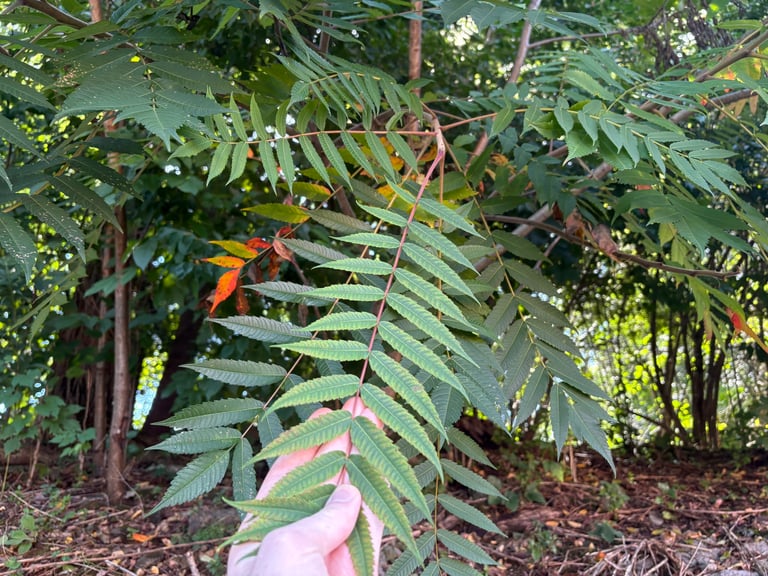
Atop the trunk sits a large, funnel-shaped crown formed by numerous fronds, a shape that may help the plant funnel rainwater down toward its core. The fronds themselves can reach 4 m (13 ft) in length, attached by a stout 30 cm (12 in) stipe that is smooth except at the base, where long brown hairs cluster. The fronds are tripinnate, stiff and leathery, dark green above and paler underneath, broadest at the midpoint.
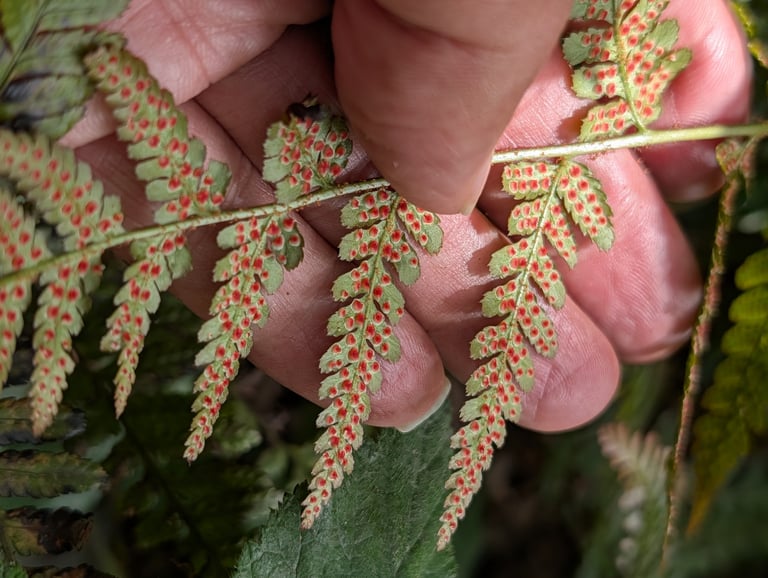
Spores form in small sori on the underside of the fronds, one per lobe, each only about 1 mm (0.04 in) across. Most plants grow a single stem, though specimens with as many as six crowns have been documented, a rare but striking departure from the norm.
Distribution and Habitat
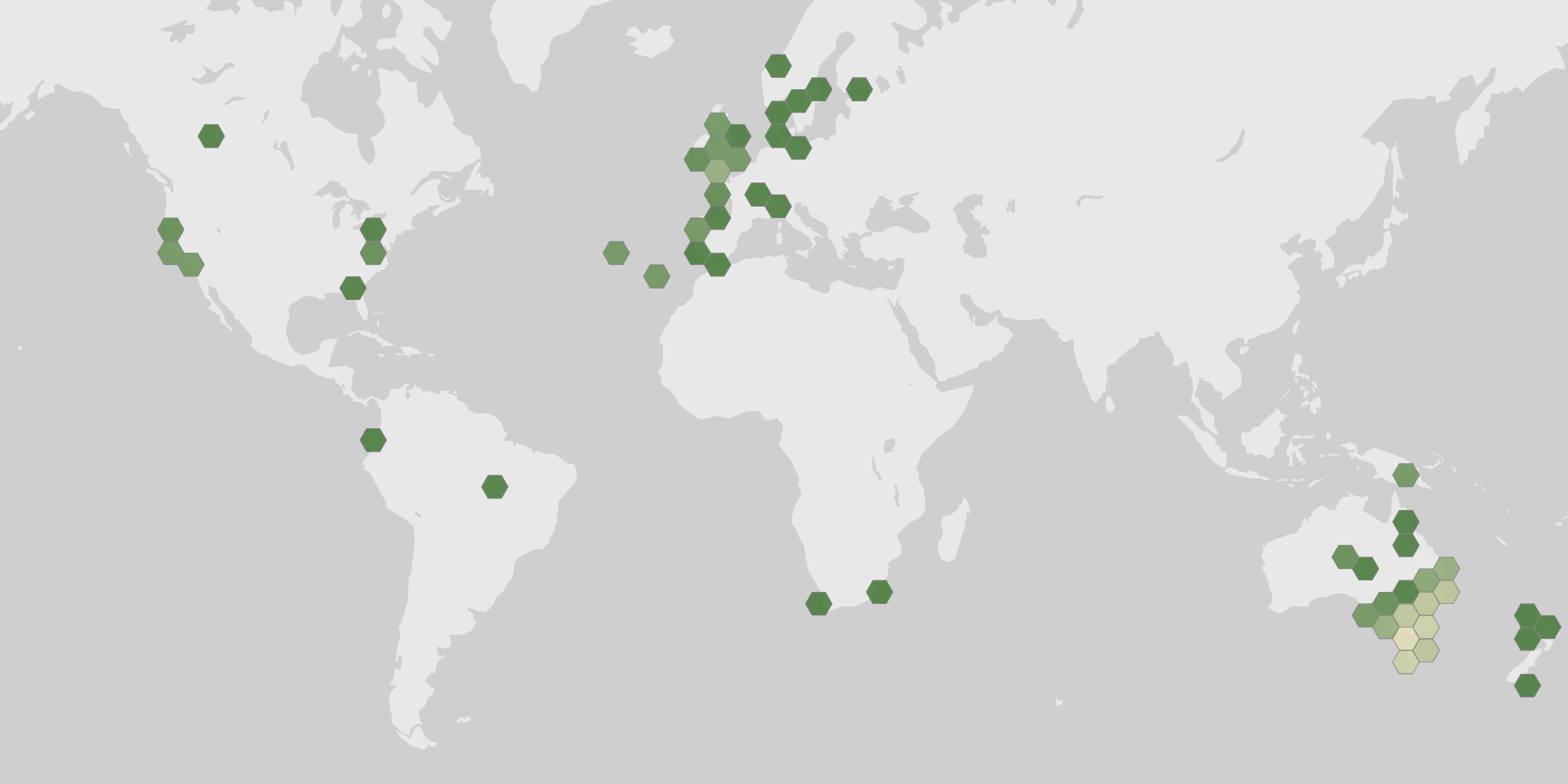
Dicksonia antarctica occurs naturally along a long north-south strip of eastern Australia, from the Bunya Mountains in southeast Queensland through near-coastal New South Wales and Victoria into Tasmania. It once grew in South Australia as well, but is now considered probably extinct in the wild there. The species has also been introduced well beyond Australia, establishing in Great Britain, Ireland, Madeira, the Azores and South Africa.
Within its native range it favors rainforest and wet sclerophyll forest with high rainfall, particularly sheltered gullies and creek banks, where it can become dense enough to dominate the understorey. It grows from near sea level up to about 1,000 m (3,300 ft) in elevation.
A notable trait of this fern is its fire adaptation: it tolerates both deep forest shade and the exposed, sun-baked conditions that follow a bushfire. Its trunk resists fire damage, and even a burnt crown will regrow, letting the species persist through disturbance cycles that eliminate other plants.
Monthly observation records show relatively steady sightings through most of the year, with a dip around July and August and higher counts from October through March; this pattern reflects observation activity rather than the fern's actual abundance or a complete picture of its range.
Ecology and Relationships
Wildlife make regular use of the crown and croziers of Dicksonia antarctica. Possums sleep among the fronds and, along with parrots, feed on the young uncurling croziers, while crimson rosellas (Platycercus elegans) have been observed eating the spore-bearing sori directly.
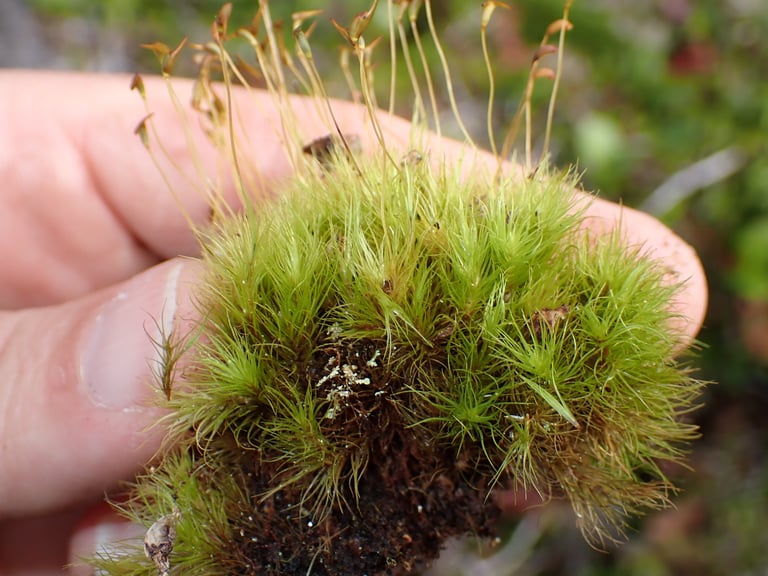
The fibrous caudex itself functions as a habitat structure. A 2005 study of 120 wild Tasmanian specimens found 97 species of smaller ferns, mosses and bryophytes growing as epiphytes on the trunks, showing how a single fern can support a dense community of other plants.
The species' fire tolerance also shapes its ecological role: because its trunk survives burning and the crown regrows afterward, it can persist as a shelter and food source through disturbance events that clear away more fire-sensitive vegetation.
Uses and Human Relationships
Indigenous Australians historically ate the pith and croziers of the soft tree fern. An 1889 account in The Useful Native Plants of Australia describes splitting open about 45 cm (18 in) of the trunk top to remove a starchy heart resembling a Swedish turnip in texture, roughly the thickness of a man's arm, which was then roasted in ashes or eaten as a bread substitute; the source notes it was "too bitter and astringent to suit an English palate."
Beyond food, the fibrous caudex has practical uses: it has served as fencing material and as a growing medium for orchids, taking advantage of its dense, moisture-retentive structure.
Today the species is widely valued as an ornamental. It requires at least 500 mm (20 in) of rainfall a year, and in drier climates growers rely on drip irrigation or overhead spraying to meet its water needs. Its popularity in gardens and landscaping has earned it the Royal Horticultural Society's Award of Garden Merit.
Conservation and Threats
Dicksonia antarctica has not been given a formal conservation classification by the IUCN or by the Australian federal, New South Wales, Victorian or Tasmanian governments as of November 2025. Its status varies sharply at the state level: Queensland lists it as "special least concern," while South Australia lists it as endangered, reflecting its likely extinction in the wild in that state.
This patchwork of listings suggests the species remains secure across most of its core range in Queensland, New South Wales, Victoria and Tasmania, but has already lost ground at the western edge of its historical distribution.
Fun Facts
- A single wild trunk can host an entire miniature ecosystem: a 2005 Tasmanian study found 97 species of ferns, mosses and bryophytes growing on just 120 specimens.
- While most plants top out around 5 m (16 ft), exceptional individuals have been recorded reaching 15 m (49 ft) tall with trunks 2 m (6 ft 7 in) thick.
- Some specimens grow as many as six separate crowns from one trunk, instead of the usual single stem.
- Possums sleep in the fern's crown and, alongside parrots, feed on its young unfurling croziers.
- Crimson rosellas have been seen eating the fern's spore clusters, or sori, directly off the fronds.
- The trunk is fire-resistant enough that the crown can regrow even after being burned in a bushfire.
Ecology
Habitat
- Forest
Growth habit
- Fern